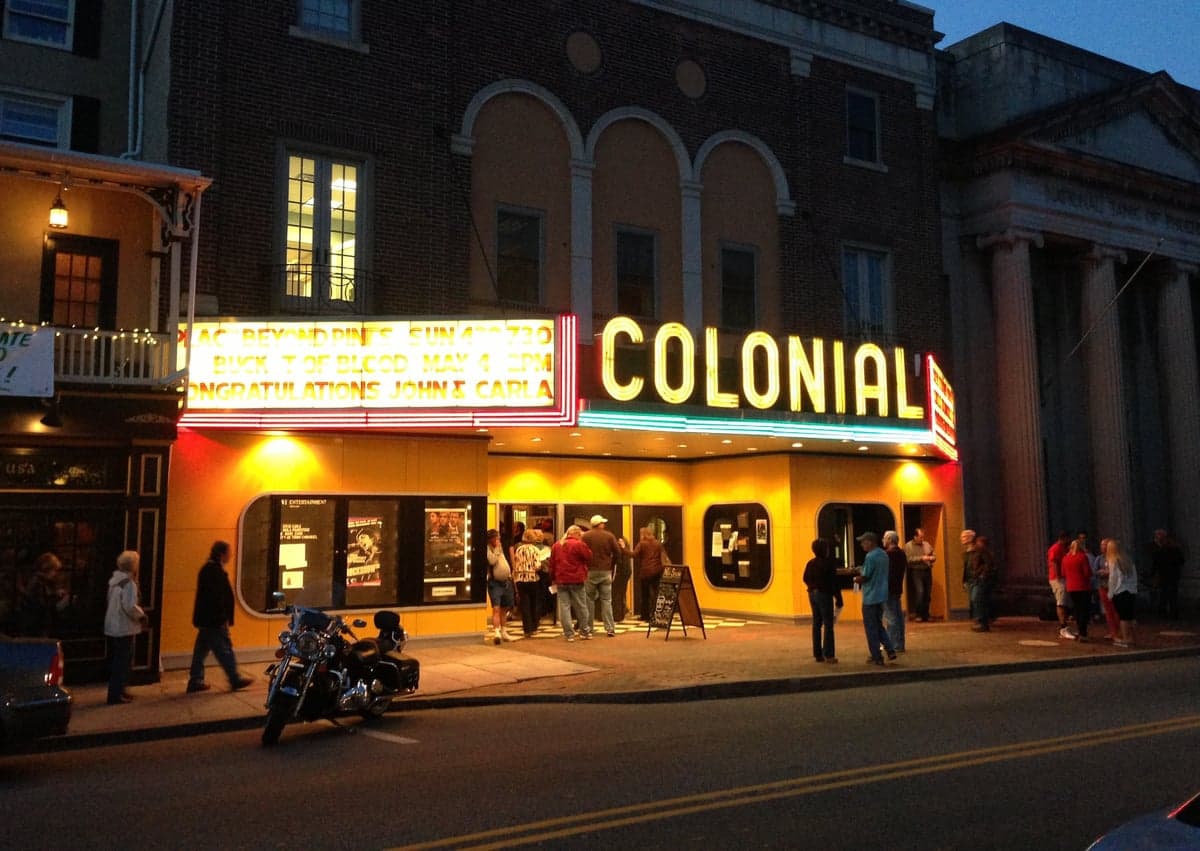
Photo: Wikipedia
Political ClimatePolitical Climate in Phoenixville, PA
District shown is the primary district for this city’s centroid. Cities may span multiple districts.
Local Political AnalysisPolitical Analysis of Phoenixville, PA
Phoenixville used to be a pretty straightforward, blue-collar town where folks mostly kept to themselves and the local government stayed out of your business. But over the last decade or so, the political climate has shifted hard to the left, and it’s not subtle anymore. The Cook PVI rating of D+6 tells you the math: Democrats have a solid six-point advantage over the national average in this borough, and in practice, that means progressive policies are the default, not the exception. If you’re looking at the trajectory, it’s not slowing down—it’s accelerating, especially as more people from the Philadelphia suburbs move in and bring their big-government ideas with them.
How it compares
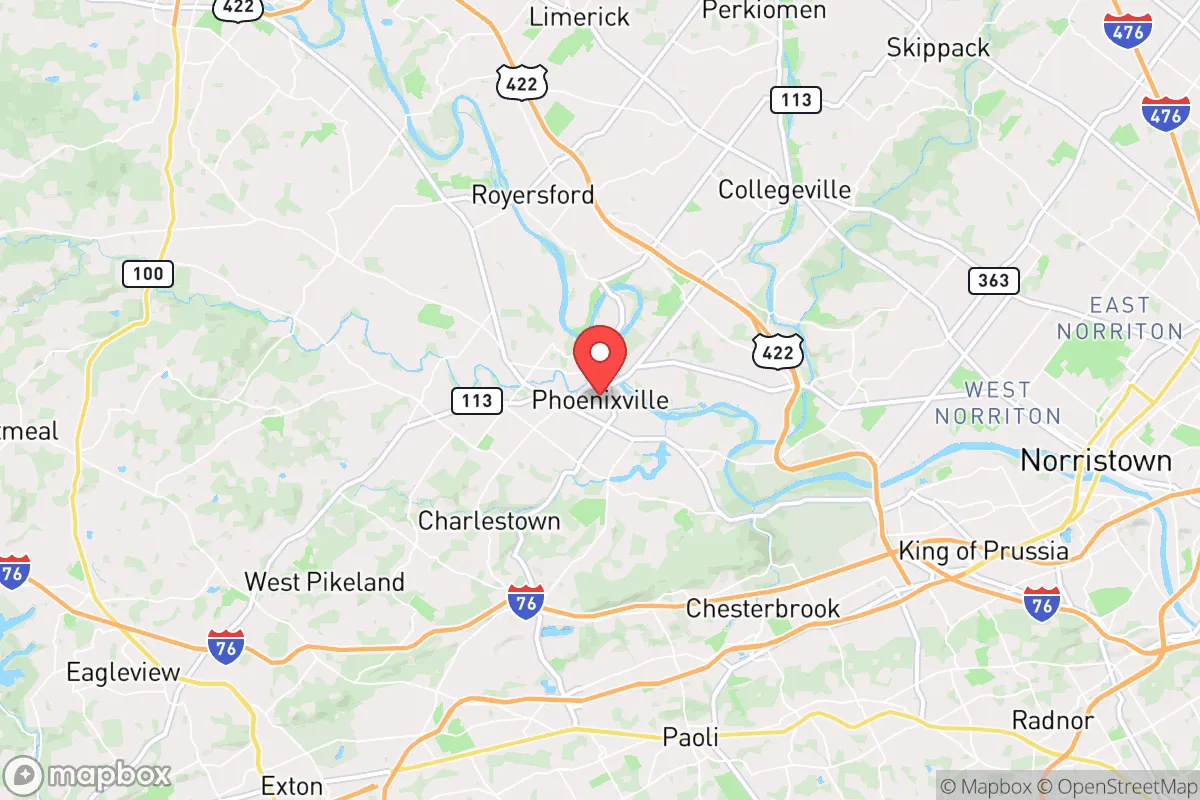
To really get the picture, you have to look at what’s around Phoenixville. Drive ten minutes west to Spring City or Royersford, and you’re in more conservative territory—those areas still lean red, with a lot of working-class families who don’t want the county telling them how to live. Head east toward Valley Forge or King of Prussia, and you’re in deep-blue corporate suburbia. Phoenixville sits right in the middle, but it’s been pulled left by an influx of younger professionals and remote workers who treat local elections like a culture war. The contrast is stark: in neighboring East Pikeland Township, you’ll still see Trump signs in yards; in Phoenixville proper, you’re more likely to see “In This House We Believe” placards and municipal initiatives on sustainability and equity. The borough council has shifted from a mix of moderates and conservatives to a near-uniform progressive bloc, and the zoning and tax policies reflect it.
What this means for residents
For anyone who values personal freedom and keeping government out of your wallet or your home, the changes here are a real concern. The local government has gotten more aggressive with ordinances—things like strict rental inspection regimes, mandated affordable housing quotas for new developments, and business licensing requirements that make it harder for a small shop to open without jumping through hoops. Property taxes have crept up as the borough funds more social programs and public art initiatives that sound nice on paper but hit your pocketbook directly. There’s also been a push for “complete streets” redesigns that prioritize bike lanes and pedestrian plazas over car traffic, which sounds progressive but can make a simple errand a headache. If you’re a homeowner or a small business owner, you’re feeling the squeeze—more regulations, more fees, and less say in how your own property is used. The long-term trend is toward a more managed, top-down community where individual choice takes a backseat to collective goals.
Culturally, Phoenixville still has its charms—the old steel mill history, the independent movie theater, the walkable downtown—but the policy distinctions are becoming harder to ignore. The borough has adopted sanctuary city-like policies that limit cooperation with federal immigration enforcement, and it’s been aggressive on environmental mandates like banning natural gas hookups in new construction. These aren’t just symbolic gestures; they change how you live day to day. If you’re a conservative or even a moderate who believes in limited government, you’ll find yourself increasingly at odds with the direction of the town. The old Phoenixville—the one where you could fix your own porch without a permit and your neighbor minded his own business—is fading fast. My honest advice: if you’re thinking of moving here, come for the walkable Main Street and the proximity to the Schuylkill River Trail, but go in with your eyes open about the political climate. It’s not the same place it was twenty years ago, and it’s not trending back.

State Political ClimatePolitical Climate in Pennsylvania
State Political AnalysisPolitical Environment in the State
Pennsylvania is a classic swing state, but the pendulum has been swinging in a concerning direction over the past 10-20 years. The state’s overall partisan lean is a razor-thin Democratic tilt at the presidential level—Biden won it by just 1.2 points in 2020—but the real story is the accelerating urban-rural split. The Philadelphia and Pittsburgh metros have become deep blue strongholds, while the vast central and northern “T” of the state has hardened into deep red territory. The trajectory over the last two decades has been a slow but steady Democratic drift, driven by population growth in the southeast and a collapse of rural Democratic registration. For a conservative looking to relocate, the key question isn’t whether Pennsylvania is red or blue—it’s which Pennsylvania you’re moving to.
Urban vs. rural divide
The political map of Pennsylvania is a tale of two states. The southeastern corner, anchored by Philadelphia and its collar counties like Montgomery and Delaware, is the engine of Democratic power. Philadelphia County alone delivered over 600,000 votes for Biden in 2020, more than the entire vote total of many rural counties. Pittsburgh and its Allegheny County base are similarly blue, though with a slightly more moderate flavor. The suburbs of both cities—places like Bucks County (north of Philly) and Chester County (west of Philly)—have flipped from Republican to Democratic over the last decade, driven by college-educated professionals moving in from out of state. Meanwhile, the vast rural expanse—Lancaster County, York County, the Poconos, and the Northern Tier counties like Tioga and Bradford—vote Republican by 30-40 point margins. The key battlegrounds are the “collar counties” around Pittsburgh and the Lehigh Valley (Allentown, Bethlehem, Easton), which have trended blue but still have competitive races. The 2022 Senate race between John Fetterman and Mehmet Oz was decided by just 5 points, with Fetterman winning by running up margins in Philly and Pittsburgh while Oz performed well in the rural middle.
Policy environment
Pennsylvania’s policy environment is a mixed bag for conservatives. The state has a flat income tax rate of 3.07%, which is relatively low and hasn’t been raised in decades—a rare bright spot. However, property taxes are among the highest in the nation, averaging over 1.5% of home value, which hits homeowners hard. There is no statewide sales tax on groceries or clothing, but the base rate is 6%. The regulatory posture is moderate: Pennsylvania is not a “right-to-work” state, meaning union dues can be mandatory for many workers, and the state’s Act 47 program for distressed municipalities has given cities like Harrisburg and Scranton heavy state oversight. Education policy is a flashpoint: the state has a massive funding disparity between wealthy suburban districts and poor rural ones, and Governor Josh Shapiro has pushed for increased funding for Philadelphia schools. Election laws are relatively stable: no-excuse mail-in voting was passed with bipartisan support in 2019 (Act 77), but it remains controversial among conservatives. There is no voter ID requirement for in-person voting, though first-time voters must show ID. The state’s gun laws are preemptive—localities cannot pass their own restrictions—which is a win for Second Amendment advocates, but the state does require background checks for all handgun sales and has a “red flag” law that allows temporary seizure of firearms.
Trajectory & freedom
On the freedom front, Pennsylvania has been a mixed bag trending slightly negative for conservatives. The most significant recent expansion of liberty was the passage of Act 79 in 2022, which eliminated the requirement for a permit to carry a concealed firearm—a major win for gun rights. However, the state has moved in the opposite direction on medical freedom: Governor Shapiro signed an executive order in 2023 protecting access to gender-affirming care for minors, and the state’s Department of Health has aggressively enforced COVID-19 vaccine mandates for healthcare workers, which remain in place. Parental rights have been a battleground: in 2023, the state’s Commonwealth Court ruled that parents do not have a fundamental right to opt their children out of LGBTQ-inclusive curriculum, a decision that has energized conservative activism. Property rights are generally strong, but the state’s Clean Streams Law has been used to block some agricultural and industrial development. Taxation freedom is a bright spot: the flat income tax has not increased, and the state has no estate tax. However, the Philadelphia wage tax (3.75% for residents) is a major drag on economic freedom in the state’s largest city.
Civil unrest & political movements
Pennsylvania has seen its share of political flashpoints. The 2020 election aftermath was particularly heated in Philadelphia, where Republican poll watchers were allegedly restricted from observing ballot counting, leading to ongoing election integrity concerns. The state’s Act 77 mail-in voting law has been the subject of multiple lawsuits, with conservatives arguing it was unconstitutionally enacted. On the left, the Black Lives Matter protests in Philadelphia in 2020 were large and occasionally violent, with looting and property damage in Center City. The Pittsburgh synagogue shooting in 2018 galvanized both gun control activism and community solidarity. Immigration politics are less visible than in border states, but Philadelphia is a sanctuary city, and the state’s Clean Slate Act (automatic expungement for certain low-level offenses) has been praised by criminal justice reform advocates but criticized by conservatives as soft on crime. The Pennsylvania Freedom Caucus in the state legislature has been a vocal force, pushing for election integrity reforms, school choice, and opposition to carbon pricing. The Lancaster County area has seen a rise in “constitutional sheriff” activism, with some sheriffs refusing to enforce certain state gun laws.
Projection
Over the next 5-10 years, Pennsylvania is likely to continue its slow drift leftward, but the pace will depend on migration patterns. The Lehigh Valley and Bucks County are seeing an influx of New Jersey and New York transplants, who tend to vote Democratic. Meanwhile, rural counties are losing population, which reduces their electoral weight. The state’s congressional map, redrawn after the 2020 census, is now more competitive, with Democrats holding a 9-8 edge in the delegation. The 2024 presidential race will be a key test: if a Republican can win Pennsylvania, it signals a potential realignment. However, the demographic trends favor Democrats in the long run. For a conservative moving in now, the best bet is to target the Lancaster-York corridor or the Poconos, where growth is strong and the political culture is still red. The state’s flat income tax and strong property rights are assets, but the high property taxes and union influence are liabilities. The biggest wildcard is the state Supreme Court, which has a 5-2 Democratic majority and has been aggressive in striking down Republican-passed laws.
Bottom line: Pennsylvania is not a lost cause for conservatives, but it’s a state that requires strategic placement. If you move to the right county—Lancaster, York, Cumberland, or Butler—you’ll find a community that shares your values and a state government that, while not perfect, hasn’t gone full California. The key is to avoid the Philadelphia and Pittsburgh metros, where the political culture is increasingly hostile to conservative views. The state’s flat tax and strong gun rights are real advantages, but you’ll need to be prepared for high property taxes and a public school system that is increasingly progressive. If you’re willing to fight for your values at the local level, Pennsylvania still offers a decent shot at the American Dream—but the clock is ticking.
* Values derived from national, state, county, city and local statistics and may differ in a specific area. Last updated: 2026-04-19T10:44:06.000Z
Narrative content on this page is AI-generated and may contain mistakes. Verify any details that matter before acting on them.
ReloMaps may earn a commission from affiliate links at no extra cost to you.

