 Popular
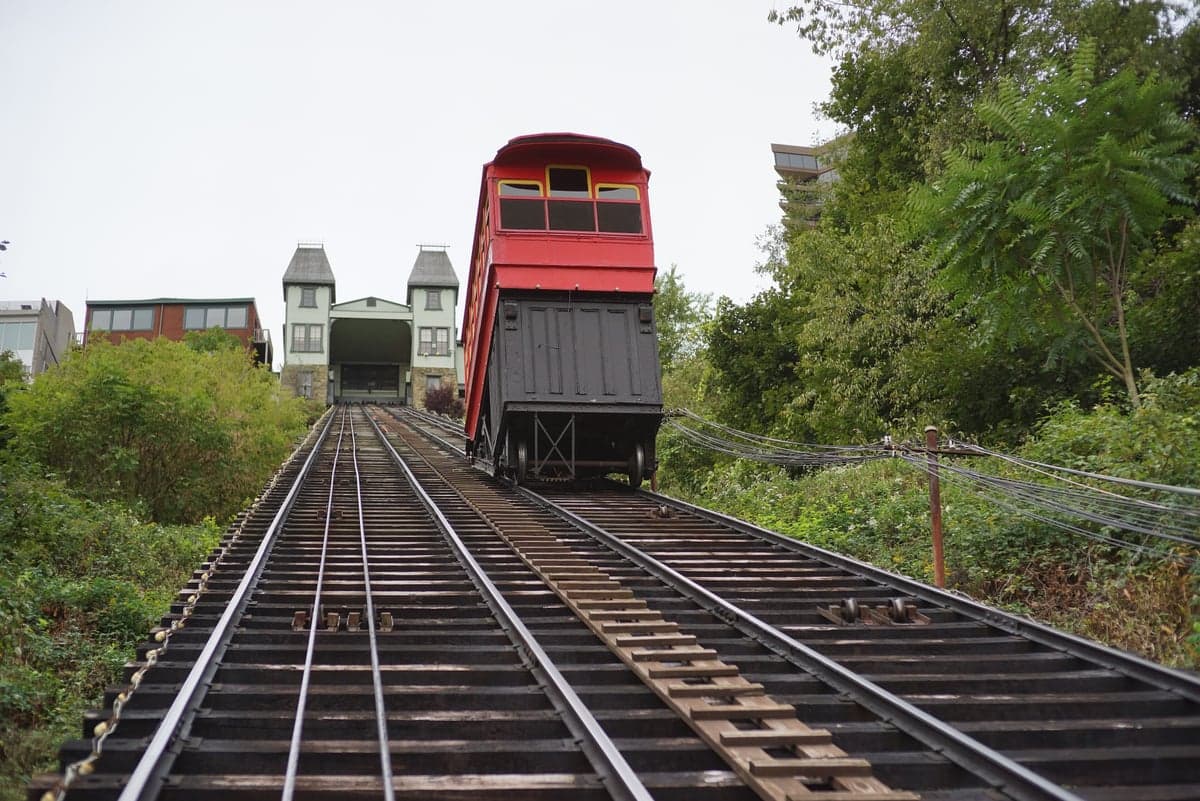
Photo: Wikipedia
Strategic Assessment of Pittsburgh, PA
Multiple tactical vulnerabilities. Population density, target proximity, or disaster risk are likely compounding. A retreat property and exit planning is required.
What does the Strategic Assessment tell us?
Our Strategic Assessment grades tactical survivability of an area. Major population centers, military targets, fallout zones, natural disasters, and border exposure all drive risk — lower exposure means a more defensible position in a crisis.
This is heavily inspired by Joel Skousen's Strategic Relocation book. Highly recommended you checkout the book ($)What does this tell us?
Our Strategic Assessment grades tactical survivability of an area. Major population centers, military targets, fallout zones, natural disasters, and border exposure all drive risk — lower exposure means a more defensible position in a crisis.
This is heavily inspired by Joel Skousen's Strategic Relocation book. Highly recommended you checkout the book ($)Strategic Pillars

Key Distances
Regional Safe Places
Below is our recommended "safe zones" in Pennsylvania and the surrounding area based on our strategic heuristics. For most people, it's unrealistic to live in a “safe zone” full-time due to work, family or other personal reasons. They tend to be more rural. However, many of these areas are perfect for second homes and retreat properties that double as a vacation home or even a short-term rental.
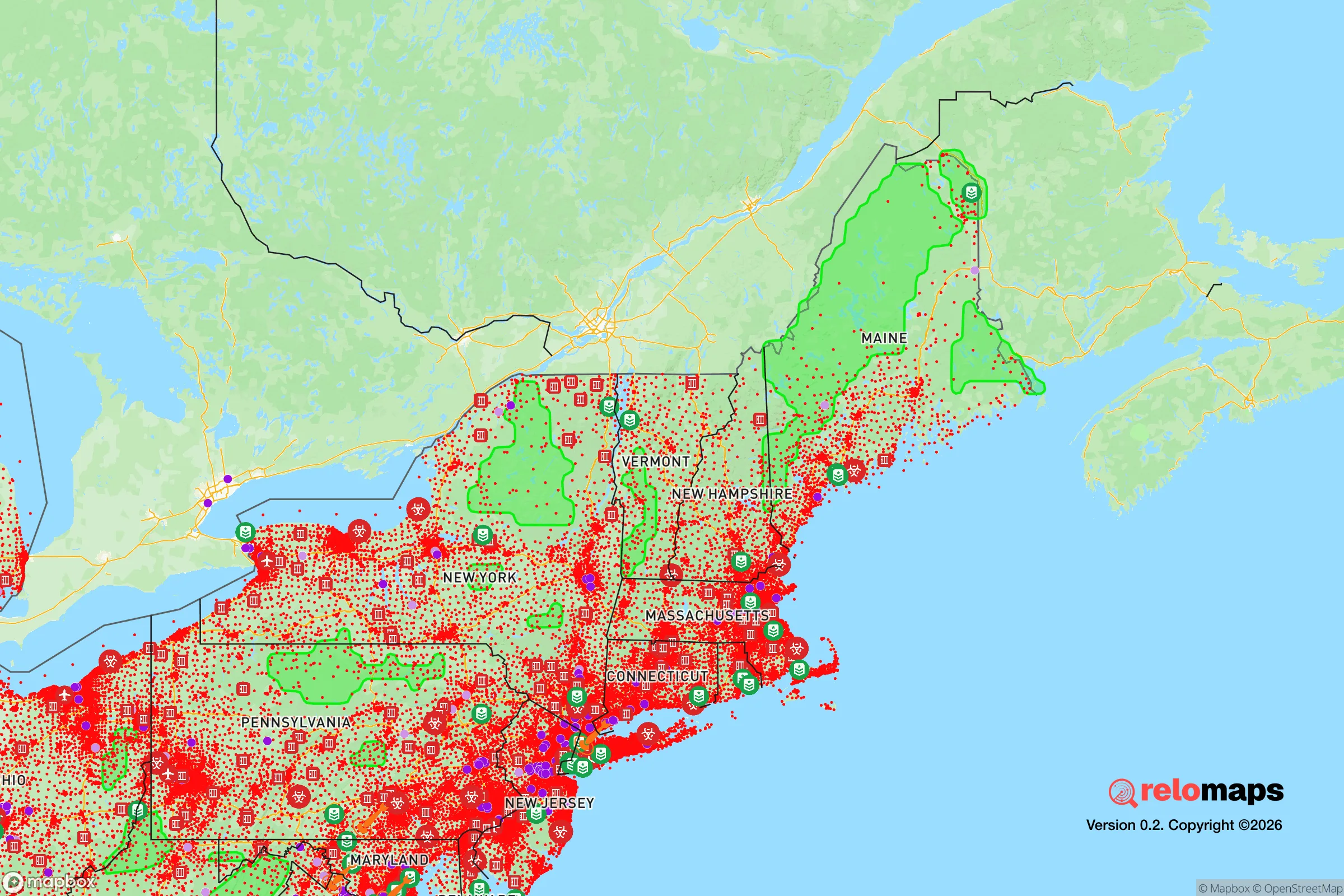
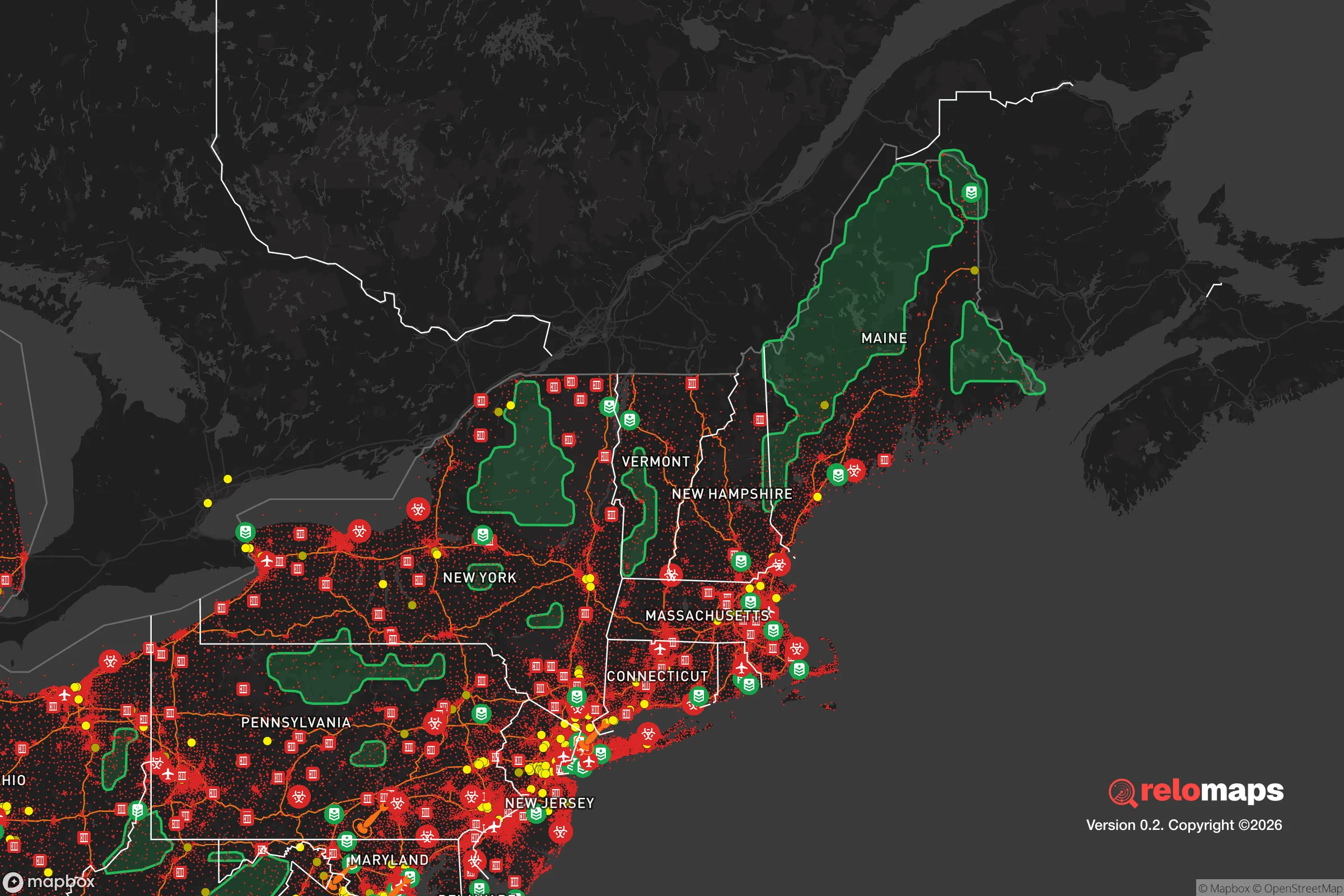


Important Note: For informational purposes only. This does not mean nothing bad ever happens in the green zones. Please use common sense. This is based on public data and modeled with AI. We tried to take a conservative approach but mistakes happen. We update this regularly as new information becomes available.
Solar Generator Recommendations
Backup power matters more here than in safer locations. We've picked three solar generators across budgets and capacity tiers — start with the budget unit if you only need a few essentials, or step up if you want to run a fridge and HVAC for days at a time.

Jackery Portable Power Station Explorer 300
Budget OptionPower on the Go: Weighing only 11 lbs, it's convenient to set up and store with book-sized foldable solar panels

BLUETTI Portable Power Station AC180
Designed for both indoor and outdoor scenarios, AC180 is highly capable as it has a robost capacity and continuous output power.

EF ECOFLOW DELTA Pro Ultra Power Station
Upgraded PickEcoFlow DELTA Pro Ultra is a whole-home energy system designed to grow with your family. Integrated with the Smart Home Panel 2, it scales to meet your evolving energy needs — keeping your home powered, intelligent, and secure through every stage of life.
We earn a commission, at no additional cost to you.
Strategic Assessment Analysis
Pittsburgh, Pennsylvania, often sells itself as a "comeback city," but from a strategic relocation standpoint, its real value lies in its geographic resilience and industrial bones. Nestled at the confluence of three major rivers and surrounded by the rugged Allegheny Plateau, the city offers a rare combination of defensible terrain, abundant fresh water, and a built environment that was literally designed to withstand bombardment. For the conservative prepper or survivalist, Pittsburgh presents a mixed bag: it is a regional population center with all the associated risks of civil unrest and infrastructure fragility, yet its physical layout and resource endowment make it one of the more survivable mid-sized metros in the Eastern United States. The key is understanding that Pittsburgh is not a bug-out destination—it is a hardened outpost that requires careful positioning within its outer ring of suburbs and exurbs to maximize its natural advantages while minimizing exposure to the urban core's inevitable collapse points.
Geographic position and natural advantages for long-term survival
Pittsburgh's geographic position is arguably its strongest asset for a long-term resilience strategy. The city sits in a deeply dissected plateau, meaning the terrain is steep, wooded, and riddled with narrow valleys and ridgelines. This topography naturally limits the movement of large groups, creates chokepoints, and provides ample cover for those who know the back roads. The three rivers—the Allegheny, Monongahela, and Ohio—are not just scenic; they represent a virtually inexhaustible supply of fresh water, a resource that will become the single most critical commodity in any prolonged disruption. The region's location, roughly 300 miles from both the East Coast and the Great Lakes, places it outside the immediate blast radius of major strategic targets like Washington D.C., New York, or Philadelphia, yet close enough to serve as a secondary hub for regional trade if the grid survives. Furthermore, the surrounding counties—Butler, Washington, Westmoreland, and Armstrong—contain significant agricultural land, limestone deposits, and coal reserves, providing the raw materials for food production and energy generation that most modern cities have completely abandoned. For a relocator thinking in decades, not years, this combination of water, fuel, and defensible terrain is rare east of the Mississippi.
Risks, exposures, and proximity to fallout-relevant landmarks
The sobering reality is that Pittsburgh is not a safe haven from all threats. Its industrial history and current infrastructure create specific vulnerabilities that a strategic relocator must account for. The most immediate concern is the city's proximity to the Beaver Valley Nuclear Power Station, located about 30 miles northwest of downtown along the Ohio River. While not a catastrophic risk in the same league as a major coastal strike, a containment failure or targeted attack on that facility could render large swaths of the downwind corridor—including parts of Allegheny and Beaver counties—uninhabitable for weeks or months. Additionally, Pittsburgh is home to numerous chemical plants, steel mills, and natural gas processing facilities along the river valleys. A cascading failure of these industrial sites during a grid-down event could produce toxic plumes that would force evacuation of low-lying areas. On the civil unrest front, Pittsburgh has a history of labor strikes and protest activity, and its dense urban core—particularly neighborhoods like Oakland, East Liberty, and the South Side—could become flashpoints during a national crisis. The city's bridges and tunnels, while defensible, also represent single points of failure; if the Liberty Bridge or Fort Pitt Tunnel becomes impassable, large sections of the population could be trapped or cut off from supply routes. For the prepper, the strategic play is not to live within the city limits but to secure a position in the outer ring suburbs—places like Wexford, Murrysville, or McMurray—that offer buffer distance from these hazards while still allowing access to the region's resources.
Practical resilience for a relocator: food, water, energy, and defensibility
When evaluating Pittsburgh for practical day-to-day resilience, the picture is surprisingly favorable for those willing to adapt. Water is the headline advantage: the three rivers are supplemented by dozens of smaller creeks and reservoirs, and the region's average annual rainfall of 38 inches means that rainwater catchment is a viable year-round strategy. The local geology also supports shallow wells in many suburban and exurban areas, a critical capability if municipal water treatment fails. Food security is more complex. The city itself is a food desert in many neighborhoods, but the surrounding counties have a robust network of farms, farmers' markets, and Amish communities that still practice traditional agriculture. Establishing relationships with these producers before a crisis is essential—they will be the backbone of any local food system when trucking stops. Energy resilience is mixed. Pittsburgh's grid is aging and prone to outages from winter storms and summer heat, but the region's natural gas abundance means that many homes in the outer suburbs already have gas hookups for heating and cooking, which is far more resilient than all-electric systems. Solar potential is moderate due to cloud cover, but micro-hydro from a creek or a small propane generator is a more reliable backup here than in sunnier but less water-rich regions. Defensibility is where Pittsburgh's topography truly shines. The narrow valley roads, steep hillsides, and dense forest cover make it difficult for large, organized groups to move through the area without being observed or ambushed. A well-positioned property on a ridgeline with a single access road offers a natural fortress that would be prohibitively expensive to assault. The key is to avoid the floodplains and the deep hollows where you can be trapped; instead, aim for the high ground with multiple egress routes.
The overall strategic picture for Pittsburgh is that of a hardened regional hub with genuine long-term potential, but only for the relocator who approaches it with clear eyes and a plan. It is not a remote wilderness retreat—you will be within a few hours of major population centers and their associated risks. But it is also not a soft coastal city that will collapse in the first week of a crisis. Pittsburgh's industrial heritage means its people are more self-reliant, its infrastructure is more robust, and its geography is more defensible than almost any other metro of its size in the Northeast. The conservative prepper who settles in the outer ring—someone who stocks supplies, learns basic mechanical skills, and builds community with the local farming population—will find Pittsburgh to be a viable base of operations for weathering the coming storms. The ones who move into a downtown condo expecting the city to save them will be the first to leave when the bridges close. Choose your ground wisely, and this city of steel and water can become a fortress.

* Values derived from national, state, county, city and local statistics and may differ in a specific area. Last updated: 2026-05-01T20:26:10.000Z
Narrative content on this page is AI-generated and may contain mistakes. Verify any details that matter before acting on them.
ReloMaps may earn a commission from affiliate links at no extra cost to you.

