Photo: Wikipedia
Strategic Assessment of Plattsmouth, NE
Meaningful friction. Expect exposure to either population pressure, blast zones, or natural disaster risk. Consider buying a retreat property.
What does the Strategic Assessment tell us?
Our Strategic Assessment grades tactical survivability of an area. Major population centers, military targets, fallout zones, natural disasters, and border exposure all drive risk — lower exposure means a more defensible position in a crisis.
This is heavily inspired by Joel Skousen's Strategic Relocation book. Highly recommended you checkout the book ($)What does this tell us?
Our Strategic Assessment grades tactical survivability of an area. Major population centers, military targets, fallout zones, natural disasters, and border exposure all drive risk — lower exposure means a more defensible position in a crisis.
This is heavily inspired by Joel Skousen's Strategic Relocation book. Highly recommended you checkout the book ($)Strategic Pillars

Key Distances
Regional Safe Places
Below is our recommended "safe zones" in Nebraska and the surrounding area based on our strategic heuristics. For most people, it's unrealistic to live in a “safe zone” full-time due to work, family or other personal reasons. They tend to be more rural. However, many of these areas are perfect for second homes and retreat properties that double as a vacation home or even a short-term rental.
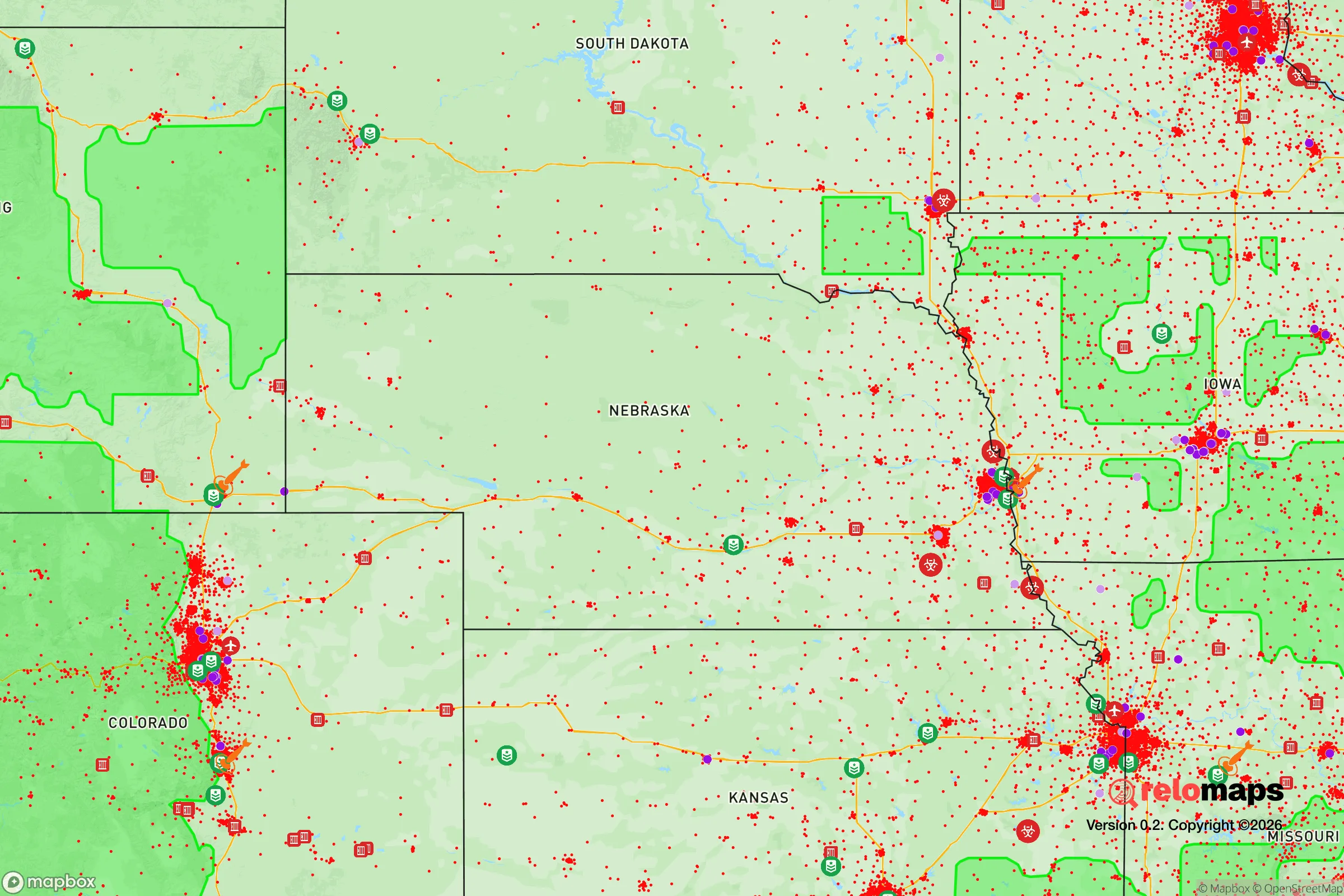
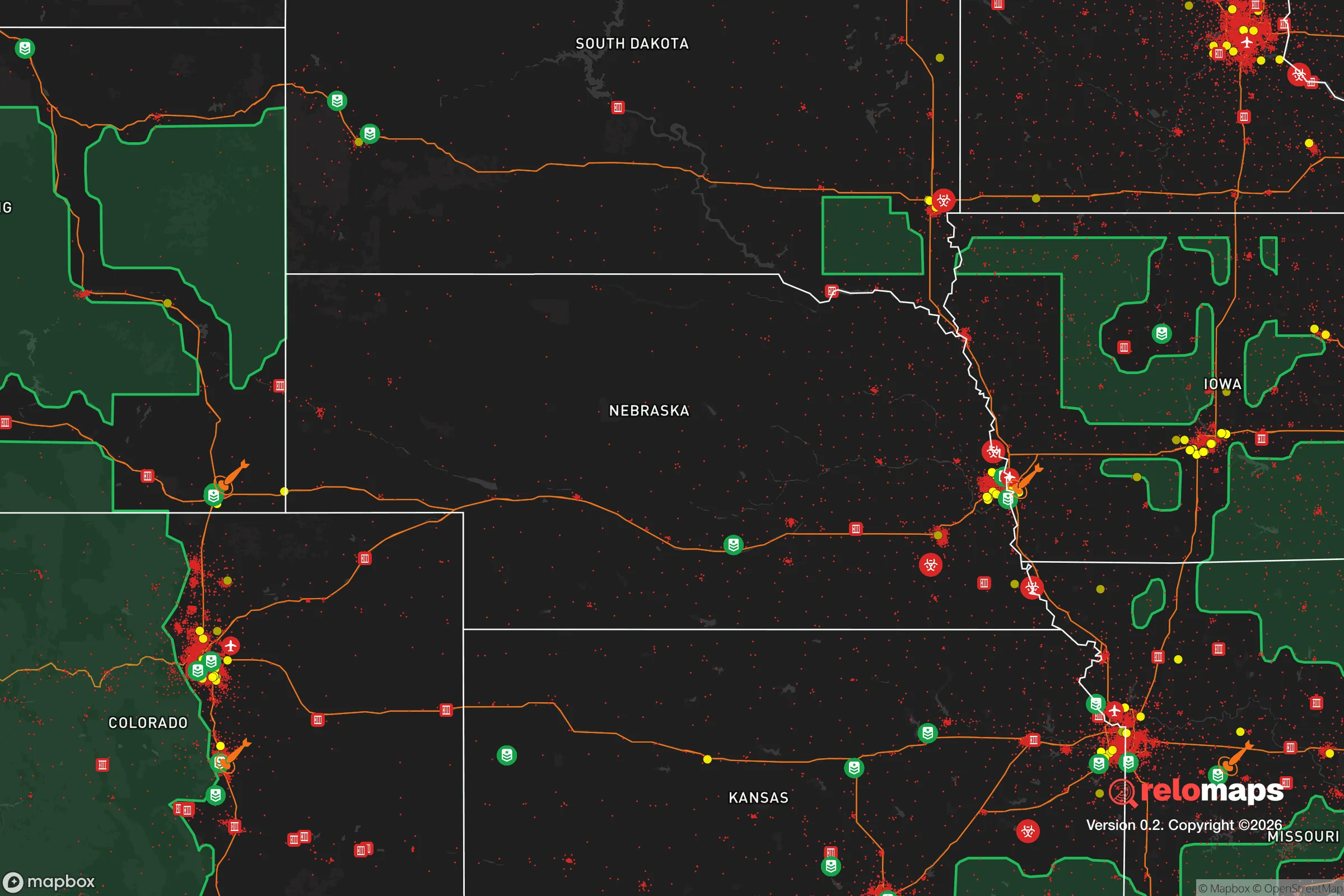


Important Note: For informational purposes only. This does not mean nothing bad ever happens in the green zones. Please use common sense. This is based on public data and modeled with AI. We tried to take a conservative approach but mistakes happen. We update this regularly as new information becomes available.
Solar Generator Recommendations
Backup power matters more here than in safer locations. We've picked three solar generators across budgets and capacity tiers — start with the budget unit if you only need a few essentials, or step up if you want to run a fridge and HVAC for days at a time.

Jackery Portable Power Station Explorer 300
Budget OptionPower on the Go: Weighing only 11 lbs, it's convenient to set up and store with book-sized foldable solar panels

BLUETTI Portable Power Station AC180
Designed for both indoor and outdoor scenarios, AC180 is highly capable as it has a robost capacity and continuous output power.

EF ECOFLOW DELTA Pro Ultra Power Station
Upgraded PickEcoFlow DELTA Pro Ultra is a whole-home energy system designed to grow with your family. Integrated with the Smart Home Panel 2, it scales to meet your evolving energy needs — keeping your home powered, intelligent, and secure through every stage of life.
We earn a commission, at no additional cost to you.
Strategic Assessment Analysis
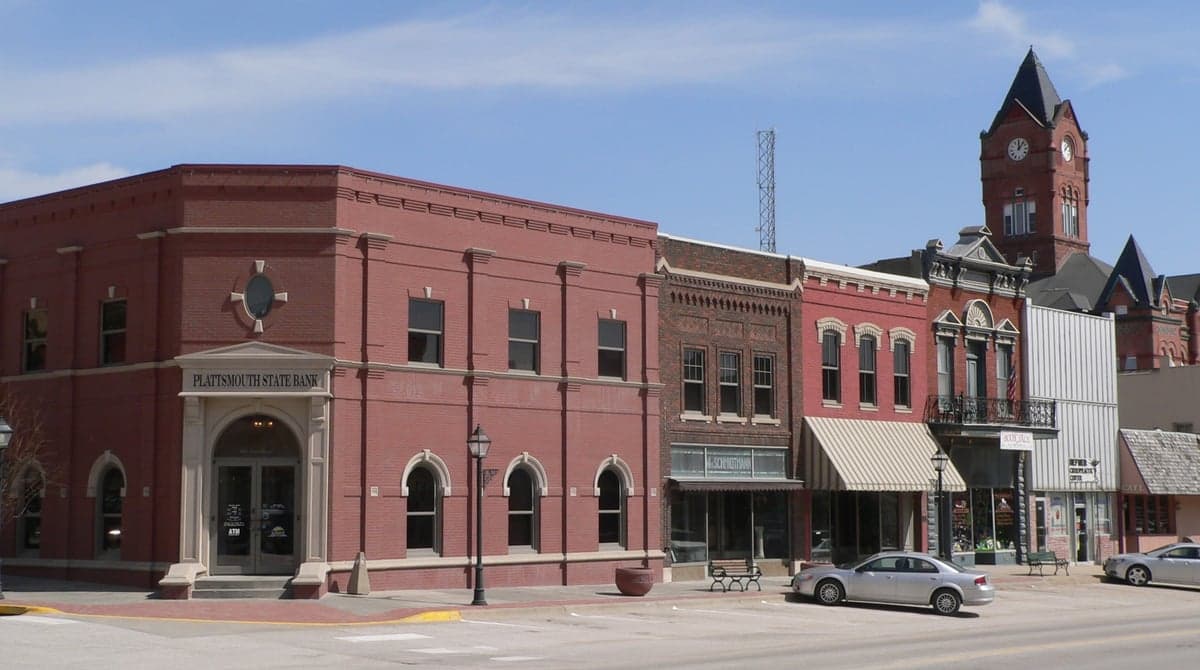
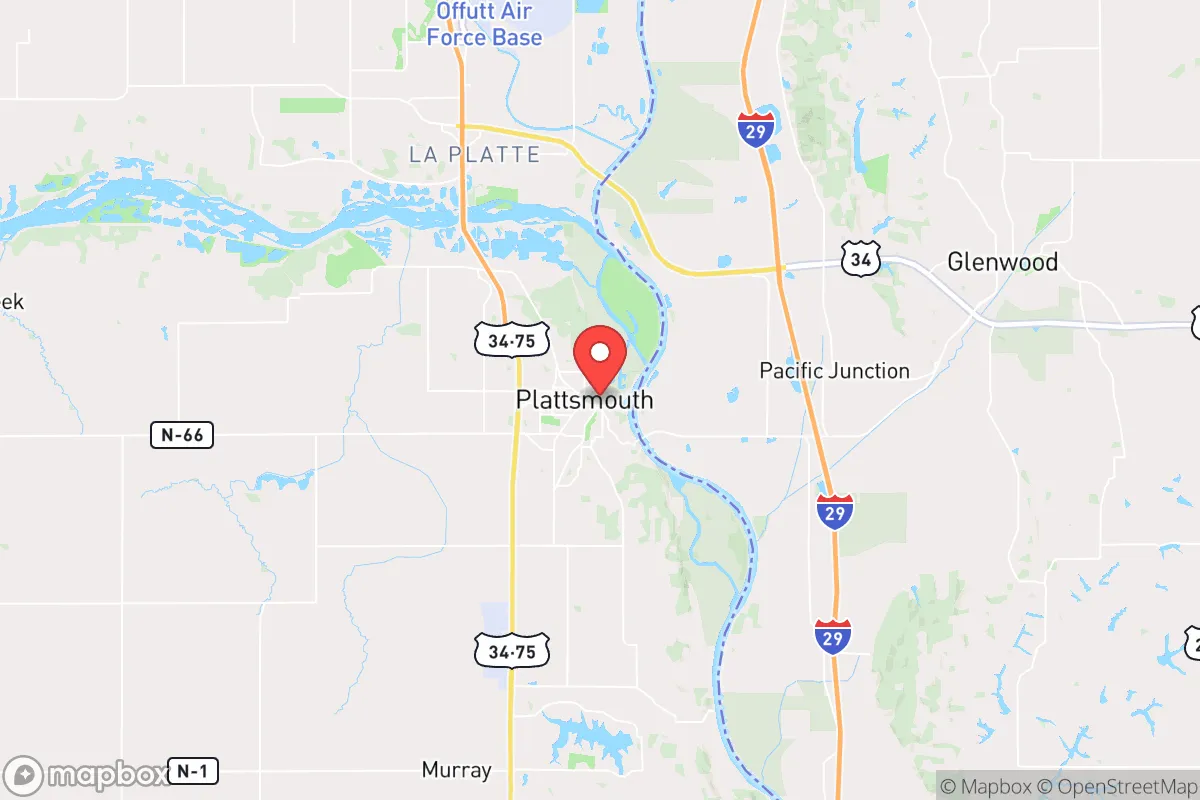
Plattsmouth, Nebraska, offers a strategic balance of proximity to critical resources and separation from the most acute risks of a major metropolitan collapse. Sitting along the Missouri River roughly 20 miles south of Omaha, this Cass County seat provides a defensible position with access to water, fertile ground, and a low population density that makes it a viable fallback location for those prioritizing self-sufficiency. Its location on the eastern edge of the state, near the Nebraska-Iowa border, places it within a day’s drive of multiple regional supply hubs while remaining far enough from the densest urban cores to avoid the worst fallout from a major disruption.
Geographic position and natural advantages for long-term survival
Plattsmouth’s geography is its primary strategic asset. The city sits on bluffs overlooking the Missouri River, providing natural elevation that aids in both observation and defense. The river itself is a reliable water source, critical for any long-term resilience plan, and the surrounding Cass County is predominantly agricultural, meaning food production capacity is within easy reach. The area’s position in the Missouri River Valley also places it in a moderate climate zone—hot summers and cold winters, but without the extreme drought risks of the High Plains or the flooding vulnerabilities of lower-lying river towns. The nearby Platte River confluence adds another water source, and the region’s groundwater is generally abundant and of good quality. For a relocator, this means you’re not dependent on a single municipal supply; private wells are feasible, and surface water can be treated with basic filtration. The surrounding farmland also offers opportunities for barter and local food networks, which become invaluable if supply chains falter.
Risks, exposures, and proximity to fallout-relevant landmarks
The most significant risk for Plattsmouth is its proximity to Omaha, a major population center and economic hub. In a scenario involving civil unrest, mass casualty events, or a breakdown of order, the city’s 20-mile distance from Omaha’s core means it could see a surge of refugees fleeing the city, straining local resources and security. Omaha also hosts critical infrastructure—including the Offutt Air Force Base, a major command and control center—which could become a target in a conflict or a focal point for government response efforts. Plattsmouth itself is not a primary target, but its location along the Missouri River and near Interstate 29 makes it a potential transit corridor for both evacuees and military movements. The city’s own population of roughly 6,500 is small enough to maintain social cohesion, but the surrounding county’s 26,000 residents could create pressure points if regional systems fail. Flooding is a recurring natural hazard along the Missouri, with major events in 2011 and 2019 causing significant damage; any long-term plan must account for elevated ground and flood-proofing of critical supplies. Tornado risk is moderate, typical for the region, but not a deal-breaker compared to the human-caused threats.
Practical resilience for a relocator: food, water, energy, and defensibility
For a single individual or family looking to establish a resilient base, Plattsmouth offers a workable foundation. The agricultural land around the city supports small-scale farming, livestock, and gardening, and the local climate is suitable for a wide range of crops—corn, soybeans, vegetables, and fruit trees. Water access is strong: the Missouri River is a perennial source, and the alluvial aquifer beneath the valley provides reliable well water at moderate depths. Energy infrastructure is typical for a small Midwestern town—grid-dependent, but with ample space for solar panels, wind turbines, or backup generators on rural properties. The city’s layout, with its historic downtown on the bluffs and newer developments spreading outward, means defensible positions are available: properties with clear sightlines, limited access points, and room for perimeter security. The local police and sheriff’s department are present but small; in a prolonged crisis, community self-policing and mutual aid networks would be essential. The nearest major hospital is in Omaha, which is a liability if roads are blocked or the system is overwhelmed, but Plattsmouth has a local clinic and basic emergency services. Stockpiling medical supplies and learning basic trauma care is strongly advised. The local economy is modest, with manufacturing, agriculture, and some retail, so a relocator should plan to bring their own income source or trade skills—welding, carpentry, medical training, or mechanical repair—that will be in high demand.
Overall, Plattsmouth presents a mixed but workable strategic picture for the conservative prepper. It avoids the worst of urban density and target risk while retaining access to the Missouri River’s water and the surrounding farmland’s food production capacity. The proximity to Omaha is a double-edged sword: it offers supply access in normal times but becomes a liability during a collapse. For a relocator willing to invest in flood-proofing, establish a defensible rural property, and build local relationships, Plattsmouth can serve as a resilient base. It is not a remote mountain redoubt, but it is a practical, affordable option in the Midwest for those who want to be prepared without going completely off-grid. The key is to treat it as a staging ground—not a final fortress—and to have a secondary plan for moving further west or north if conditions deteriorate beyond local capacity to manage.

* Values derived from national, state, county, city and local statistics and may differ in a specific area. Last updated: 2026-04-21T14:14:24.000Z
Narrative content on this page is AI-generated and may contain mistakes. Verify any details that matter before acting on them.
ReloMaps may earn a commission from affiliate links at no extra cost to you.

