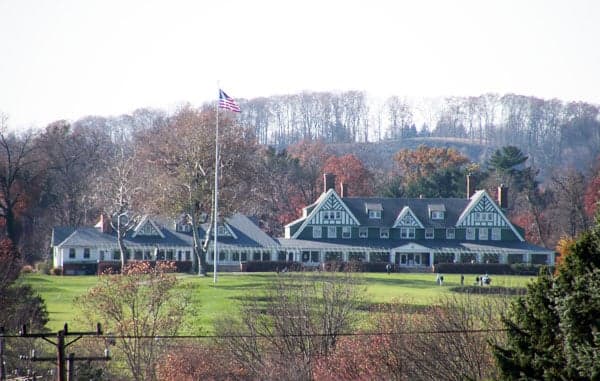
Photo: Wikipedia
Strategic Assessment of Plum, PA
Meaningful friction. Expect exposure to either population pressure, blast zones, or natural disaster risk. Consider buying a retreat property.
What does the Strategic Assessment tell us?
Our Strategic Assessment grades tactical survivability of an area. Major population centers, military targets, fallout zones, natural disasters, and border exposure all drive risk — lower exposure means a more defensible position in a crisis.
This is heavily inspired by Joel Skousen's Strategic Relocation book. Highly recommended you checkout the book ($)What does this tell us?
Our Strategic Assessment grades tactical survivability of an area. Major population centers, military targets, fallout zones, natural disasters, and border exposure all drive risk — lower exposure means a more defensible position in a crisis.
This is heavily inspired by Joel Skousen's Strategic Relocation book. Highly recommended you checkout the book ($)Strategic Pillars

Key Distances
Regional Safe Places
Below is our recommended "safe zones" in Pennsylvania and the surrounding area based on our strategic heuristics. For most people, it's unrealistic to live in a “safe zone” full-time due to work, family or other personal reasons. They tend to be more rural. However, many of these areas are perfect for second homes and retreat properties that double as a vacation home or even a short-term rental.
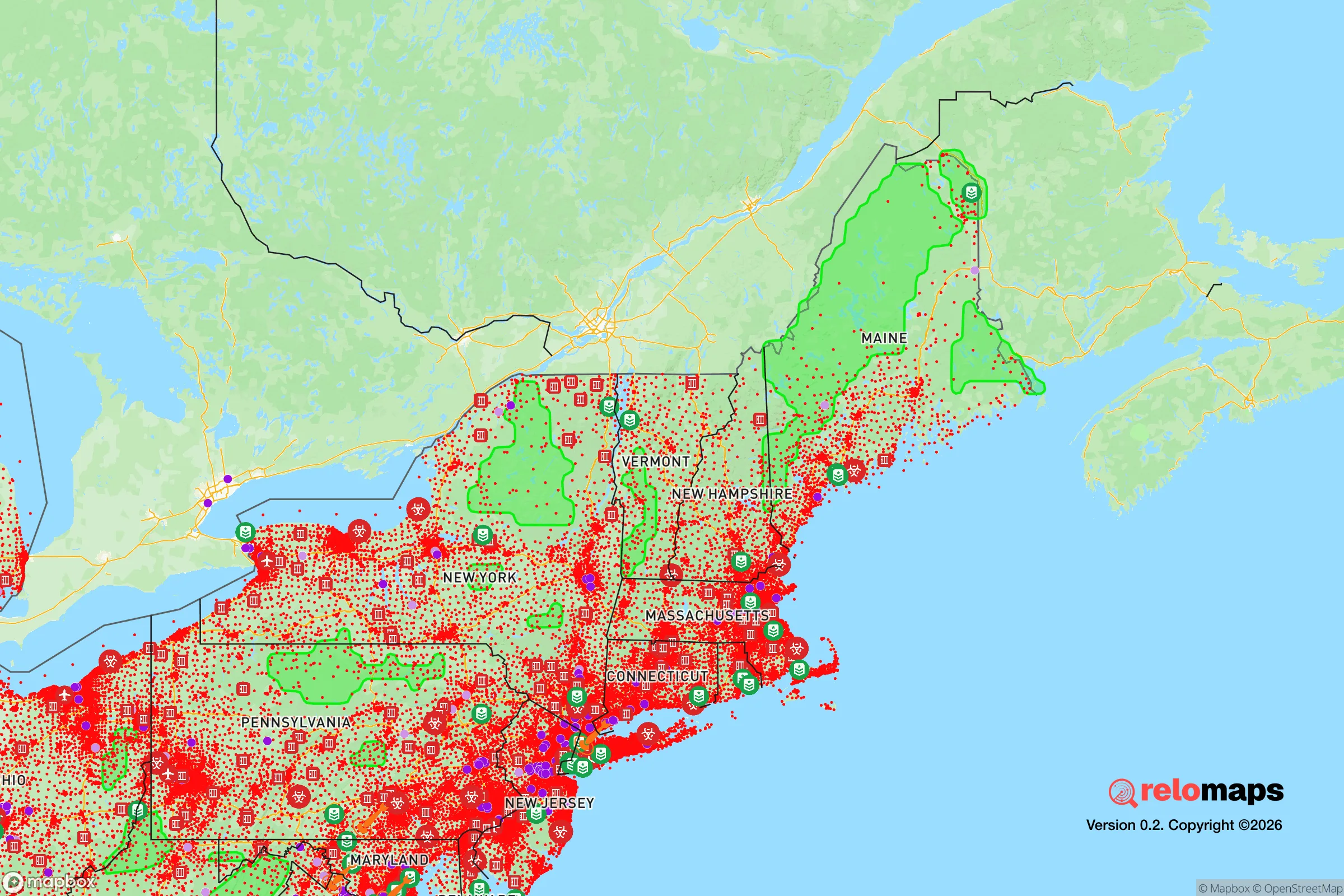
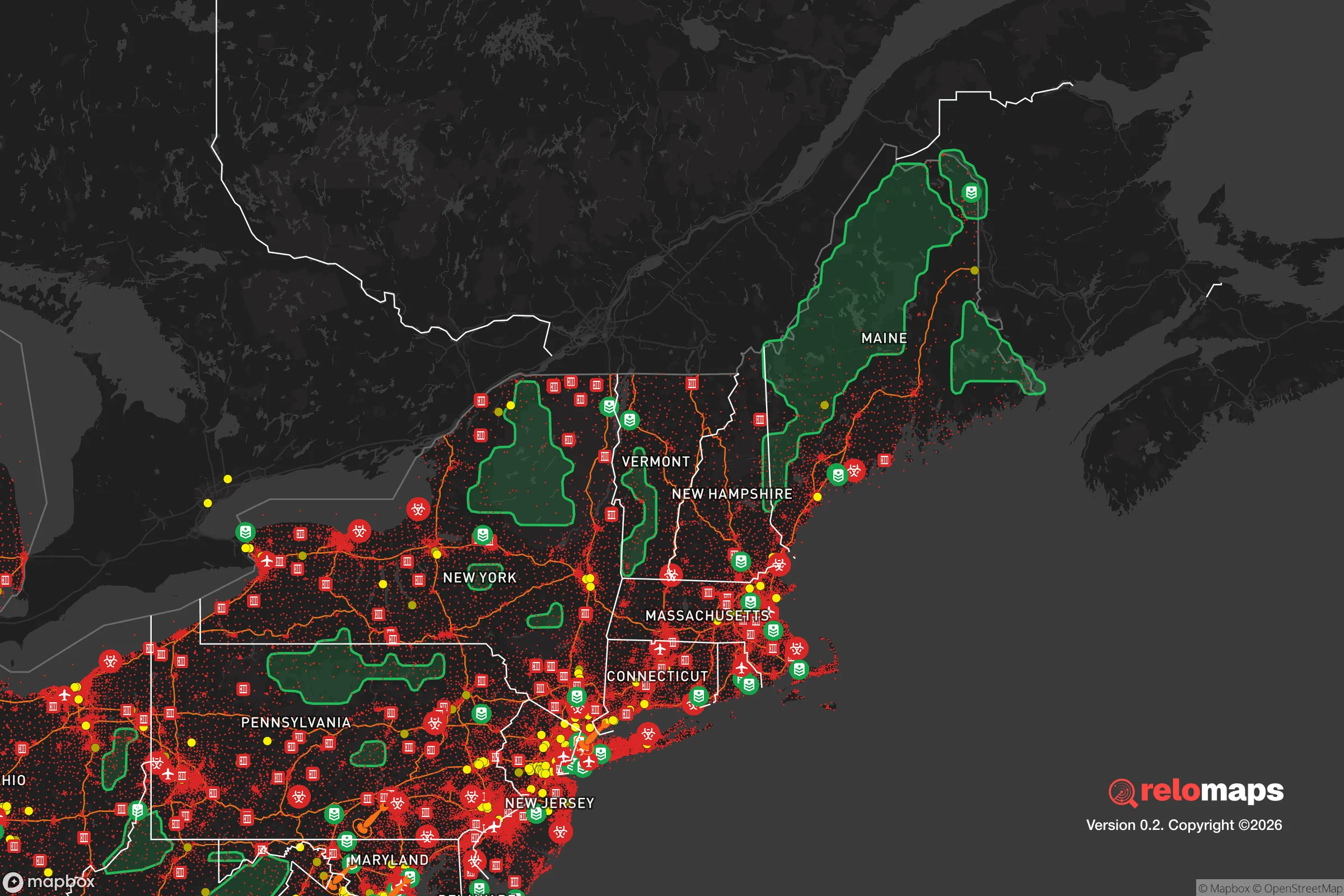


Important Note: For informational purposes only. This does not mean nothing bad ever happens in the green zones. Please use common sense. This is based on public data and modeled with AI. We tried to take a conservative approach but mistakes happen. We update this regularly as new information becomes available.
Solar Generator Recommendations
Backup power matters more here than in safer locations. We've picked three solar generators across budgets and capacity tiers — start with the budget unit if you only need a few essentials, or step up if you want to run a fridge and HVAC for days at a time.

Jackery Portable Power Station Explorer 300
Budget OptionPower on the Go: Weighing only 11 lbs, it's convenient to set up and store with book-sized foldable solar panels

BLUETTI Portable Power Station AC180
Designed for both indoor and outdoor scenarios, AC180 is highly capable as it has a robost capacity and continuous output power.

EF ECOFLOW DELTA Pro Ultra Power Station
Upgraded PickEcoFlow DELTA Pro Ultra is a whole-home energy system designed to grow with your family. Integrated with the Smart Home Panel 2, it scales to meet your evolving energy needs — keeping your home powered, intelligent, and secure through every stage of life.
We earn a commission, at no additional cost to you.
Strategic Assessment Analysis
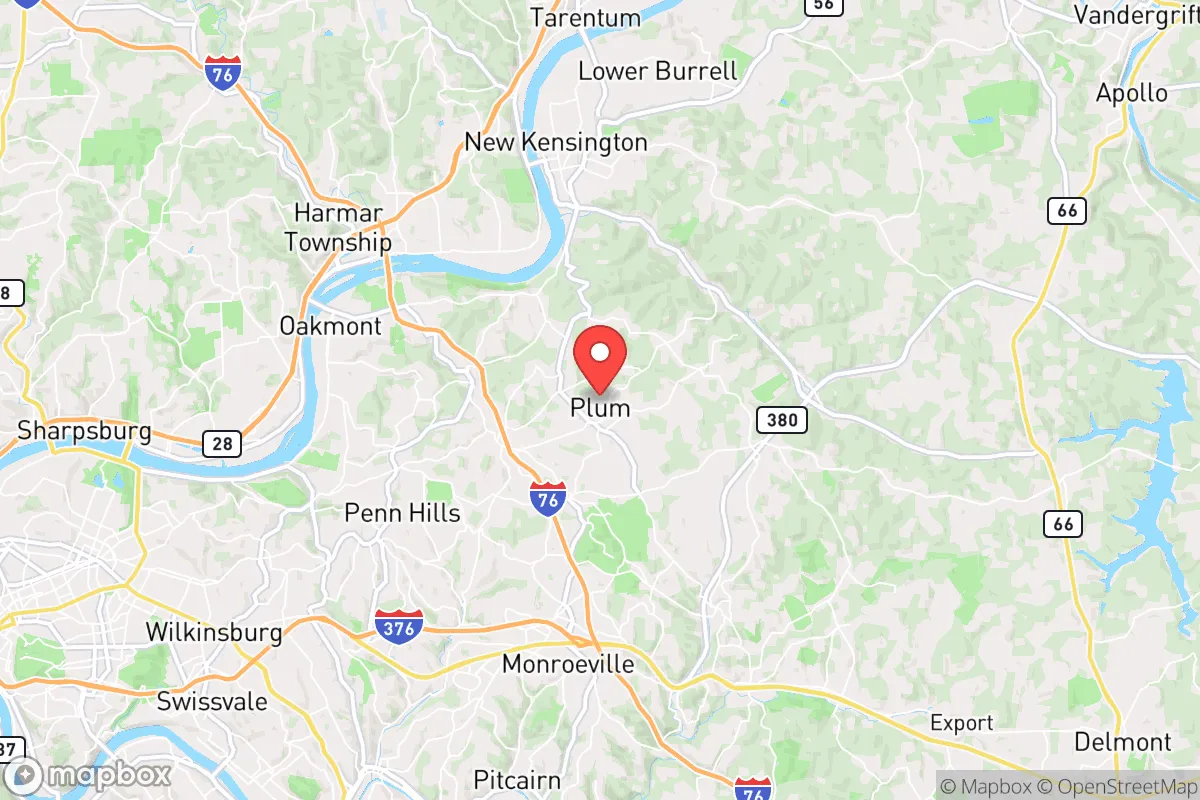
Plum, Pennsylvania, offers a surprisingly resilient position for those looking to balance proximity to critical infrastructure with the need for a defensible, low-profile base. Nestled in Allegheny County about 20 miles east of downtown Pittsburgh, this borough of roughly 27,000 residents sits on a strategic ridge above the Allegheny River, providing natural elevation advantages and multiple egress routes that most suburban communities lack. For the prepper or survivalist, Plum’s key strength is its location: close enough to Pittsburgh to access medical centers, supply chains, and employment, yet far enough to avoid the worst of urban collapse scenarios, with a geography that forces any potential threat to funnel through a limited number of choke points.
Geographic position and natural defensive advantages
Plum’s topography is its first line of defense. The borough straddles a series of hills and valleys, with the Allegheny River forming its northern boundary and the Turtle Creek valley cutting through the south. This terrain creates natural barriers: most approaches require climbing steep grades or crossing narrow bridges, both of which can be monitored or blocked with minimal effort. The area’s elevation—much of Plum sits at 1,000 to 1,200 feet above sea level—offers clear sightlines over the surrounding lowlands, a tactical advantage for anyone concerned with situational awareness. The borough is also bisected by Route 286, a major east-west artery, but the road network is limited enough that a single accident or deliberate obstruction on the Plum Street Bridge or the Sandy Creek Road corridor could effectively isolate large sections of the community. For a relocator, this means defensibility is baked into the landscape, not something you have to engineer from scratch. The nearby Allegheny River also provides a potential water source and a natural barrier to the north, though it’s navigable and not a complete obstacle.
Risks, exposures, and proximity to fallout-relevant landmarks
The biggest strategic liability for Plum is its proximity to several high-value targets that could become focal points during civil unrest or a larger conflict. Pittsburgh itself, with its concentration of financial institutions, federal buildings, and critical infrastructure like the Pittsburgh International Airport and the Port of Pittsburgh, is a likely flashpoint. Plum sits roughly 25 miles from the city center, which puts it within the fallout zone of any major event—whether that’s a conventional attack on the city’s bridges and tunnels or a radiological incident at the Beaver Valley Nuclear Power Station, located about 35 miles northwest. The borough is also within 50 miles of the Westinghouse nuclear facility in Madison and the Bettis Atomic Power Laboratory in West Mifflin, both of which are potential targets. For the prepper, this means Plum is not a remote bug-out location; it’s a suburban buffer zone that requires a solid plan for sheltering in place or a pre-staged secondary location farther east. The good news is that prevailing winds in western Pennsylvania generally blow from the west, meaning fallout from a Pittsburgh event would likely drift east, away from Plum. But a nuclear incident at Beaver Valley would put the borough directly downwind, a risk that demands a basement or interior room with at least two weeks of supplies.
Practical resilience for a relocator: food, water, energy, and defensibility
For daily life and long-term sustainability, Plum offers a mixed but workable picture. The borough is served by the Plum Borough Municipal Authority, which draws water from the Allegheny River and local wells, but the system is vulnerable to contamination or disruption. A private well is a major advantage here—many homes in the more rural sections of Plum, particularly near the Murrysville border, have their own wells, and a hand pump or solar-powered pump can keep water flowing when the grid goes down. The soil in the area is a mix of clay and loam, suitable for gardening if you amend it, and the growing season runs from April to October, long enough for a solid vegetable harvest. Deer are abundant in the wooded areas around the borough, and small game like squirrel and rabbit are common, though hunting is restricted within borough limits. For energy, Plum is served by Duquesne Light, which has a decent reliability record but is tied to the same grid as Pittsburgh. Solar panels are a viable option—the area gets about 160 sunny days per year, below the national average but enough for a modest off-grid setup if paired with battery storage. Natural gas is widely available, and a backup generator running on propane or natural gas is a smart investment. Defensibility at the household level is strong: many homes sit on large lots with wooded buffers, and the borough’s layout—winding roads, dead ends, and cul-de-sacs—makes it difficult for a large group to move through quickly. The local police force is small (about 30 officers), so don’t expect rapid response in a widespread emergency. Your best bet is to build relationships with neighbors who share your mindset; the area has a noticeable conservative and self-reliant culture, with a strong volunteer fire department and a history of community organizing during snowstorms and floods.
The overall strategic picture for Plum is one of calculated trade-offs. It’s not a remote survivalist paradise—you’re still within striking distance of a major city and its associated risks, and the nuclear shadow from Beaver Valley is a real concern. But for someone who needs to maintain a job or family ties in the Pittsburgh region while building a resilient home base, Plum is one of the better options in Allegheny County. The terrain buys you time, the water access is solid, and the community’s independent streak means you won’t be the only one preparing. The key is to treat Plum as a forward operating base, not a final redoubt: stock your basement, know your egress routes east toward the Allegheny National Forest, and keep a low profile. In a world where the grid is fragile and the cities are tinderboxes, Plum gives you a fighting chance to ride out the storm without having to disappear into the woods entirely.

* Values derived from national, state, county, city and local statistics and may differ in a specific area. Last updated: 2026-04-24T12:17:36.000Z
Narrative content on this page is AI-generated and may contain mistakes. Verify any details that matter before acting on them.
ReloMaps may earn a commission from affiliate links at no extra cost to you.

