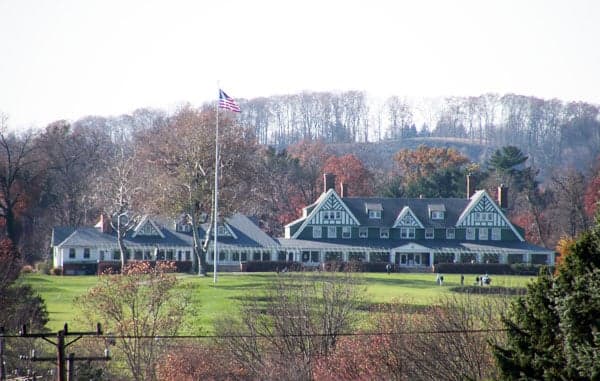
Photo: Wikipedia
Personal Sovereignty in Plum, PA
Strong independent fundamentals that actively favor personal liberty and low regulation.
What does Personal Sovereignty tell us?
Personal Sovereignty measures your capacity for self-reliance and independence with minimal government friction. Higher scores mean fewer barriers between you and the way you want to live... but it assumes you have the space you need and good neighbors.
What does this tell us?
Personal Sovereignty measures your capacity for self-reliance and independence with minimal government friction. Higher scores mean fewer barriers between you and the way you want to live... but it assumes you have the space you need and good neighbors.
State Policy
Energy independence: Net exporter (150% of energy produced in-state)
Personal Liberty
Homesteading

Personal Liberty Analysis
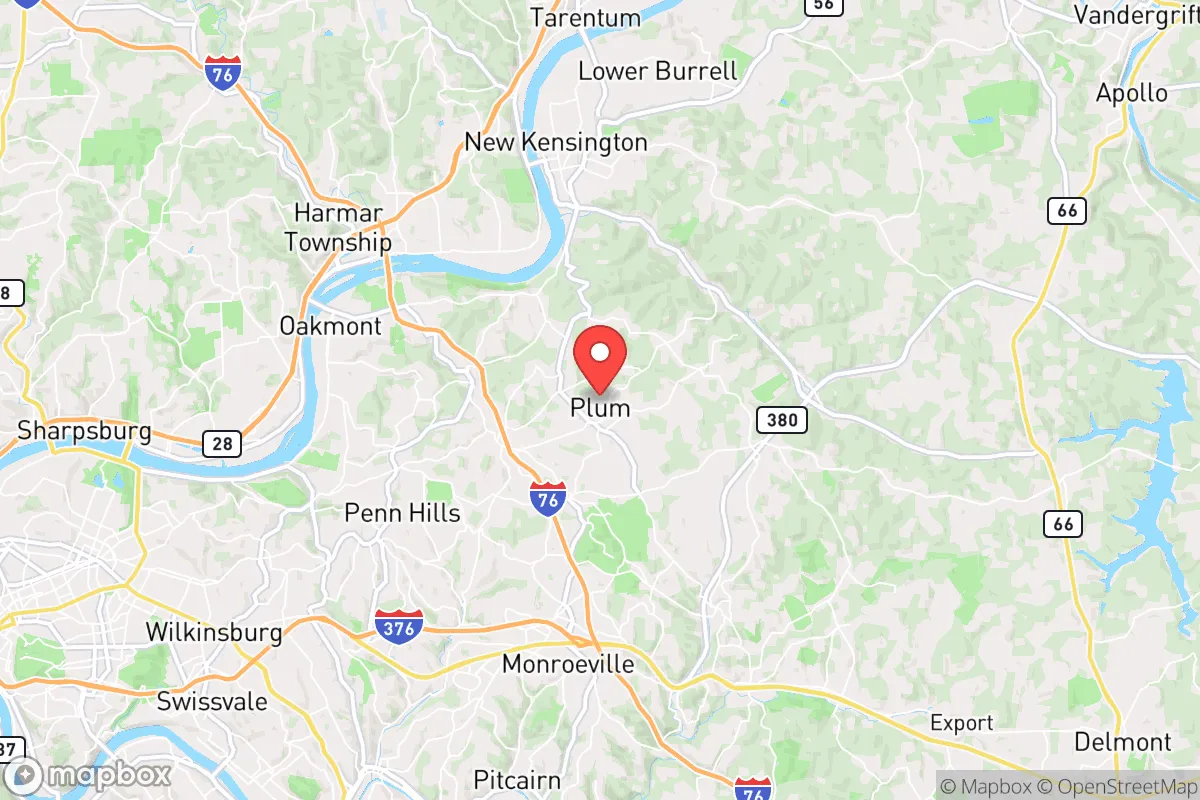
Plum, Pennsylvania, offers a notably high degree of personal sovereignty for those seeking to minimize government overreach in daily life, particularly when compared to the heavily regulated environments of nearby Pittsburgh or Philadelphia. As a borough in Allegheny County, Plum operates under Pennsylvania’s relatively permissive state-level framework for gun rights, property use, and taxation, while maintaining a local culture that largely leaves residents alone. For the survivalist or prepper, this translates into a workable balance of suburban convenience and rural-style autonomy, though state-level mandates on vehicle inspections and some business licensing remain points of friction.
Tax burden and regulatory posture: How much the state and local government takes
Pennsylvania’s tax structure is a mixed bag for those prioritizing financial sovereignty. The state’s flat personal income tax rate of 3.07% is among the lowest in the nation, and there is no tax on retirement income (Social Security, pensions, 401(k) withdrawals), which directly benefits preppers funding their own retreats or stockpiles. However, Allegheny County imposes a local earned income tax of roughly 1% (combined borough and school district), and property taxes in Plum average around 2.5% of assessed value, which is moderate for the region but not negligible. The real burden comes from Pennsylvania’s state sales tax of 6% (8% in Allegheny County due to a local add-on), which applies to most preparedness gear, tools, and building materials. Regulatory posture is generally light: Plum has no zoning overlay that prohibits backyard chicken coops or small-scale gardening, and the borough does not require business licenses for home-based side hustles like selling eggs or honey. The biggest regulatory headache for preppers is Pennsylvania’s mandatory annual vehicle safety inspection and emissions testing, which can be a nuisance for those maintaining older, off-grid-capable trucks or vans. Overall, the tax burden is manageable for a single individual or family, but the local sales tax add-on and property taxes are the main drag on financial autonomy.
Self-defense and gun law specifics: What you can own and where you can carry
Pennsylvania is a shall-issue state for concealed carry permits, meaning Plum residents face no subjective “good cause” requirement—if you pass a background check, you get the permit. The state also preempts local gun ordinances, so Plum cannot enact its own bans on magazine capacity, firearm types, or storage requirements, which is a critical safeguard against the kind of patchwork restrictions seen in states like New York or California. Open carry is legal without a permit for anyone 18 or older who can legally possess a firearm, though it’s less common in suburban settings. For the prepper, the key advantage is that Pennsylvania allows ownership of NFA items (suppressors, short-barreled rifles, machine guns) with federal tax stamps, and there is no state-level ban on “assault weapons” or high-capacity magazines. Stand-your-ground laws apply, with no duty to retreat in any place where you are lawfully present. Castle doctrine is strong: deadly force is presumed justified against unlawful intruders in your home or vehicle. The only notable restriction is that private firearm sales between individuals (not through a dealer) still require a background check via the Pennsylvania Instant Check System (PICS), which adds a bureaucratic step but does not create a registry. For a survivalist, Plum’s legal environment is one of the most permissive in the Northeast, allowing you to build a serious armory without local interference.
Self-reliance and homesteading viability: Lot sizes, zoning, and off-grid feasibility
Plum’s residential lots vary widely, from standard quarter-acre suburban plots to multi-acre parcels in the borough’s more rural eastern and northern sections. Zoning is generally agricultural-residential (R-1 and R-2), which permits keeping chickens, rabbits, and even goats on lots of one acre or more, though pigs and cattle are restricted. The borough does not explicitly ban rainwater collection, but Pennsylvania’s state water rights are based on riparian doctrine, meaning you can collect rainwater from your roof without a permit as long as it doesn’t harm downstream users. Off-grid feasibility is limited by the requirement to connect to municipal sewer in most developed areas—septic systems are only allowed on lots larger than two acres in certain zones. Solar panels are permitted by right, but net metering with Duquesne Light (the local utility) is required if you want to stay connected to the grid; going fully off-grid with battery storage is legal but may trigger a zoning review if you disconnect from the electric grid entirely. The borough does not have a noise ordinance that would prevent a generator running during a power outage, but there are restrictions on burning trash or yard waste (only clean wood and leaves are allowed). For a prepper, the sweet spot is a property of 2-5 acres in the eastern part of Plum, where you can have a large garden, a few animals, and a backup generator without drawing attention from code enforcement. The main limitation is that the borough’s building code requires permits for any structural addition, including a root cellar or underground bunker, which could be a hurdle for those wanting to build a hardened shelter.
Personal liberties: Parental rights, medical autonomy, speech, and property
Pennsylvania has strong protections for parental rights in education, with a statute that allows parents to opt their children out of any curriculum they find objectionable on religious or moral grounds. Homeschooling is legal with a notarized affidavit and annual portfolio review, but the state requires standardized testing in grades 3, 5, and 8, which is more intrusive than in states like Texas or Idaho. Medical autonomy is a mixed bag: Pennsylvania does not have a state-level vaccine mandate for adults, but it does require certain vaccines for school attendance (with medical and religious exemptions available). The state’s COVID-era emergency powers were rolled back in 2022, limiting the governor’s ability to unilaterally shut down businesses or mandate masks. Free speech is protected under the Pennsylvania Constitution, which has been interpreted more broadly than the First Amendment in some cases, particularly regarding political speech on private property. Property rights are generally strong: the borough does not have a rental registry or landlord licensing scheme, and there are no rent control laws. However, eminent domain is a concern—Allegheny County has used it for pipeline and road projects, and Plum’s location near the Route 286 corridor means some parcels are at risk. For the prepper, the most important liberty is the ability to keep your property free from warrantless searches: Pennsylvania requires a warrant for most government inspections of private homes, including code enforcement, unless there is an emergency. This means you can store supplies, build structures, and live your life without the government prying unless you give them probable cause.
In the broader context of the Northeast, Plum stands out as a pocket of relative sovereignty where a survivalist or prepper can maintain a low-profile, self-sufficient lifestyle without constant government interference. The tax burden is moderate, gun laws are among the best in the region, and zoning allows for meaningful homesteading on larger lots. The main trade-offs are the state’s vehicle inspection requirement, the local sales tax, and the need to navigate building permits for major projects. Compared to rural areas in the South or West, Plum lacks the same level of off-grid freedom, but for someone who needs to stay within commuting distance of Pittsburgh for work or family, it offers a rare combination of suburban safety and personal autonomy. If you value the ability to defend your home, raise your own food, and keep the government out of your medical and educational decisions, Plum is a strong contender in a state that still respects the concept of individual liberty.

* Values derived from national, state, county, city and local statistics and may differ in a specific area. Last updated: 2026-04-24T12:17:36.000Z
Narrative content on this page is AI-generated and may contain mistakes. Verify any details that matter before acting on them.
ReloMaps may earn a commission from affiliate links at no extra cost to you.

