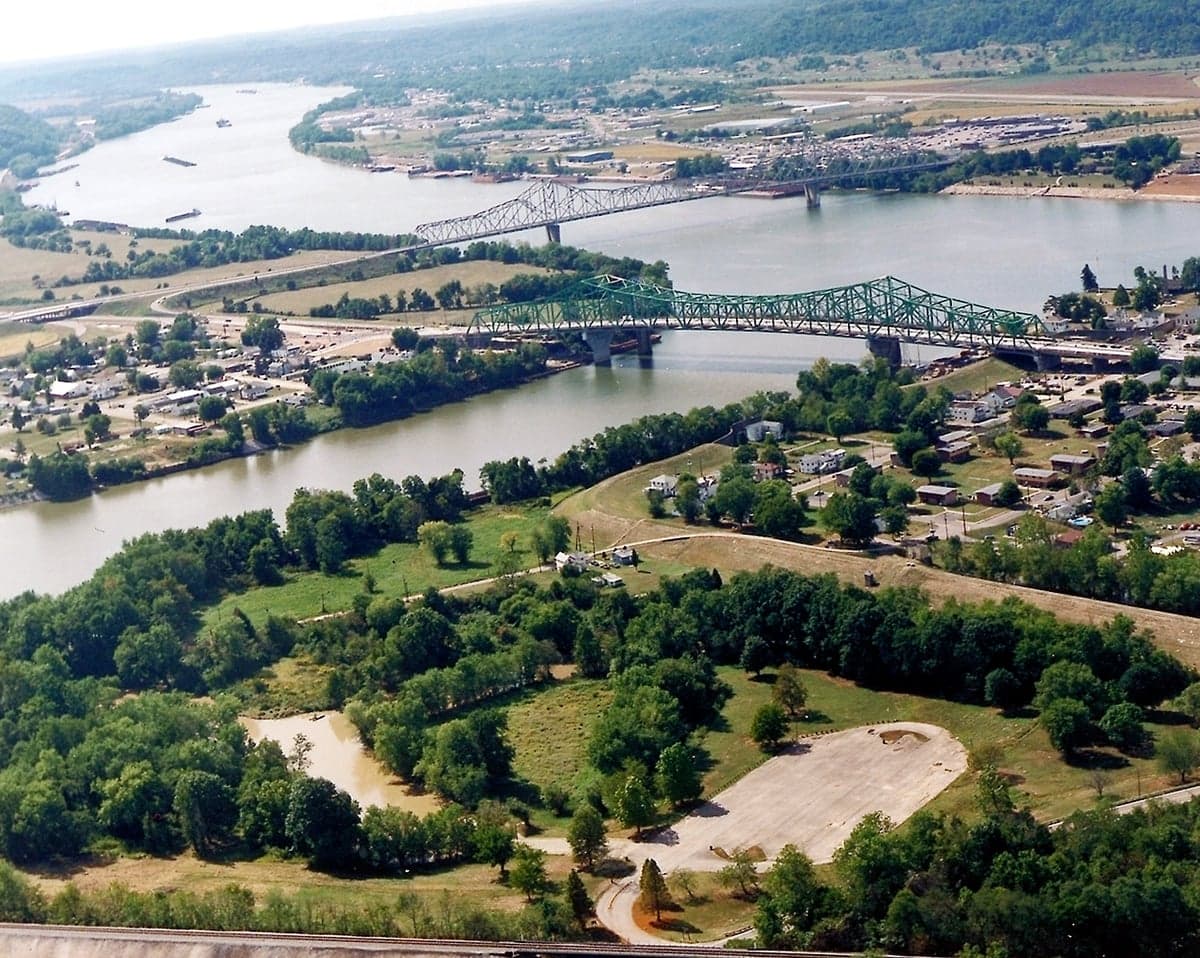
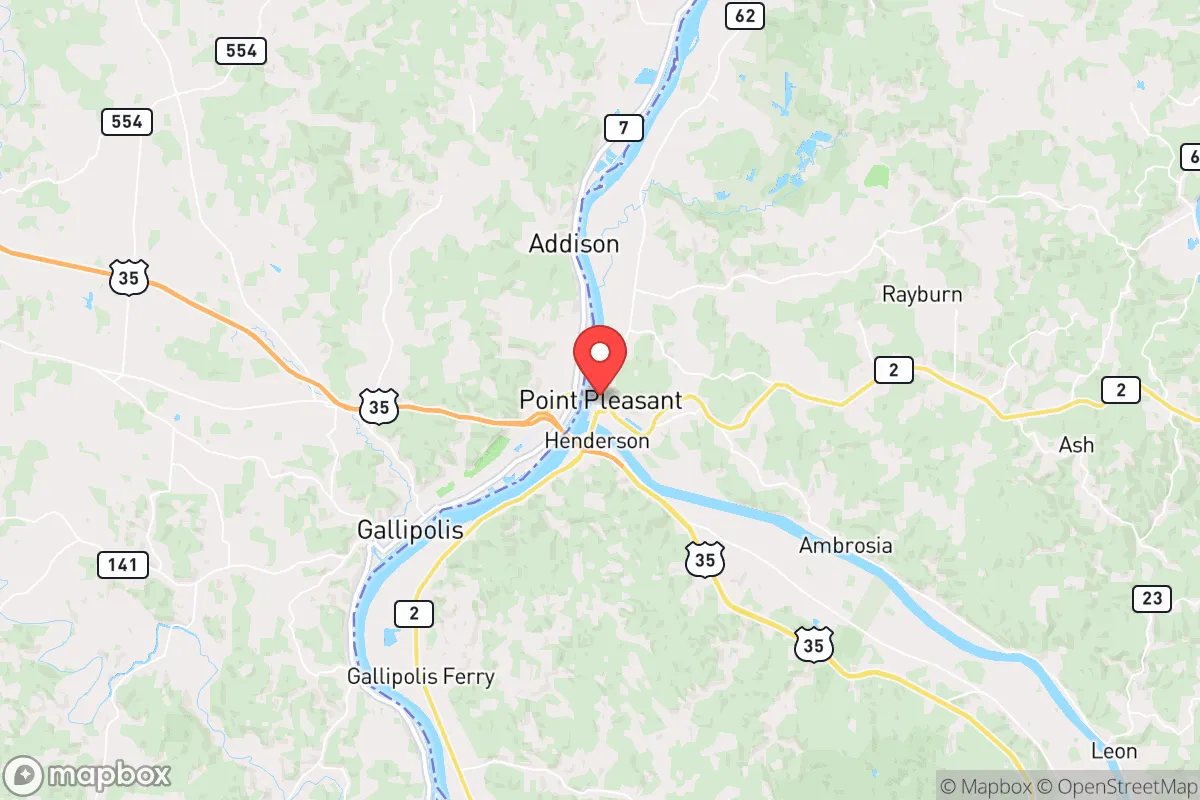
Photo: Wikipedia
Personal Sovereignty in Point Pleasant, WV
Strong independent fundamentals that actively favor personal liberty and low regulation.
What does Personal Sovereignty tell us?
Personal Sovereignty measures your capacity for self-reliance and independence with minimal government friction. Higher scores mean fewer barriers between you and the way you want to live... but it assumes you have the space you need and good neighbors.
What does this tell us?
Personal Sovereignty measures your capacity for self-reliance and independence with minimal government friction. Higher scores mean fewer barriers between you and the way you want to live... but it assumes you have the space you need and good neighbors.
State Policy
Energy independence: Net exporter (200% of energy produced in-state)
Personal Liberty
Homesteading

Personal Liberty Analysis
Point Pleasant, West Virginia, offers a notably high degree of personal sovereignty, largely because it sits in a state that has deliberately pushed back against federal overreach and maintains a culture of self-reliance. For the prepper or survivalist-minded individual, this small Ohio River town represents a place where the government is more of a background presence than a daily manager of your life. The local ethos, combined with West Virginia’s constitutional and statutory protections, creates an environment where you can live largely on your own terms—provided you’re willing to handle the responsibilities that come with that freedom. This analysis breaks down the key pillars of autonomy here: taxes and regulation, self-defense, homesteading viability, and personal liberties.
Tax burden and regulatory posture: How much the state leaves in your pocket
West Virginia’s tax structure is generally favorable for those seeking to keep more of their earnings and reduce government entanglement. The state’s personal income tax is a graduated system with rates from 2.36% to 4.82% as of 2026, but there is ongoing legislative momentum to reduce or eliminate it entirely, which would be a major win for sovereignty-minded residents. Property taxes in Point Pleasant and surrounding Mason County are among the lowest in the nation, with effective rates often below 0.5% of assessed value—meaning a $150,000 home might carry an annual tax bill of only $600 to $750. This low burden directly supports self-reliance by leaving more capital for land, supplies, and infrastructure. On the regulatory side, West Virginia is a right-to-work state with minimal business licensing hurdles, and the state has actively resisted federal environmental and energy regulations that would hamper independent living. The local government in Point Pleasant is small and generally non-intrusive; there are no onerous zoning codes that prevent you from building a workshop, keeping livestock, or storing fuel on your property. The biggest regulatory friction point is the state’s property tax on vehicles (a personal property tax), but even that is modest compared to states like Virginia or North Carolina. Overall, the tax and regulatory climate here is designed to let you keep what you earn and build what you need without constant government permission.
Self-defense and gun law specifics: What you can own and where you can carry
West Virginia is a constitutional carry state, meaning that as of 2026, any law-abiding adult 21 or older can carry a concealed firearm without a permit. This is a foundational sovereignty right—you don’t need to ask the government for permission to defend yourself. Point Pleasant, like the rest of the state, has no additional local gun ordinances that restrict magazine capacity, firearm types, or ammunition purchases. You can own suppressors, short-barreled rifles, and other NFA items without state-level interference, though federal paperwork still applies. The state’s “Stand Your Ground” law is robust: there is no duty to retreat in any place you are lawfully present, and the Castle Doctrine extends to your vehicle and workplace. For preppers, this means your bug-out vehicle, your home, and your property are legally defensible without fear of prosecution for using deadly force against a genuine threat. The local sheriff’s office in Mason County is generally pro-Second Amendment, and there is no culture of gun confiscation or red-flag order abuse that you might find in more progressive jurisdictions. If you’re building a survival stockpile, you can store firearms and ammunition without worrying about state-level registration or capacity bans. The only practical limitation is that you must be mindful of federal laws regarding interstate transport and NFA items, but within West Virginia’s borders, your right to keep and bear arms is about as unencumbered as it gets east of the Mississippi.
Self-reliance and homesteading viability: Lot sizes, zoning, and off-grid feasibility
Point Pleasant itself is a small town (population around 4,000), but the surrounding Mason County area offers abundant opportunities for self-sufficient living. Residential lots within town limits are typically a quarter-acre to half-acre, which is enough for a substantial garden, a few chickens, and a small workshop. However, the real draw for homesteaders is the unincorporated county land, where you can find parcels ranging from 1 to 20 acres at prices often under $3,000 per acre. Zoning in the county is minimal—there are no county-wide building codes that require permits for basic structures like sheds, barns, or greenhouses, and no restrictions on rainwater collection, composting toilets, or solar panel installation. Off-grid feasibility is high: the region gets about 40 inches of rain annually, so a well and rainwater catchment can provide reliable water, and the relatively flat floodplain soils are good for gardening. The Ohio River provides a secondary water source and a potential transportation route. For energy independence, solar is viable (about 4.5 peak sun hours per day), and wood heat is a practical option given the surrounding forests. The local government does not require connection to municipal water or sewer if you’re outside town limits, and there are no nuisance ordinances that would prevent you from keeping goats, pigs, or even a small number of cattle. The main limitation is that the area is not zoned for heavy industrial use on residential land, but for a prepper looking to build a self-reliant homestead with a workshop, food storage, and alternative energy, this is one of the most permissive environments in the Appalachian region.
Personal liberties: Parental rights, medical autonomy, speech, and property
West Virginia has a strong track record on parental rights, with state law affirming that parents have the fundamental right to direct the upbringing, education, and healthcare of their children. This means no state-mandated vaccine requirements for school attendance (medical and religious exemptions are available), and parents can opt their children out of any curriculum they find objectionable. The state has also passed legislation protecting parents’ rights to access their children’s medical records and to be notified of any health services provided at school. On medical autonomy, West Virginia does not have a state-level vaccine passport mandate, and during the COVID-19 era, the state government largely deferred to individual choice rather than imposing broad lockdowns or mask mandates. For the survivalist, this means you can make your own medical decisions—including using alternative treatments or declining certain interventions—without government coercion. Free speech is protected under the state constitution, and there are no hate speech laws or social media censorship mandates that would chill political or religious expression. Property rights are strong: West Virginia has a “right to farm” law that protects agricultural activities from nuisance lawsuits, and there is no state-level inheritance tax or estate tax, so you can pass your land and supplies to your heirs without the government taking a cut. The only notable limitation is that the state does have a sales tax (6%), but food and prescription drugs are exempt. Overall, the legal framework here respects the individual’s right to live, speak, and raise a family without constant government interference.
In the broader context of the United States, Point Pleasant offers a level of personal sovereignty that is increasingly rare. Compared to states like New York, California, or Illinois, where taxes are high, gun rights are restricted, and parental authority is undermined, West Virginia’s approach is a deliberate counterweight. The town itself is small and quiet, but the legal and cultural environment allows you to build a life that is largely independent of government oversight. For the prepper or conservative individual looking to escape the encroaching reach of federal and state overreach, Point Pleasant represents a viable sanctuary—provided you are prepared to handle the practical challenges of rural living, such as limited healthcare access and a slower economy. The trade-off is clear: you trade convenience and government services for freedom and self-reliance. If that trade aligns with your values, this area deserves serious consideration.

* Values derived from national, state, county, city and local statistics and may differ in a specific area. Last updated: 2026-04-19T09:35:57.000Z
Narrative content on this page is AI-generated and may contain mistakes. Verify any details that matter before acting on them.
ReloMaps may earn a commission from affiliate links at no extra cost to you.

