Photo: Wikipedia
Strategic Assessment of Point Pleasant, WV
Meaningful friction. Expect exposure to either population pressure, blast zones, or natural disaster risk. Consider buying a retreat property.
What does the Strategic Assessment tell us?
Our Strategic Assessment grades tactical survivability of an area. Major population centers, military targets, fallout zones, natural disasters, and border exposure all drive risk — lower exposure means a more defensible position in a crisis.
This is heavily inspired by Joel Skousen's Strategic Relocation book. Highly recommended you checkout the book ($)What does this tell us?
Our Strategic Assessment grades tactical survivability of an area. Major population centers, military targets, fallout zones, natural disasters, and border exposure all drive risk — lower exposure means a more defensible position in a crisis.
This is heavily inspired by Joel Skousen's Strategic Relocation book. Highly recommended you checkout the book ($)Strategic Pillars

Key Distances
Regional Safe Places
Below is our recommended "safe zones" in West Virginia and the surrounding area based on our strategic heuristics. For most people, it's unrealistic to live in a “safe zone” full-time due to work, family or other personal reasons. They tend to be more rural. However, many of these areas are perfect for second homes and retreat properties that double as a vacation home or even a short-term rental.
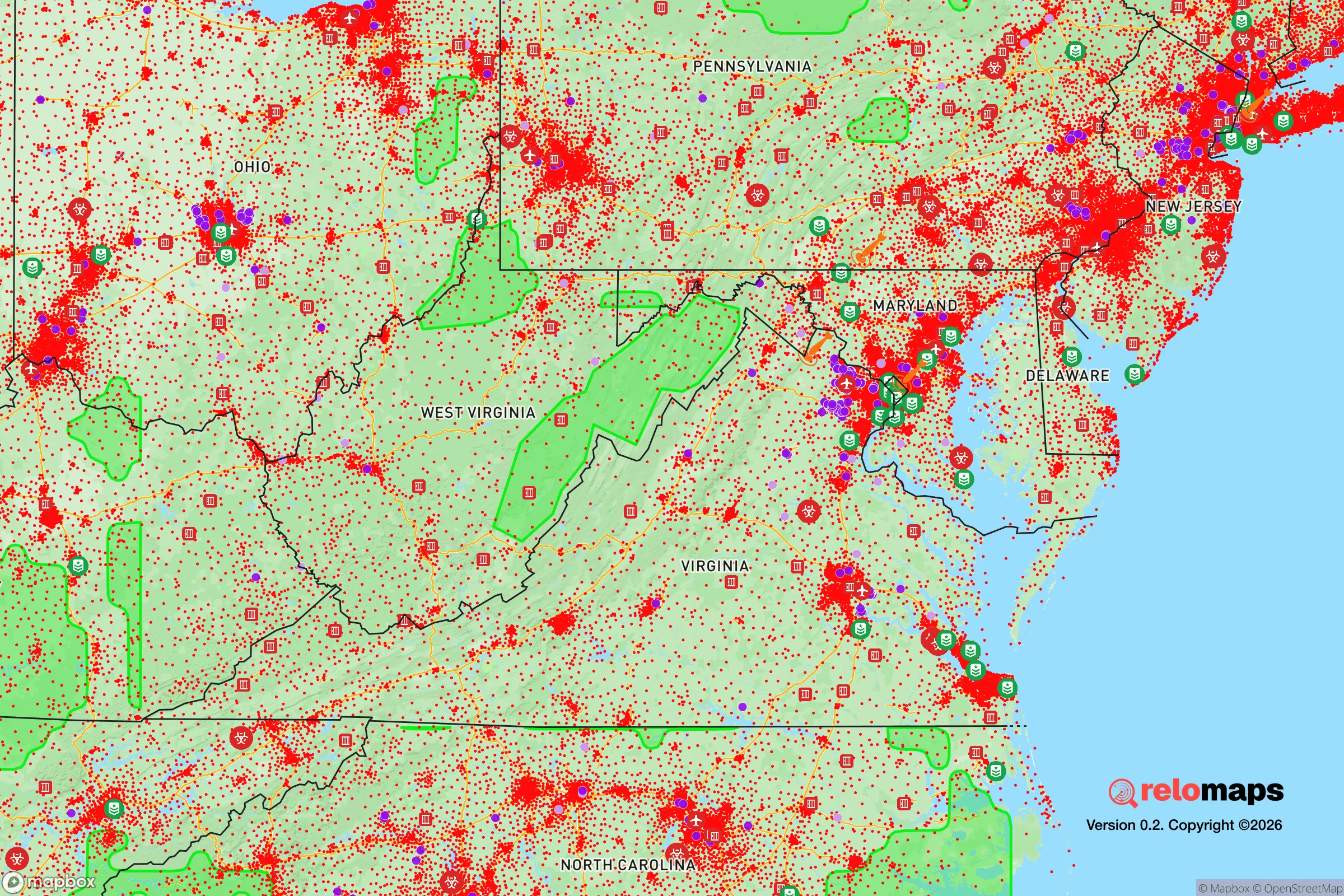
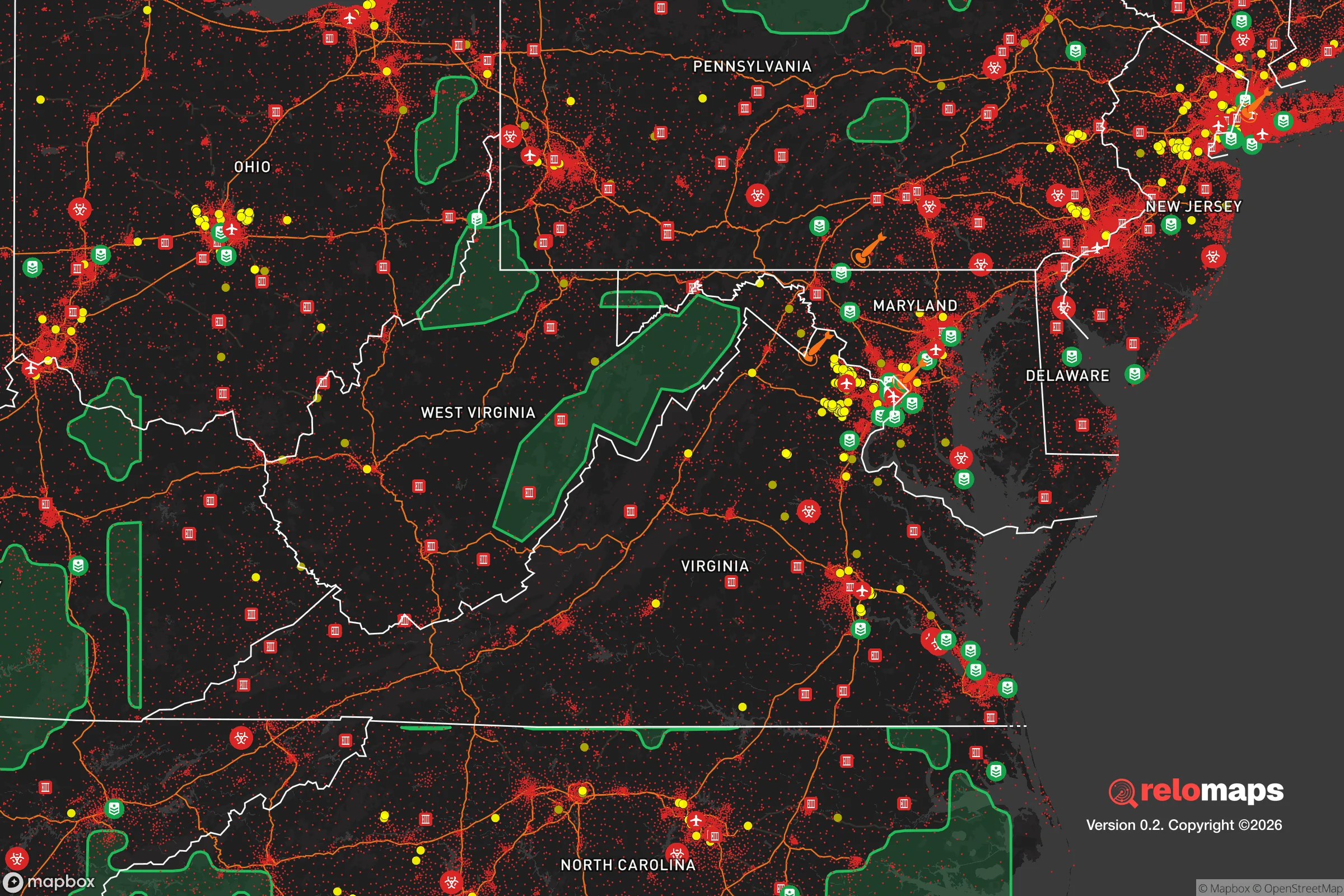


Important Note: For informational purposes only. This does not mean nothing bad ever happens in the green zones. Please use common sense. This is based on public data and modeled with AI. We tried to take a conservative approach but mistakes happen. We update this regularly as new information becomes available.
Solar Generator Recommendations
Backup power matters more here than in safer locations. We've picked three solar generators across budgets and capacity tiers — start with the budget unit if you only need a few essentials, or step up if you want to run a fridge and HVAC for days at a time.

Jackery Portable Power Station Explorer 300
Budget OptionPower on the Go: Weighing only 11 lbs, it's convenient to set up and store with book-sized foldable solar panels

BLUETTI Portable Power Station AC180
Designed for both indoor and outdoor scenarios, AC180 is highly capable as it has a robost capacity and continuous output power.

EF ECOFLOW DELTA Pro Ultra Power Station
Upgraded PickEcoFlow DELTA Pro Ultra is a whole-home energy system designed to grow with your family. Integrated with the Smart Home Panel 2, it scales to meet your evolving energy needs — keeping your home powered, intelligent, and secure through every stage of life.
We earn a commission, at no additional cost to you.
Strategic Assessment Analysis
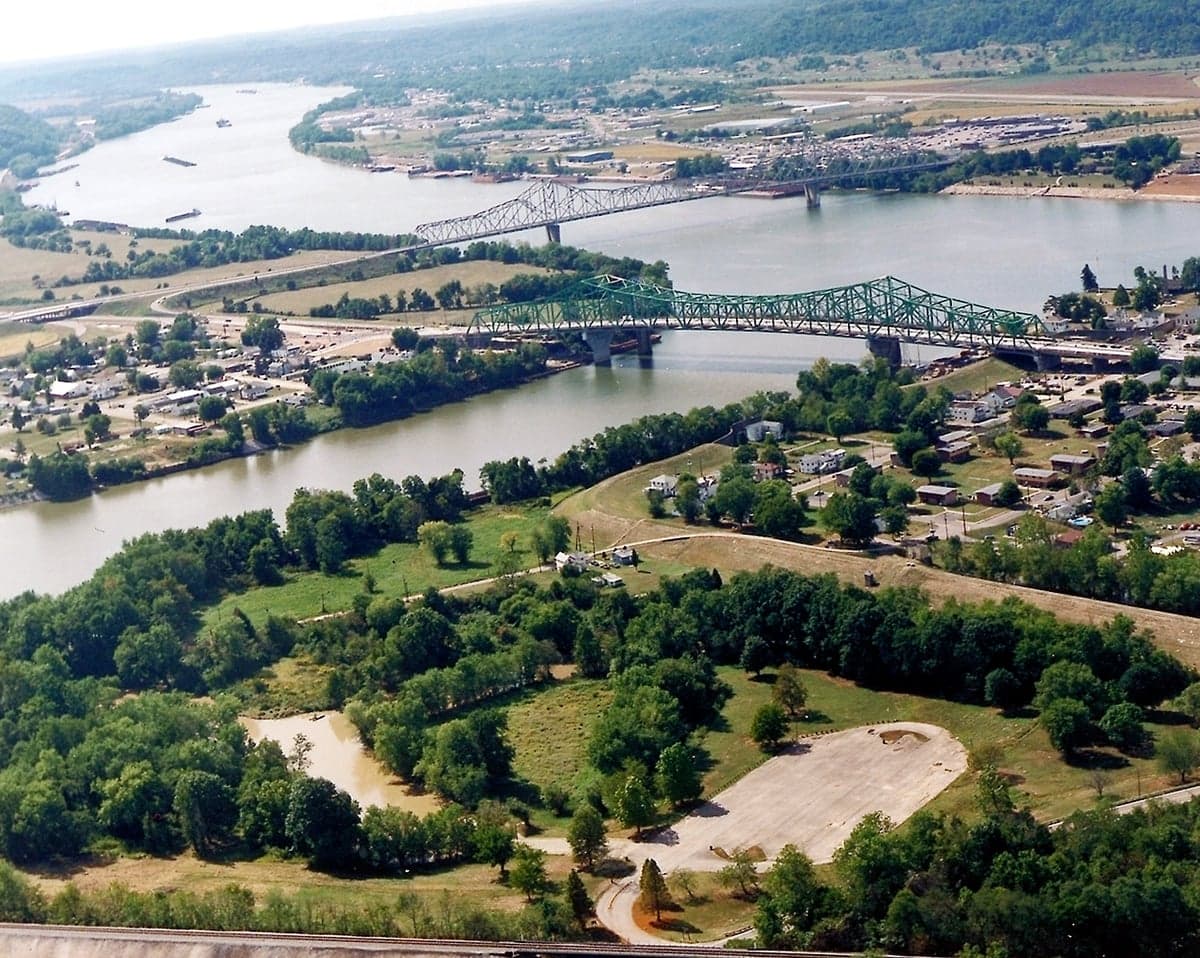
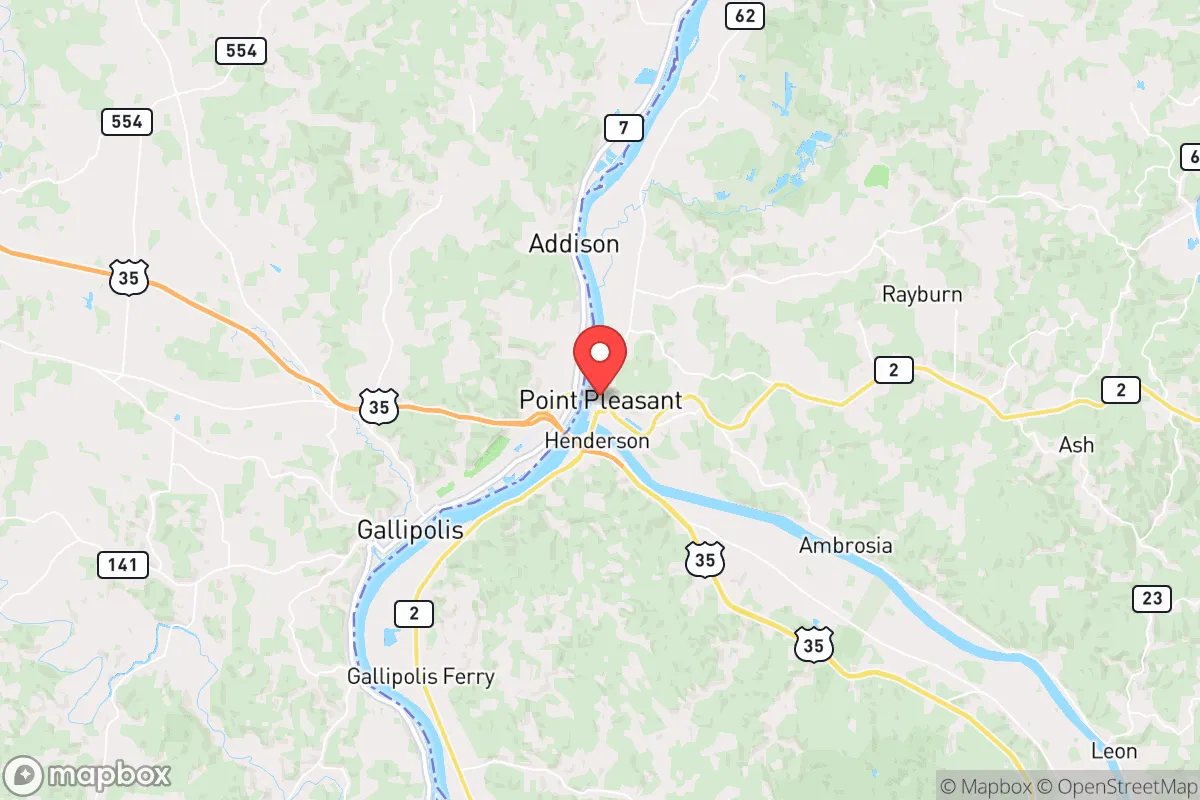
Point Pleasant, West Virginia, sits at a strategic crossroads where the Ohio and Kanawha Rivers meet, offering a mix of geographic isolation and logistical access that appeals to those planning for long-term resilience. For a conservative-leaning relocator concerned with civic unrest, mass casualty events, or large-scale disasters, this small town of roughly 4,000 people presents a compelling but nuanced picture. Its location—roughly 50 miles from Charleston and 90 miles from Huntington—places it far enough from major urban centers to avoid the immediate fallout of a metropolitan crisis, yet close enough to supply routes and regional infrastructure to sustain a self-reliant lifestyle. The area’s historical resilience, shaped by floods and industrial shifts, suggests a community that has learned to adapt without relying on federal bailouts, a trait that aligns with a prepper mindset valuing local competence over distant authority.
Geographic position and natural advantages for long-term survival
Point Pleasant’s position at the confluence of two major rivers is its most defining strategic asset. The Ohio River provides a natural transportation corridor for bulk goods and water access, while the Kanawha River links deeper into West Virginia’s mountainous interior. This dual-river setup offers multiple escape routes by water if road networks become compromised during unrest or disaster. The surrounding terrain—rolling hills, dense hardwood forests, and limited through-roads—creates natural chokepoints that could be defended or used to control access. The town itself sits on a floodplain, which is a double-edged sword, but the higher ground just a few miles east, toward the Appalachian foothills, offers defensible positions with clear sightlines. For a relocator, the key advantage is that Point Pleasant is not a natural target: it lacks major military installations, large industrial complexes, or high-value infrastructure that would draw attention during a national crisis. The nearest significant fallout-relevant landmarks are the Gavin Power Plant (about 30 miles upriver) and the Charleston-area chemical corridor, but prevailing winds and river currents generally push hazards away from the town. The area’s low population density—Mason County has roughly 25 people per square mile—means fewer competition for resources and less risk of civil unrest spilling over from nearby cities.
Risks, exposures, and proximity to fallout-relevant landmarks
No strategic assessment is honest without addressing the downsides. Point Pleasant’s primary risk is flooding: the 1937 flood and the 2018 high-water events demonstrated that the downtown area and low-lying neighborhoods are vulnerable to Ohio River surges. A relocator should plan for a home at least 20 feet above the 100-year floodplain, ideally on the eastern ridges. The second risk is the town’s proximity to the Ohio River Valley’s industrial corridor, which includes chemical plants, refineries, and rail lines that could become secondary targets during a mass casualty event or sabotage. The Silver Bridge collapse in 1967—a catastrophic infrastructure failure—is a historical reminder that local bridges and roads are aging and could fail under stress. For a prepper, the biggest concern is that Point Pleasant sits within 100 miles of the Portsmouth Gaseous Diffusion Plant (a decommissioned uranium enrichment site) and the Mountaineer Power Plant, both of which could release hazardous materials if neglected or attacked. However, these are not active nuclear weapons targets, and the prevailing wind patterns (west to east) mean that fallout from a major event in the Ohio Valley would likely bypass the town. The real exposure is economic: the area’s reliance on a few employers—like the local hospital, schools, and a handful of manufacturing plants—means that a prolonged crisis could collapse the local economy faster than in more diversified regions.
Practical resilience for a relocator: food, water, energy, and defensibility
For a single individual or family looking to establish a resilient homestead, Point Pleasant offers several practical advantages. Water is abundant: the Ohio and Kanawha Rivers provide a year-round source, though treatment and filtration are essential due to agricultural runoff and industrial upstream activity. The area’s average rainfall of 42 inches per year supports private wells and rainwater catchment systems, and the shallow groundwater table in the river valleys means drilling a well is relatively affordable (typically $3,000–$6,000 for a residential system). Food production is viable: the growing season runs from April to October, and the fertile river-bottom soils can support large gardens, orchards, and small livestock operations. Local farmers’ markets and the Mason County Farmers Cooperative offer seed stock and livestock feed without relying on national supply chains. Energy resilience is mixed: the grid is served by Appalachian Power, which has a history of outages during storms, but the area’s wooded terrain makes solar panels less efficient than in the Southwest. A better bet is a backup generator running on propane or diesel, with fuel available at local stations like the Point Pleasant Truck Stop. Defensibility is moderate: the town’s layout—a compact downtown with residential spread along river roads—means that a relocator on the outskirts can control access to their property with minimal effort. The local sheriff’s office has about 15 deputies for the entire county, so law enforcement response times in a crisis could be hours, not minutes. This reinforces the need for a self-reliant mindset: neighbors in Mason County tend to know each other, and the area’s hunting culture means many households already own firearms and have basic survival skills. For a relocator, integrating into this community—attending the Mason County Fair, joining the local volunteer fire department, or participating in church groups—is as important as stockpiling supplies.
The overall strategic picture for Point Pleasant is one of moderate resilience with clear trade-offs. It is not a hardened bunker location like the remote Montana wilderness, nor is it a high-risk urban fringe like the suburbs of Washington, D.C. Instead, it offers a middle path: a small-town environment with natural resources, water access, and a community that has weathered economic decline and natural disasters without losing its identity. The biggest threat is not a single catastrophic event but a slow-motion collapse of infrastructure and social order, and Point Pleasant’s distance from major power centers works in its favor. For a conservative relocator who values local autonomy, self-sufficiency, and a slower pace of life, this area deserves serious consideration—provided they choose their property above the flood line, build a reliable water filtration system, and establish relationships with neighbors before a crisis hits. The town’s motto, “Where the Rivers Meet,” could just as easily describe the convergence of risk and opportunity that defines this corner of West Virginia.

* Values derived from national, state, county, city and local statistics and may differ in a specific area. Last updated: 2026-04-19T09:35:57.000Z
Narrative content on this page is AI-generated and may contain mistakes. Verify any details that matter before acting on them.
ReloMaps may earn a commission from affiliate links at no extra cost to you.

