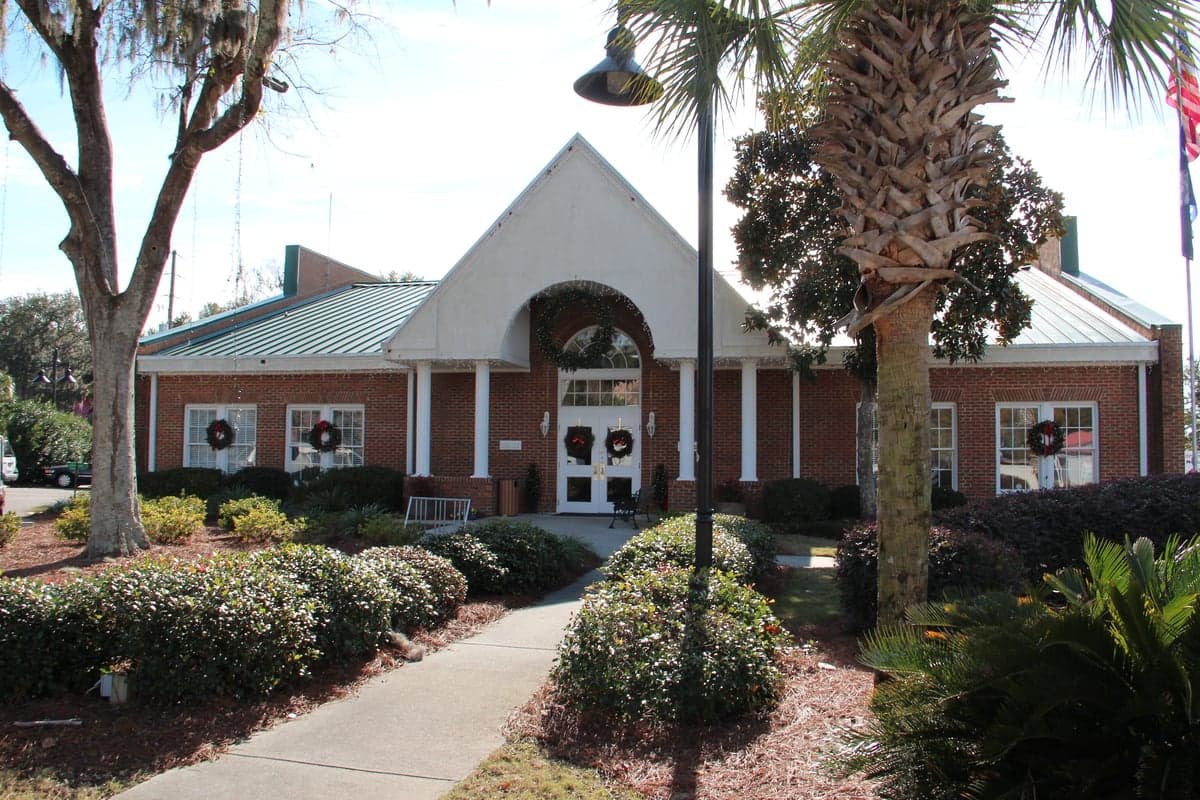
Photo: Wikipedia
Personal Sovereignty in Port Royal, SC
Viable for self-reliance. Generally workable, though some barriers may limit total independence.
What does Personal Sovereignty tell us?
Personal Sovereignty measures your capacity for self-reliance and independence with minimal government friction. Higher scores mean fewer barriers between you and the way you want to live... but it assumes you have the space you need and good neighbors.
What does this tell us?
Personal Sovereignty measures your capacity for self-reliance and independence with minimal government friction. Higher scores mean fewer barriers between you and the way you want to live... but it assumes you have the space you need and good neighbors.
State Policy
Energy independence: Importer (25% of energy produced in-state)
Personal Liberty
Homesteading

Personal Liberty Analysis
Port Royal, South Carolina, offers a notably high degree of personal sovereignty compared to many coastal towns, largely because South Carolina itself maintains a strong tradition of limited government and local control. While you won't find the total autonomy of a remote mountain compound, the legal and regulatory environment here is designed to let individuals and families make their own decisions on everything from property use to self-defense, with minimal interference from state or county bureaucrats. For a prepper or survivalist-minded individual, the key question isn't whether the government is absent—it's whether the existing framework respects your right to be left alone. The answer, relative to the Northeast or West Coast, is a solid yes, though you must navigate a few local ordinances that can chafe.
Tax burden and regulatory posture: How South Carolina's fiscal policies affect your independence
South Carolina's tax structure is a clear win for personal sovereignty. There is no state income tax on Social Security benefits, and the state's top marginal income tax rate has been cut to 6.2% as of 2025, with a path toward a flat 3.99% rate. Property taxes are assessed at just 4% of the fair market value for owner-occupied primary residences, and the millage rate in Beaufort County (which includes Port Royal) is moderate—around 100-120 mills depending on the specific district. This means a $300,000 home might carry an annual tax bill of roughly $1,200 to $1,500, far less than comparable coastal properties in Florida or California. The regulatory posture is equally favorable: South Carolina is a "right-to-work" state with no state-level occupational licensing requirements for many trades, and the state's Department of Health and Environmental Control (DHEC) is generally less aggressive than its counterparts in blue states. However, Port Royal itself has a town council that has occasionally pushed for stricter stormwater and tree preservation ordinances, so you'll want to check the specific zoning code before buying property—especially if you plan to build a workshop, greenhouse, or other outbuilding without a lengthy permit process. The overall message: the state gives you breathing room, but the town can still impose its will on your land.
Self-defense and gun law specifics: What you can and cannot do in Port Royal
South Carolina is a "shall-issue" state for concealed carry permits, meaning if you pass a background check and complete a training course, the sheriff must issue your permit—no subjective "good cause" requirement. As of 2024, the state also passed constitutional carry, allowing any law-abiding adult 18 or older to carry a concealed firearm without a permit. This is a massive win for personal sovereignty. Port Royal itself has no local gun ordinances that supersede state law, so you can carry openly or concealed in most public spaces, including parks and streets. The only off-limits areas are those mandated by state law: schools, courthouses, police stations, and establishments that derive 51% or more of their revenue from alcohol sales (unless you have a permit and the owner allows it). Stand-your-ground laws are fully in effect—you have no duty to retreat before using deadly force if you are lawfully present and reasonably believe it's necessary to prevent death or great bodily harm. For preppers, this is a solid legal foundation. The one caveat: magazine capacity is not restricted, but you cannot carry into federal buildings or military installations (like nearby Parris Island). If you're a survivalist, you'll also want to note that South Carolina does not require registration of firearms or ammunition, and there is no state-level red flag law as of 2026—though federal background checks still apply at licensed dealers.
Self-reliance and homesteading viability: Lot sizes, zoning, and off-grid feasibility
Port Royal's zoning is a mixed bag for serious homesteaders. The town is largely built out with smaller lots—typically 0.25 to 0.5 acres in the historic district and newer subdivisions—which limits your ability to raise livestock or maintain a large garden. The town's zoning code allows chickens (hens only, no roosters) on lots of at least 10,000 square feet, but you'll need a permit and can only keep up to six birds. Larger livestock like goats or pigs are prohibited within town limits. If you want true self-reliance, you'll need to look outside Port Royal proper—unincorporated Beaufort County or neighboring Jasper County offer 1- to 5-acre parcels where you can keep horses, goats, and even a few head of cattle without a special use permit. Off-grid feasibility is limited within town: Port Royal requires connection to municipal water and sewer, and solar panels are allowed but must be installed by a licensed contractor and cannot exceed 110% of your annual electricity usage. Rainwater collection is legal but must be used only for irrigation, not potable water, unless you install a DHEC-approved treatment system. For a prepper, the best strategy is to buy a small lot in town for a primary residence (good for hurricane evacuation and proximity to supplies) and a separate rural parcel for a bug-out location or serious homesteading. The town's regulatory posture is not hostile, but it's not libertarian either—you'll have to work within the system.
Personal liberties: Parental rights, medical autonomy, speech, and property
South Carolina has been a battleground for parental rights, and the current legal environment is favorable. The state's "Parental Bill of Rights" (enacted in 2023) gives parents the explicit right to direct their child's education, medical care, and religious upbringing, and it requires schools to notify parents of any changes in a student's services or monitoring related to mental, emotional, or physical health. Homeschooling is straightforward: you simply register with the local school district and submit a basic curriculum plan—no state testing requirements or home visits. Medical autonomy is more nuanced. South Carolina does not have a state-level vaccine mandate for adults, and COVID-19 mandates were struck down by the state legislature in 2022. However, the state's medical freedom is not absolute: you cannot legally purchase raw milk for human consumption, and the state's telemedicine laws require an in-person visit for certain prescriptions. Speech is protected under the First Amendment, and Port Royal has no local ordinances restricting political signs or public assembly. Property rights are strong: South Carolina is a "Dillon's Rule" state, meaning local governments only have powers explicitly granted by the state, but Beaufort County has been aggressive in using its zoning authority to limit short-term rentals and commercial activities in residential zones. For a prepper, the key takeaway is that you have broad latitude to live your life as you see fit, but you must stay informed about local ordinances—especially if you plan to run a home business or build a defensive structure like a fence or gate.
Overall, Port Royal offers a level of personal sovereignty that is well above the national average, especially when compared to the regulatory-heavy environments of the Northeast, West Coast, or even parts of Florida. The state's constitutional carry, low taxes, and strong parental rights create a foundation that respects individual decision-making. The trade-offs are the town's moderate zoning restrictions and the need to navigate a few local ordinances that can feel like government overreach. For a survivalist or prepper, Port Royal is not a libertarian paradise—but it is a place where you can live largely on your own terms, with the legal tools to defend yourself, your family, and your property. The real test of sovereignty here is whether you're willing to engage with the local political process to protect those freedoms, because the town council can and will make changes if you're not paying attention.

* Values derived from national, state, county, city and local statistics and may differ in a specific area. Last updated: 2026-04-30T02:17:02.000Z
Narrative content on this page is AI-generated and may contain mistakes. Verify any details that matter before acting on them.
ReloMaps may earn a commission from affiliate links at no extra cost to you.

