Photo: Wikipedia
Political ClimatePolitical Climate in Port Royal, SC
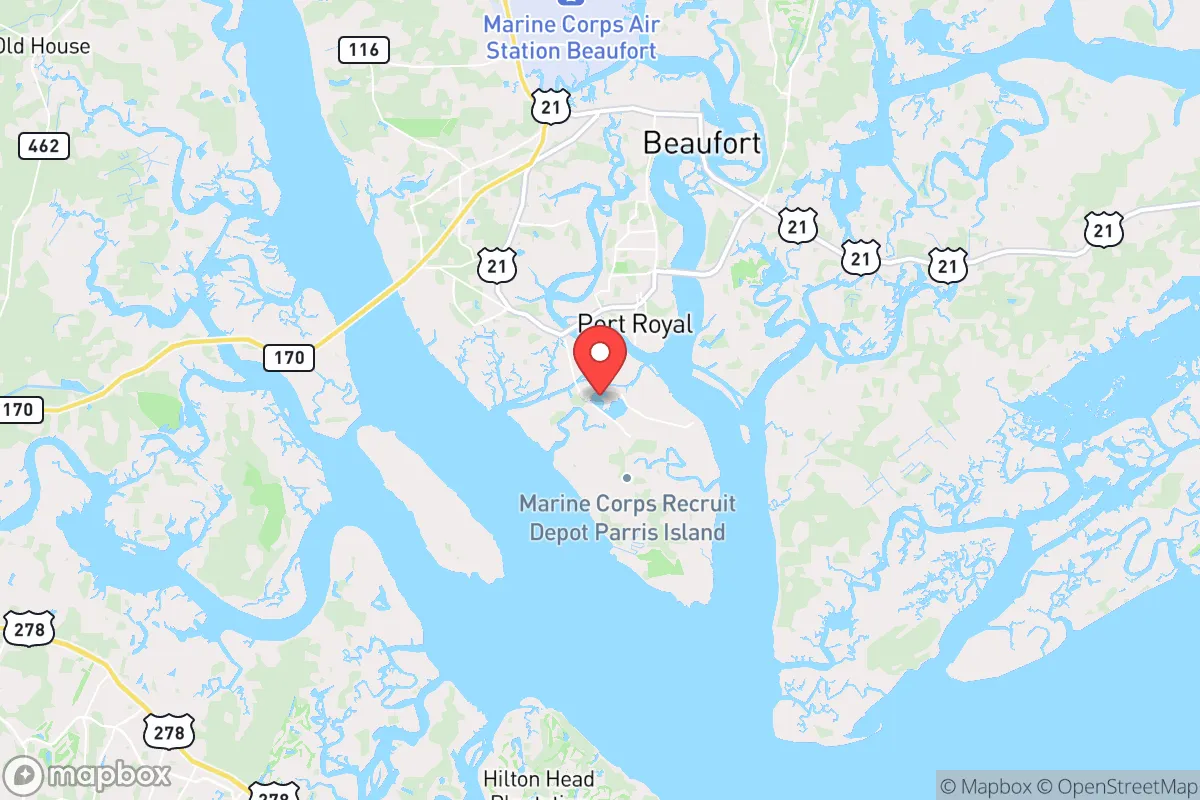
District shown is the primary district for this city’s centroid. Cities may span multiple districts.
Local Political AnalysisPolitical Analysis of Port Royal, SC
Port Royal, South Carolina, has long been a solidly conservative community, and its Cook Political Report rating of R+6 reflects that reality—though if you’ve lived here as long as I have, you’ll notice the political winds have shifted a bit in recent years. The town itself leans Republican, but the surrounding Beaufort County has seen an influx of folks from up north and out west, bringing with them a more progressive bent that’s starting to ripple through local elections and policy debates. While the core of Port Royal still values personal responsibility, low taxes, and limited government, you can feel the tension between that old-school Lowcountry independence and the newer, more activist-minded crowd that wants to expand government’s reach into everything from land use to business regulations.
How it compares
If you drive just a few miles north to Beaufort city proper, you’ll hit a noticeably different vibe—Beaufort’s historic district and waterfront have attracted a younger, more liberal demographic, and its city council has flirted with progressive policies like stricter environmental mandates and affordable housing quotas that would make a Port Royal old-timer wince. Head south to Hilton Head Island, and you’ll find a mix of wealthy retirees and seasonal residents who lean Republican but often support tourism-driven government spending that feels like a slippery slope toward bigger bureaucracy. The real contrast, though, is with rural towns like Ridgeland or Hardeeville up in Jasper County, where the political culture is still deeply conservative and suspicious of any government overreach—those folks look at Port Royal’s recent zoning changes and shake their heads. Port Royal sits right in the middle: still R+6 on paper, but the margin is shrinking as new arrivals push for things like “equity” initiatives and expanded public services that sound nice but come with more rules and higher taxes.
What this means for residents
For those of us who’ve been here a while, the biggest concern is that the local government is slowly creeping into areas it used to stay out of—like telling property owners what they can build on their own land or mandating “inclusive” housing policies that drive up costs for everyone. The school board and county council races are where you’ll see the real battleground; in the past, those were quiet affairs where fiscal conservatism was a given, but now you’ve got candidates pushing for curriculum changes and diversity programs that feel like a federal overreach into local classrooms. Property taxes have inched up as the county adds more staff for code enforcement and planning departments, and there’s chatter about a new stormwater fee that sounds like another way to fund pet projects. The good news is that Port Royal’s core electorate still turns out for Republican candidates in state and national races, so the overall direction hasn’t flipped yet—but if you value your Second Amendment rights or want to keep your business free from endless permitting, you’ll want to keep an eye on those local elections.
Culturally, Port Royal still holds onto its military and maritime roots—Parris Island is right next door, and that instills a sense of discipline and self-reliance that cuts against the progressive grain. You’ll see more American flags than pride flags here, and the local churches and civic clubs remain the backbone of community life, not government programs. The policy distinction that matters most is land use: Port Royal has resisted the kind of high-density development and “complete streets” mandates that Beaufort has embraced, and that’s a win for property rights. But the long-term trend is concerning—if the newcomers keep coming and voting for bigger government, this little slice of Lowcountry conservatism could get swallowed up by the same bureaucratic mindset that’s choking places like Charleston. For now, it’s still a good place to raise a family without the government breathing down your neck, but don’t take it for granted.

State Political ClimatePolitical Climate in South Carolina
State Political AnalysisPolitical Environment in the State
South Carolina has long been a reliably red state, with a solid Republican lean that has only deepened over the past two decades. The GOP holds supermajorities in both chambers of the state legislature, and the state has voted Republican in every presidential election since 1980, with margins typically in the high single to low double digits. However, the political landscape is not monolithic—the state's coastal and urban growth corridors are shifting the map in subtle but important ways, while the rural interior remains deeply conservative. For a conservative-leaning individual or family considering relocation, South Carolina offers a generally friendly policy environment, but the trajectory is worth watching closely as in-migration from blue states accelerates.
Urban vs. rural divide
The political map of South Carolina is a classic story of coastal and urban blue versus rural and suburban red. The state's largest metro, Charleston, has become a Democratic stronghold in recent cycles, driven by rapid population growth, a booming tech and tourism economy, and an influx of out-of-state transplants. In 2020, Charleston County voted for Joe Biden by a 10-point margin, a stark contrast to the rest of the state. Similarly, Columbia (Richland County) and Greenville (Greenville County) have seen their urban cores trend leftward, though the surrounding suburbs remain reliably Republican. The real engine of conservative power lies in the rural and exurban counties: Spartanburg, York (home to Rock Hill and Fort Mill), Lexington, and Anderson counties routinely deliver 60-70% of their votes to GOP candidates. The Pee Dee region and the Lowcountry interior—places like Florence, Sumter, and Beaufort—are also reliably red, though with smaller populations. The key takeaway: if you want a deeply conservative community, look to the suburbs and small towns; if you prefer a more mixed or liberal environment, the downtowns of Charleston, Columbia, and Greenville are your options.
Policy environment
South Carolina's policy environment is broadly favorable to conservative priorities. The state has a flat income tax of 6.2% (with a scheduled phase-down to 6.0% by 2025), and no estate or inheritance tax. Property taxes are among the lowest in the country, with a median effective rate of 0.55%—a major draw for families and retirees. The state is a right-to-work state, and union membership is minimal. On education, South Carolina has a robust school choice landscape: the state offers Education Savings Accounts (ESAs) for special-needs students and a tax-credit scholarship program for low-income families. In 2023, the legislature expanded ESAs to all students, though the program is currently capped. However, the state's public school system remains a concern—test scores are below the national average, and many rural districts struggle with funding. On healthcare, South Carolina did not expand Medicaid under the Affordable Care Act, and the state has some of the most restrictive abortion laws in the country (a six-week ban, with exceptions for rape, incest, and life of the mother). Election laws are moderately strict: voters must show a photo ID, and early voting was expanded to two weeks in 2022. The state also has a voter ID law that has withstood legal challenges. Overall, the policy environment is stable and conservative, but not as aggressively libertarian as some neighboring states like Georgia or Florida.
Trajectory & freedom
South Carolina has been moving in a generally freedom-friendly direction over the past decade, but with some notable exceptions. On the positive side, the state passed constitutional carry (permitless carry of handguns) in 2021, a major win for Second Amendment advocates. The same year, the legislature enacted a parental rights in education law that requires schools to notify parents of any changes in a child's mental, emotional, or physical health—a direct response to concerns about gender ideology in schools. In 2023, the state banned gender-affirming care for minors, a move that has drawn both praise and legal challenges. On the economic freedom front, the state has no corporate income tax on manufacturers and a relatively low regulatory burden. However, there are areas of concern for liberty-minded residents. The state's COVID-19 emergency powers were used aggressively by Governor Henry McMaster in 2020-2021, including business closures and mask mandates, though these were largely lifted by mid-2021. More recently, the state has seen a push for school library book bans and restrictions on classroom content, which some conservatives see as necessary and others as government overreach. The biggest looming issue is property rights: as coastal development booms, there are growing tensions between local zoning authority and state-level preemption, particularly in Charleston and Beaufort counties. Overall, the trajectory is positive for conservatives, but the state's growing population and urbanization could shift the balance in the next decade.
Civil unrest & political movements
South Carolina has not seen the level of civil unrest seen in larger states, but there have been notable flashpoints. The Confederate flag removal from the Statehouse grounds in 2015, following the Charleston church shooting, was a deeply divisive moment that still resonates. The Black Lives Matter protests in 2020 were relatively small compared to other states, but they did occur in Charleston, Columbia, and Greenville, with some property damage and arrests. On the right, the Moms for Liberty movement has been highly active in school board races, particularly in Lexington and York counties, where they have successfully pushed for conservative curriculum changes and library restrictions. Immigration politics are less heated than in border states, but there is a growing concern about sanctuary city policies—Charleston and Columbia have both been criticized by conservatives for their "welcoming city" ordinances, though neither has a full sanctuary policy. Election integrity remains a hot topic: the state's 2020 election was certified without major controversy, but the legislature has since passed stricter voter ID and absentee ballot rules. The most visible political movement is the nullification rhetoric around federal gun laws and environmental regulations, particularly in rural counties like Anderson and Oconee, where local sheriffs have publicly stated they will not enforce federal gun bans. A new resident would notice that political activism is generally polite and localized—yard signs, church bulletin announcements, and school board meetings—rather than the street-level confrontations seen in other states.
Projection
Over the next 5-10 years, South Carolina's political trajectory is likely to be one of slow but steady moderation, driven by in-migration from blue states and the growth of its coastal and urban metros. The state is projected to gain a congressional seat after the 2030 census, and that seat will likely be in the Charleston or Greenville area—both of which are trending left. The rural counties will remain deeply red, but their population is stagnant or declining, meaning their electoral weight will shrink. The biggest wildcard is the suburban shift: places like Fort Mill (York County) and Mount Pleasant (Charleston County) are growing rapidly with transplants from New York, New Jersey, and California, many of whom bring moderate-to-liberal views on social issues. However, these same transplants often appreciate the state's low taxes and business-friendly climate, so the shift may be more cultural than economic. On the policy front, expect continued battles over school choice, abortion, and transgender rights, with the legislature likely to hold the line on most conservative priorities. The biggest risk for conservatives is that the state's growing diversity and urbanization could flip the state to a purple or even blue status within a decade, particularly if national trends continue. For now, South Carolina remains a safe bet for conservative families, but the window of certainty is narrowing.
For a conservative-leaning individual or family moving to South Carolina, the bottom line is this: you will find a state that broadly aligns with your values on taxes, guns, education, and family policy, especially if you choose a suburban or rural community. The urban cores are becoming more liberal, but the state legislature and governor's office are firmly in Republican hands and likely to remain so for the near future. Pay attention to local school board races and county council elections—that's where the real battles over your daily freedoms are being fought. And if you're looking for a place where your vote will count most, consider the fast-growing suburbs of Greenville or Lexington rather than the coastal cities. South Carolina is still a red state, but it's a red state in transition—and the next decade will determine whether it stays that way.
* Values derived from national, state, county, city and local statistics and may differ in a specific area. Last updated: 2026-04-30T02:17:02.000Z
Narrative content on this page is AI-generated and may contain mistakes. Verify any details that matter before acting on them.
ReloMaps may earn a commission from affiliate links at no extra cost to you.

