Photo: Wikipedia
Demographics of Prairie Village, KS
Affluence Level in Prairie Village, KS
An upper-middle-class area. Household wealth, education levels, and homeownership run ahead of national benchmarks.
People of Prairie Village, KS
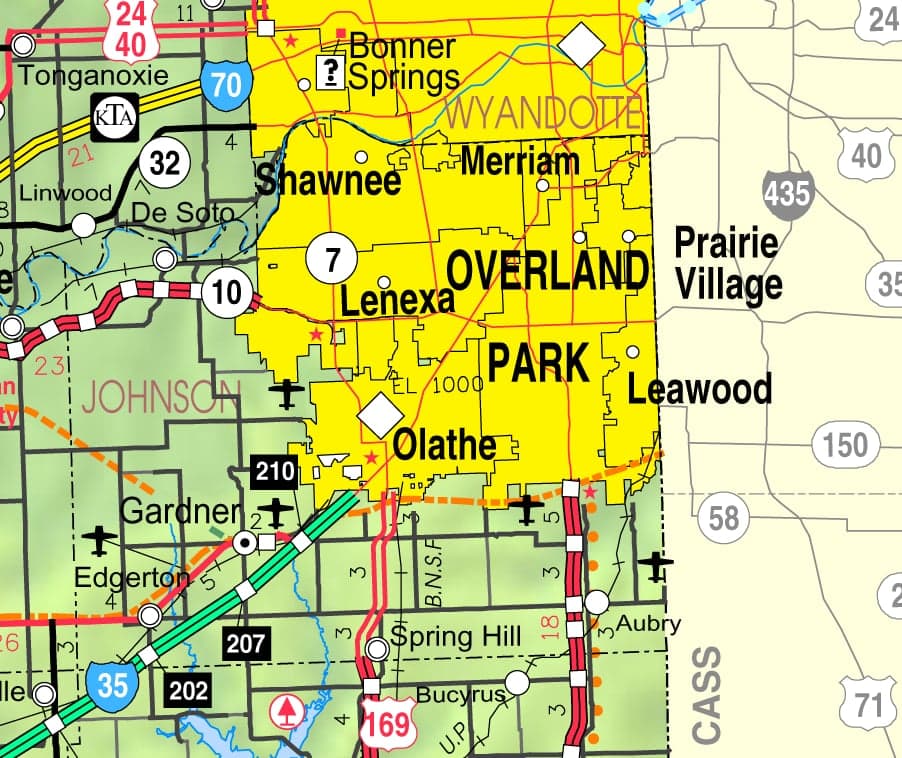
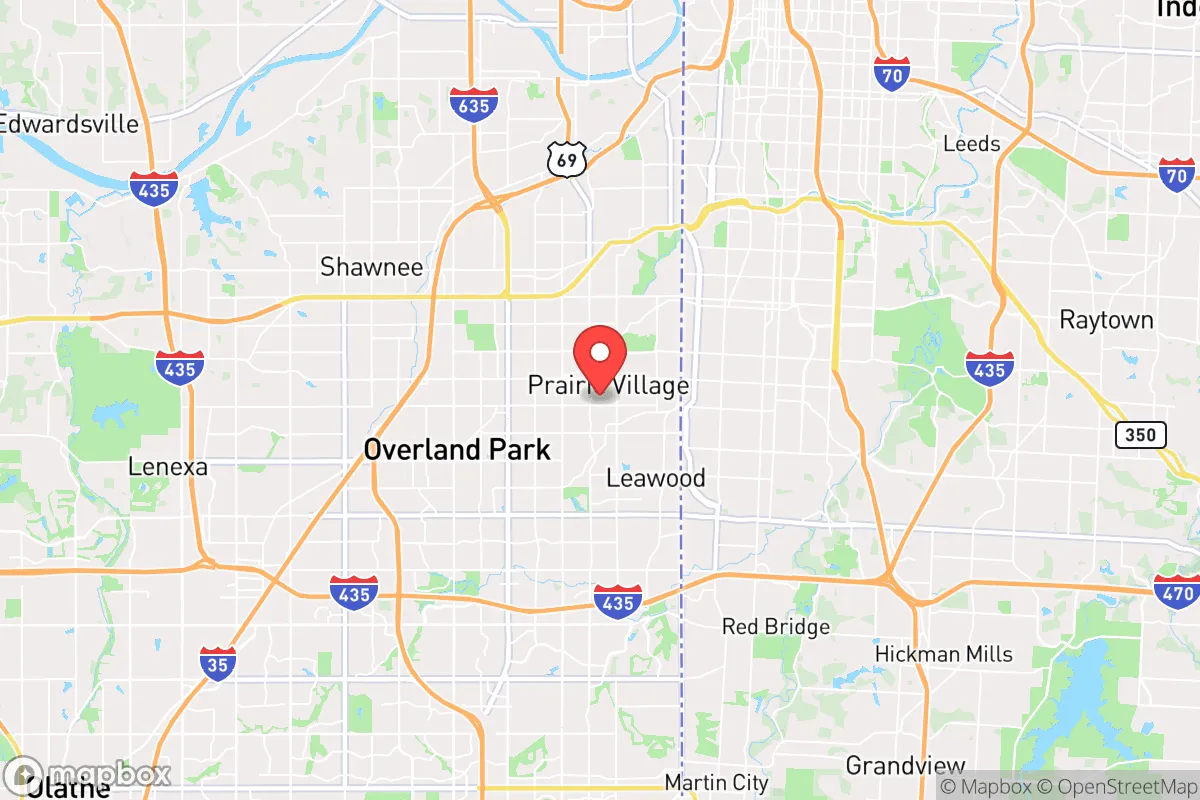
Prairie Village, Kansas, is a densely settled, affluent inner-ring suburb of Kansas City with a population of 22,937 that remains overwhelmingly white (88.8%) and highly educated (73.4% college-educated). Its residents are characterized by a strong sense of local identity rooted in mid-century planned development, a family-oriented lifestyle, and one of the lowest foreign-born shares in the metro area at just 0.4%. The city’s human history is less a story of successive immigrant waves and more one of deliberate suburban creation, white flight from Kansas City proper, and long-term demographic stability.
How the city was settled and grew
Prairie Village was not a pioneer settlement or industrial town; it was a post-World War II planned suburb, platted and built from scratch on former farmland. The J.C. Nichols Company, famous for developing the Country Club District, designed Prairie Village as a middle-to-upper-middle-class bedroom community for white families fleeing the crowding and ethnic diversity of Kansas City. The first homes went up in the late 1940s, and the city incorporated in 1951. The original population was almost entirely native-born white Protestants and Catholics, drawn by affordable single-family homes, good schools, and restrictive covenants that excluded Black and Jewish buyers. The earliest neighborhoods—Prairie Village North (near 75th Street and Mission Road) and Prairie Village South (around 83rd Street)—were built out rapidly through the 1950s, filled by returning GIs and young families. The Mission Hills adjacent area, though technically a separate city, shares the same development DNA and was the wealthier sibling. By 1960, the population had already reached nearly 20,000, and the city was effectively built out—there was little undeveloped land left.
Modern era (post-1965)
The 1965 Hart-Cellar Act and subsequent immigration waves had almost no impact on Prairie Village. The city’s foreign-born population today is just 0.4%, compared to roughly 14% nationally. Instead, the post-1965 story is one of white domestic in-migration and gradual ethnic diversification at the margins. As Kansas City’s urban core experienced racial turnover and white flight accelerated in the 1970s and 1980s, Prairie Village absorbed many white families from the city’s east side and from older suburbs like Roeland Park. The Franklin Park neighborhood (near 71st and Nall) and the Colonial Heights area (around 79th and Belinder) became popular for second-generation suburbanites seeking larger lots and better schools. Hispanic residents now make up 5.0% of the population, concentrated in the South Prairie Village area near 85th Street, where older, slightly less expensive homes have attracted a modest number of Latino families. East/Southeast Asian residents (1.5%) and Black residents (0.9%) are scattered thinly across the city, with no single ethnic enclave. The Indian subcontinent population is negligible at 0.2%. The city’s racial composition has shifted only slightly since 2000: the white share has dropped from about 94% to 88.8%, while the Hispanic share has grown from 2% to 5%.
The future
Prairie Village is likely to remain a predominantly white, high-income suburb for the foreseeable future. The city is built out, with no room for large-scale new development, and home prices (median above $400,000) filter for buyers who are already affluent and predominantly white. The Hispanic share may continue to creep upward slowly, driven by families moving from the Kansas City metro’s growing Latino population, but it is unlikely to exceed 8-10% within a decade. The East/Southeast Asian and Black shares are expected to remain low, as the city lacks the rental housing stock, transit access, and ethnic institutions that attract larger immigrant communities. The population is also aging: the median age is 42, and the share of households with children under 18 has declined slightly since 2010. The city is not tribalizing into distinct ethnic enclaves; rather, it is homogenizing around a white, college-educated, professional-class identity. New arrivals are most likely to be young families from other parts of Johnson County or from Kansas City’s Plaza and Brookside neighborhoods, seeking Prairie Village’s reputation for safety and schools.
For a conservative-leaning mover today, Prairie Village offers a stable, low-diversity, high-amenity environment where the population is not rapidly changing. The city is becoming slightly more Hispanic but remains overwhelmingly white and native-born, with a strong civic culture centered on the Prairie Village Shopping Center and the Harmon Park area. The bottom line: this is a place where the demographic future looks very much like the present—a well-maintained, family-focused suburb with little ethnic or cultural flux, appealing to those who prioritize continuity over diversity.

* Values derived from national, state, county, city and local statistics and may differ in a specific area. Last updated: 2026-05-03T13:07:49.000Z
Narrative content on this page is AI-generated and may contain mistakes. Verify any details that matter before acting on them.
ReloMaps may earn a commission from affiliate links at no extra cost to you.

