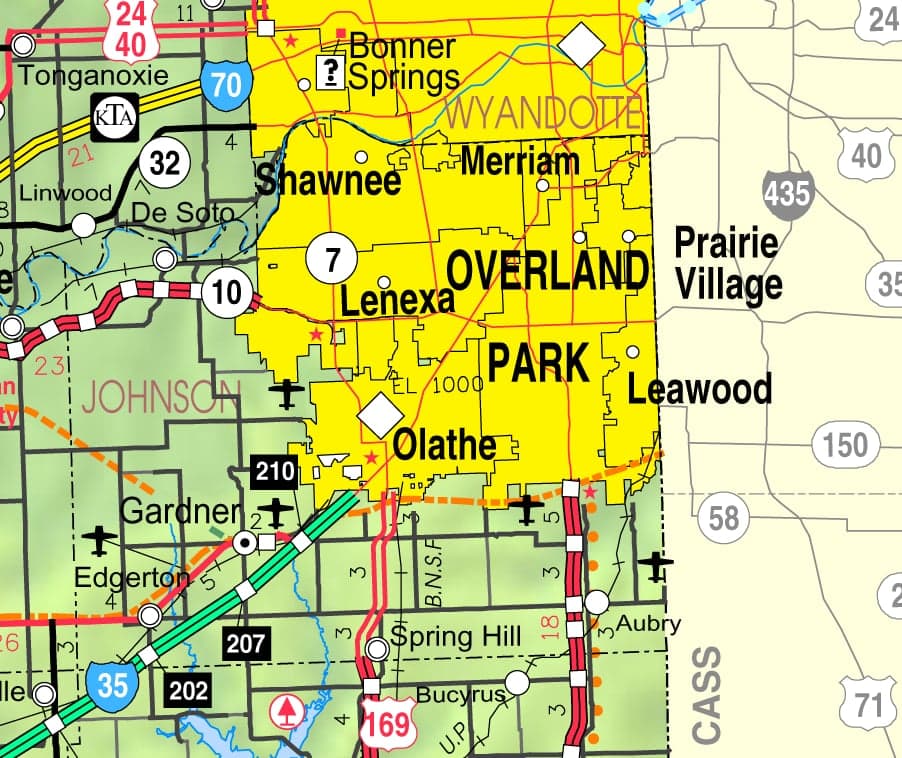
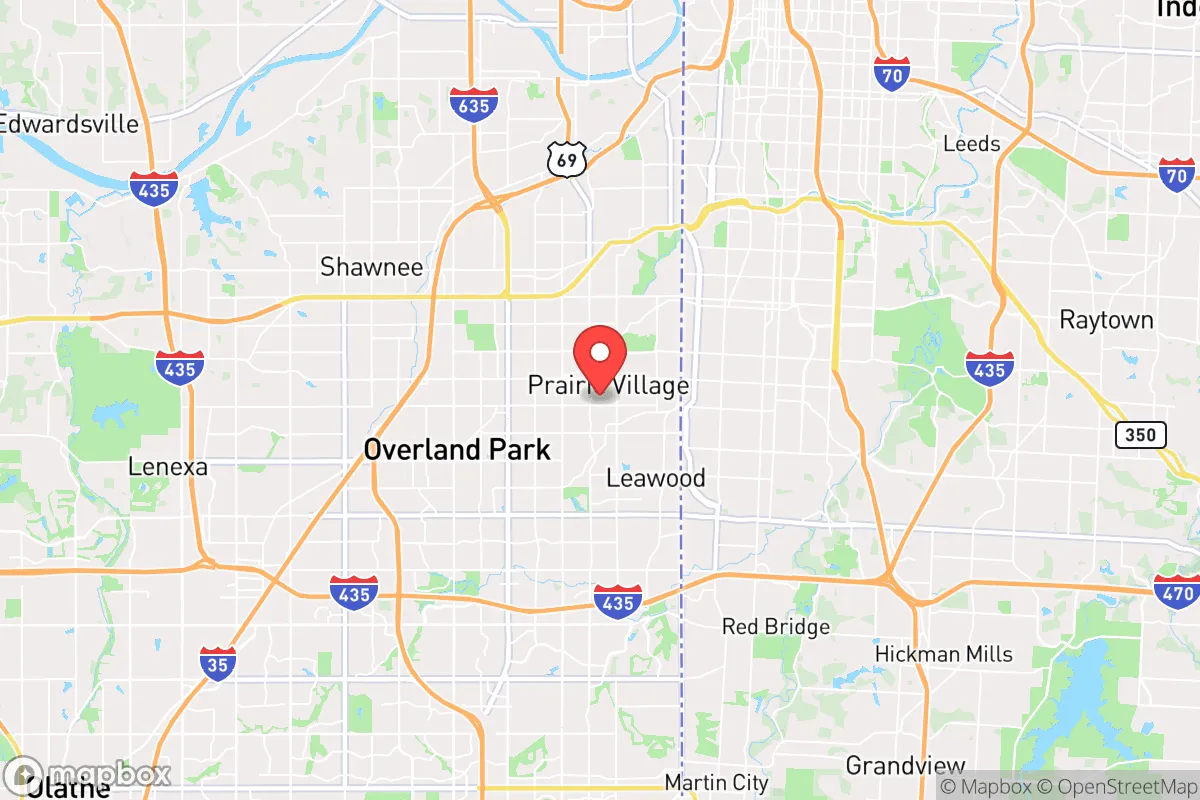
Photo: Wikipedia
Personal Sovereignty in Prairie Village, KS
Viable for self-reliance. Generally workable, though some barriers may limit total independence.
What does Personal Sovereignty tell us?
Personal Sovereignty measures your capacity for self-reliance and independence with minimal government friction. Higher scores mean fewer barriers between you and the way you want to live... but it assumes you have the space you need and good neighbors.
What does this tell us?
Personal Sovereignty measures your capacity for self-reliance and independence with minimal government friction. Higher scores mean fewer barriers between you and the way you want to live... but it assumes you have the space you need and good neighbors.
State Policy
Energy independence: Self-sufficient (80% of energy produced in-state)
Personal Liberty
Homesteading

Personal Liberty Analysis
For the liberty-minded individual or family evaluating Prairie Village, Kansas, as a relocation destination, the personal sovereignty environment presents a mixed picture of strong state-level protections tempered by local municipal oversight. As a first-ring suburb of Kansas City, Prairie Village operates within Johnson County, which consistently ranks among the most fiscally conservative and regulatory-light areas in the Midwest, yet its dense suburban character imposes constraints on the kind of self-reliant, off-grid lifestyle that preppers and survivalists often prioritize. The key takeaway is that while Kansas state law provides robust shields for gun rights, property use, and parental authority, the practical realities of a 1950s-era planned suburb with strict zoning codes and homeowner association influence mean that personal autonomy is exercised more through legal and political channels than through physical self-sufficiency on one's own land.
Tax burden and regulatory posture for conservative households
Kansas offers a relatively favorable tax climate for those seeking to minimize government extraction from their income and property. The state levies a flat income tax rate of 5.7% as of 2026, with no progressive brackets that penalize higher earners, and the state sales tax sits at 6.5%, though local options in Prairie Village push the combined rate to roughly 8.5-9.0%. Property taxes in Johnson County are the primary concern, with effective rates around 1.2-1.4% of assessed value, which is moderate nationally but high for Kansas. Prairie Village's city government maintains a lean operational budget, with no city income tax and a focus on core services like police, fire, and street maintenance. The regulatory posture at the state level is decidedly pro-business and anti-red-tape, with Kansas being a right-to-work state and having no state-level occupational licensing for over 100 low-to-moderate income occupations. However, local zoning and building codes in Prairie Village are strict, requiring permits for most structural changes, fencing, and even significant landscaping alterations. For the prepper, this means that while the state won't tax you into submission, the city will enforce its vision of orderly suburban aesthetics, which can clash with stockpiling visible supplies, constructing outbuildings, or running a home-based firearms business without explicit approval.
Self-defense rights and gun law specifics in Kansas
Kansas is a constitutional carry state, meaning that as of 2026, any law-abiding adult 21 or older can carry a concealed handgun without a permit, and open carry is legal without a license statewide. Prairie Village, as a city, cannot preempt these state laws, so local ordinances restricting carry are effectively null. The state also has strong castle doctrine and stand-your-ground statutes, with no duty to retreat in any place where a person is lawfully present. This provides a solid legal foundation for self-defense in the home, vehicle, or public space. Prairie Village has its own police department, which generally maintains a professional and non-hostile posture toward lawful gun owners, though officers in Johnson County are known for being thorough during traffic stops. For the survivalist, the key limitation is not legal but practical: Prairie Village's dense layout and proximity to Kansas City mean that a defensive firearm is primarily for personal and home protection, not for rural perimeter security. There are no local gun stores within the city limits, but several reputable dealers exist within a 15-minute drive in Overland Park or Mission. Magazine capacity restrictions and "assault weapon" bans are nonexistent at the state level, and there is no state-wide firearm registry. The biggest concern for the liberty-minded is the potential for federal overreach, as Kansas has passed a Second Amendment Preservation Act that theoretically nullifies federal gun laws, but its enforceability remains untested in court.
Self-reliance and homesteading viability in a suburban setting
Prairie Village was developed in the post-war era with a vision of single-family homes on modest lots, typically ranging from 7,000 to 12,000 square feet. This means that serious homesteading—raising livestock, maintaining large gardens, or installing solar panels for off-grid capability—faces significant zoning hurdles. The city's municipal code prohibits keeping chickens, goats, or any farm animals on residential lots, and front-yard vegetable gardens are technically allowed but must be maintained to "neighborhood standards," which effectively bans anything that looks rustic or unkempt. Rainwater collection is legal under Kansas law, but Prairie Village's building codes require that any system over 100 gallons be permitted and inspected, adding bureaucratic friction. For the prepper focused on food security, the best strategy is to maximize the backyard space for raised-bed vegetable gardening and consider a small greenhouse, which is allowed with a permit. Solar panels are permitted but must be flush-mounted on roofs and cannot be ground-mounted in front yards, limiting off-grid electrical independence. The city's water and sewer infrastructure is reliable, but for those concerned about grid collapse, a backup well is not feasible on most lots due to space and zoning restrictions. The practical reality is that Prairie Village is a place to prepare through community networking and financial resilience, not through land-based self-sufficiency. The nearby rural areas of Miami County or Linn County, within a 45-minute drive, offer far more homesteading potential for those willing to commute.
Personal liberties: parental rights, medical autonomy, speech, and property
Kansas has been a battleground for parental rights in education, and as of 2026, state law requires school districts to notify parents of any curriculum involving human sexuality and to allow parents to opt their children out without penalty. Prairie Village is served by the Shawnee Mission School District, which has generally complied with these laws, though some parents report that the district's administration leans progressive and may attempt to circumvent parental oversight through vague policies. Homeschooling is legal and relatively unregulated in Kansas, requiring only a simple notification to the local school board and no standardized testing mandates, making it a viable option for families seeking maximum educational sovereignty. Medical autonomy is a mixed bag: Kansas has no state-level vaccine mandate for adults, and COVID-era mandates have been largely rescinded, but the state does require certain immunizations for school attendance, with a philosophical exemption available only for religious or medical reasons, not general personal belief. The state's medical freedom landscape improved in 2025 with the passage of a law prohibiting discrimination against those who decline medical treatments, but enforcement is still developing. Free speech is strongly protected under the Kansas Constitution, and Prairie Village has no local ordinances restricting political signage or public assembly beyond standard time-place-manner regulations. Property rights are generally strong, with Kansas having a relatively low rate of eminent domain abuse, but Prairie Village's zoning board holds significant power to deny variances for non-conforming uses. For the liberty-minded individual, the most pressing concern is the potential for local government to adopt progressive policies on housing, environmental regulations, or public health that could infringe on personal choices, but the state's preemption laws provide a meaningful check.
In the broader context of the United States, Prairie Village offers a moderate-to-strong sovereignty profile for a suburban environment, particularly when compared to coastal blue states with aggressive gun control, high taxes, and expansive government mandates. The state of Kansas provides a solid legal foundation for self-defense, parental rights, and economic freedom, but the city's suburban DNA limits the physical expression of self-reliance. For the survivalist or prepper who values community resilience, low crime, and a like-minded conservative population, Prairie Village is a defensible choice—but only if paired with a realistic understanding that true off-grid independence will require a secondary property in a less regulated county. The area's greatest strength for personal sovereignty is its political culture: Johnson County voters consistently reject progressive overreach at the local level, and the state legislature remains committed to protecting individual liberties against federal encroachment. For those willing to navigate the zoning codes and HOAs, Prairie Village provides a safe, stable base from which to build a resilient life, with the understanding that the ultimate safeguard of liberty lies not in the land itself, but in the vigilance of its citizens.

* Values derived from national, state, county, city and local statistics and may differ in a specific area. Last updated: 2026-05-03T13:07:49.000Z
Narrative content on this page is AI-generated and may contain mistakes. Verify any details that matter before acting on them.
ReloMaps may earn a commission from affiliate links at no extra cost to you.

