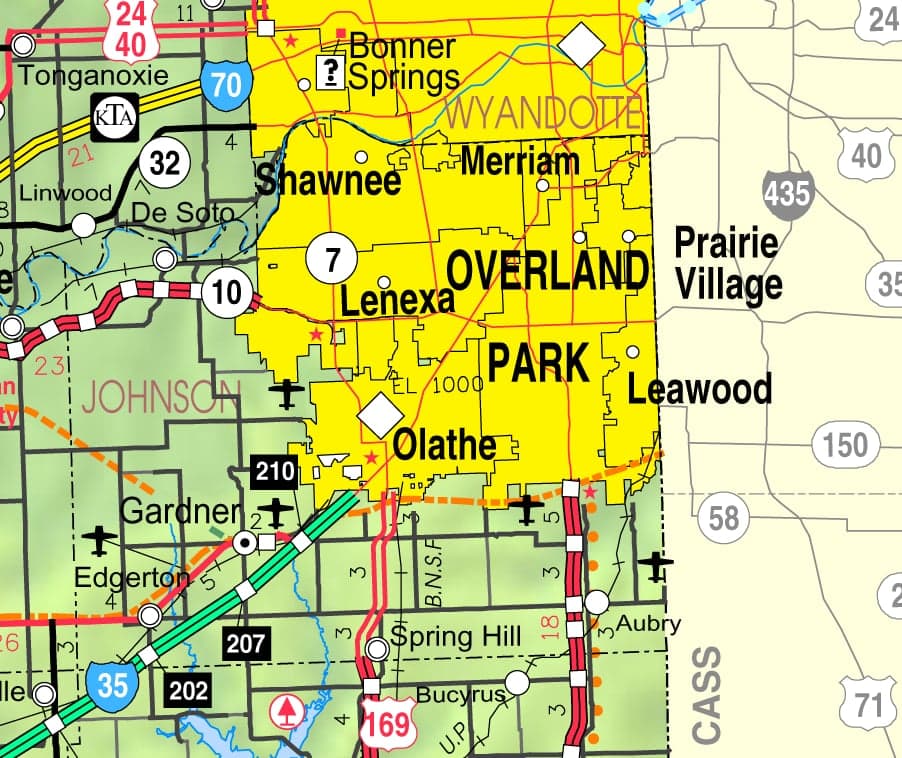
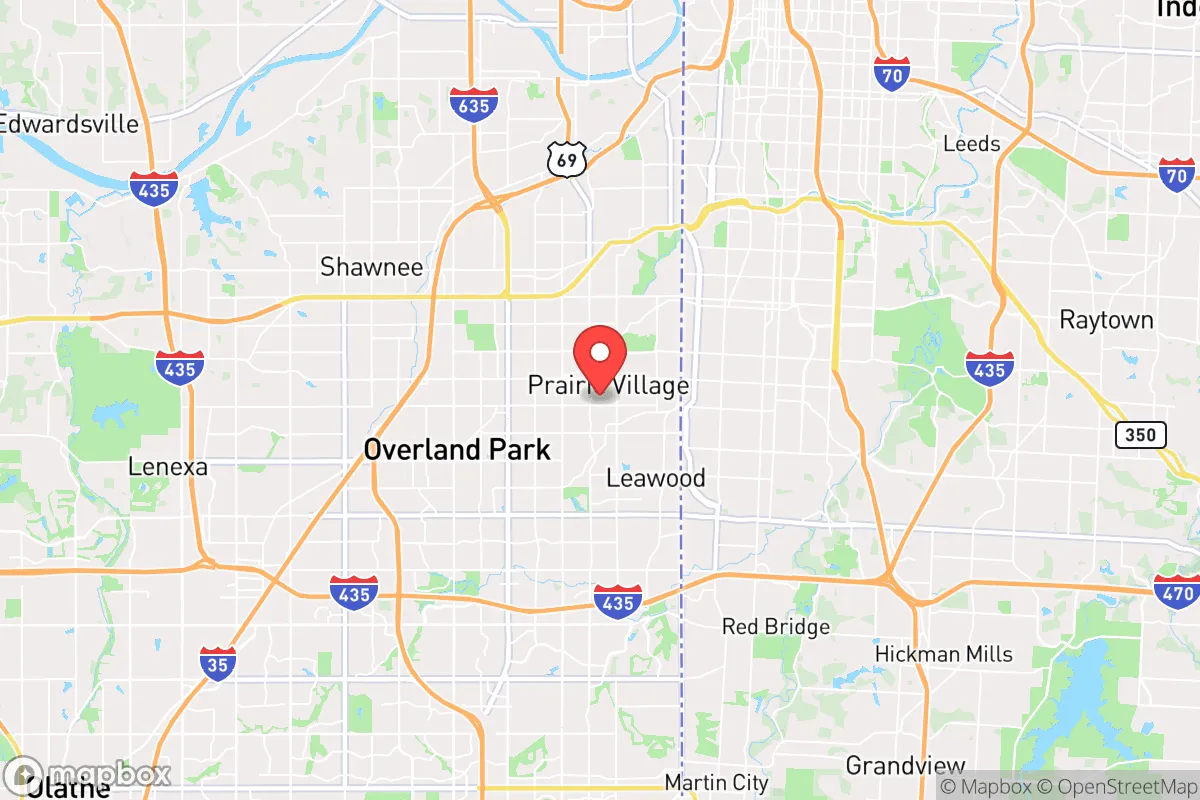
Photo: Wikipedia
Strategic Assessment of Prairie Village, KS
Multiple tactical vulnerabilities. Population density, target proximity, or disaster risk are likely compounding. A retreat property and exit planning is required.
What does the Strategic Assessment tell us?
Our Strategic Assessment grades tactical survivability of an area. Major population centers, military targets, fallout zones, natural disasters, and border exposure all drive risk — lower exposure means a more defensible position in a crisis.
This is heavily inspired by Joel Skousen's Strategic Relocation book. Highly recommended you checkout the book ($)What does this tell us?
Our Strategic Assessment grades tactical survivability of an area. Major population centers, military targets, fallout zones, natural disasters, and border exposure all drive risk — lower exposure means a more defensible position in a crisis.
This is heavily inspired by Joel Skousen's Strategic Relocation book. Highly recommended you checkout the book ($)Strategic Pillars

Key Distances
Regional Safe Places
Below is our recommended "safe zones" in Kansas and the surrounding area based on our strategic heuristics. For most people, it's unrealistic to live in a “safe zone” full-time due to work, family or other personal reasons. They tend to be more rural. However, many of these areas are perfect for second homes and retreat properties that double as a vacation home or even a short-term rental.
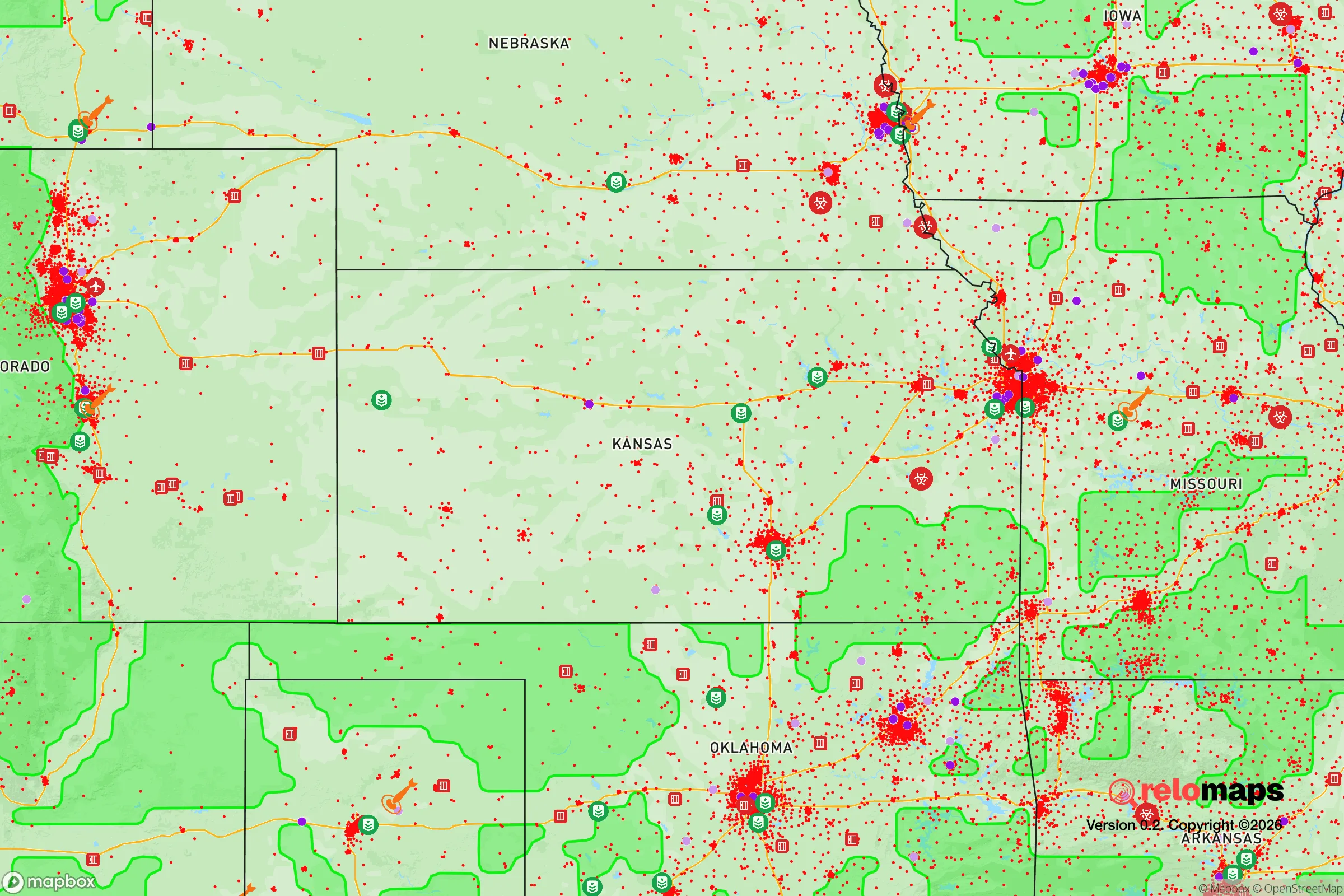
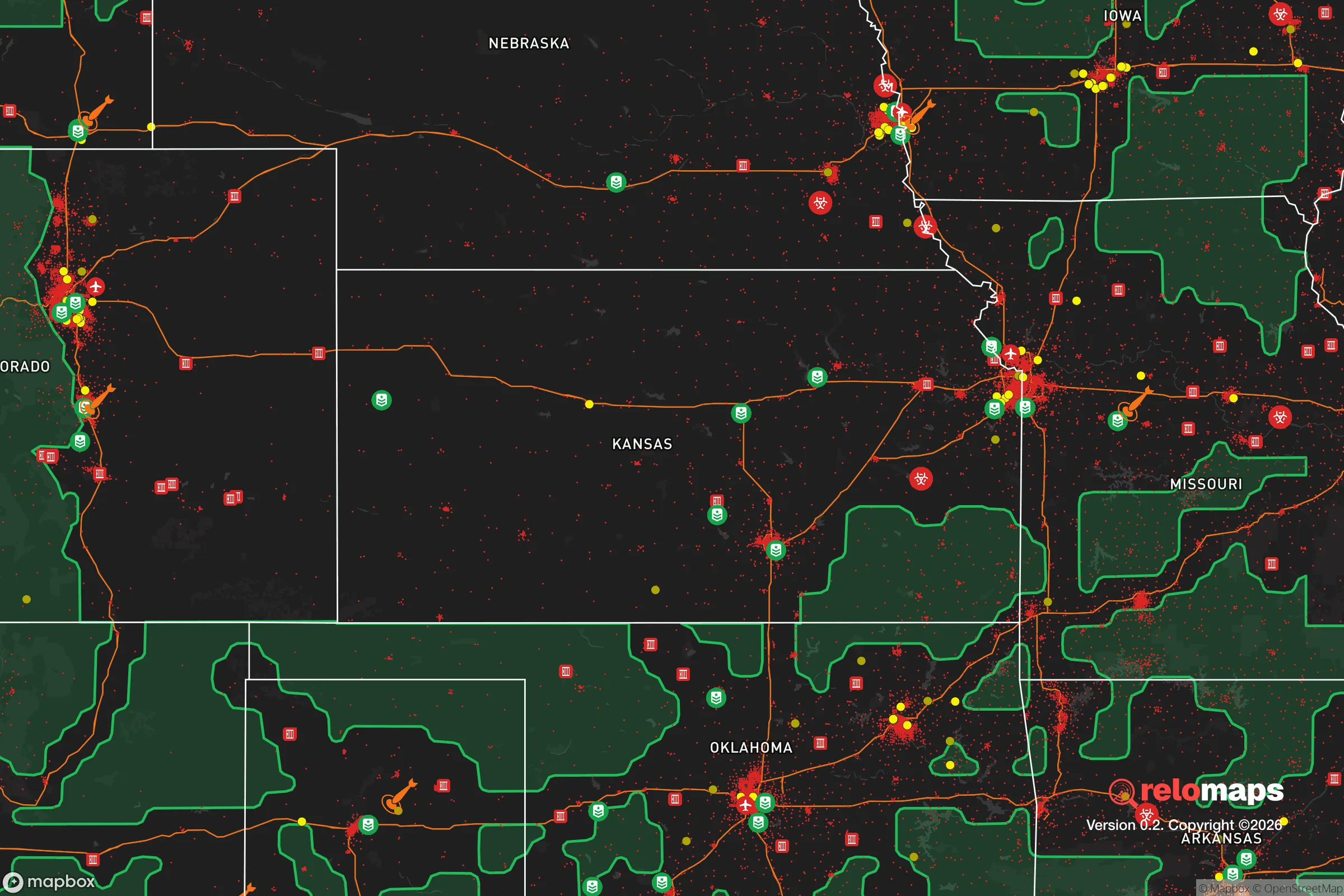


Important Note: For informational purposes only. This does not mean nothing bad ever happens in the green zones. Please use common sense. This is based on public data and modeled with AI. We tried to take a conservative approach but mistakes happen. We update this regularly as new information becomes available.
Solar Generator Recommendations
Backup power matters more here than in safer locations. We've picked three solar generators across budgets and capacity tiers — start with the budget unit if you only need a few essentials, or step up if you want to run a fridge and HVAC for days at a time.

Jackery Portable Power Station Explorer 300
Budget OptionPower on the Go: Weighing only 11 lbs, it's convenient to set up and store with book-sized foldable solar panels

BLUETTI Portable Power Station AC180
Designed for both indoor and outdoor scenarios, AC180 is highly capable as it has a robost capacity and continuous output power.

EF ECOFLOW DELTA Pro Ultra Power Station
Upgraded PickEcoFlow DELTA Pro Ultra is a whole-home energy system designed to grow with your family. Integrated with the Smart Home Panel 2, it scales to meet your evolving energy needs — keeping your home powered, intelligent, and secure through every stage of life.
We earn a commission, at no additional cost to you.
Strategic Assessment Analysis
Prairie Village, Kansas, presents a nuanced strategic picture for the conservative prepper. On one hand, its location in the Kansas City metro offers significant logistical advantages for supply and community networking; on the other, it sits squarely within a high-density target zone for any major disruption. This analysis weighs those factors for the single individual or family prioritizing resilience, self-reliance, and a conservative worldview in an uncertain future. The key takeaway: Prairie Village is a solid base for pre-disaster preparation and post-event recovery, but it is not a bug-out location for a long-term collapse scenario.
Geographic position and natural advantages for a strategic relocation
Prairie Village’s primary strategic asset is its position within the Kansas City metropolitan area, but not at its core. It lies roughly 15 minutes south of downtown Kansas City, Missouri, and about 20 minutes from the Kansas City International Airport. This proximity to a major transportation hub—interstates 35, 435, and 69—provides excellent supply chain access for pre-stocking gear, food, and medical supplies. For a prepper, this means you can source materials from multiple regional suppliers without relying on a single, fragile local economy. The area sits on the eastern edge of the Great Plains, offering relatively flat terrain that is defensible in a conventional sense—no mountain passes to control, but also no natural chokepoints that could be easily cut off. The Kansas River and Missouri River are within 20 minutes, providing potential water access for filtration, though both are heavily industrialized and would require serious treatment. The local climate is temperate, with four distinct seasons, meaning you can practice year-round skills like gardening, hunting (deer are common in suburban parks), and cold-weather survival without extreme conditions. The soil in Johnson County is decent for small-scale agriculture, and many homes have yards suitable for raised beds or greenhouses.
Risks, exposures, and proximity to fallout-relevant landmarks
The most significant risk for Prairie Village is its proximity to multiple high-value targets. Kansas City is a major transportation and logistics hub, home to the BNSF Railway’s Argentine Yard, the Kansas City International Airport, and numerous interstate bridges. In a conflict scenario, these are prime targets for sabotage or direct attack. Additionally, the area is within 30 miles of the Whiteman Air Force Base (home to the B-2 Spirit bomber) and the Kansas City National Security Campus (a nuclear weapons component plant). A conventional or nuclear strike on either would produce significant fallout patterns that could affect Prairie Village depending on wind direction. The city itself is a dense suburban grid with limited natural cover—no forests, hills, or caves for immediate shelter. In a civil unrest scenario, the proximity to Kansas City’s urban core (with its higher crime rates and potential for protest escalation) means Prairie Village could see spillover violence or looting, especially along major corridors like Metcalf Avenue or Roe Boulevard. The area is also in Tornado Alley, with a moderate risk of severe weather events that could disrupt power and communications for days. Flooding is a minor concern near the Kansas River, but most of Prairie Village is on higher ground.
Practical resilience for a relocator: food, water, energy, and defensibility
For a single individual or family looking to establish a resilient household, Prairie Village offers a mixed bag. Water is the biggest vulnerability. The municipal supply comes from the Missouri River via Kansas City’s treatment plants, which are a single point of failure. A prolonged power outage or contamination event would cut off tap water. You will need a minimum of two weeks of stored water per person (at least 14 gallons per person) and a reliable filtration system for local sources like the Kansas River or Brush Creek. Rainwater collection is legal in Kansas but requires a permit for large-scale systems; small barrels for garden use are fine. Food security is achievable. Johnson County has a strong network of farmers’ markets, local farms (e.g., the Overland Park Farmers’ Market), and grocery stores like Price Chopper and Hy-Vee. For long-term storage, you can stockpile easily, but you must rotate supplies. The area’s growing season runs April to October, allowing for significant home gardening. Energy resilience is moderate. The grid is reliable but aging; a solar panel system with battery backup (like a Tesla Powerwall or DIY setup) is feasible for most homes, and local codes are favorable for rooftop solar. Natural gas is common for heating, but a propane backup generator is a wise investment. Defensibility is the weak point. Prairie Village is a classic suburb with open streets, minimal fencing, and close neighbors. A single-family home on a quarter-acre lot offers some privacy, but you cannot easily secure a perimeter against a determined group. The best approach is community-based defense: build relationships with like-minded neighbors, form a neighborhood watch, and establish communication protocols (ham radio or GMRS). The local police department is well-funded and responsive, but in a major event, they will be overwhelmed. Your best bet is to be a hard target—reinforced doors, security cameras, and a visible but not ostentatious preparedness posture.
Overall strategic picture for the conservative prepper
Prairie Village is a viable “gray man” location for the prepper who wants to maintain a normal suburban life while quietly building resilience. It is not a remote survival retreat, but it offers enough infrastructure, community, and resources to weather most short-to-medium-term disruptions—civil unrest, natural disasters, or economic collapse. The conservative-leaning population (Johnson County voted +12 R in 2024) means you are likely to find neighbors who share your values on self-reliance, firearms ownership, and community cooperation. The biggest strategic mistake would be to treat Prairie Village as a bug-out destination; it is a place to hunker down and ride out the storm, not a long-term off-grid homestead. For the single individual or family willing to invest in water storage, food security, and neighborhood networking, it offers a solid foundation. But if you are planning for a complete societal breakdown or a nuclear exchange, you need a secondary location farther from the metro area—perhaps in the Flint Hills or the Ozarks. Prairie Village is a good base camp, not a final redoubt.

* Values derived from national, state, county, city and local statistics and may differ in a specific area. Last updated: 2026-05-03T13:07:49.000Z
Narrative content on this page is AI-generated and may contain mistakes. Verify any details that matter before acting on them.
ReloMaps may earn a commission from affiliate links at no extra cost to you.

