Photo: Wikipedia
Political ClimatePolitical Climate in Prairie Village, KS
District shown is the primary district for this city’s centroid. Cities may span multiple districts.
Local Political AnalysisPolitical Analysis of Prairie Village, KS
Prairie Village, Kansas, has a Cook PVI of D+2, which means it leans slightly Democratic in federal elections, but that number doesn’t tell the whole story for those of us who’ve lived here a while. This area used to be a rock-solid conservative stronghold, and while it’s shifted left in recent cycles, it’s still a place where a lot of folks value their personal freedoms and aren’t shy about pushing back on government overreach. The trajectory is concerning if you’re a conservative—each election seems to bring a little more progressive influence, but the fight isn’t over yet.
How it compares
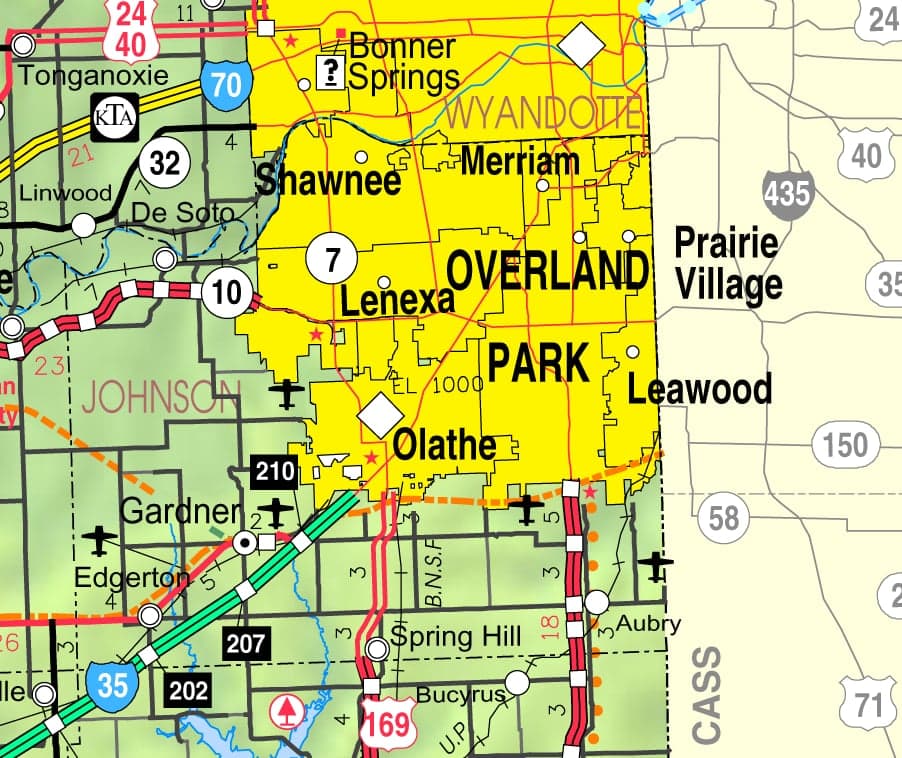
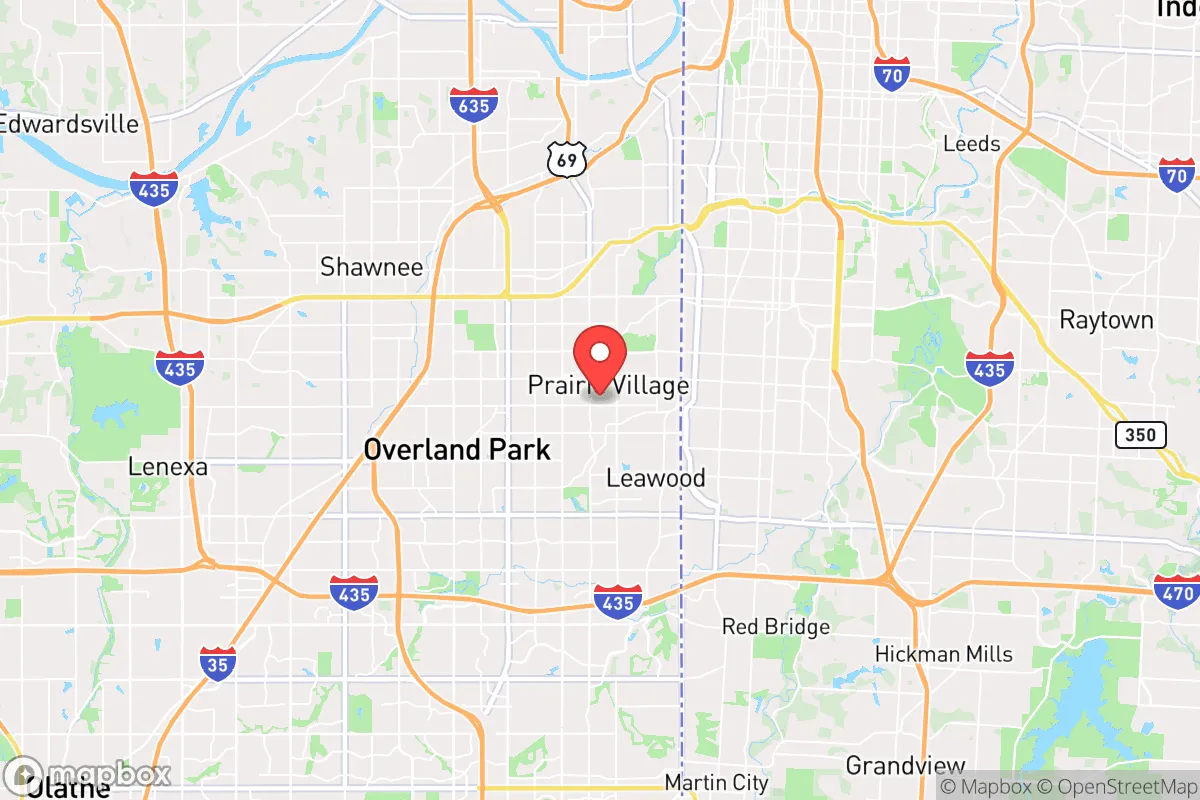
To really get the political lay of the land, you have to look at the towns around us. Head west to Leawood or Overland Park, and you’ll find a similar D+2 to D+4 vibe—more suburban, more moderate, but with a growing progressive streak that’s been creeping in since the 2020 election. But drive just a few miles south to Stanley or Stilwell, and you’re in deep red territory, where folks still fly Trump flags and talk about property rights like they’re sacred. North of us, Mission and Roeland Park are even bluer, with a younger, more activist crowd that’s pushed things like rent control and stricter zoning. Prairie Village sits right in the middle—a battleground where the old guard of fiscally conservative, freedom-loving residents is being challenged by newcomers who want more government involvement in everything from housing to schools.
What this means for residents
For conservatives living here, the biggest concern is the slow erosion of local control. The city council has been flirting with more regulations—think mandatory affordable housing quotas and stricter building codes—that feel like a foot in the door for bigger government. Property taxes have crept up, and there’s chatter about new fees for things like short-term rentals or even lawn watering restrictions that would have been laughed off a decade ago. The school board, too, has seen a shift: more emphasis on equity initiatives and less on academic rigor or parental say in curriculum. If you’re someone who believes in personal responsibility and minimal interference, you’ll need to stay engaged—attend those city council meetings, vote in every local election, and maybe even run for a seat yourself. The good news is that the conservative base here is still organized; groups like the Johnson County Republican Party are active, and there’s a strong network of homeowners who’ll push back on anything that feels like a power grab.
One thing that sets Prairie Village apart is its strong tradition of neighborhood associations. These aren’t just social clubs—they’re political battlegrounds where residents debate everything from tree ordinances to speed bumps. It’s a double-edged sword: on one hand, it gives you a direct say in what happens on your block, but on the other, it can be a vehicle for progressive activists to organize. Long-term, I see the trend continuing toward a more progressive tilt, especially as younger families move in from Kansas City proper. But if you’re willing to get involved and remind your neighbors that freedom means less government, not more, Prairie Village can still be a place where conservative values hold their ground. Just don’t expect it to happen on autopilot.

State Political ClimatePolitical Climate in Kansas
State Political AnalysisPolitical Environment in the State
Kansas has long been a reliably Republican state in presidential elections, voting for the GOP candidate in every cycle since 1964 except for Lyndon Johnson’s landslide in 1964. However, the state’s political climate is far from monolithic—it’s a tale of two Kansases: the deeply conservative rural and small-town regions that anchor the GOP, and the increasingly blue urban corridors of Johnson County (Kansas City suburbs) and Douglas County (Lawrence). Over the past 10-20 years, the state has shifted from a solidly red, moderate Republican stronghold to a more polarized battleground where conservative populism has gained ground, but the growing influence of suburban and college-town voters has made statewide races increasingly competitive. In 2024, Donald Trump won Kansas by about 18 points, but the state’s U.S. Senate and House races often hinge on a few thousand votes in Johnson County.
Urban vs. rural divide
The political map of Kansas is starkly divided. The western and central parts of the state—places like Garden City, Dodge City, and Hays—are overwhelmingly Republican, often voting 70-80% for the GOP. These areas are driven by agriculture, oil and gas, and a strong sense of traditional values. In contrast, the eastern edge of the state tells a different story. Johnson County, which includes affluent suburbs like Overland Park and Olathe, has become a political battleground. Once a reliable GOP stronghold, Johnson County has trended purple over the last decade, with Democratic candidates winning it in recent statewide races. Lawrence, home to the University of Kansas, is the state’s most liberal city, consistently voting 70%+ Democratic. Wichita, the largest city, leans Republican but has a sizable moderate and Democratic base, especially in its urban core. The rural-urban divide is so pronounced that a candidate can win the statewide popular vote while losing every county east of I-135, or vice versa.
Policy environment
Kansas’s policy environment has been shaped by a long-running experiment in conservative governance. The state has a flat income tax rate of 5.7% (after the infamous “Kansas Experiment” tax cuts under Governor Sam Brownback were partially reversed in 2017), and no state tax on Social Security benefits. Property taxes are relatively high, but the state has no inheritance or estate tax. The regulatory posture is business-friendly, with right-to-work laws and a generally low regulatory burden. On education, Kansas has seen a tug-of-war between the legislature and the state Supreme Court over school funding, with the court repeatedly ordering more money for K-12 schools, which has frustrated conservatives. The state has a Republican supermajority in the legislature, which has passed laws restricting abortion (a near-total ban after 22 weeks, with a 2022 amendment vote affirming no constitutional right to abortion), expanding gun rights (permitless carry since 2015), and enacting voter ID laws. Election integrity is a hot topic—Kansas was one of the first states to require proof of citizenship for voter registration (the “SAVE Act” style law), though that provision was struck down in federal court. The state also has a conservative-leaning Supreme Court, but it has occasionally ruled against the legislature on school funding and abortion.
Trajectory & freedom
On the freedom front, Kansas has generally moved in a conservative direction over the past decade, but with some notable exceptions. The state expanded gun rights significantly with the 2015 permitless carry law, allowing any legal adult to carry a concealed firearm without a permit. In 2023, the legislature passed a “Second Amendment Preservation Act” that prohibits state and local enforcement of federal gun laws that violate the Second Amendment. Parental rights have been strengthened with a 2021 law requiring schools to notify parents of any changes to a student’s health or well-being, and a 2023 law banning transgender athletes from female sports. Medical autonomy took a hit with the near-total abortion ban, but the 2022 ballot measure affirming no constitutional right to abortion was a major victory for pro-life advocates. On the downside, property rights have been tested by the state’s aggressive use of eminent domain for the proposed “Tiger Pipeline” and other energy projects. Taxation remains a mixed bag—the flat income tax is a plus, but property taxes have risen, and the state’s sales tax on groceries (6.5%) is among the highest in the nation. Overall, Kansas is becoming more free on cultural and Second Amendment issues, but less free on fiscal matters and local control.
Civil unrest & political movements
Kansas has seen its share of political flashpoints, but they tend to be more subdued than in coastal states. The most visible unrest in recent years has been around abortion—after the 2022 Dobbs decision, pro-choice protests erupted in Topeka and Lawrence, but they were largely peaceful and small compared to national demonstrations. The state has a strong pro-life movement, with groups like Kansans for Life wielding significant influence in the legislature. On the left, the “Kansas People’s Action” and local chapters of Indivisible have organized around healthcare and education funding. Immigration politics are less heated than in border states, but the issue flares up in western Kansas, where meatpacking plants in Garden City and Dodge City rely heavily on immigrant labor. There have been calls for sanctuary city policies in Lawrence and Kansas City, Kansas, but these have been largely symbolic. Election integrity remains a live issue—the 2020 election saw no major fraud, but conservative groups continue to push for stricter voter ID and ballot security measures. The “Kansas State Rifle Association” is active, and there have been small, isolated protests over mask mandates and vaccine passports, but nothing approaching the scale seen in other states.
Projection
Looking ahead 5-10 years, Kansas is likely to remain a red-leaning state, but the margin will continue to narrow. The key demographic shift is the growth of Johnson County, which is becoming more diverse and more educated—and more Democratic. If current trends hold, Johnson County could flip to reliably blue within a decade, which would make statewide races much more competitive. Meanwhile, rural counties are losing population, which will dilute their electoral power. The state’s in-migration is modest, but it’s coming from blue states like California and Illinois, and these new residents tend to settle in the suburbs of Kansas City and Wichita, bringing more moderate or liberal views. The legislature will likely remain Republican-controlled, but the governor’s race could become a toss-up. On policy, expect continued battles over school funding, abortion (with potential further restrictions), and property tax relief. The state’s conservative base is energized, but the suburban shift means that any Republican candidate who is too far to the right on social issues may struggle in Johnson County. For a conservative moving in, the state will still feel like a safe bet culturally, but the political landscape is slowly becoming more contested.
Bottom line for a new resident: If you’re a conservative looking for a state where your values are reflected in law and culture, Kansas is a solid choice—especially if you settle in the rural areas or smaller cities like Hays or Manhattan. You’ll find low taxes (mostly), strong gun rights, and a government that generally respects parental authority. But if you move to the Kansas City suburbs, be prepared for a more politically mixed environment, where your neighbors might not share your views. The state is not trending toward the progressive extremes of the coasts, but it’s also not as rock-ribbed conservative as it was 20 years ago. Keep an eye on property taxes and school funding debates—those are the issues that will affect your wallet and your kids’ education most directly. Overall, Kansas offers a good balance of freedom and stability, but it’s not immune to the national trends that are reshaping every state.
* Values derived from national, state, county, city and local statistics and may differ in a specific area. Last updated: 2026-05-03T13:07:49.000Z
Narrative content on this page is AI-generated and may contain mistakes. Verify any details that matter before acting on them.
ReloMaps may earn a commission from affiliate links at no extra cost to you.

