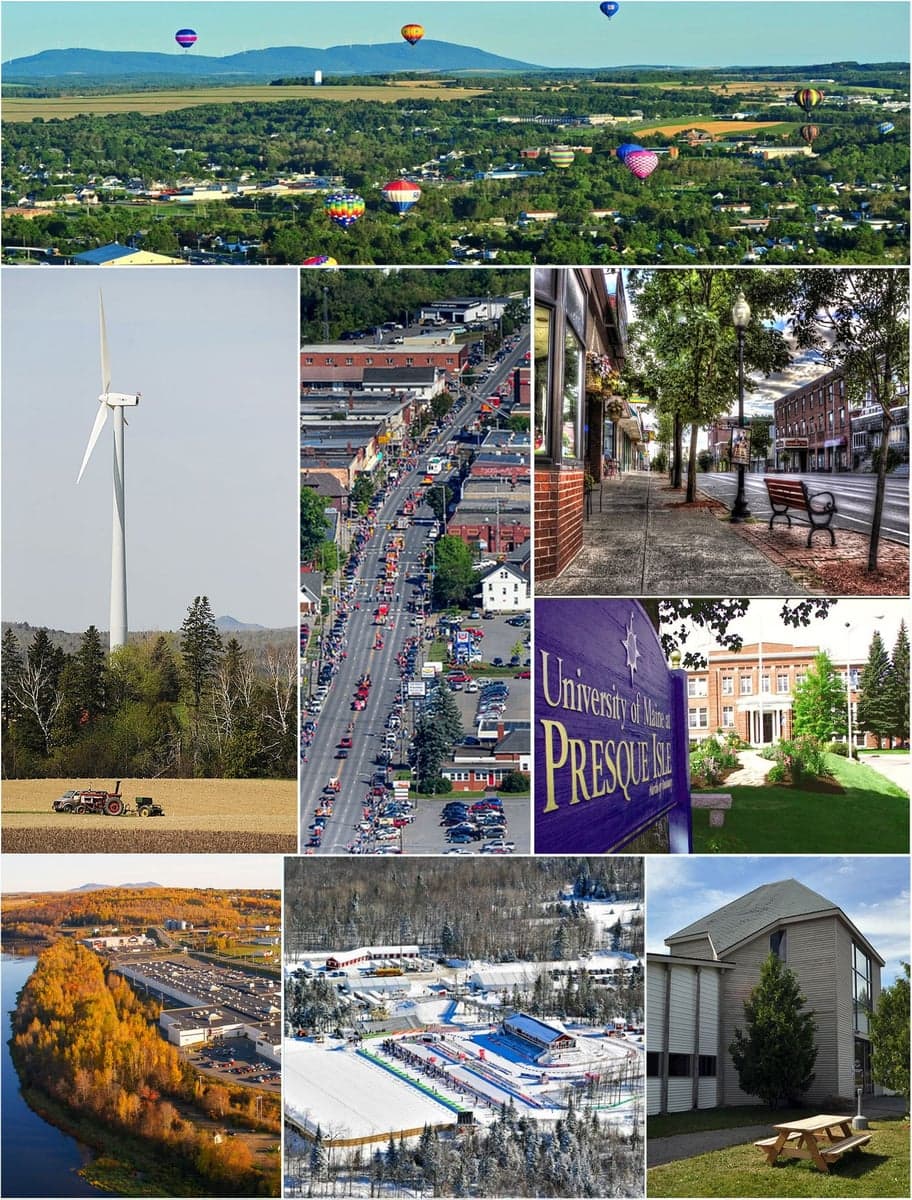
Photo: Wikipedia
Political ClimatePolitical Climate in Presque Isle, ME
District shown is the primary district for this city’s centroid. Cities may span multiple districts.
Local Political AnalysisPolitical Analysis of Presque Isle, ME
Presque Isle has long been a reliably conservative stronghold in northern Maine, with a Cook PVI of R+4 that reflects its steady Republican lean in presidential elections. But if you’ve lived here as long as I have, you’ve seen the political winds shift in ways that feel less like a gentle breeze and more like a slow, creeping tide. The area still votes red, but the margins have tightened in recent cycles, and there’s a growing unease among folks who remember when this town was a rock-solid bet for conservative values—limited government, personal responsibility, and a healthy skepticism of federal overreach. Today, the trajectory is concerning: while Presque Isle itself hasn’t flipped, the surrounding Aroostook County is seeing pockets of progressive activism, especially in places like Caribou and Fort Fairfield, where younger transplants and remote workers are bringing more liberal ideas about everything from land use to local governance.
How it compares
Compared to the rest of Maine, Presque Isle stands out as a conservative island in a state that’s trended purple-to-blue in recent years. Portland and Bangor are the obvious contrasts—both are deep blue, with Portland’s city council pushing policies like rent control and sanctuary city status that would never fly up here. Even within Aroostook County, you’ll notice a split: towns like Houlton and Mars Hill lean conservative but with a more moderate edge, while Presque Isle remains the most reliably Republican of the larger hubs. The R+4 rating puts it in the same ballpark as places like Waterville, but the difference is cultural—Presque Isle’s conservatism is rooted in rural self-reliance, not suburban fiscal caution. When you drive 30 minutes south to Caribou, you’ll see more “Black Lives Matter” signs in yards than you would here, and that’s a red flag for anyone who values traditional community norms over imported ideological battles.
What this means for residents
For those of us who call Presque Isle home, the political climate directly shapes daily life in ways that matter. Property taxes remain relatively low compared to southern Maine, and there’s little appetite for the kind of zoning overhauls or green-energy mandates that have driven up costs in Portland. But the pressure is mounting: state-level policies from Augusta—like the push for stricter gun laws and expanded Medicaid—are increasingly at odds with local sentiment. You’ll hear grumbling at the hardware store about how the state government doesn’t trust us to manage our own land or raise our families without interference. The real concern is that as more people move here for the low cost of living, they bring voting habits that could tilt the balance in a decade or two. For now, residents enjoy a community where personal freedoms—like hunting, snowmobiling, and running a small business without a pile of red tape—are still respected, but you can feel the ground shifting under your feet.
Culturally, Presque Isle holds onto distinctions that set it apart from the rest of Maine. The annual Potato Blossom Festival is a celebration of agricultural heritage, not a platform for political activism. Local schools emphasize vocational training and traditional values, with little of the critical race theory or gender ideology debates that dominate coastal districts. But there’s a quiet worry among long-timers that the next generation might not hold the line. If you’re considering a move here, know that you’ll find a community that values its independence and isn’t shy about pushing back against government overreach—but keep an eye on the local elections, because that’s where the real battles are being fought. The future of Presque Isle depends on whether we can keep it the kind of place where common sense still rules the day.

State Political ClimatePolitical Climate in Maine
State Political AnalysisPolitical Environment in the State
Maine has long been known as a classic swing state with a libertarian streak, but over the past 20 years it has shifted noticeably to the left, particularly in its southern coastal corridor. While the state still elects centrist governors and occasionally splits its congressional delegation, the dominant coalition in the legislature and statewide offices is now firmly progressive, driven by the Portland metro area and college towns. For a conservative considering relocation, the key takeaway is that Maine is a state of stark contrasts: you can find deep-red, self-reliant communities in the northern and eastern counties, but the state-level policy environment has become increasingly hostile to gun rights, parental choice in education, and tax freedom.
Urban vs. rural divide
The political map of Maine is a textbook case of the urban-rural split. Portland and its suburbs in Cumberland County are the engine of Democratic power, delivering margins of 60-70% for progressive candidates. This metro area, including South Portland, Westbrook, and Falmouth, has grown rapidly with out-of-state transplants, many from Massachusetts and New York, who have brought their voting habits with them. The Augusta-Waterville corridor and the college towns of Brunswick, Orono, and Farmington also lean heavily blue. In contrast, the vast Second Congressional District — covering the northern two-thirds of the state — is reliably Republican at the federal level. Counties like Aroostook, Franklin, and Piscataquis routinely vote +20 to +30 points for GOP candidates. However, even here, the margins are thinning as rural populations decline and younger residents move south. A notable exception is Washington County, which has flipped from reliably red to a true battleground, often decided by a few hundred votes. The Midcoast region (Knox, Lincoln, Waldo counties) is a mixed bag, with tourist towns like Camden and Rockport trending left while inland working-class towns remain conservative.
Policy environment
Maine’s state-level policy has taken a sharp progressive turn in the last decade. The income tax is a top concern: the top marginal rate is 7.15%, and while recent reforms flattened the brackets, the overall burden remains high compared to neighboring New Hampshire (which has no income tax). Property taxes are among the highest in the nation, averaging around 1.3% of home value, and they fund a school system that has seen declining enrollment but rising costs. On education, Maine has embraced expansive school choice through charter schools and public magnet programs, but the state’s teachers’ union remains powerful and has blocked universal voucher proposals. Healthcare is heavily regulated; Maine expanded Medicaid under the Affordable Care Act and has a state-based insurance exchange with high premiums. Election laws are a mixed bag: Maine was the first state to adopt ranked-choice voting for federal elections, which has helped moderate candidates but also confused many voters. Voter ID is not required, and same-day registration is allowed, which conservatives view as a vulnerability. The state also has a strict gun control regime: a "yellow flag" law (LD 1640) allows police to seize firearms from individuals deemed a threat, and a 2023 law (LD 2238) expanded background checks to private sales and raised the purchase age to 21. These passed with narrow margins and are a major flashpoint for Second Amendment advocates.
Trajectory & freedom
On the freedom index, Maine is moving in the wrong direction for conservatives. The gun rights landscape has deteriorated significantly: the 2023 "red flag" law and the private-sale background check mandate were the most restrictive measures in state history. Parental rights have been under assault: a 2021 law (LD 1064) removed the requirement for schools to notify parents if a child changes their gender identity or pronouns, and the state’s Department of Education has actively promoted LGBTQ+ curriculum without opt-out provisions. Medical autonomy took a hit with the 2023 passage of a law (LD 1612) that mandates COVID-19 vaccine reporting for healthcare workers, though the mandate itself was later rescinded. On taxation, the state has not indexed its income tax brackets to inflation, meaning bracket creep is a real concern. The one bright spot is property rights: Maine has strong protections against eminent domain abuse, and the state’s "right to farm" law (Title 7, §152) shields agricultural operations from nuisance lawsuits. However, the overall trajectory is clear: the legislature has become more aggressive in regulating personal behavior, from energy mandates (requiring heat pumps in new construction) to plastic bag bans. The state’s freedom ranking by the Cato Institute has slipped from the middle of the pack to the bottom third over the past decade.
Civil unrest & political movements
Maine is not known for violent civil unrest, but the political temperature has risen. The Portland protests of 2020 saw sustained demonstrations for racial justice, with some property damage and clashes with police. The Yellow Vests Maine movement, a libertarian-leaning group, has held rallies against COVID mandates and gun control, drawing hundreds to the State House in Augusta. Immigration politics are a hot-button issue: Portland has declared itself a "sanctuary city," and the state has a law (Title 30-A, §5001-A) that limits local cooperation with federal immigration enforcement. This has led to tensions in smaller towns like Sanford and Lewiston, where asylum seekers have been bused in and local services strained. The election integrity debate is muted compared to other states, but the 2020 and 2022 elections saw close races that triggered recounts, and the ranked-choice voting system has been criticized for confusing voters and producing results where the winner did not receive a majority of first-choice votes. The secession movement in northern Maine (the "State of Maine" proposal to split the state) has fizzled, but the sentiment remains strong in Aroostook County, where residents feel ignored by Augusta.
Projection
Looking ahead 5-10 years, the demographic trends favor the progressive coalition. In-migration is concentrated in the southern coast and Portland suburbs, with new residents coming from blue states and bringing their politics with them. The rural population continues to age and decline, meaning the Second Congressional District could flip to Democratic control within a decade. The state legislature is likely to become more uniformly Democratic, which will accelerate the policy trends: expect further gun restrictions (magazine bans, assault weapon bans), expansion of Medicaid-funded abortion services, and a push for a state-level universal basic income pilot. The tax burden will likely increase as the state grapples with an aging population and rising pension obligations. The one wild card is the independent streak of Maine voters: Governor Janet Mills (a Democrat) won re-election in 2022 by only 3 points, and the state has a history of electing centrists like Angus King and Paul LePage. If the progressive wing overreaches, a backlash could produce a more moderate governor in 2026. But the long-term trend is clear: Maine is becoming a more reliably blue state, and conservatives moving here should expect to be in the minority on most state-level issues.
Bottom line for a new resident: If you are a conservative looking to relocate to Maine, you can still find a welcoming community in the northern and eastern counties, where self-reliance and traditional values are the norm. But you will be fighting an uphill battle at the state level. Expect higher taxes, more gun control, and a school system that may not align with your values on parental rights. The best strategy is to choose your town carefully — look at Oxford County or Piscataquis County for a more conservative environment — and get involved in local politics to push back against the Augusta agenda. Maine is still a beautiful state with a strong sense of community, but the freedom you find here will depend heavily on where you plant your flag.
* Values derived from national, state, county, city and local statistics and may differ in a specific area. Last updated: 2026-05-01T04:37:23.000Z
Narrative content on this page is AI-generated and may contain mistakes. Verify any details that matter before acting on them.
ReloMaps may earn a commission from affiliate links at no extra cost to you.

