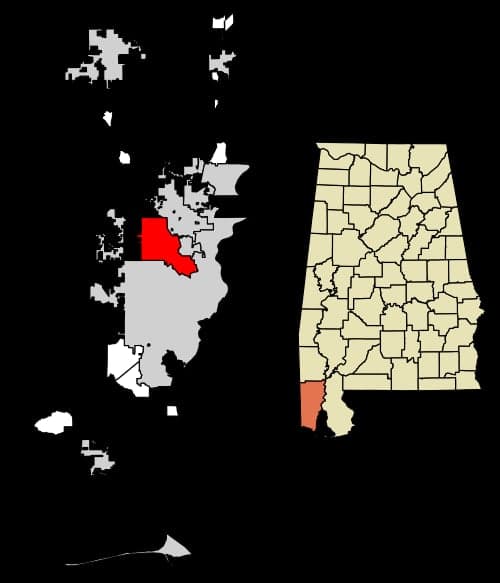
Photo: Wikipedia
Strategic Assessment of Prichard, AL
Meaningful friction. Expect exposure to either population pressure, blast zones, or natural disaster risk. Consider buying a retreat property.
What does the Strategic Assessment tell us?
Our Strategic Assessment grades tactical survivability of an area. Major population centers, military targets, fallout zones, natural disasters, and border exposure all drive risk — lower exposure means a more defensible position in a crisis.
This is heavily inspired by Joel Skousen's Strategic Relocation book. Highly recommended you checkout the book ($)What does this tell us?
Our Strategic Assessment grades tactical survivability of an area. Major population centers, military targets, fallout zones, natural disasters, and border exposure all drive risk — lower exposure means a more defensible position in a crisis.
This is heavily inspired by Joel Skousen's Strategic Relocation book. Highly recommended you checkout the book ($)Strategic Pillars

Key Distances
Regional Safe Places
Below is our recommended "safe zones" in Alabama and the surrounding area based on our strategic heuristics. For most people, it's unrealistic to live in a “safe zone” full-time due to work, family or other personal reasons. They tend to be more rural. However, many of these areas are perfect for second homes and retreat properties that double as a vacation home or even a short-term rental.
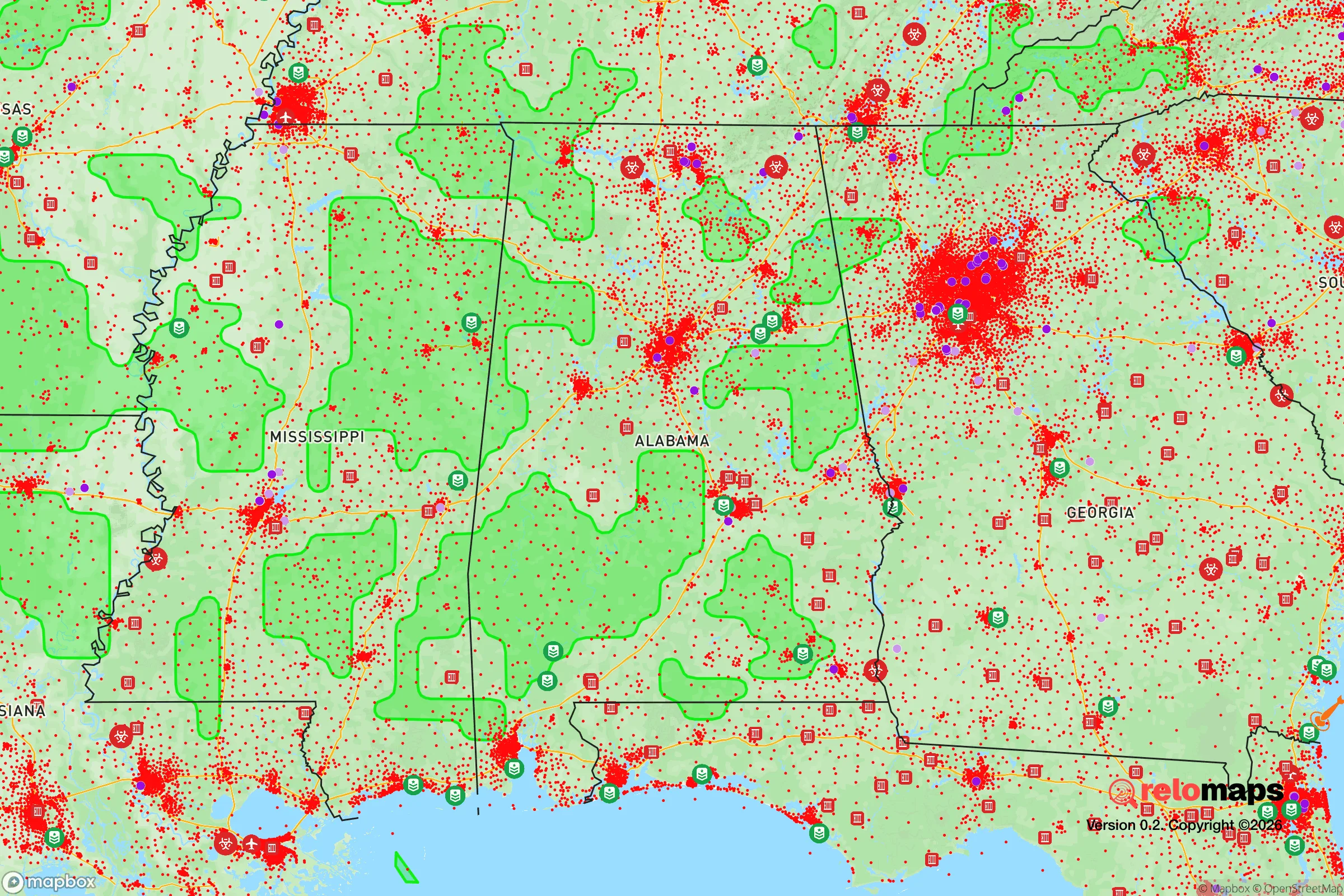
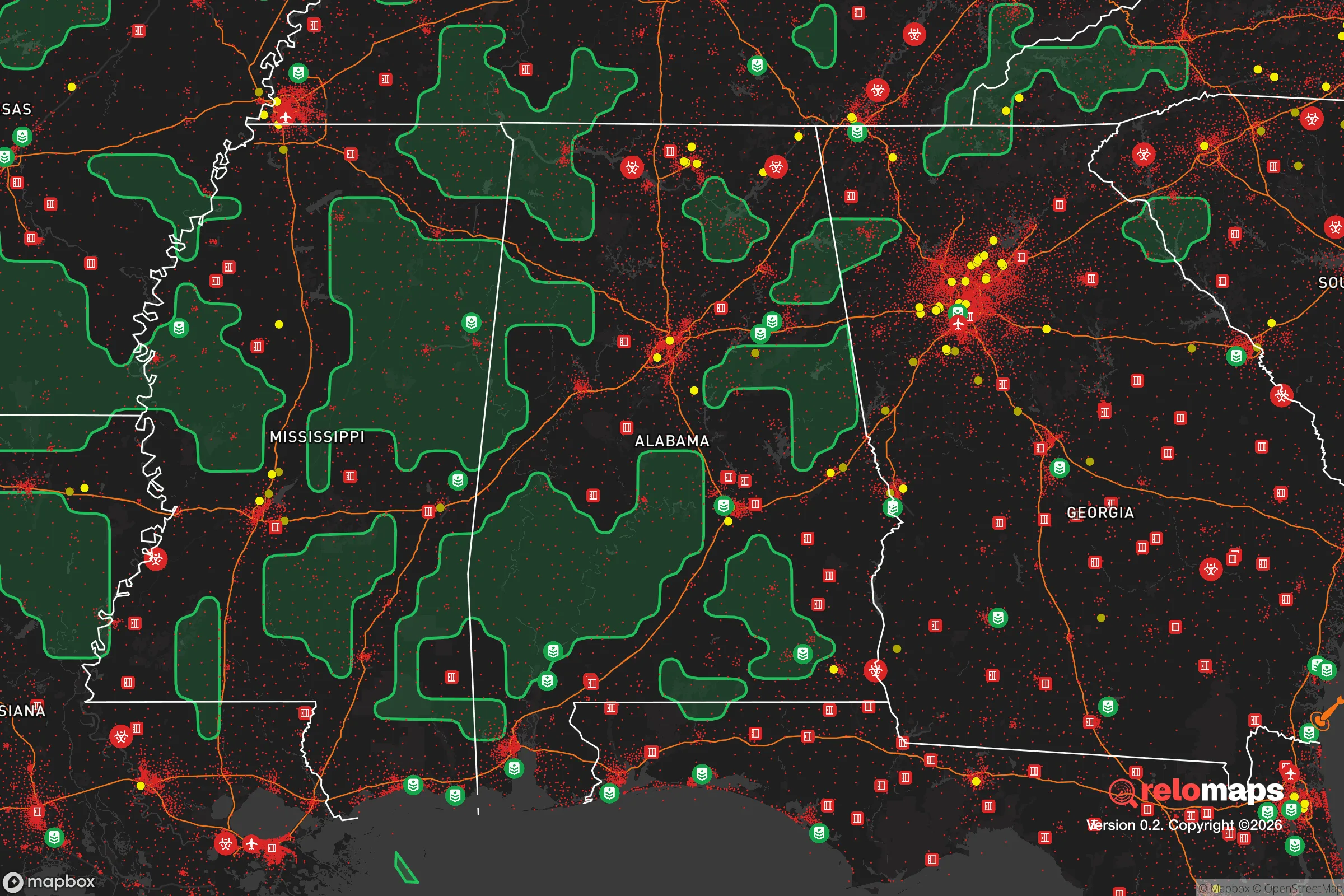


Important Note: For informational purposes only. This does not mean nothing bad ever happens in the green zones. Please use common sense. This is based on public data and modeled with AI. We tried to take a conservative approach but mistakes happen. We update this regularly as new information becomes available.
Solar Generator Recommendations
Backup power matters more here than in safer locations. We've picked three solar generators across budgets and capacity tiers — start with the budget unit if you only need a few essentials, or step up if you want to run a fridge and HVAC for days at a time.

Jackery Portable Power Station Explorer 300
Budget OptionPower on the Go: Weighing only 11 lbs, it's convenient to set up and store with book-sized foldable solar panels

BLUETTI Portable Power Station AC180
Designed for both indoor and outdoor scenarios, AC180 is highly capable as it has a robost capacity and continuous output power.

EF ECOFLOW DELTA Pro Ultra Power Station
Upgraded PickEcoFlow DELTA Pro Ultra is a whole-home energy system designed to grow with your family. Integrated with the Smart Home Panel 2, it scales to meet your evolving energy needs — keeping your home powered, intelligent, and secure through every stage of life.
We earn a commission, at no additional cost to you.
Strategic Assessment Analysis
Prichard, Alabama, presents a complex strategic picture for the conservative prepper or survivalist. Its primary advantage is its location within the broader Gulf Coast region, offering access to maritime resources and a temperate climate that reduces the severity of winter survival challenges. However, the city itself is a cautionary tale of urban decay, with a population that has plummeted from over 47,000 in 1960 to roughly 19,000 today, leaving behind a landscape of abandoned properties, strained municipal services, and a high crime rate that makes it a poor candidate for immediate habitation. The real strategic value lies not in the city proper, but in its position as a potential buffer zone and resource-access point for those willing to establish a more defensible position in the surrounding Mobile County or further north into Washington County.
Geographic position and natural advantages for long-term survival
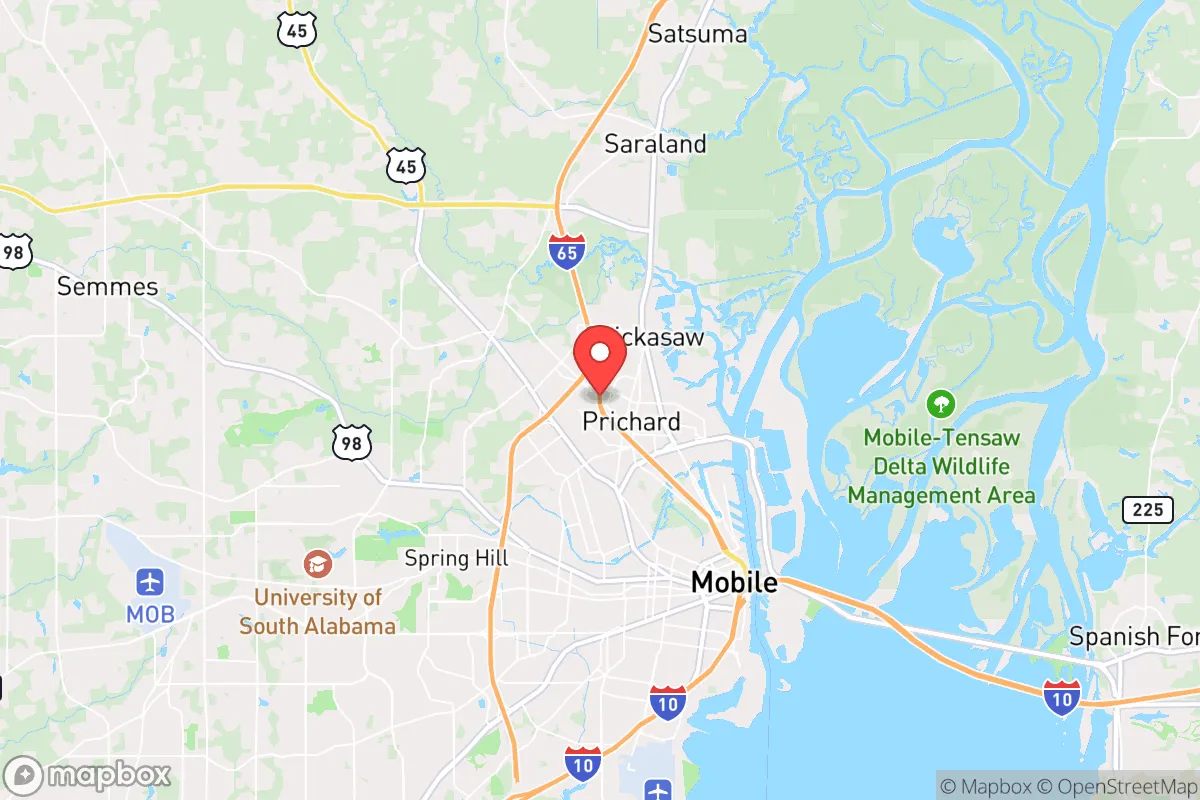
Prichard sits directly north of Mobile, placing it within a few miles of Mobile Bay and the Gulf of Mexico. For a survivalist, this proximity to a major saltwater body is a double-edged sword. On the positive side, it offers a near-limitless supply of seafood—fish, crabs, and shrimp—which can be a critical protein source if supply chains collapse. The climate is humid subtropical, with mild winters that rarely see freezing temperatures, meaning a reliable growing season for food production and reduced heating fuel demands. The area is also part of the Gulf Coastal Plain, characterized by flat terrain and sandy soils that drain well, which is advantageous for rainwater catchment and gardening. The Mobile-Tensaw River Delta, one of the largest river deltas in the United States, lies just to the north and east, providing a massive, sparsely populated wilderness area for hunting, foraging, and potential retreat. This delta is a natural fortress of swamps, bayous, and dense forest, making it difficult to traverse without local knowledge—a significant defensive asset.
Risks, exposures, and proximity to fallout-relevant landmarks
The most glaring negative for Prichard is its location relative to Mobile, a major port city and industrial hub. Mobile is home to the Port of Mobile, one of the busiest in the nation, handling massive volumes of container shipping, coal, and petroleum products. It also hosts chemical plants, oil refineries, and the Austal USA shipyard, which builds military vessels. In a scenario involving a major conflict or economic collapse, Mobile would be a high-priority target for disruption, whether from cyberattacks, physical sabotage, or conventional military strikes. The fallout from such events—whether literal radioactive fallout from a nuclear detonation or the secondary effects of industrial fires and chemical releases—would directly threaten Prichard, which lies only 5-10 miles north of the city center. Additionally, the Mobile Bay Causeway and the I-10 tunnel are critical chokepoints that would likely be compromised in a crisis, cutting off Prichard from the eastern shore and the Florida panhandle. The city itself has a violent crime rate roughly four times the national average, making it a high-risk area for everyday living, let alone during a breakdown of civil order. The presence of abandoned industrial sites and brownfields within Prichard also poses long-term environmental health risks.
Practical resilience for a relocator: food, water, energy, and defensibility
For a relocator considering Prichard as a base, the practical challenges are severe. The municipal water system is aging and unreliable, with frequent boil-water notices and infrastructure failures reported in local news. A prepper would need to assume they must be completely self-sufficient for water, either through a deep well (if property allows) or extensive rainwater collection. The flat, sandy soil is workable for gardening, but it is nutrient-poor and requires significant amendment. The long growing season is a plus, but the high humidity and pest pressure (mosquitoes, fire ants, and invasive plants) demand constant management. Energy-wise, the region is prone to hurricanes and severe thunderstorms, meaning grid power is frequently knocked out for days or weeks. Solar panels with battery storage are a wise investment, but they must be secured against both weather and theft. Defensibility is the biggest concern. Prichard's layout is a typical suburban grid with many vacant lots and derelict structures, offering numerous points of entry and concealment for threats. A better strategy would be to use Prichard as a staging area for acquiring supplies from Mobile's ports and warehouses, then retreating to a more defensible rural property north of the city, perhaps in the Citronelle or Mount Vernon areas, where land is cheaper and population density drops sharply. The presence of the Mobile Regional Airport and Brookley Aeroplex (a former Air Force base) just south of Prichard also introduces the risk of military or government activity drawing unwanted attention.
In the overall strategic picture, Prichard, AL, is best viewed as a high-risk, high-reward location for a survivalist with a specific plan. It is not a place to settle down and build a homestead. Rather, it is a potential forward operating base for someone who understands the risks of being near a major port and industrial target, but who wants to exploit the resource wealth of the Gulf Coast and the Mobile-Tensaw Delta. The city's decay means property is cheap, but that cheapness comes with the cost of high crime, poor infrastructure, and proximity to a likely crisis epicenter. For the conservative prepper who values self-reliance and is willing to maintain a low profile, the surrounding region offers genuine advantages in food, water, and natural cover. But Prichard itself should be approached with extreme caution, and only as part of a larger, more defensible network of positions further inland. The smart move is to treat it as a resource node, not a home.

* Values derived from national, state, county, city and local statistics and may differ in a specific area. Last updated: 2026-04-19T19:07:22.000Z
Narrative content on this page is AI-generated and may contain mistakes. Verify any details that matter before acting on them.
ReloMaps may earn a commission from affiliate links at no extra cost to you.

