 Popular
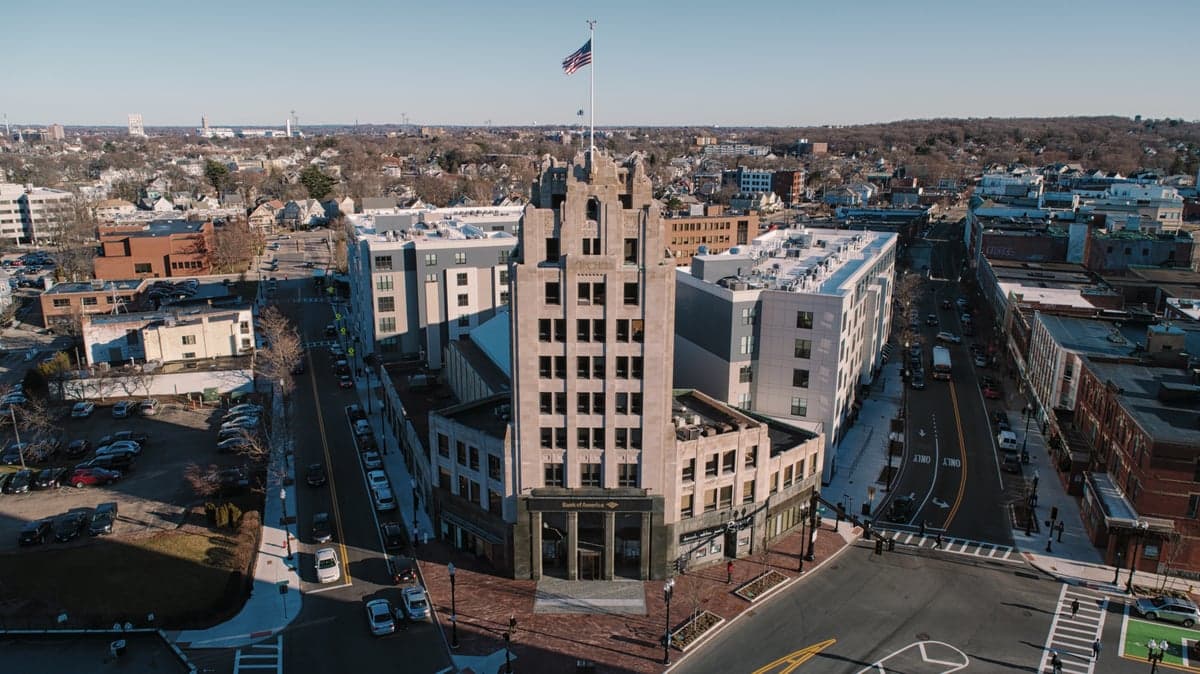
Photo: Wikipedia
Demographics of Quincy, MA
Affluence Level in Quincy, MA
A middle-class area roughly in line with national averages across income, home values, education, and employment.
People of Quincy, MA
Quincy, Massachusetts, is a dense, historic city of 101,361 residents that blends deep-rooted Yankee and Irish Catholic traditions with a rapidly growing East and Southeast Asian majority. Its population is notably well-educated—48.6% hold a college degree—and increasingly diverse, yet it retains a strong sense of neighborhood identity shaped by distinct immigrant waves. The city’s character today is defined by a mix of established single-family home districts and newer immigrant enclaves, creating a place where old Boston-area customs coexist with vibrant Asian-owned businesses and cultural institutions.
How the city was settled and grew
Quincy’s original population was English Puritan, drawn by the fertile coastal land and shipbuilding opportunities along the Town River and Quincy Bay. The city was part of Braintree until 1792, and its early economy revolved around farming, fishing, and granite quarrying—the famous Quincy granite built the Bunker Hill Monument. By the mid-19th century, the granite and shipbuilding industries attracted a wave of Irish immigrants fleeing the Great Famine. These families settled in Germantown (named for an earlier German settlement that faded) and Houghs Neck, working the quarries and docks. A second major wave came from Italian immigrants in the early 1900s, who clustered in Wollaston and North Quincy, establishing tight-knit Catholic parishes and small businesses. The city’s population grew steadily through the mid-20th century, peaking at around 88,000 in 1970, as second- and third-generation Irish and Italian families moved into newer subdivisions like West Quincy and South Quincy.
Modern era (post-1965)
The 1965 Hart-Cellar Act reshaped Quincy’s demographics dramatically. The first major post-1965 arrivals were Chinese immigrants, many from Hong Kong and Guangdong, who began settling in North Quincy in the 1980s and 1990s. This area now has a dense concentration of Chinese-owned restaurants, grocery stores, and professional services. A second Asian wave came from Vietnam and Korea in the 1990s and 2000s, with families drawn to Quincy’s affordable housing stock relative to Boston and its strong public schools. These groups concentrated in Wollaston and Adams Shore, where Asian-language signage and Buddhist temples are now common. Meanwhile, the city’s Black population (6.1%) and Hispanic population (5.8%) grew more slowly, with Black families settling primarily in West Quincy and Hispanic households spreading across the city’s rental-heavy areas. The Indian-subcontinent population (4.3%) is a smaller but visible presence, concentrated in South Quincy near the commuter rail. Quincy’s white population, still the largest single group at 54.4%, has aged in place in older neighborhoods like Houghs Neck and Germantown, while younger white families have been priced out of Boston and are moving into newer developments along the Quincy Center waterfront.
The future
Quincy’s population is heading toward a continued diversification, with East and Southeast Asian communities likely to grow further as immigration from China and Vietnam remains steady and as second-generation Asian families stay in the city. The white population is slowly declining as older residents pass away and younger white families choose outer suburbs, but the city’s strong school system and commuter rail access may slow that trend. The Indian-subcontinent population is growing from a small base, driven by tech workers employed in Boston’s innovation economy, and is likely to expand in South Quincy and near the Quincy Center MBTA station. The city is not homogenizing; instead, it is tribalizing into distinct enclaves—North Quincy remains heavily Chinese, Wollaston is mixed Asian and Italian, and Houghs Neck stays predominantly white and Irish. The next 10-20 years will likely see Quincy become a majority-minority city, with East and Southeast Asians forming the largest bloc, while the city’s political and civic leadership gradually reflects this shift.
For someone moving in now, Quincy offers a rare combination: a walkable, historic New England city with strong schools and direct transit to Boston, but with a demographic landscape that is still in flux. New residents should expect neighborhood life to be shaped by distinct ethnic communities rather than a melting pot, and should consider which enclave best matches their priorities for schools, commute, and cultural fit.

* Values derived from national, state, county, city and local statistics and may differ in a specific area. Last updated: 2026-05-02T14:10:01.000Z
Narrative content on this page is AI-generated and may contain mistakes. Verify any details that matter before acting on them.
ReloMaps may earn a commission from affiliate links at no extra cost to you.

