 Popular
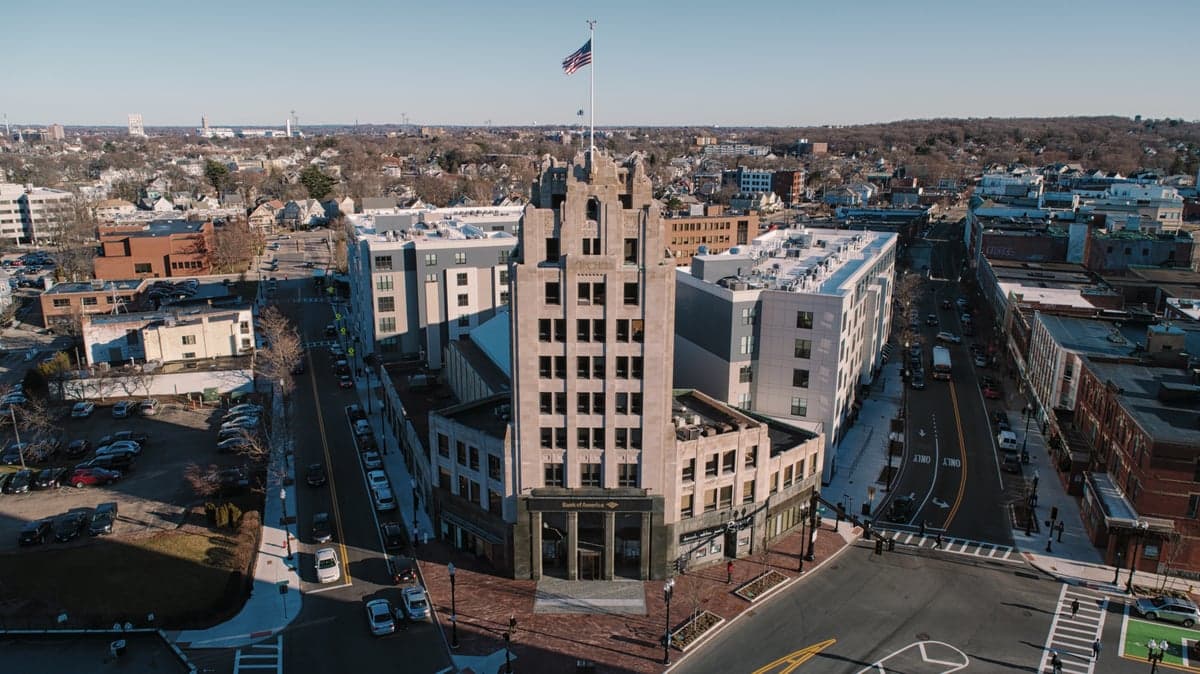
Photo: Wikipedia
Quality of Life in Quincy, MA
A high quality of life with strong walkability, manageable living costs, healthy neighborhood signals, and solid amenity access.
What does Quality of Life tell us?
Quality of Life blends cost of living, nearby amenities, socioeconomic signals, and neighborhood character. City-level scores represent the whole municipality; individual neighborhoods can differ.
What does this tell us?
Quality of Life blends cost of living, nearby amenities, socioeconomic signals, and neighborhood character. City-level scores represent the whole municipality; individual neighborhoods can differ.
Cost of Living
88% above national average
The Real Cost of Living in Quincy, MA for 2026
| Tier | Individual | Family (4) |
|---|---|---|
| Survival | $32k | $60k |
| Comfortable | $105k | $155k |
| Luxury | $155k+ | $240k+ |
| Elite (Top 5%) | $182k+ | $282k+ |
62%
The Area Signal
A metric tracking the socioeconomic signals of the area.
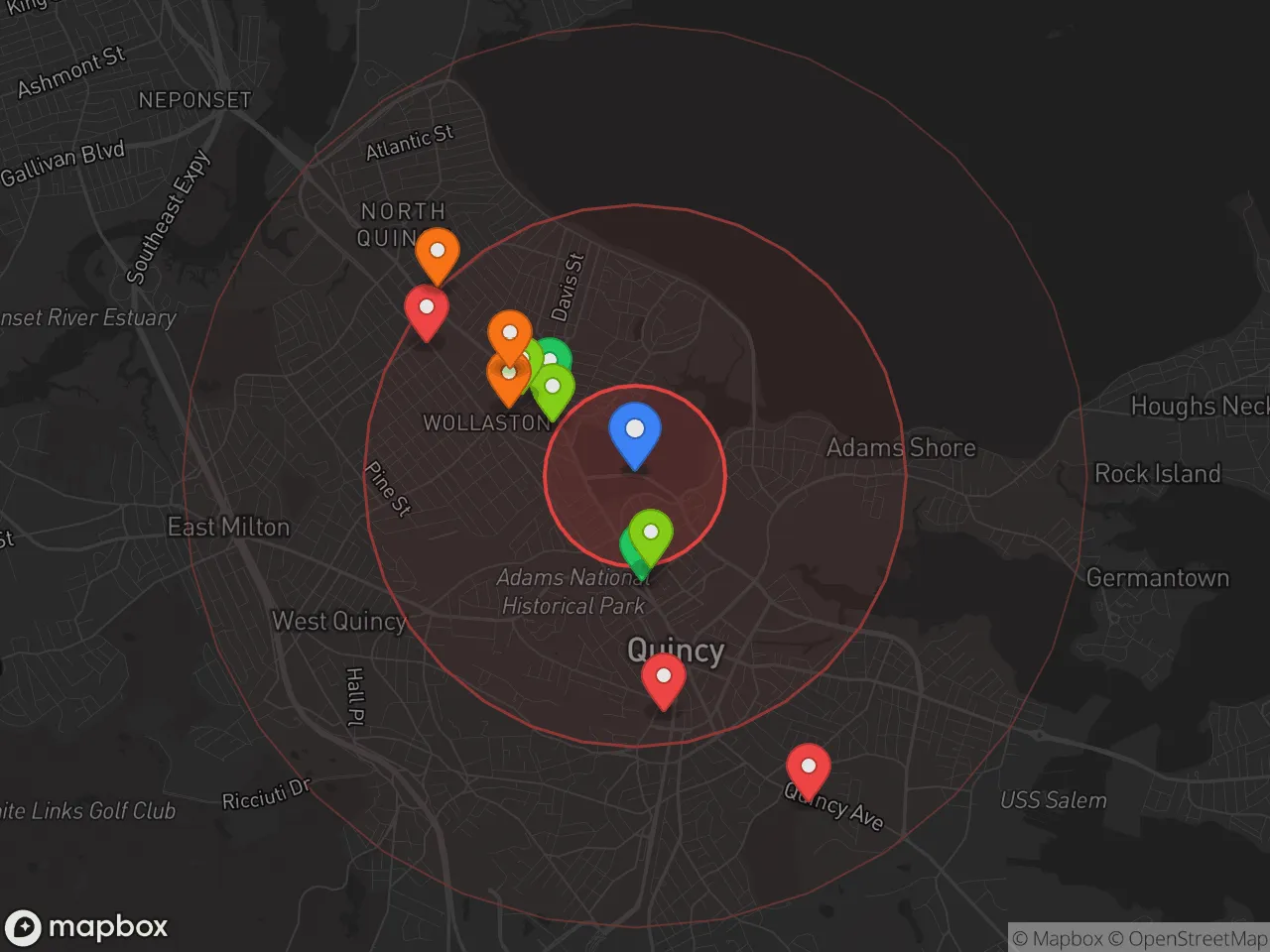
Hobbies
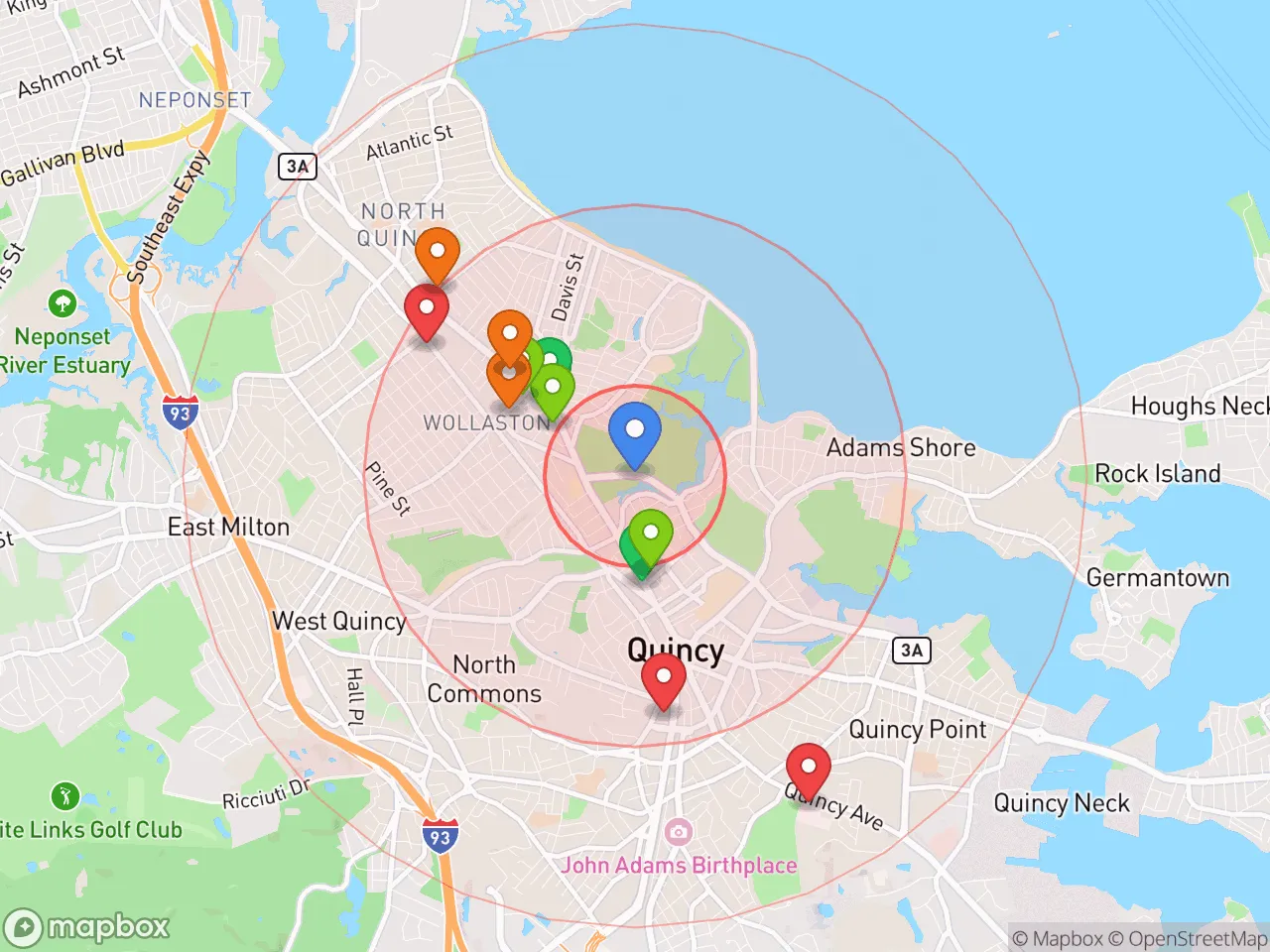
Explore the areaGroceries
5 within 10 miles
Gas
20 within 10 miles
Hospital
20 within 20 miles
Airport
PDX — Portland International Jetport
Post Office
USPS — Quincy, MA
Critical Amenities
Quality-of-Life Analysis
Quincy, Massachusetts, is an affluent, densely settled city of roughly 100,000 residents that blends historic New England charm with direct access to Boston’s economy. The population skews older and more educated than the national average, with a significant Asian-American community—particularly of Chinese and Vietnamese heritage—that shapes the city’s cultural and culinary landscape. Median household income hovers around $85,000, well above the U.S. median, reflecting a professional-class workforce drawn by the city’s position as the birthplace of two U.S. presidents and its reputation as a quieter, more affordable alternative to Boston proper.
Cost of living, housing affordability, and how Quincy compares to Boston
Quincy’s cost of living index stands at 188—nearly double the U.S. average—driven primarily by housing. The median home value is $598,100, and the median rent is $1,998 per month. While these figures are steep by national standards, they represent a significant discount compared to Boston, where the median home value exceeds $750,000 and rents routinely top $2,800. For buyers, Quincy offers more square footage per dollar and a higher likelihood of single-family homes with yards. Renters face a tight market, but the city’s rent stabilization ordinance (passed in 2023) caps annual increases at 7% plus inflation, providing some predictability. Property taxes are moderate for Massachusetts at roughly 1.1% of assessed value, though recent reassessments have pushed bills higher. The trade-off for lower housing costs is a punishing commute: the average one-way trip is 34.2 minutes, with many residents relying on the Red Line subway or the commuter rail into South Station. Gas and parking costs in Boston add to the transportation burden, making a car-free lifestyle feasible only for those living within walking distance of the Quincy Center or North Quincy T stations.
Schools, parks, and the daily rhythm of life in Quincy
Quincy Public Schools serve roughly 9,000 students and are generally rated above average for Massachusetts, with North Quincy High School and Quincy High School both offering robust Advanced Placement programs and strong STEM pathways. The city also hosts several well-regarded private and parochial options, including Boston College High School (a Jesuit institution) and the independent Thayer Academy in nearby Braintree. Daily life revolves around Quincy Center’s walkable downtown, which features a mix of independent restaurants (especially Vietnamese pho shops and Chinese bakeries), the historic Adams National Historical Park, and the 1.5-mile-long Quincy Shore Drive along Wollaston Beach. The city maintains 28 parks, with Faxon Park and the Blue Hills Reservation offering hiking and mountain biking within a 15-minute drive. For families, the presence of the Thomas Crane Public Library—a Carnegie library with a strong children’s program—and the Quincy Community Schools adult education program add to the sense of a place that values lifelong learning. Nightlife is modest, with a handful of Irish pubs and craft beer bars, but most residents head into Boston for concerts, theater, or late-night dining. The city’s dense, walkable neighborhoods near the T stations foster a more urban feel than the surrounding South Shore suburbs, while outlying areas like Squantum and Houghs Neck retain a quieter, almost coastal village character.
Quincy is best suited for professionals and families who prioritize a shorter commute to Boston than outer suburbs like Framingham or Lowell, but who cannot afford or do not want the density and price of Cambridge or Somerville. Empty-nesters and retirees also find the city appealing due to its walkable downtown, access to healthcare at Quincy Medical Center, and proximity to Boston’s cultural institutions. Those seeking a quiet, car-dependent suburban lifestyle with large lots and top-tier public schools may prefer Milton or Hingham, while anyone who values ethnic diversity, historic character, and direct transit to downtown Boston will find Quincy a pragmatic and livable choice. The city’s affordability gap relative to Boston is narrowing, but for now, it remains one of the few places inside the I-95 belt where a family can buy a single-family home without a seven-figure budget.

Crime in Quincy, MA
Lower crime rates than 76% of comparable U.S. locations.
Violent CrimeViolent Crime Analysis
Property CrimeProperty Crime Analysis
Crime Analysis
Quincy, Massachusetts, presents a mixed safety profile for prospective residents. While its violent crime rate of 265.3 incidents per 100,000 people is slightly below the national average for cities of its size, the city's property crime rate of 1,001.5 per 100,000 is notably elevated. As a densely populated suburb of Boston, Quincy benefits from proximity to major economic centers but also contends with the crime pressures typical of a large metro area, where progressive judicial policies in Massachusetts often prioritize rehabilitation over incarceration, potentially contributing to higher recidivism and more criminals on the street.
Crime in context
Quincy's violent crime rate is roughly 28% lower than the national average for U.S. cities, a figure that aligns with many older, established suburbs in the Northeast. However, its property crime rate is about 15% higher than the national median, driven largely by thefts from vehicles and package thefts in dense residential neighborhoods. Compared to the state of Massachusetts, which has a violent crime rate of approximately 300 per 100,000 and a property crime rate near 1,200 per 100,000, Quincy fares slightly better on both counts. Still, the city's location within a liberal-leaning judicial district means that offenders—particularly those charged with non-violent property crimes—often face lighter sentences or diversion programs, a factor that can undermine deterrence and public confidence in safety.
What residents experience
Daily life in Quincy involves a heightened awareness of property crime. Residents commonly report stolen packages from doorsteps, break-ins of unlocked cars, and occasional bike thefts, especially in the densely packed neighborhoods near the Red Line T stations like Quincy Center and North Quincy. Violent crime is less frequent but not absent; incidents tend to be concentrated in specific areas and often involve disputes among individuals known to one another rather than random attacks on the public. The presence of progressive district attorneys in Norfolk County means that even repeat property offenders may cycle through the system quickly, a pattern that frustrates many homeowners and small business owners who feel the justice system prioritizes offender welfare over victim protection.
Neighborhood-level variation is significant. The more affluent, suburban-style areas of Wollaston and Squantum generally report lower crime rates, with residents describing a quiet, family-oriented atmosphere. In contrast, the downtown Quincy Center corridor and parts of Germantown see higher volumes of both property crime and police calls for service. For those considering a move, choosing a street with strong neighborhood watch participation and secure off-street parking can mitigate the most common risks, though the broader challenge of a lenient judicial environment remains a concern for long-term safety planning.
* Values derived from national, state, county, city and local statistics and may differ in a specific area. Last updated: 2026-05-02T14:10:01.000Z
Narrative content on this page is AI-generated and may contain mistakes. Verify any details that matter before acting on them.
ReloMaps may earn a commission from affiliate links at no extra cost to you.

