 Popular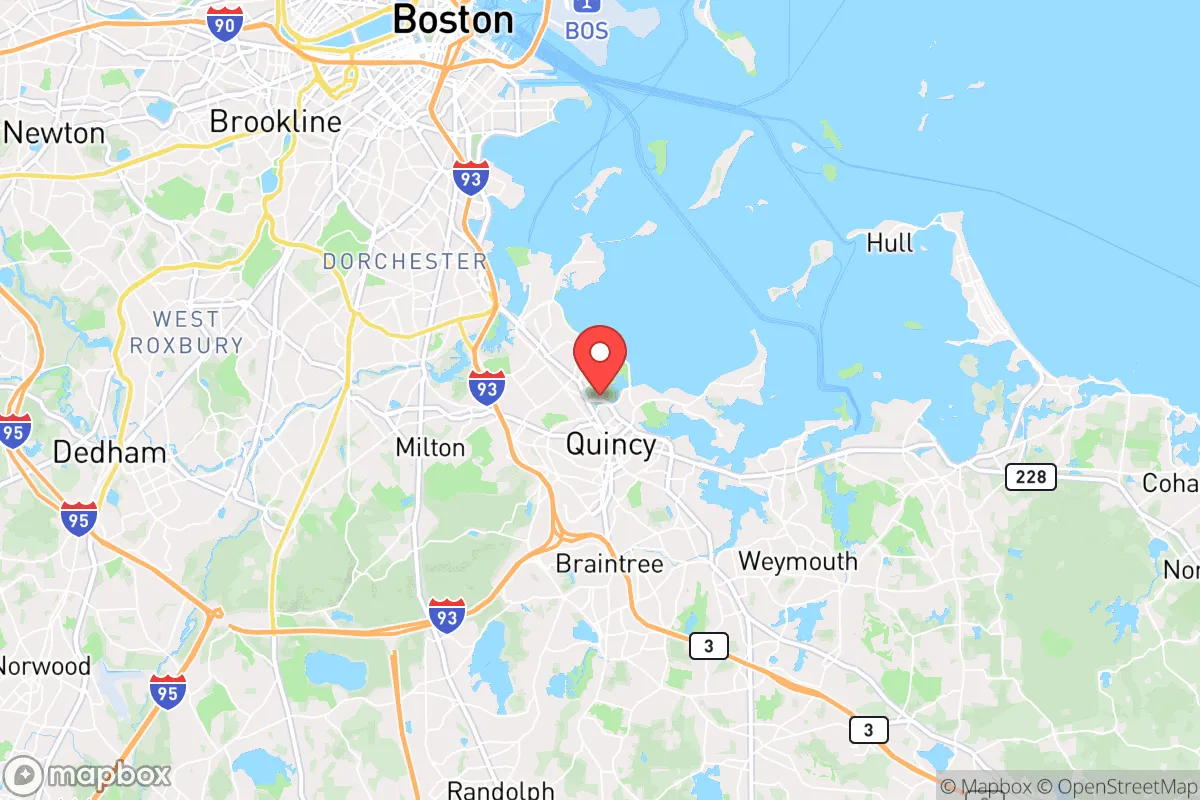
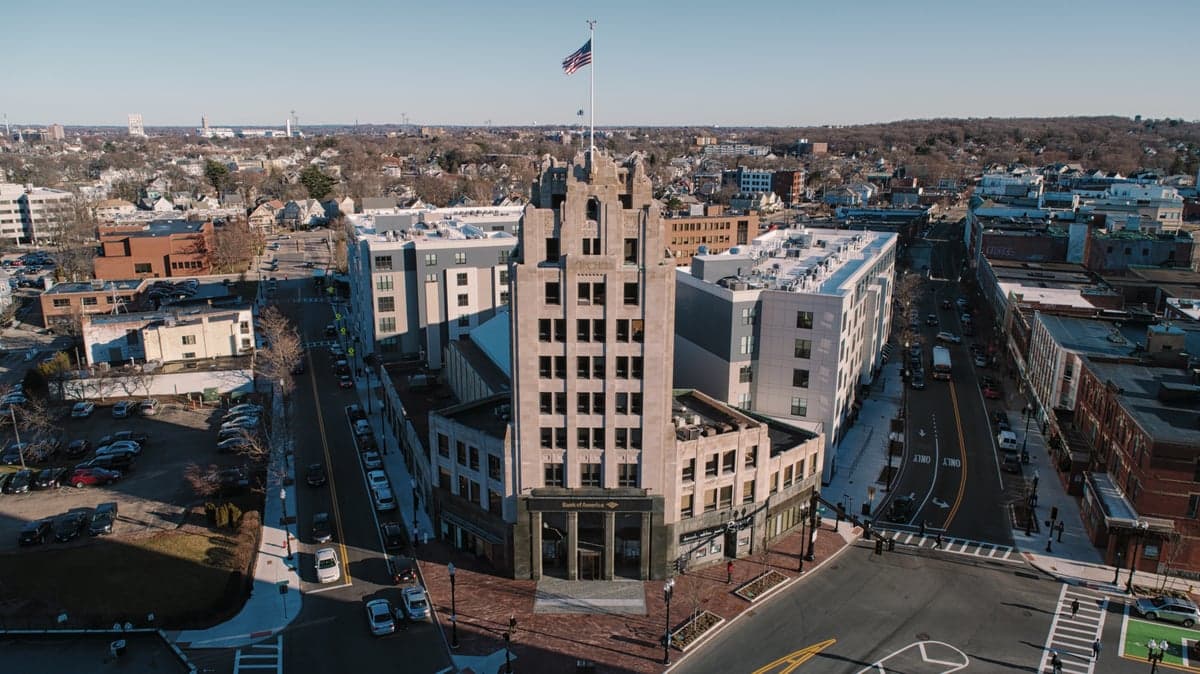
Photo: Wikipedia
Strategic Assessment of Quincy, MA
Multiple tactical vulnerabilities. Population density, target proximity, or disaster risk are likely compounding. A retreat property and exit planning is required.
What does the Strategic Assessment tell us?
Our Strategic Assessment grades tactical survivability of an area. Major population centers, military targets, fallout zones, natural disasters, and border exposure all drive risk — lower exposure means a more defensible position in a crisis.
This is heavily inspired by Joel Skousen's Strategic Relocation book. Highly recommended you checkout the book ($)What does this tell us?
Our Strategic Assessment grades tactical survivability of an area. Major population centers, military targets, fallout zones, natural disasters, and border exposure all drive risk — lower exposure means a more defensible position in a crisis.
This is heavily inspired by Joel Skousen's Strategic Relocation book. Highly recommended you checkout the book ($)Strategic Pillars

Key Distances
Regional Safe Places
Below is our recommended "safe zones" in Massachusetts and the surrounding area based on our strategic heuristics. For most people, it's unrealistic to live in a “safe zone” full-time due to work, family or other personal reasons. They tend to be more rural. However, many of these areas are perfect for second homes and retreat properties that double as a vacation home or even a short-term rental.
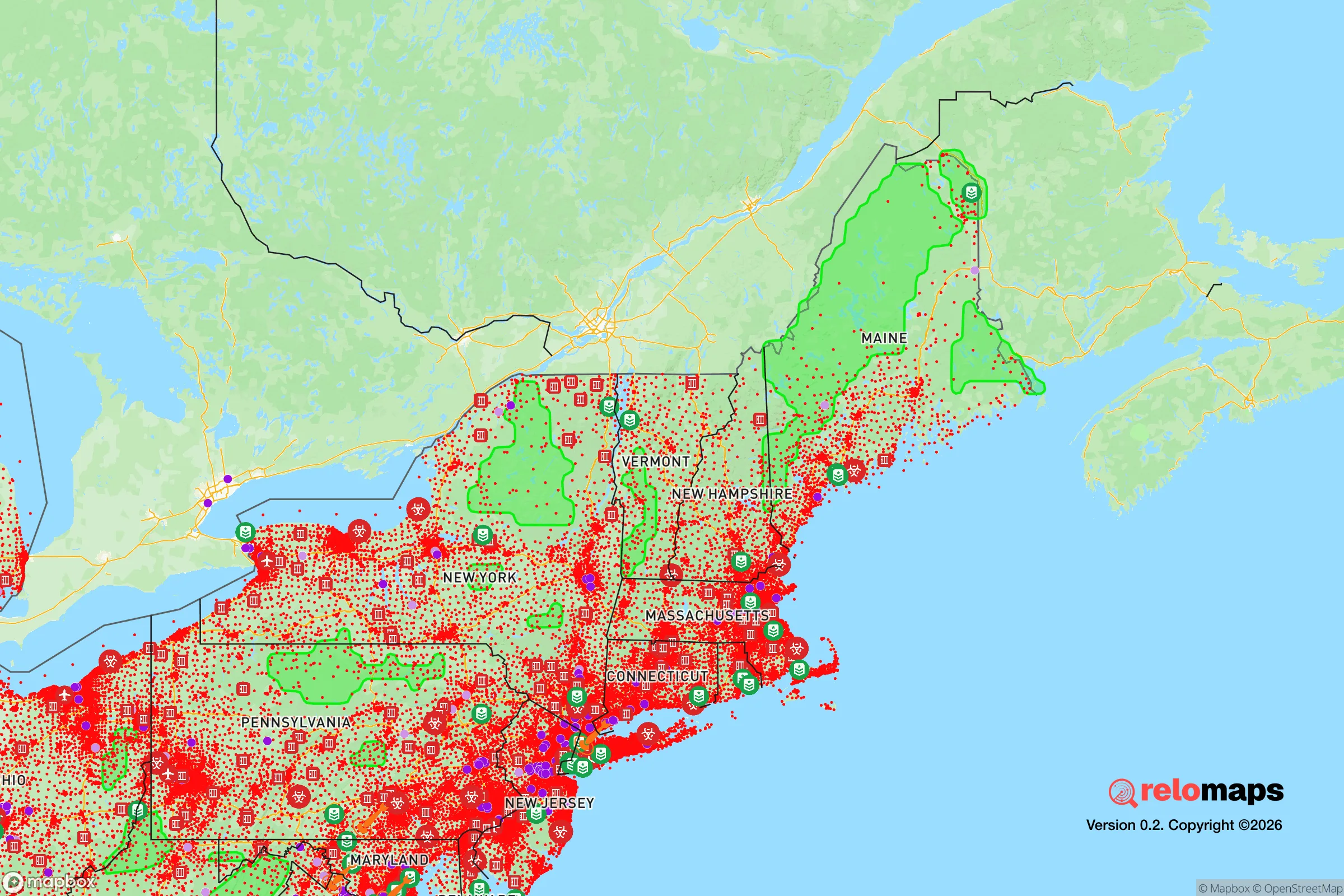
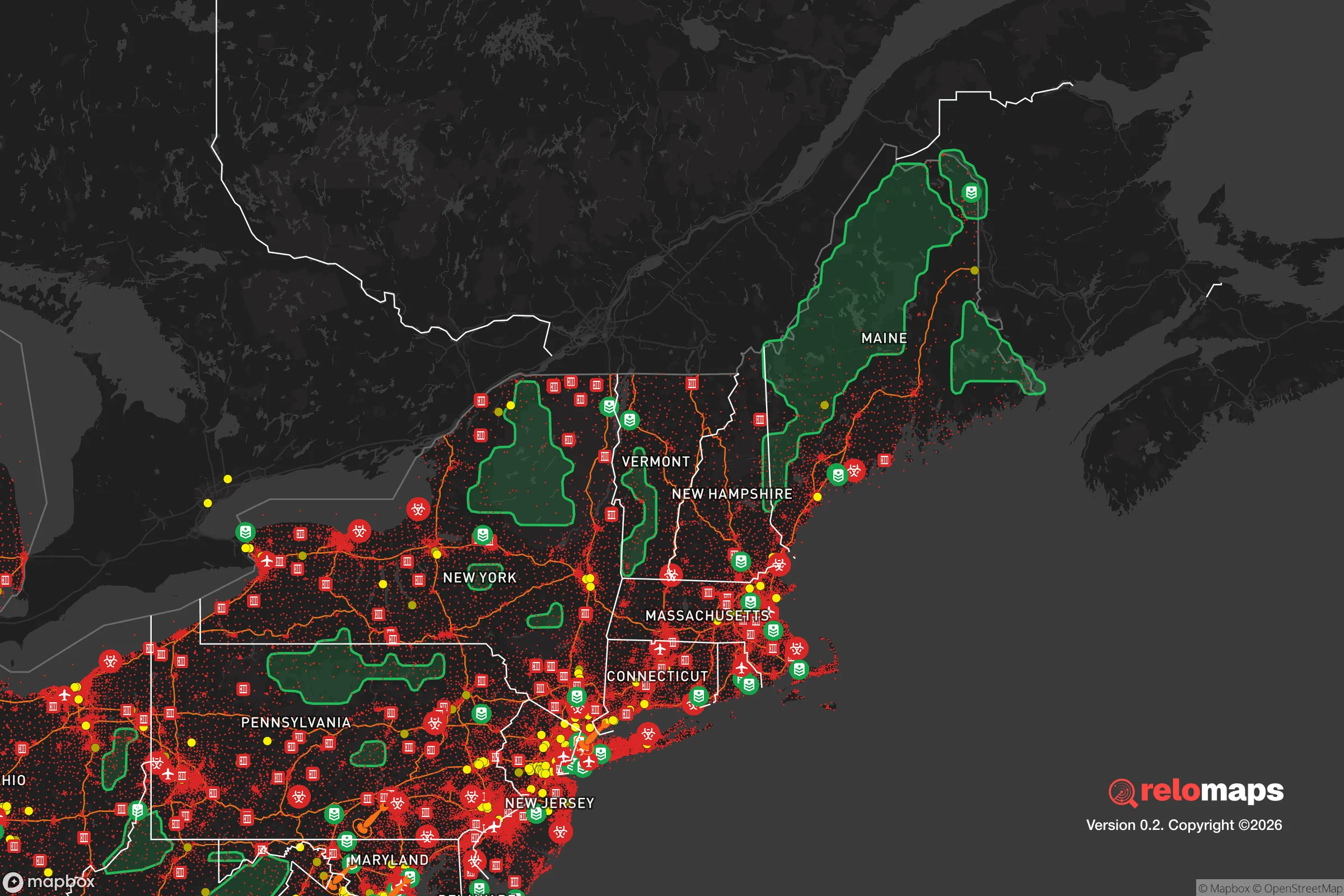


Important Note: For informational purposes only. This does not mean nothing bad ever happens in the green zones. Please use common sense. This is based on public data and modeled with AI. We tried to take a conservative approach but mistakes happen. We update this regularly as new information becomes available.
Solar Generator Recommendations
Backup power matters more here than in safer locations. We've picked three solar generators across budgets and capacity tiers — start with the budget unit if you only need a few essentials, or step up if you want to run a fridge and HVAC for days at a time.

Jackery Portable Power Station Explorer 300
Budget OptionPower on the Go: Weighing only 11 lbs, it's convenient to set up and store with book-sized foldable solar panels

BLUETTI Portable Power Station AC180
Designed for both indoor and outdoor scenarios, AC180 is highly capable as it has a robost capacity and continuous output power.

EF ECOFLOW DELTA Pro Ultra Power Station
Upgraded PickEcoFlow DELTA Pro Ultra is a whole-home energy system designed to grow with your family. Integrated with the Smart Home Panel 2, it scales to meet your evolving energy needs — keeping your home powered, intelligent, and secure through every stage of life.
We earn a commission, at no additional cost to you.
Strategic Assessment Analysis
Quincy, Massachusetts, presents a complex strategic picture for the conservative prepper or survivalist. While its location on Boston Harbor offers certain logistical advantages, its proximity to a major metropolitan center and critical infrastructure makes it a high-risk zone for anyone prioritizing long-term resilience and security. The city’s dense population, reliance on fragile supply chains, and exposure to both natural and man-made threats mean that a relocator must approach Quincy with eyes wide open, treating it less as a sanctuary and more as a forward operating base with significant liabilities.
Geographic position and natural advantages for a prepper
Quincy sits on a peninsula jutting into Boston Harbor, roughly 10 miles south of downtown Boston. Its coastal position provides access to the Atlantic Ocean, which could be a double-edged sword. On one hand, the harbor offers potential for maritime escape routes, fishing, and water-based resupply—critical if road networks become compromised. The city’s numerous parks, including the 1,300-acre Blue Hills Reservation to the west, provide some wooded terrain for short-term evasion or foraging. However, the area’s natural advantages are severely limited by its urban density. Quincy’s population of over 100,000 people means that any grid-down scenario would quickly turn the city into a competition zone for resources. The Blue Hills, while a green buffer, are not remote enough to offer true defensibility; they are a state park crisscrossed by trails and roads, easily accessible to anyone fleeing Boston. The coastline itself is heavily developed, with few secluded coves or defensible points. For a relocator, the key takeaway is that Quincy’s geography offers a slight edge in water access and nearby open space, but it is not a bug-out location—it is a place to transit through or use as a temporary staging area before moving inland or to the islands.
Risks, exposures, and proximity to fallout-relevant landmarks
The most glaring risk for a prepper in Quincy is its proximity to Boston, a Tier 1 target for any large-scale conflict or terrorist event. Boston is home to Logan International Airport, the Port of Boston, major financial institutions, and research facilities like MIT and Harvard—all potential targets for a nuclear, biological, or cyber attack. Quincy itself sits directly adjacent to the Fore River Shipyard, a historic naval construction site that, while currently used for commercial shipbuilding, could become a military asset in a crisis. The city is also near the Pilgrim Nuclear Power Station in Plymouth (about 20 miles south), a decommissioned plant that still stores spent fuel on site. A catastrophic failure or attack there could render large swaths of the South Shore uninhabitable. Additionally, Quincy is crisscrossed by major transportation arteries—Interstate 93, Route 3, and the Red Line subway—that would become chokepoints during an evacuation. In a civil unrest scenario, these routes would be clogged with panicked Bostonians, making any attempt to leave the city a nightmare. The city’s dense residential neighborhoods, many with narrow streets and limited egress, amplify the risk of being trapped. For a conservative-minded relocator, the calculus is clear: Quincy’s value as a strategic location is undermined by its vulnerability to both direct and cascading threats from the Boston metro area.
Practical resilience for a relocator: food, water, energy, and defensibility
When assessing Quincy’s practical resilience, the picture is sobering. The city relies entirely on external supply chains for food, with most groceries coming from warehouses in the Boston suburbs. In a prolonged disruption, local supermarkets would empty within days. The city’s water supply comes from the Massachusetts Water Resources Authority (MWRA), which draws from the Quabbin Reservoir—a single-point-of-failure system that could be compromised by contamination or sabotage. Quincy has no significant local water source; the harbor is saltwater, and the few ponds (like Furnace Brook Pond) are small and likely to be quickly depleted. Energy is equally fragile: the city is served by Eversource and National Grid, with power lines running along the same vulnerable corridors as roads. A coordinated attack or severe storm could knock out electricity for weeks. Natural gas pipelines also run through the area, presenting an explosion risk. Defensibility is poor. Quincy is a dense, flat coastal city with few natural chokepoints. The neighborhoods of Wollaston, North Quincy, and Quincy Center are tightly packed with multi-family homes and apartments, offering little room for perimeter security. The best a relocator could do is secure a single-family home on a dead-end street near the Blue Hills, but even then, the surrounding population density makes long-term defense untenable. For those serious about preparedness, Quincy is a location to avoid unless you have a specific, short-term mission there—such as maintaining a safe house for a quick extraction by boat or air.
The overall strategic picture for Quincy is one of high risk and limited reward for the conservative prepper. Its coastal location and proximity to Boston make it a prime candidate for being caught in the crosshairs of a major event, whether that be a terrorist attack, a nuclear incident, or widespread civil unrest. The city’s infrastructure is brittle, its population dense, and its escape routes easily clogged. While a relocator could theoretically use Quincy as a temporary base to monitor events in Boston or to access the harbor for a maritime escape, the long-term viability of living there in a crisis is poor. For a single individual or family seeking a defensible, self-sufficient location, the smart move is to look further inland—toward central or western Massachusetts, where population density drops, water sources are more reliable, and the threat from urban fallout is reduced. Quincy is a place to pass through, not to dig in. If you are already there, your best strategy is to build a network of contacts in the surrounding towns, stockpile supplies for a 72-hour window, and have a pre-planned bug-out route to the west or north. Anything less is a gamble with odds that are not in your favor.

* Values derived from national, state, county, city and local statistics and may differ in a specific area. Last updated: 2026-05-02T14:10:01.000Z
Narrative content on this page is AI-generated and may contain mistakes. Verify any details that matter before acting on them.
ReloMaps may earn a commission from affiliate links at no extra cost to you.

