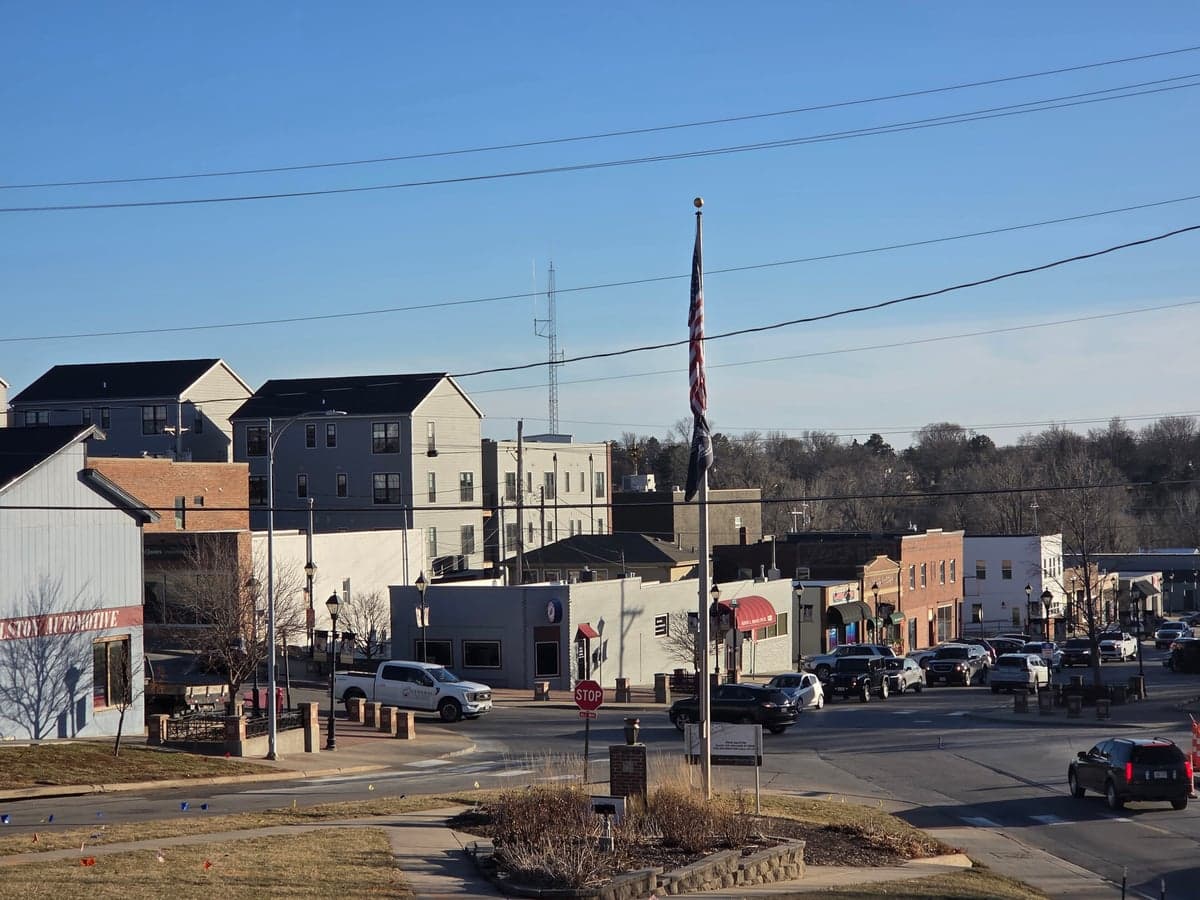
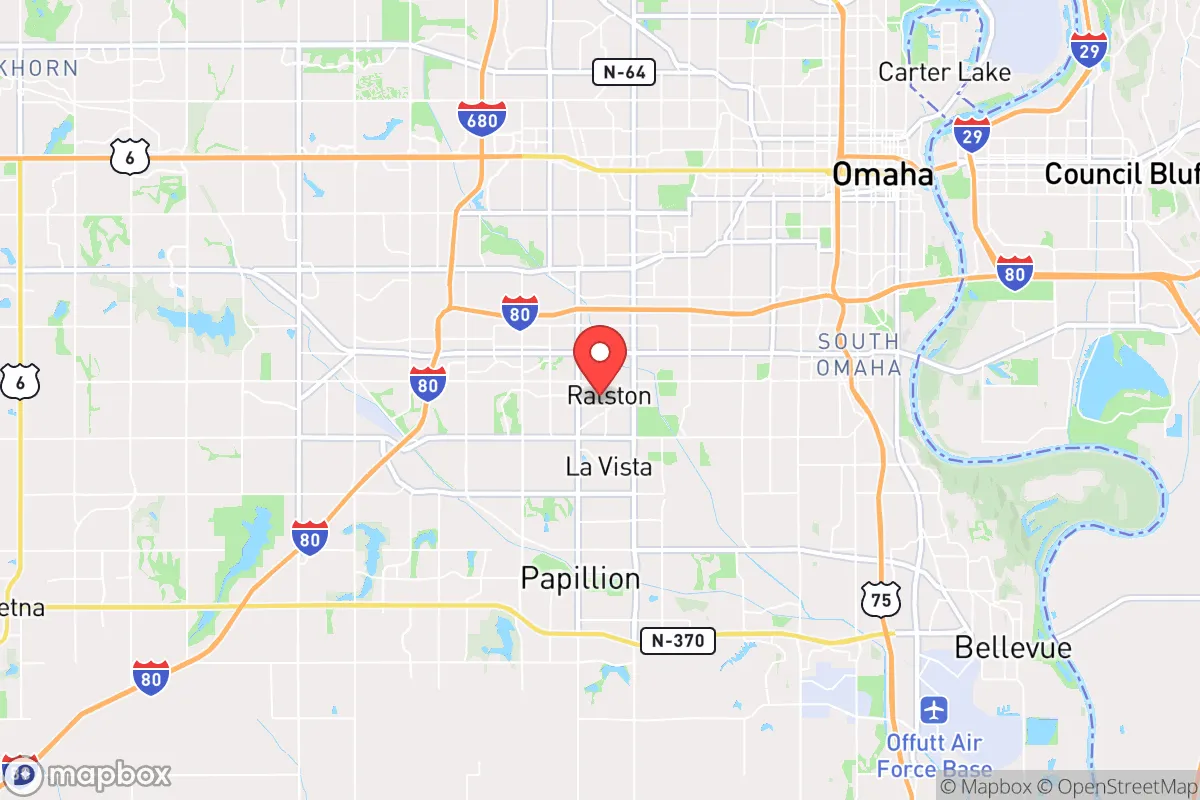
Photo: Wikipedia
Demographics of Ralston, NE
Affluence Level in Ralston, NE
A middle-class area roughly in line with national averages across income, home values, education, and employment.
People of Ralston, NE
Ralston, Nebraska, is a compact, landlocked city of 6,445 residents that blends a strong small-town identity with the pressures of being a mature, fully built-out suburb of Omaha. Its population is predominantly White (71.7%) with a significant and growing Hispanic minority (23.7%), a small foreign-born share of 6.8%, and a college attainment rate of 27.0%. The city’s character is defined by its historic core, its fiercely independent school system, and a sense of being a distinct community rather than just another Omaha neighborhood.
How the city was settled and grew
Ralston’s origins are tied to the transcontinental railroad and the agricultural boom of the late 19th century. Founded in 1888 and named after a railroad official, the city was initially a rural stopover for farmers and ranchers shipping grain and livestock. The first wave of settlers were primarily German and Czech immigrants drawn by cheap land and railroad access. They built the original homes along what is now Main Street and the blocks immediately surrounding the railroad depot, an area still referred to as Old Town Ralston. The city remained a small, ethnically homogeneous farming community through the early 20th century, with growth stunted by its small geographic footprint—just over one square mile. The post-World War II era brought a second wave: returning veterans and their families seeking affordable suburban homes. This period saw the development of the Ralston Park neighborhood, a grid of modest single-family homes built in the 1950s and 1960s that remains the city’s most densely populated residential area.
Modern era (post-1965)
The 1965 Hart-Cellar Act had a limited direct impact on Ralston, as the city was already landlocked and not a primary destination for new international immigration. The major demographic shift of the modern era has been the domestic in-migration of Hispanic families, primarily of Mexican and Central American heritage, beginning in the 1990s. This group was drawn by affordable housing stock and jobs in Omaha’s construction, meatpacking, and service sectors. They concentrated in the older, more affordable housing stock of South Ralston, an area south of Harrison Street characterized by smaller, older homes and a higher density of rental properties. The White population, which was over 90% as recently as 1990, has declined in share as the Hispanic population has grown to 23.7%. The Black population remains negligible at 0.8%, and East/Southeast Asian communities are virtually absent at 0.1%, reflecting Ralston’s lack of the employment anchors or ethnic institutions that draw those groups to larger Omaha neighborhoods. The city’s Ralston Heights area, a newer pocket of homes built in the 1970s and 1980s, has remained predominantly White and more affluent, creating a subtle east-west socioeconomic divide within the city limits.
The future
Ralston’s population is trending toward a two-group dynamic: a stable, aging White population and a younger, growing Hispanic population. The city is fully built out with no room for annexation or large-scale new construction, meaning future growth will come from densification and household turnover rather than new development. The Hispanic share is likely to continue rising, potentially reaching 30-35% within the next decade, as younger families replace older White homeowners. The foreign-born share (6.8%) is modest but may increase slightly as immigrant families from Latin America move into the city’s aging housing stock. The city is not tribalizing into hostile enclaves, but distinct residential patterns persist: Old Town Ralston and South Ralston are becoming more Hispanic, while Ralston Park and Ralston Heights remain predominantly White. The college attainment rate of 27.0% is below the national average, reflecting the city’s blue-collar and service-sector employment base.
For a conservative-leaning individual or family moving in now, Ralston offers a stable, low-crime community with a strong sense of local identity and a respected public school system. The city is becoming more diverse but not in a way that has disrupted its core character. The main risk for newcomers is the lack of growth: property values will appreciate slowly, and the housing stock is aging. Ralston is a place for those who want an established, no-frills suburb with a clear sense of its own history, not a booming exurb with new amenities.

* Values derived from national, state, county, city and local statistics and may differ in a specific area. Last updated: 2026-05-01T04:29:59.000Z
Narrative content on this page is AI-generated and may contain mistakes. Verify any details that matter before acting on them.
ReloMaps may earn a commission from affiliate links at no extra cost to you.

