Photo: Wikipedia
Strategic Assessment of Ralston, NE
Multiple tactical vulnerabilities. Population density, target proximity, or disaster risk are likely compounding. A retreat property and exit planning is required.
What does the Strategic Assessment tell us?
Our Strategic Assessment grades tactical survivability of an area. Major population centers, military targets, fallout zones, natural disasters, and border exposure all drive risk — lower exposure means a more defensible position in a crisis.
This is heavily inspired by Joel Skousen's Strategic Relocation book. Highly recommended you checkout the book ($)What does this tell us?
Our Strategic Assessment grades tactical survivability of an area. Major population centers, military targets, fallout zones, natural disasters, and border exposure all drive risk — lower exposure means a more defensible position in a crisis.
This is heavily inspired by Joel Skousen's Strategic Relocation book. Highly recommended you checkout the book ($)Strategic Pillars

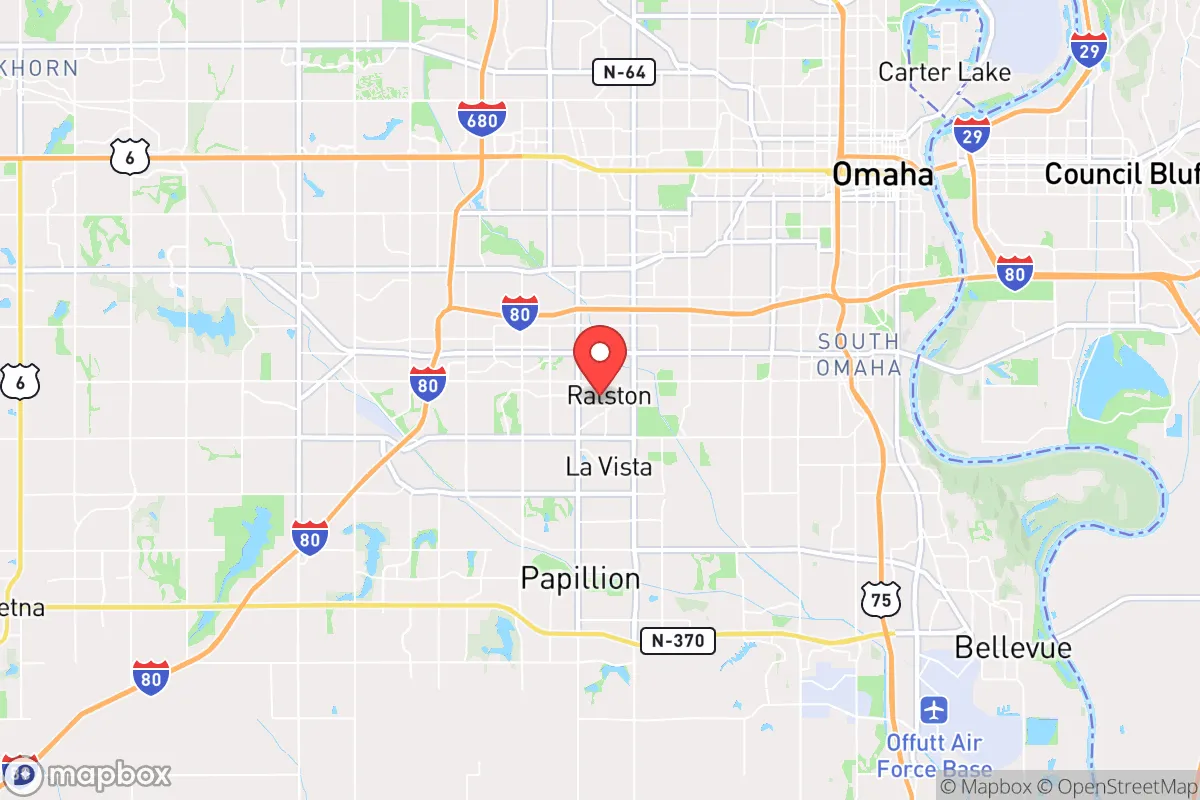
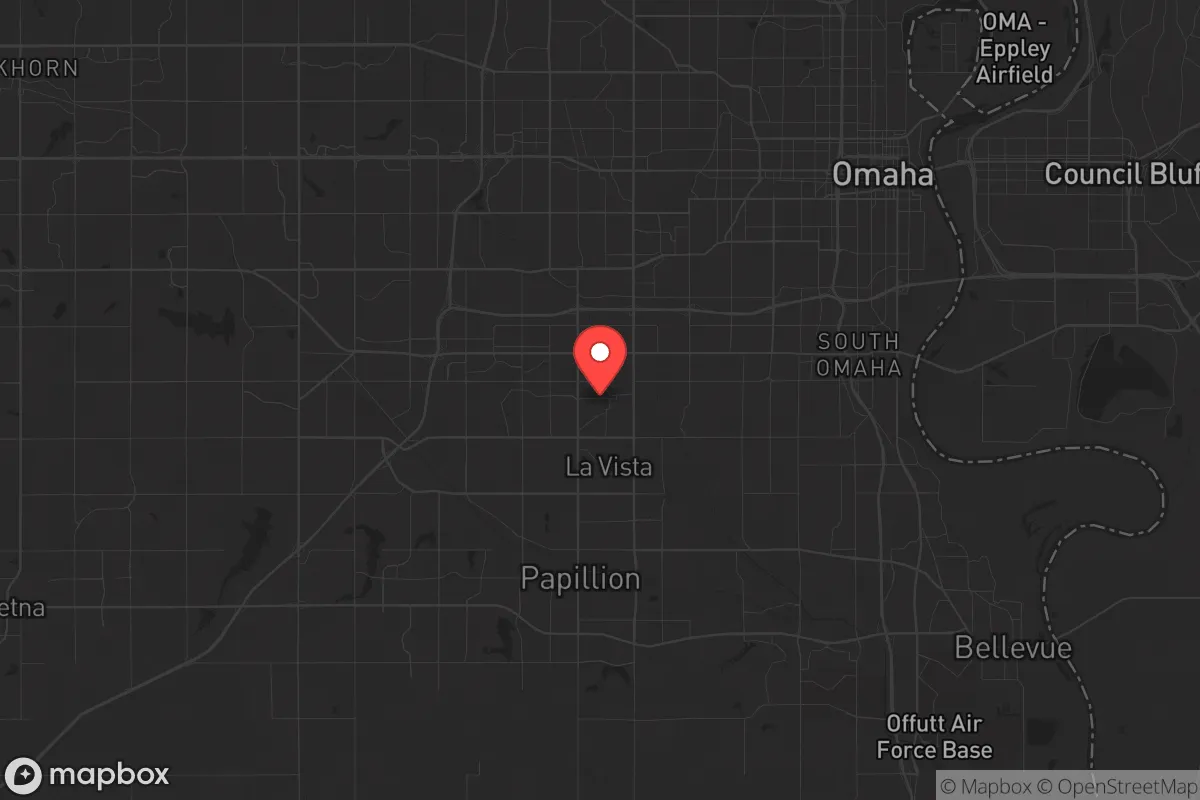
Key Distances
Regional Safe Places
Below is our recommended "safe zones" in Nebraska and the surrounding area based on our strategic heuristics. For most people, it's unrealistic to live in a “safe zone” full-time due to work, family or other personal reasons. They tend to be more rural. However, many of these areas are perfect for second homes and retreat properties that double as a vacation home or even a short-term rental.
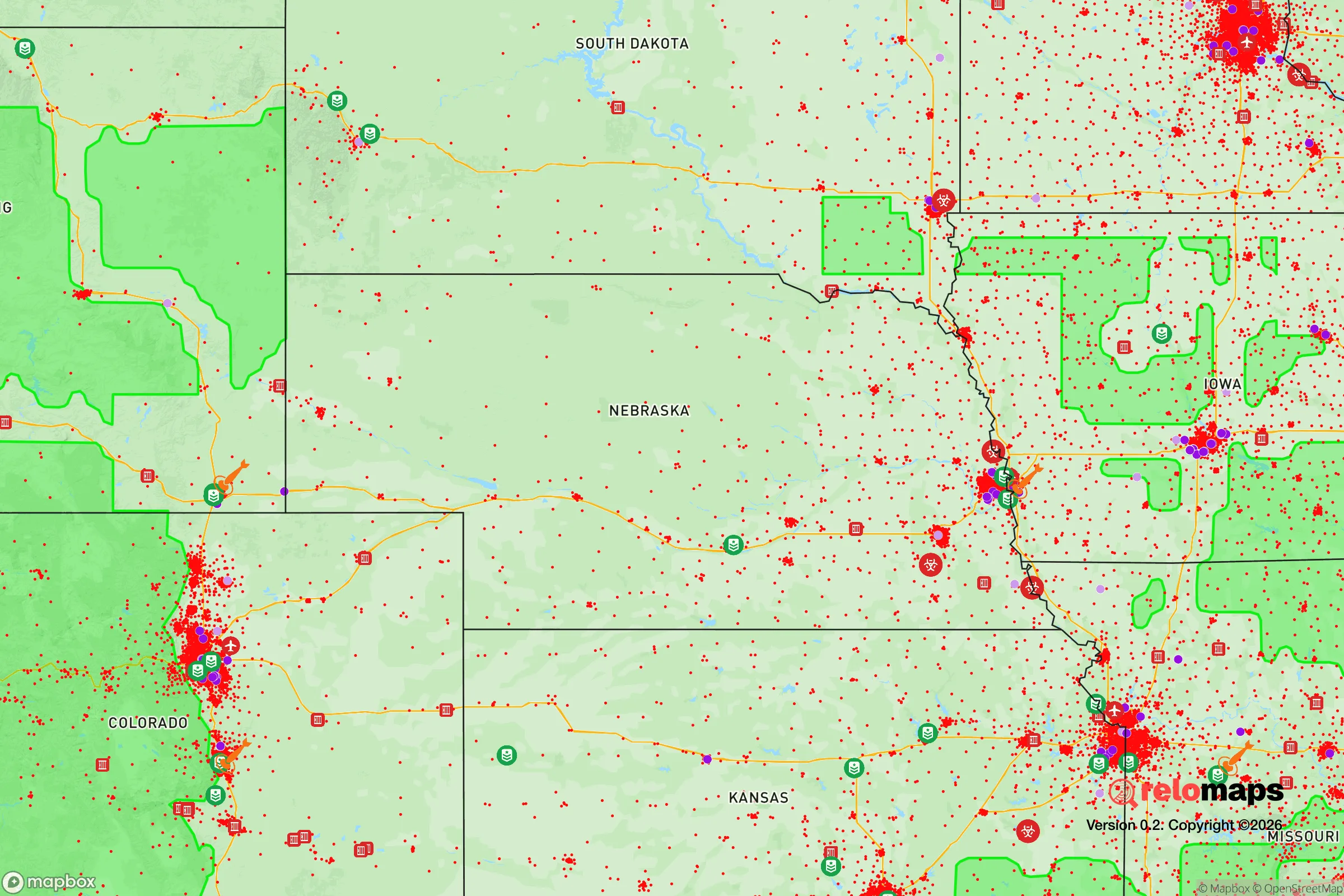
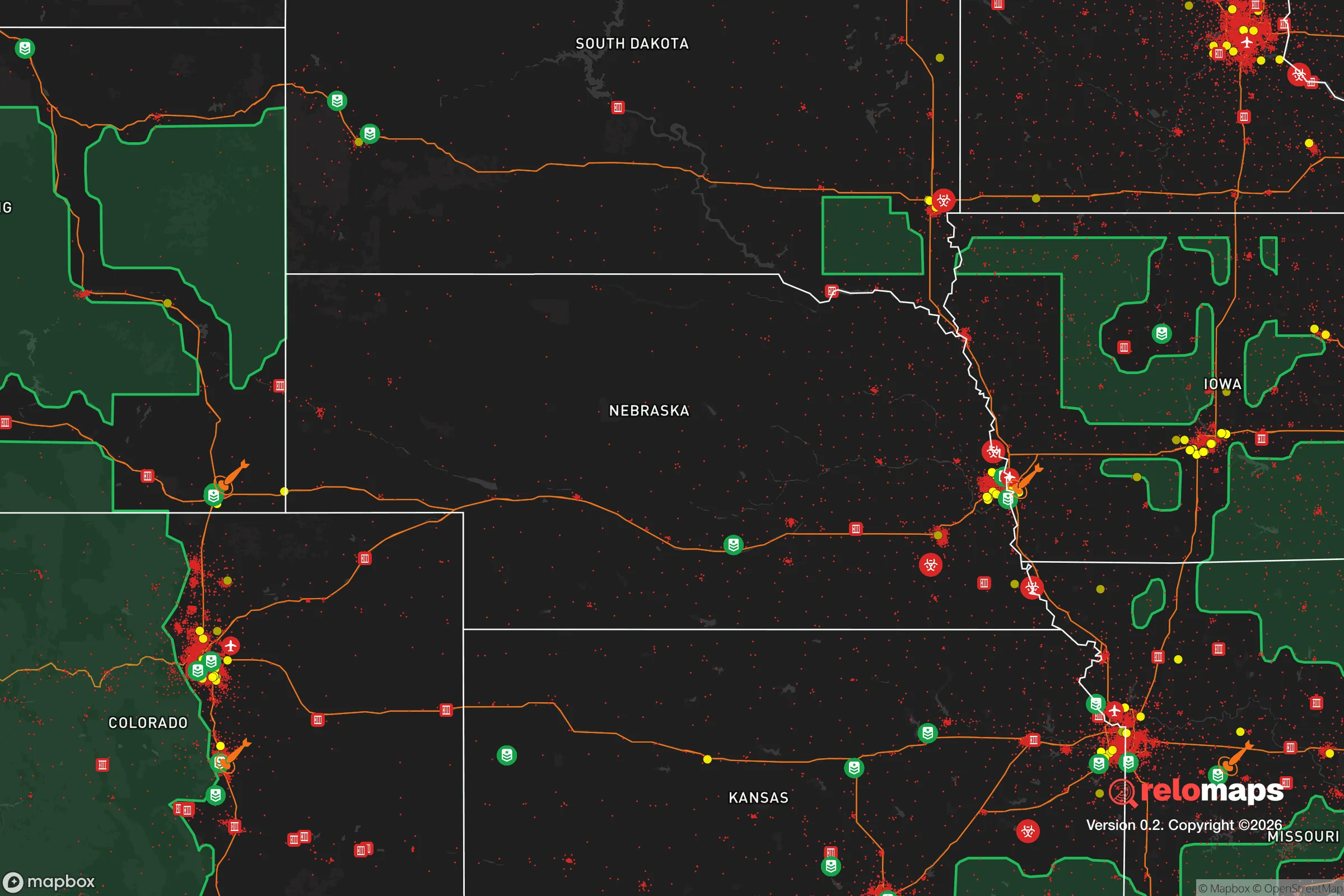


Important Note: For informational purposes only. This does not mean nothing bad ever happens in the green zones. Please use common sense. This is based on public data and modeled with AI. We tried to take a conservative approach but mistakes happen. We update this regularly as new information becomes available.
Solar Generator Recommendations
Backup power matters more here than in safer locations. We've picked three solar generators across budgets and capacity tiers — start with the budget unit if you only need a few essentials, or step up if you want to run a fridge and HVAC for days at a time.

Jackery Portable Power Station Explorer 300
Budget OptionPower on the Go: Weighing only 11 lbs, it's convenient to set up and store with book-sized foldable solar panels

BLUETTI Portable Power Station AC180
Designed for both indoor and outdoor scenarios, AC180 is highly capable as it has a robost capacity and continuous output power.

EF ECOFLOW DELTA Pro Ultra Power Station
Upgraded PickEcoFlow DELTA Pro Ultra is a whole-home energy system designed to grow with your family. Integrated with the Smart Home Panel 2, it scales to meet your evolving energy needs — keeping your home powered, intelligent, and secure through every stage of life.
We earn a commission, at no additional cost to you.
Strategic Assessment Analysis
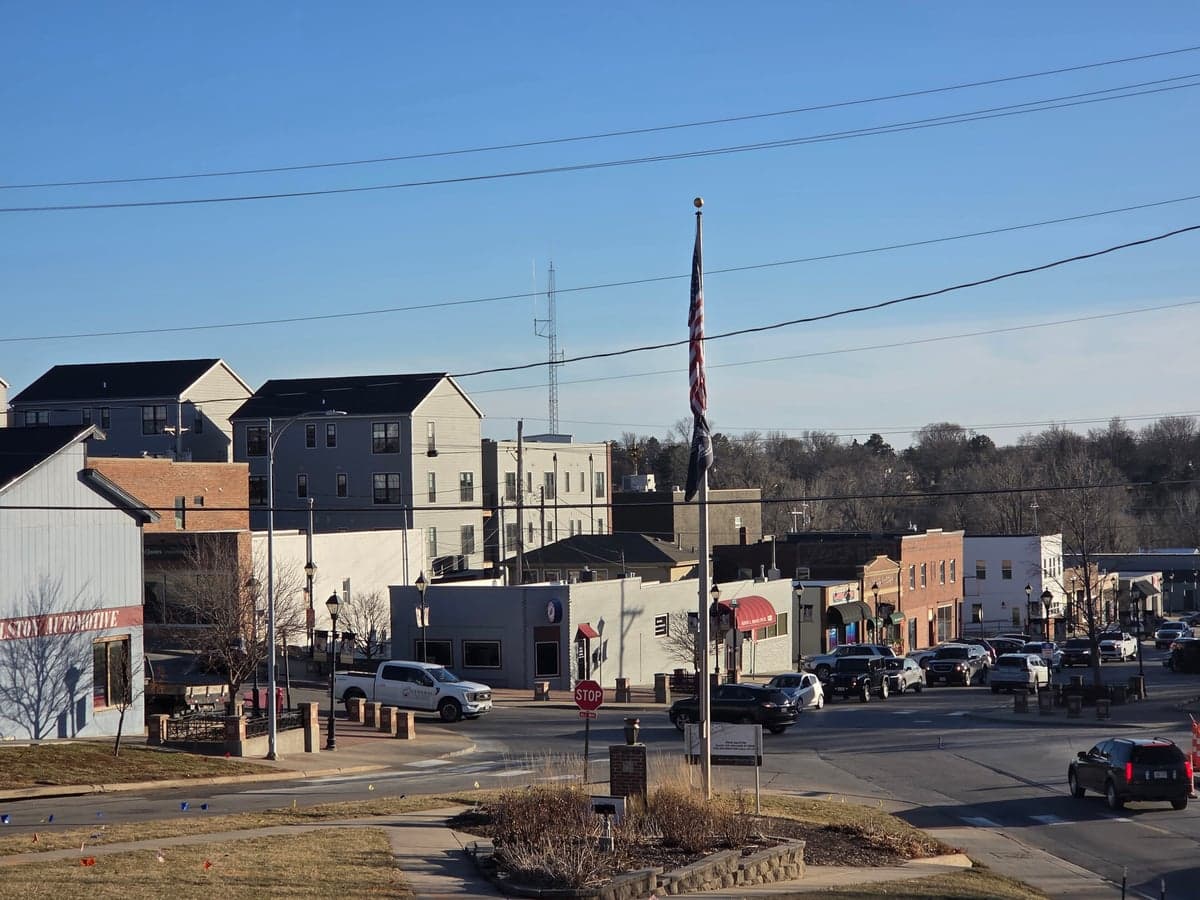
Ralston, Nebraska, offers a surprisingly resilient position for those prioritizing strategic relocation, balancing proximity to Omaha’s resources with a distinct buffer from its densest risks. This small city of roughly 6,000 sits just southwest of Omaha’s urban core, yet its layout—a compact, older suburb with limited through-traffic—provides a degree of natural isolation that larger, sprawling suburbs lack. For a conservative-leaning prepper, Ralston’s key advantage is its location on the high ground of the Missouri River bluffs, offering both drainage advantages and a defensible perch relative to the flood-prone lowlands that surround much of the metro area. The city’s resilience is further bolstered by its own municipal water system and a local government that has historically prioritized infrastructure maintenance, a rare trait in an era of deferred public works.
Geographic position and natural advantages for long-term stability
Ralston sits on the eastern edge of the Great Plains, atop the Loess Hills formation that rises 100–200 feet above the Missouri River floodplain. This elevation is not merely scenic—it means the city is largely immune to the catastrophic flooding that periodically devastates downstream communities like Plattsmouth or Nebraska City. The soil here is well-drained loess, which supports productive gardening and small-scale agriculture, a critical factor for any long-term self-sufficiency plan. The area’s natural water table is high but not swampy, meaning private wells are feasible on larger lots, though most homes are on municipal supply. Ralston’s position also places it within a 20-minute drive of Omaha’s Eppley Airfield and the Offutt Air Force Base—home to U.S. Strategic Command—which is a double-edged sword: it provides access to emergency logistics but also makes the area a potential target in a major conflict. The city’s street grid, a mix of cul-de-sacs and a few arterial roads, creates natural chokepoints that could be monitored or defended if civil order degrades, while the nearby Platte River valley offers a potential escape corridor to the west, toward less populated areas like Saunders County.
Risks, exposures, and proximity to fallout-relevant landmarks
The most significant risk for Ralston is its proximity to Offutt Air Force Base, roughly 5 miles northeast. In a nuclear exchange scenario, Offutt is a high-priority target, and a ground burst there would produce fallout that could reach Ralston within hours, depending on wind direction. The city sits within the 10-mile “prompt effects” zone for a large-yield weapon, meaning blast and thermal effects could be severe. Beyond nuclear threats, Ralston is exposed to the risks of civil unrest spilling over from Omaha. The city is directly adjacent to Omaha’s Benson and Aksarben neighborhoods, which have seen periodic protests and property crime spikes since 2020. Ralston’s own crime rates are low—violent crime is roughly half the national average—but property crime has ticked up, particularly vehicle break-ins and package thefts, reflecting broader urban decay. The city’s location along the Union Pacific mainline rail corridor also means hazardous material spills are a real concern; a derailment carrying anhydrous ammonia or chlorine could force evacuations of the entire town. Tornado risk is moderate but real—Ralston lies in the heart of Tornado Alley, and the 1975 Omaha tornado passed just north of the city. Flooding from the Papillion Creek system is a minor risk, but the city’s stormwater infrastructure is aging and may struggle with the 100-year storms that are becoming more frequent.
Practical resilience for a relocator: food, water, energy, and defensibility
For a relocator focused on practical self-sufficiency, Ralston offers a mixed but workable picture. The city’s water supply comes from the Platte River via the Metropolitan Utilities District, which has backup generators and redundant treatment capacity—but a prolonged grid failure would still disrupt pumping. A well-permitted private well is possible on lots of half an acre or more, though most Ralston lots are smaller, around 0.15–0.25 acres. Rainwater collection is legal in Nebraska and could supplement household needs, but annual precipitation is only 30 inches, so storage volume matters. Food resilience is moderate: the city has a small farmers’ market and several community gardens, but the real advantage is the surrounding agricultural land. Within a 10-mile radius, you’ll find corn, soybean, and cattle operations, and the nearby town of Gretna has a strong network of small-scale producers. For energy, Ralston is served by the Omaha Public Power District, which has a diverse generation mix including nuclear (Fort Calhoun, 20 miles north) and coal. A grid-down scenario would likely mean extended outages, but natural gas is widely available for heating and cooking, and solar panels are permitted with minimal red tape. Defensibility is the city’s weakest point: it’s a typical suburban grid with multiple entry points, and the police force of about 20 officers would be overwhelmed in a major crisis. However, the city’s small size and tight-knit community—many residents have lived here for decades—mean neighborhood watch and mutual aid networks are stronger than in newer subdivisions. The nearby Platte River State Park and the extensive trail system along the river offer both recreation and potential bug-out routes west.
Overall, Ralston presents a calculated trade-off for the strategic relocator. It’s not a remote redoubt—you’re still within the blast radius of a major military target and the social contagion of a large city. But for someone who needs to maintain a job or family ties in the Omaha area while building a resilient lifestyle, it’s one of the better options in the region. The city’s elevation, municipal infrastructure, and community character provide a foundation that many suburbs lack. The key is to treat Ralston as a base camp, not a fortress: invest in water storage, a backup power system, and a vehicle capable of a 200-mile evacuation. If you’re willing to accept the risks of being near a strategic target in exchange for economic opportunity and a functional local government, Ralston is a solid choice. If your priority is complete isolation from national vulnerabilities, look farther west—but for a balanced, actionable relocation, this small city holds its ground.

* Values derived from national, state, county, city and local statistics and may differ in a specific area. Last updated: 2026-05-01T04:29:59.000Z
Narrative content on this page is AI-generated and may contain mistakes. Verify any details that matter before acting on them.
ReloMaps may earn a commission from affiliate links at no extra cost to you.

