Photo: Wikipedia
Demographics of Raymore, MO
Affluence Level in Raymore, MO
An upper-middle-class area. Household wealth, education levels, and homeownership run ahead of national benchmarks.
People of Raymore, MO
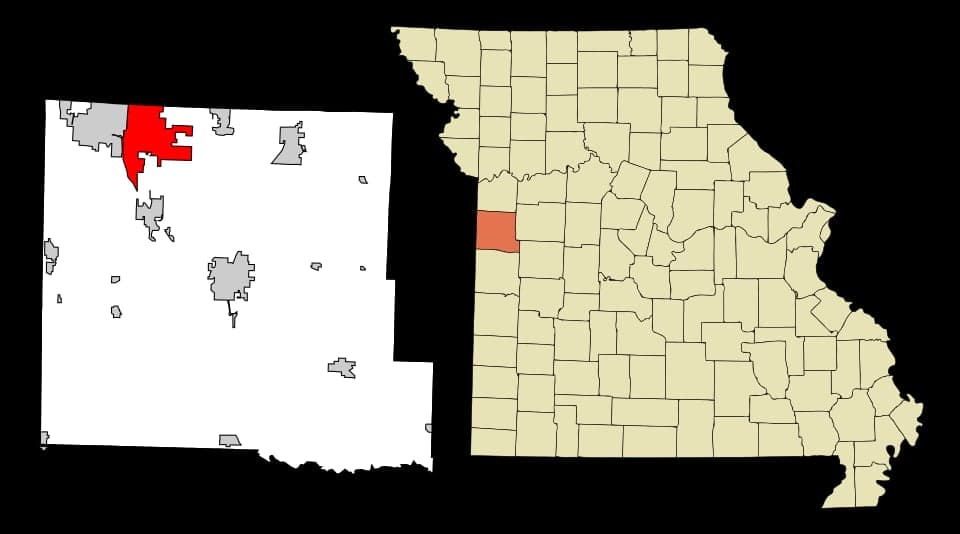
The people of Raymore, Missouri, today number 23,849, forming a predominantly white (77.2%) and family-oriented suburb with a notably low foreign-born population of just 0.4%. The city’s identity is shaped by its rapid post-2000 growth as a bedroom community for Kansas City, attracting residents who value new construction, low crime, and a conservative-leaning local government. With 37.0% of adults holding a college degree, Raymore’s population skews toward educated professionals and young families seeking larger homes and good schools without the density of northern Cass County suburbs.
How the city was settled and grew
Raymore’s original population arrived in the 1850s, drawn by the promise of fertile prairie land and the Missouri Pacific Railroad’s extension through Cass County. The town was platted in 1856, and its early residents were overwhelmingly white settlers of German and Scotch-Irish descent, who established farms and small businesses around the rail depot. The historic Downtown Raymore district—centered on Washington Street—became the commercial and social hub for these agrarian families, with grain elevators and general stores serving a population that barely topped 500 by 1900. A second wave of white, native-born families arrived during the 1940s and 1950s, drawn by the expansion of Kansas City’s defense industry and the construction of U.S. Route 71. These newcomers settled in the Lake Winnebago area (a small, unincorporated community that later merged into Raymore’s sphere), building modest ranch homes on larger lots. The city remained overwhelmingly white and rural through the 1960 census, with fewer than 1,000 residents and no significant non-white population.
Modern era (post-1965)
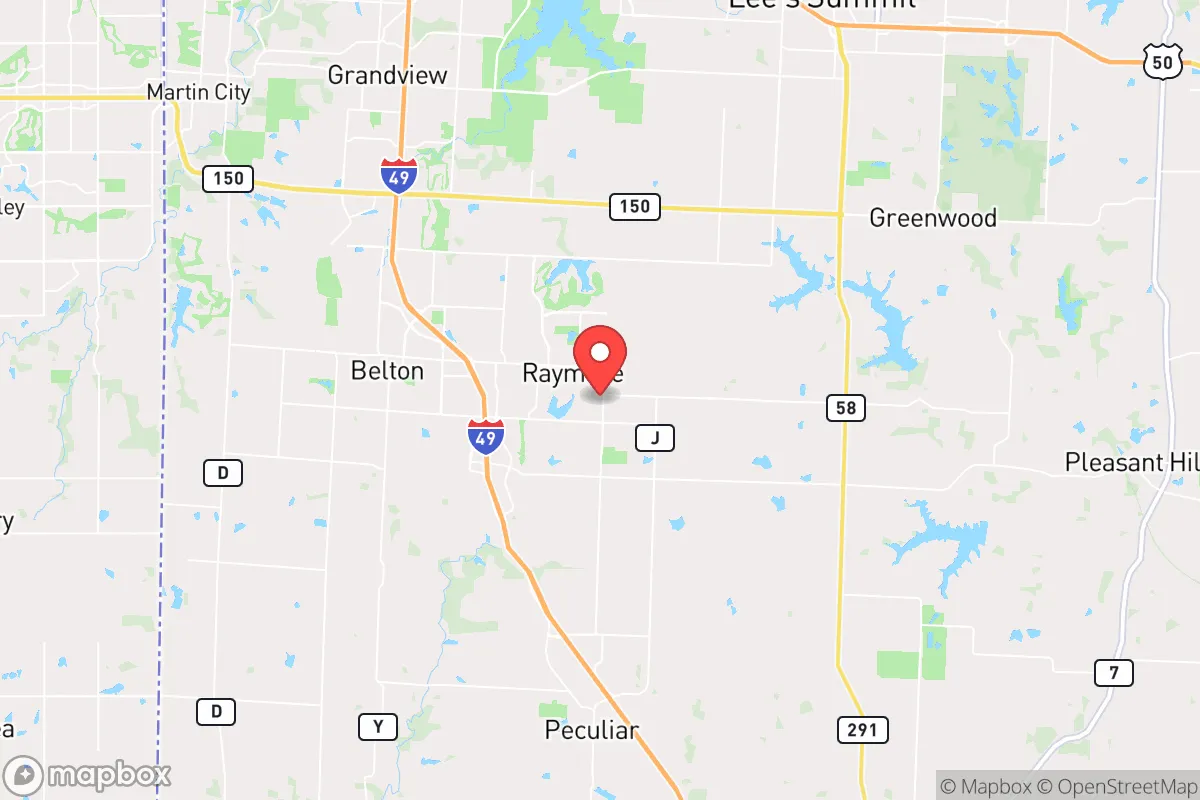
Raymore’s modern demographic transformation began in earnest after 1990, driven by white domestic out-migration from Kansas City proper and the construction of Interstate 49. The city’s population exploded from 1,234 in 1990 to 23,849 by 2024, fueled almost entirely by native-born white families seeking affordable new housing and low taxes. The Astoria subdivision (opened in the early 2000s) and the Summit Ridge neighborhood became primary landing zones for these relocating families, offering four-bedroom homes on quarter-acre lots. The Black population grew from near-zero to 8.4% during this period, concentrated in the Villages of Chapel Ridge and Hickory Hills subdivisions, as some African American professionals moved south from Kansas City for better schools and newer inventory. The Hispanic share (6.8%) is largely composed of second- and third-generation Mexican-American families from the Kansas City metro, settling in the Foxborough area and working in construction and service trades. East/Southeast Asian residents (1.1%) and Indian-subcontinent residents (0.1%) remain tiny populations, mostly professionals in healthcare and engineering who bought homes in Astoria and Summit Ridge. The foreign-born share (0.4%) is among the lowest in the Kansas City metro, reflecting Raymore’s character as a destination for native-born Americans rather than immigrants.
The future
Raymore’s population trajectory points toward continued growth and demographic homogenization. The city’s buildable land is concentrated in the southern and western edges, where new subdivisions like Prairie View and Stone Creek are attracting the same white, college-educated, family-oriented demographic that fueled the 2000s boom. The Black and Hispanic shares are likely to plateau or grow slowly, as Raymore lacks the rental housing stock and public transit that attract lower-income and immigrant populations in larger suburbs. The East/Southeast Asian and Indian populations are expected to remain negligible, as these groups continue to cluster in Johnson County, Kansas, and northern Cass County suburbs with higher density and more ethnic infrastructure. The foreign-born share will likely stay below 1%, making Raymore one of the most nativist-identifying suburbs in the metro. The city is not tribalizing into distinct ethnic enclaves—rather, it is homogenizing into a largely white, native-born, conservative-voting community with small, integrated minority populations.
For a conservative-leaning family or individual moving to Raymore today, the bottom line is clear: this is a growing, predominantly white suburb where the population is shaped by domestic migration from within the United States, not by immigration. The city offers new housing, low crime, and a like-minded social environment, but those seeking ethnic diversity or a globally connected community will find little of either. Raymore is becoming more of what it already is—a safe, homogeneous, family-focused exurb on Kansas City’s southern edge.

* Values derived from national, state, county, city and local statistics and may differ in a specific area. Last updated: 2026-04-22T12:42:56.000Z
Narrative content on this page is AI-generated and may contain mistakes. Verify any details that matter before acting on them.
ReloMaps may earn a commission from affiliate links at no extra cost to you.

