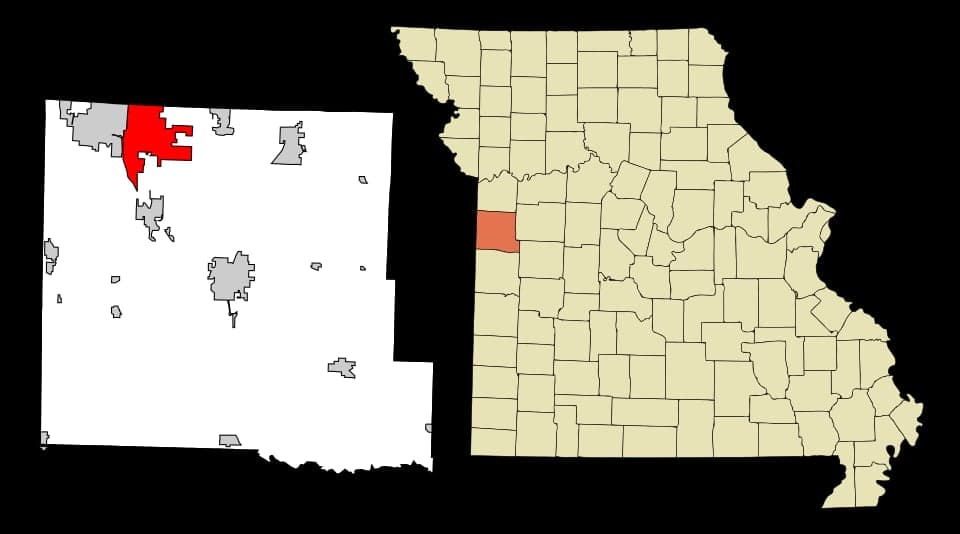
Photo: Wikipedia
Political ClimatePolitical Climate in Raymore, MO
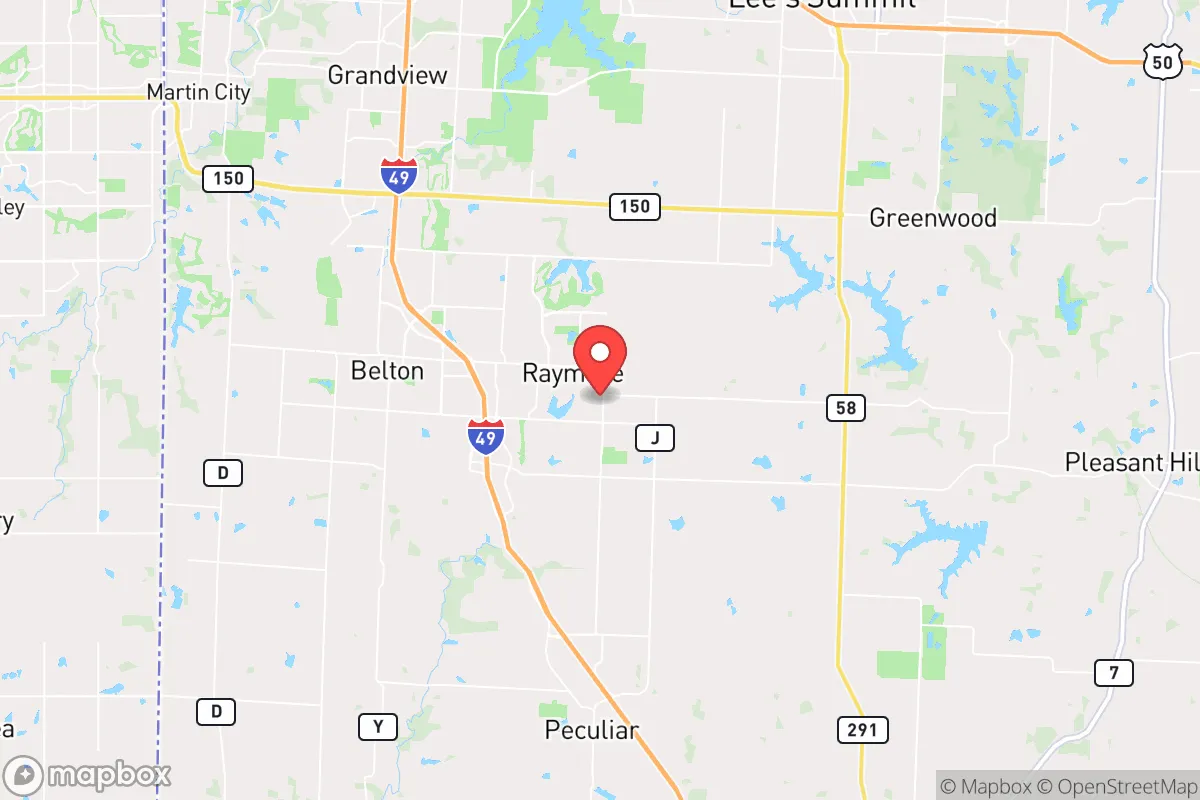
District shown is the primary district for this city’s centroid. Cities may span multiple districts.
Local Political AnalysisPolitical Analysis of Raymore, MO
Raymore, Missouri, sits comfortably in a deep-red pocket of the Kansas City metro, with a Cook PVI of R+21 that tells you everything you need to know about its political DNA. This isn’t a purple suburb that’s slowly turning blue—it’s a place where conservative values are still the default, where folks expect the government to stay out of their business and their wallets. If you’re looking at Raymore, you’re looking at a community that’s held its ground even as nearby areas like Lee’s Summit and Belton have started to drift leftward in recent cycles.
How it compares
Drive ten minutes north into Lee’s Summit, and you’ll feel the difference—that city’s been trending purple for a decade, with a growing progressive presence in local school board races and city council debates. Head east to Harrisonville, and you’re back in solidly red Cass County, but it’s a more rural, slower-moving conservatism. Raymore sits in a sweet spot: it’s suburban enough to have good schools and amenities, but it hasn’t imported the coastal-style politics that plague parts of Johnson County, Kansas, just across the state line. Overland Park and Olathe, for example, have seen noticeable shifts toward progressive policies on zoning and policing, while Raymore’s leadership has largely kept the focus on low taxes, public safety, and property rights. The contrast is stark—and for anyone who’s watched nearby towns get bogged down in DEI initiatives or climate action plans, Raymore feels like a breath of fresh air.
What this means for residents
For the people who live here, the political climate translates into a government that mostly stays out of the way. Property taxes are among the lowest in the metro, and there’s no city income tax eating into your paycheck. The local school board, Raymore-Peculiar R-II, has resisted the kind of curriculum battles that have torn apart districts in more progressive areas—parents still have a real say in what their kids are taught. That said, there’s a quiet concern among longtime residents that the area’s growth could bring change. New housing developments are popping up along 58 Highway, and some worry that the influx of commuters from Kansas City could dilute the local culture. If you value personal freedom—the right to own firearms, run a small business without endless permits, or raise your family without government overreach—Raymore is still a safe bet, but it’s worth keeping an eye on city council elections. A couple of close races in 2024 showed that the progressive playbook is being tested here, even if it hasn’t gained traction yet.
One thing that sets Raymore apart is its no-nonsense approach to development. Unlike some suburbs that have embraced “smart growth” mandates or affordable housing quotas, Raymore’s planning department works with builders, not against them. There’s no push for density-forcing zoning changes or bike-lane mandates that nobody asked for. The city’s annual budget consistently prioritizes roads and emergency services over pet projects. Culturally, you’ll find a strong sense of community at events like the Raymore Farmers Market and the annual Fourth of July celebration—places where neighbors still wave and the flag flies high. The long-term outlook depends on whether the city can maintain its conservative character as the metro expands. If you’re considering a move here, the political climate is a major plus—just stay engaged, because the fight to keep Raymore free isn’t over yet.

State Political ClimatePolitical Climate in Missouri
State Political AnalysisPolitical Environment in the State
Missouri has long been a bellwether state, but over the past 15-20 years it has shifted from a classic purple swing state to a solidly red one, with a dominant conservative coalition anchored in the rural and exurban counties. The state voted for Donald Trump by 15 points in 2020 and by 18 points in 2024, a dramatic swing from 2008 when it was decided by just 3,900 votes for John McCain. This trajectory reflects a deep cultural and geographic realignment: the once-Democratic rural strongholds have become deeply Republican, while the urban cores have become increasingly progressive, leaving a widening chasm between the two Missouris.
Urban vs. rural divide
The political map of Missouri is a study in contrasts. The two major metropolitan areas—St. Louis and Kansas City—are the engines of Democratic votes, with St. Louis City and County delivering margins of 60-70% for Democratic candidates. However, the real story is the collapse of Democratic strength in the rural and small-town regions. Counties like Phelps (Rolla), Jasper (Joplin), and Buchanan (St. Joseph) have flipped from competitive to reliably Republican over the past decade. The fastest-growing conservative strongholds are the exurbs of the major metros, particularly St. Charles County (just west of St. Louis) and Cass County (south of Kansas City), which have become solidly red as families flee the urban cores. Meanwhile, Boone County (Columbia) remains a blue island due to the University of Missouri, but its influence is increasingly isolated. The Ozarks region, including Springfield and Branson, is among the most reliably conservative areas in the entire country, with Greene County routinely voting 65-70% Republican.
Policy environment
Missouri’s state-level policy environment is among the most conservative in the Midwest. The state has a flat income tax rate of 4.95% (with a phased reduction to 4.5% by 2027), no estate tax, and a relatively low corporate tax rate of 4%. Property taxes are among the lowest in the nation, averaging about 0.9% of home value. The state is a “right-to-work” state (though the law was repealed by ballot initiative in 2018, the legislature has since passed a new version that survived court challenges). Education policy is a major battleground: Missouri has a robust charter school system in St. Louis and Kansas City, and the state’s school choice movement is gaining steam, with a new Education Savings Account program passed in 2024 that allows parents to use public funds for private school tuition. On healthcare, Missouri did not expand Medicaid until 2021, when voters forced it through a ballot initiative, but the state still has some of the strictest abortion laws in the country—a near-total ban with no exceptions for rape or incest, passed in 2019 and triggered by the Dobbs decision. Election laws have tightened: the state now requires photo ID to vote, limits absentee ballot drop boxes, and bans private funding of election administration.
Trajectory & freedom
Missouri’s trajectory on personal liberty is a mixed bag, but the overall trend is toward expanding freedom in most areas that matter to conservatives. The state has some of the strongest Second Amendment protections in the nation, including the 2021 “Second Amendment Preservation Act” (SAPA), which declares federal gun laws that infringe on the right to keep and bear arms to be null and void in Missouri. This law has been challenged in court but remains in effect, and it has made Missouri a haven for gun owners. On parental rights, the state passed a 2023 law requiring schools to notify parents of any changes to a student’s “wellness” or “mental health” and banning instruction on gender identity in grades K-3. Medical autonomy has been a flashpoint: while the state banned nearly all abortions, it also passed a 2024 law protecting doctors who refuse to perform gender transition procedures on minors. Property rights are strong, with no statewide zoning mandates and a relatively low regulatory burden for home builders. However, there are concerning trends: the state’s sales tax burden is high (over 8% in many areas), and the legislature has shown a willingness to preempt local ordinances, which can feel like government overreach to those who value local control.
Civil unrest & political movements
Missouri has been a focal point for political activism on both sides. The 2014 Ferguson protests after the Michael Brown shooting were a national flashpoint, and the St. Louis region still sees periodic protests over policing and racial justice issues. On the right, the “Show Me” spirit is alive and well: the Missouri Freedom Caucus in the state legislature has been a driving force for conservative legislation, and the state has seen a surge in county-level “Second Amendment Sanctuary” resolutions. Immigration politics are relatively quiet compared to border states, but there have been localized tensions in Springfield and Joplin over refugee resettlement and undocumented workers in the poultry and meatpacking industries. The state has no sanctuary cities, and the legislature passed a 2023 law requiring local law enforcement to cooperate with federal immigration authorities. Election integrity remains a hot topic: the 2020 election in Missouri was relatively smooth, but the state’s Republican Secretary of State has pushed for stricter voter ID laws and purges of inactive voters, which have drawn both praise and criticism. A new resident would notice the prevalence of “Trump 2024” signs in rural areas and the occasional “Defund the Police” graffiti in St. Louis—a visible reminder of the cultural divide.
Projection
Over the next 5-10 years, Missouri is likely to become even more conservative, driven by two demographic trends: the continued exodus of moderate and liberal-leaning residents from St. Louis and Kansas City to redder suburbs and out of state, and the influx of conservative-leaning migrants from blue states like California and Illinois who are drawn to Missouri’s lower taxes and gun-friendly laws. The state’s rural population is aging, but the exurbs are growing fast, and these new residents tend to be even more conservative than the existing population. The biggest wild card is the St. Louis region: if the city continues to lose population and the suburbs continue to redden, the state’s political center of gravity will shift further south and west. The legislature is likely to pass additional school choice measures, further tax cuts, and perhaps a constitutional amendment to require a supermajority for tax increases. The biggest risk to freedom is the potential for federal preemption of state laws like SAPA, but for now, Missouri is on a trajectory to become one of the most conservative states in the country, rivaling Texas and Florida in its policy environment.
For a new resident, the bottom line is this: Missouri offers a high degree of personal freedom, low taxes, and a political culture that respects gun rights, parental authority, and local control. The trade-off is that you’ll be living in a state with a deep cultural divide—the urban cores are increasingly progressive and may feel hostile to conservative values, while the rural and suburban areas are overwhelmingly friendly. If you’re moving to St. Charles, Springfield, or Joplin, you’ll find a community that shares your values. If you’re moving to St. Louis City or Kansas City, you’ll need to be prepared for a more adversarial political environment. Either way, the state’s trajectory is clearly toward greater conservatism, and the policies that matter most to freedom-minded individuals are likely to remain strong for the foreseeable future.
* Values derived from national, state, county, city and local statistics and may differ in a specific area. Last updated: 2026-04-22T12:42:56.000Z
Narrative content on this page is AI-generated and may contain mistakes. Verify any details that matter before acting on them.
ReloMaps may earn a commission from affiliate links at no extra cost to you.

