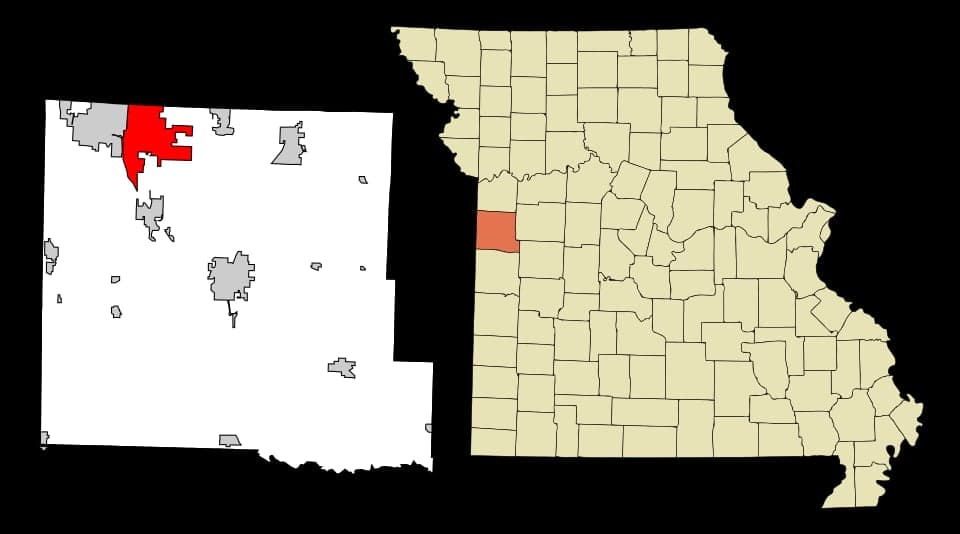
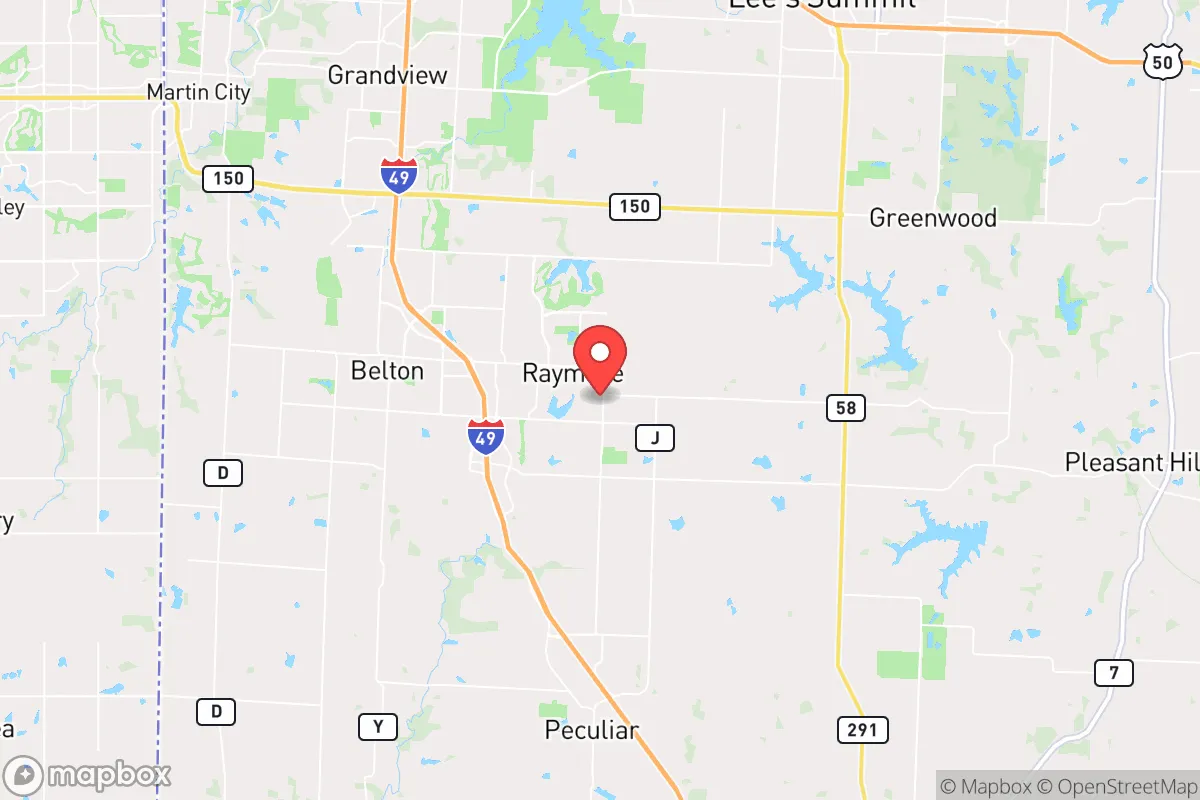
Photo: Wikipedia
Quality of Life in Raymore, MO
A high quality of life with strong walkability, manageable living costs, healthy neighborhood signals, and solid amenity access.
What does Quality of Life tell us?
Quality of Life blends cost of living, nearby amenities, socioeconomic signals, and neighborhood character. City-level scores represent the whole municipality; individual neighborhoods can differ.
What does this tell us?
Quality of Life blends cost of living, nearby amenities, socioeconomic signals, and neighborhood character. City-level scores represent the whole municipality; individual neighborhoods can differ.
Cost of Living
11% above national average
The Real Cost of Living in Raymore, MO for 2026
| Tier | Individual | Family (4) |
|---|---|---|
| Survival | $20k | $38k |
| Comfortable | $62k | $91k |
| Luxury | $138k+ | $214k+ |
| Elite (Top 5%) | $162k+ | $251k+ |
114%
The Area Signal
A metric tracking the socioeconomic signals of the area.
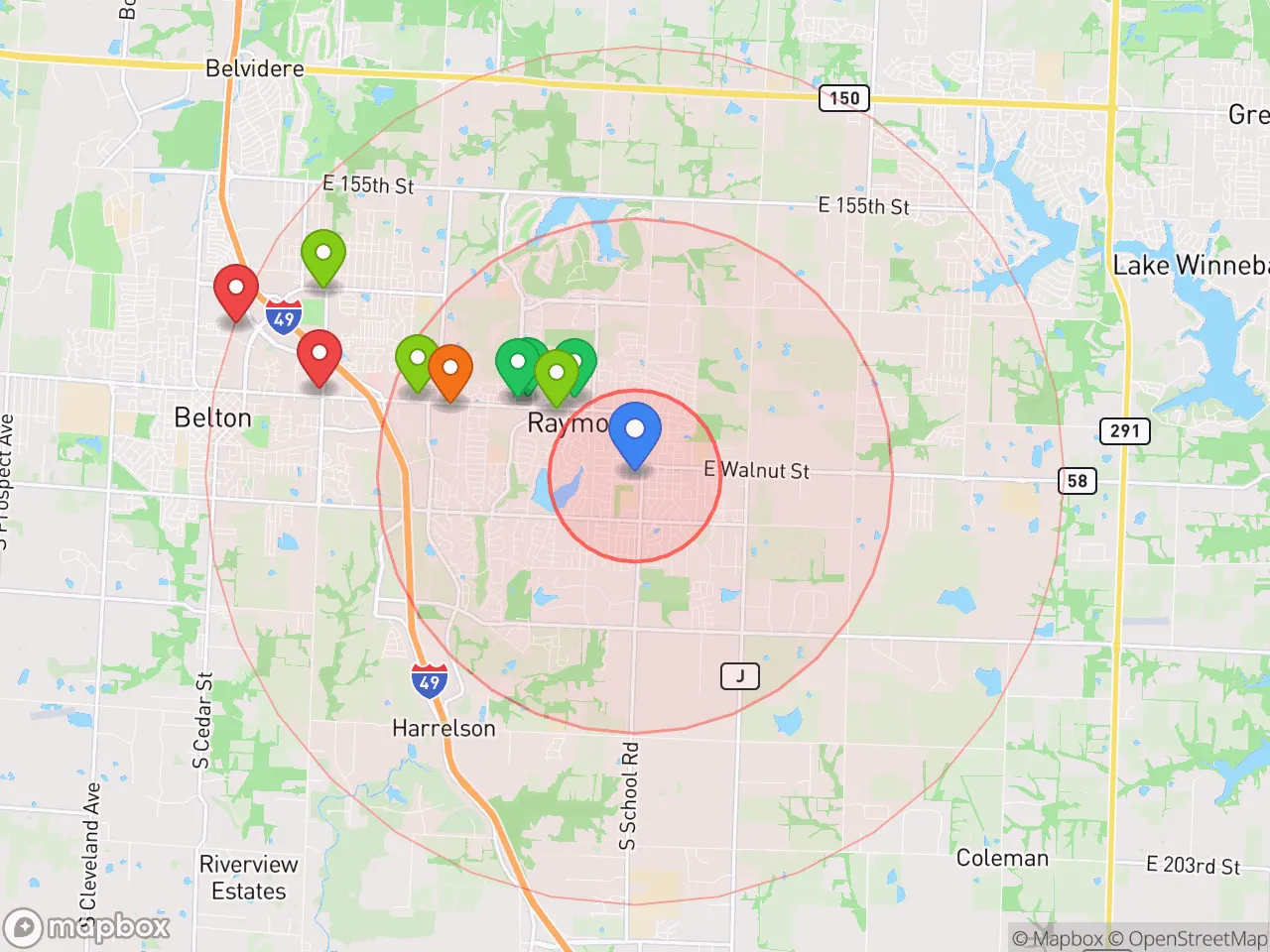
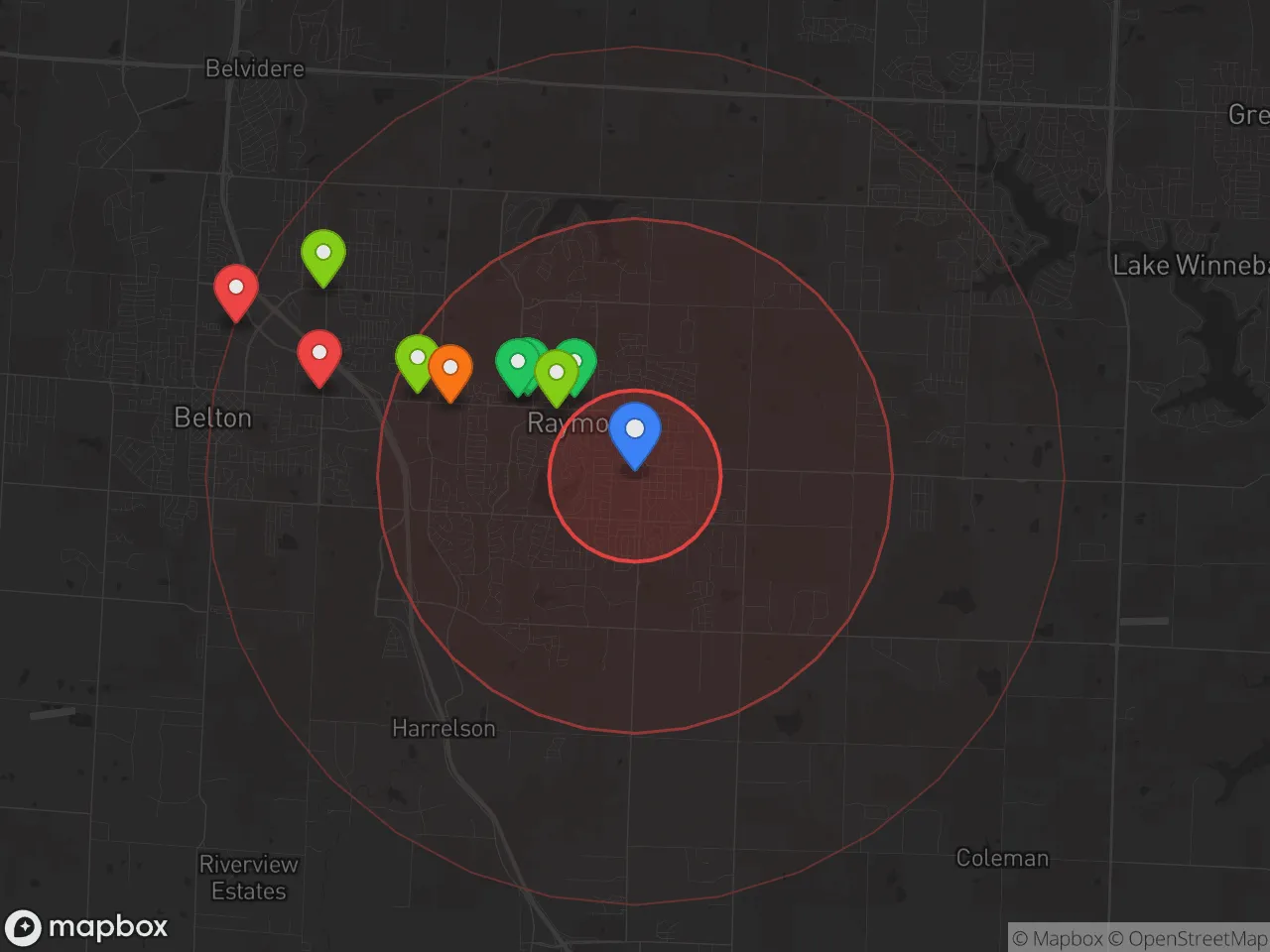
Hobbies
Explore the areaGroceries
5 within 10 miles
Gas
20 within 10 miles
Hospital
20 within 20 miles
Airport
MCI — Kansas City International
Post Office
USPS — Raymore, MO
Critical Amenities
Quality-of-Life Analysis
Raymore, Missouri, presents a distinctly affluent quality of life within the Kansas City metro, attracting a demographic of established professionals, growing families, and long-term residents who prioritize space, safety, and strong public schools over urban proximity. With a cost of living index of 111 (11% above the national average), the city commands a premium for its suburban stability, yet remains a relative value compared to the pricier Johnson County suburbs just across the state line in Kansas. The typical resident is a homeowner in a single-family detached house, commuting roughly 26 minutes into Kansas City or its surrounding employment hubs, and values the slower, community-oriented pace that defines this Cass County city.
Cost of living, housing affordability, and value compared to Kansas City suburbs
Raymore's housing market is the primary driver of its above-average cost of living, though it offers a tangible affordability advantage over comparable suburbs to the north and west. The median home value sits at $318,000, a figure that is notably lower than in Overland Park or Lee's Summit, where median values frequently exceed $400,000. For renters, the median rent of $1,283 is competitive, though the rental market is smaller and less diverse than in larger metro areas. The average commute of roughly 26 minutes is a key trade-off: residents gain larger lots and newer construction for a drive that is longer than a typical urban commute but shorter than exurban sprawl. Property taxes in Missouri are generally lower than in Kansas, which further enhances Raymore's appeal for buyers looking to maximize square footage and land for their dollar. However, the overall cost index means that groceries, healthcare, and utilities are slightly above the national norm, a factor that offsets some of the housing savings.
Schools, amenities, and what daily life is like for families
Daily life in Raymore revolves around the highly regarded Raymore-Peculiar School District (R-2), which consistently earns above-average state ratings and is a primary draw for families moving into the area. The city's amenity base is anchored by Raymore City Park, a sprawling 100+ acre complex with sports fields, walking trails, a splash pad, and the city's aquatic center, serving as the central gathering point for youth sports and weekend recreation. Retail and dining are concentrated along 58 Highway and around the intersection of MO-58 and MO-150, featuring national chains and a growing number of local eateries, though residents often drive 15-20 minutes to Lee's Summit or Belton for more extensive shopping and entertainment options. The community calendar is active with events like the annual Raymore Farmers Market, holiday parades, and concerts in the park, fostering a neighborly atmosphere that is a hallmark of the city's identity. For daily errands, the city has sufficient grocery and pharmacy access, but the lack of a major hospital or large-scale entertainment venue means most specialized needs require a short drive.
Raymore is best suited for families and mid-career professionals who prioritize a safe, spacious suburban environment with strong schools and are willing to accept a moderate commute for that lifestyle. Singles or young professionals seeking a vibrant nightlife or walkable urban core will find the city too quiet and car-dependent. Retirees may appreciate the low crime rates and community feel, though the lack of dense, walkable amenities could be a drawback. Ultimately, Raymore thrives as a deliberate choice for those who value a slower pace, newer housing stock, and a community where neighbors know each other, all at a price point that undercuts the most expensive Kansas City suburbs.

Crime in Raymore, MO
Lower crime rates than 88% of comparable U.S. locations.
Violent CrimeViolent Crime Analysis
Property CrimeProperty Crime Analysis
Crime Analysis
Raymore, Missouri, reports a violent crime rate of 71 incidents per 100,000 residents and a property crime rate of 979.1 per 100,000, placing it among the safer communities in the Kansas City metropolitan area. These figures are significantly lower than both the national average and the rates seen in nearby urban centers, offering a meaningful safety advantage for residents and newcomers. However, as a suburb within a large metro area, Raymore is not immune to regional crime trends, and the broader context of the Kansas City region’s justice system warrants careful consideration.
Crime in context
Raymore’s violent crime rate of 71 per 100,000 is roughly 80% lower than the national average of 380 per 100,000, while its property crime rate of 979.1 per 100,000 sits about 30% below the U.S. median. Compared to the state of Missouri, which has a violent crime rate of approximately 540 per 100,000, Raymore is an outlier in safety. The city benefits from its own police department and a relatively low population density, which helps keep incidents contained. However, the surrounding Kansas City metro area—including Jackson County and Wyandotte County—has experienced rising property crime and, in some jurisdictions, progressive prosecutorial policies that critics argue reduce accountability for repeat offenders. Residents should be aware that while Raymore itself is safe, the regional justice environment can influence crime spillover from neighboring communities.
What residents experience
Daily life in Raymore is characterized by low fear of violent crime, with most incidents involving theft from vehicles, burglary, and occasional vandalism. The city’s property crime rate, while higher than its violent crime rate, is still manageable and often concentrated in retail areas near the 58 Highway corridor. Residents report feeling safe walking in neighborhoods and using parks after dark, a sentiment supported by the data. The presence of a proactive police force and community watch programs further reinforces this sense of security. That said, the broader metro area’s liberal-leaning district attorneys in Kansas City proper have been associated with reduced prosecution rates for non-violent property offenses, which can embolden criminals and increase the risk of property crime in suburbs like Raymore over time.
Neighborhood-level variation in Raymore is modest but worth noting. Areas closer to the city’s southern edge, near the Cass County line, tend to have the lowest crime rates, while developments adjacent to major roads like MO-58 and MO-150 see slightly higher property crime due to easier access. Gated communities and newer subdivisions, such as those around the Creekmoor Golf Course, report near-zero violent crime. Prospective residents should prioritize properties with good street lighting and neighborhood association oversight, as these factors correlate with lower incident reports. Overall, Raymore offers a strong safety profile for a metro-area suburb, but vigilance about regional justice trends is advisable.
* Values derived from national, state, county, city and local statistics and may differ in a specific area. Last updated: 2026-04-22T12:42:56.000Z
Narrative content on this page is AI-generated and may contain mistakes. Verify any details that matter before acting on them.
ReloMaps may earn a commission from affiliate links at no extra cost to you.

