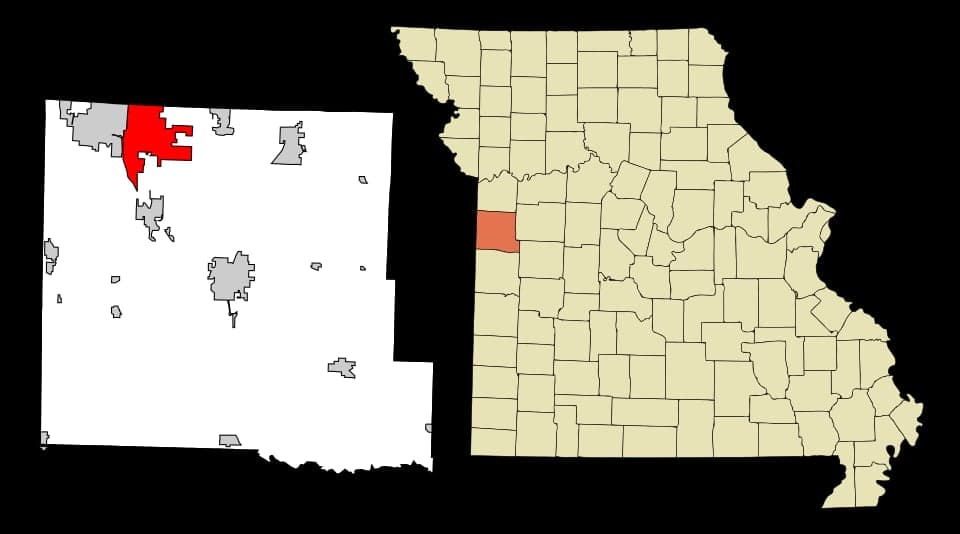
Photo: Wikipedia
Strategic Assessment of Raymore, MO
Meaningful friction. Expect exposure to either population pressure, blast zones, or natural disaster risk. Consider buying a retreat property.
What does the Strategic Assessment tell us?
Our Strategic Assessment grades tactical survivability of an area. Major population centers, military targets, fallout zones, natural disasters, and border exposure all drive risk — lower exposure means a more defensible position in a crisis.
This is heavily inspired by Joel Skousen's Strategic Relocation book. Highly recommended you checkout the book ($)What does this tell us?
Our Strategic Assessment grades tactical survivability of an area. Major population centers, military targets, fallout zones, natural disasters, and border exposure all drive risk — lower exposure means a more defensible position in a crisis.
This is heavily inspired by Joel Skousen's Strategic Relocation book. Highly recommended you checkout the book ($)Strategic Pillars

Key Distances
Regional Safe Places
Below is our recommended "safe zones" in Missouri and the surrounding area based on our strategic heuristics. For most people, it's unrealistic to live in a “safe zone” full-time due to work, family or other personal reasons. They tend to be more rural. However, many of these areas are perfect for second homes and retreat properties that double as a vacation home or even a short-term rental.


Important Note: For informational purposes only. This does not mean nothing bad ever happens in the green zones. Please use common sense. This is based on public data and modeled with AI. We tried to take a conservative approach but mistakes happen. We update this regularly as new information becomes available.
Solar Generator Recommendations
Backup power matters more here than in safer locations. We've picked three solar generators across budgets and capacity tiers — start with the budget unit if you only need a few essentials, or step up if you want to run a fridge and HVAC for days at a time.

Jackery Portable Power Station Explorer 300
Budget OptionPower on the Go: Weighing only 11 lbs, it's convenient to set up and store with book-sized foldable solar panels

BLUETTI Portable Power Station AC180
Designed for both indoor and outdoor scenarios, AC180 is highly capable as it has a robost capacity and continuous output power.

EF ECOFLOW DELTA Pro Ultra Power Station
Upgraded PickEcoFlow DELTA Pro Ultra is a whole-home energy system designed to grow with your family. Integrated with the Smart Home Panel 2, it scales to meet your evolving energy needs — keeping your home powered, intelligent, and secure through every stage of life.
We earn a commission, at no additional cost to you.
Strategic Assessment Analysis
Raymore, Missouri, sits in a strategic sweet spot that resilience-minded relocators should take seriously: close enough to Kansas City’s infrastructure to be practical, but far enough out to avoid the worst of urban collapse scenarios. With a population hovering around 25,000 and steady but controlled growth, this Cass County town offers a buffer that many suburban communities lack—it’s not a bedroom community that would be instantly overrun, but it’s not so remote that supply chains vanish. For someone thinking in terms of decades, not just the next election cycle, Raymore’s position along the I-49 corridor and its proximity to the Missouri River Valley give it both logistical reach and natural defensibility.
Geographic position and natural advantages for long-term stability
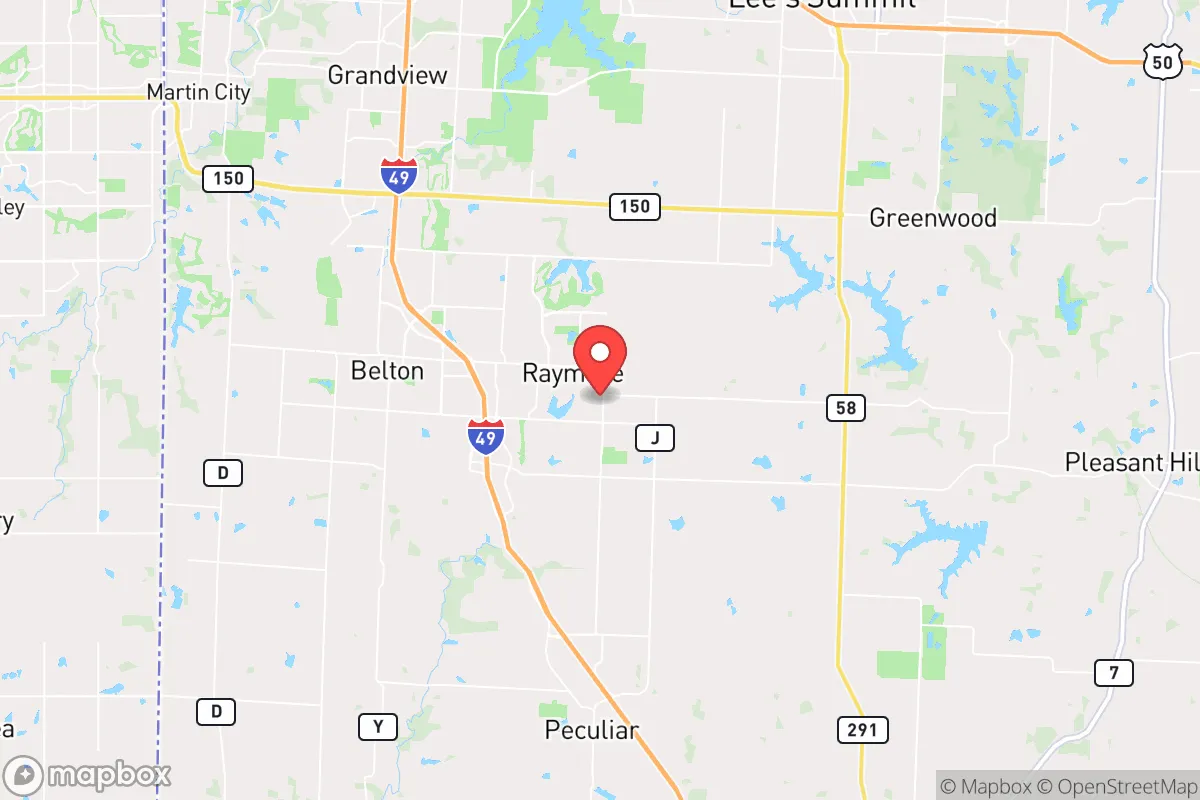
Raymore’s location at the southern edge of the Kansas City metro is its primary strategic asset. It sits roughly 25 miles south of downtown Kansas City, placing it outside the immediate blast or fallout radius of any major urban target, yet within a reasonable drive for supply runs or medical access during stable periods. The area is part of the Osage Plains, meaning the terrain is gently rolling with decent drainage—no floodplain issues like you’d find closer to the Missouri River, and no mountain passes that could be easily cut off. The soil is productive, with much of Cass County still in active agriculture, which means local food production isn’t a fantasy. Groundwater is generally accessible via wells, and the region’s annual rainfall of about 40 inches supports rain catchment without the drought risks of the High Plains. For a relocator prioritizing water security and arable land, Raymore checks those boxes without the extreme isolation that makes supply runs a multi-day ordeal.
Risks, exposures, and proximity to fallout-relevant landmarks
The most significant risk for Raymore is its proximity to Kansas City’s strategic targets. Whiteman Air Force Base, home to the B-2 Spirit stealth bomber, is about 50 miles east-southeast near Knob Noster—close enough that a ground burst or major accident there could send fallout drifting over Cass County depending on wind patterns. The same goes for the rail and highway junctions in the Kansas City rail yard complex, which are high on any adversary’s target list. Raymore is also within 30 miles of the Sunflower Army Ammunition Plant near De Soto, Kansas, a decommissioned but still hazardous site that could become a secondary target or a contamination source in a crisis. On the plus side, the town itself has no major industrial or military facilities, so it’s not a primary target. The real exposure is fallout drift from a strike on Kansas City proper or Whiteman. Prevailing winds in this region are from the south-southwest, which means a strike on Kansas City would likely push fallout northeast, away from Raymore—but that’s a probabilistic hedge, not a guarantee. For civic unrest scenarios, Raymore’s distance from the urban core is a clear advantage: rioters and looters tend to stay within easy reach of city centers, and the I-49 corridor can be monitored and controlled at chokepoints like the Grand River bridge crossings.
Practical resilience for a relocator: food, water, energy, and defensibility
For someone serious about self-sufficiency, Raymore offers a realistic mix of suburban convenience and rural capability. Water is the first concern: the city draws from groundwater wells, and most newer subdivisions are on municipal supply, but older homes and many rural parcels in the surrounding county have private wells. Drilling a well in Cass County typically runs $5,000–$12,000 and hits good water at 100–200 feet, so it’s not a moonshot. Rainwater catchment is legal and practical, with average monthly rainfall ranging from 2.5 inches in winter to 5 inches in spring. Food production is viable: the growing season runs about 180 days, and the soil is loamy clay that supports corn, soybeans, and garden vegetables. Local farmers’ markets and CSAs are active, and there are several small-scale livestock operations within a 10-mile radius. For energy, grid reliability is average—outages happen during ice storms and summer thunderstorms, but they’re usually restored within 24 hours. Solar is a solid option, with about 4.5 peak sun hours per day, and the city has no restrictive HOA policies that outright ban panels in most areas. Defensibility is where Raymore gets interesting: the town is laid out around a central square and a network of cul-de-sacs and winding roads, which naturally slows vehicle movement and creates observation points. The surrounding farmland provides clear sightlines, and the lack of dense forest means fewer concealment opportunities for threats. However, the town’s growth pattern—sprawling subdivisions with single-entry points—can be a double-edged sword: easy to block, but also easy to trap yourself in if you don’t have a secondary exit route. Relocators should prioritize properties with rear access or proximity to the county road network.
The overall strategic picture for Raymore is one of calculated trade-offs. It’s not a remote bug-out location—you won’t be living off the land in a log cabin—but it’s also not a high-risk urban target. For a conservative-leaning individual or family who wants to maintain a professional career or business ties while building real resilience, Raymore offers a rare balance: good soil, decent water, manageable risks from fallout and unrest, and a community that still votes red in a state that’s trending purple. The key is to treat it as a base of operations, not a fortress. Stockpile for 90 days, drill a well if you can, get to know your neighbors (they’re mostly armed and friendly), and keep a vehicle with good ground clearance for the back roads. Raymore won’t save you from a direct hit on Whiteman or a nationwide grid-down scenario, but for the more likely crises—civil unrest, supply chain disruptions, localized disasters—it’s one of the better bets within a two-hour drive of a major metro. The smart move is to secure a property here while it’s still affordable and before the next wave of urban refugees drives up prices.

* Values derived from national, state, county, city and local statistics and may differ in a specific area. Last updated: 2026-04-22T12:42:56.000Z
Narrative content on this page is AI-generated and may contain mistakes. Verify any details that matter before acting on them.
ReloMaps may earn a commission from affiliate links at no extra cost to you.

