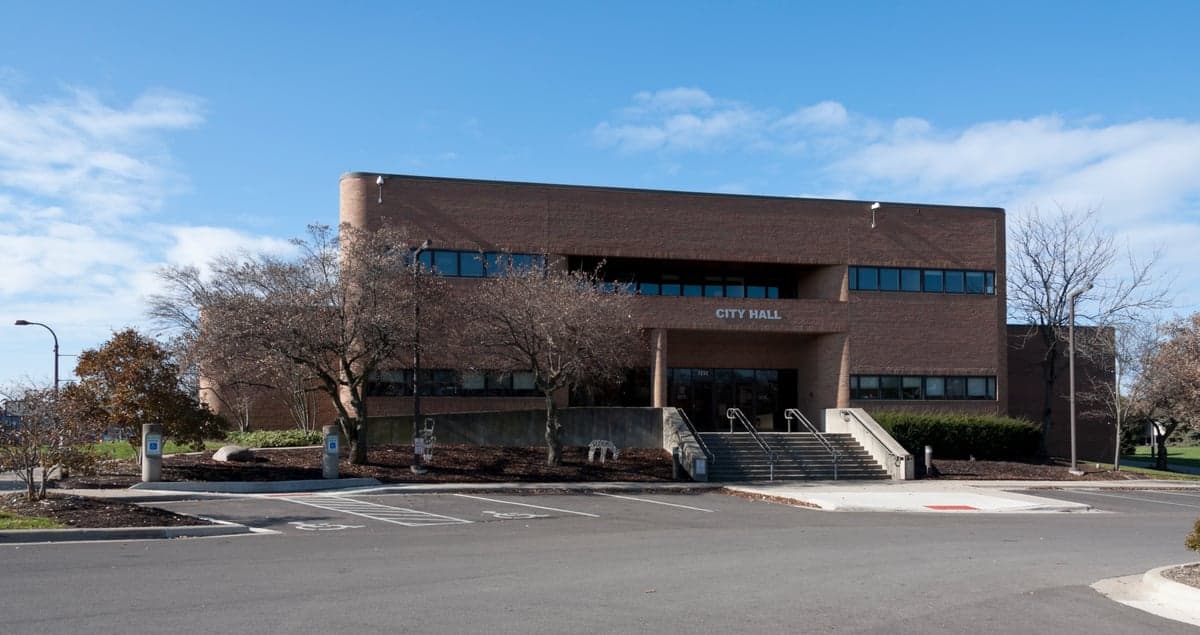
Photo: Wikipedia
Demographics of Reynoldsburg, OH
Affluence Level in Reynoldsburg, OH
A middle-class area roughly in line with national averages across income, home values, education, and employment.
People of Reynoldsburg, OH
Reynoldsburg, Ohio, today is a city of 41,032 residents defined by its racial and ethnic diversity, a strong family-oriented character, and a solidly middle-class, suburban identity. With a population that is 50.2% White, 30.3% Black, 6.9% Hispanic, 4.6% Indian (subcontinent), and 1.4% East/Southeast Asian, it stands out as one of central Ohio's most integrated communities. The city's identity is shaped by a blend of long-established families and newer waves of immigrants and domestic migrants, creating a dense, community-focused atmosphere where schools, parks, and local events like the Tomato Festival remain central to daily life.
How the city was settled and grew
Reynoldsburg's human history begins not with colonial settlement but with the arrival of the National Road (U.S. Route 40) in the 1830s, which transformed a rural crossroads into a small farming and trading hamlet. The original population was overwhelmingly of German and Irish stock, drawn by cheap land and the promise of the road's commerce. These early families settled what is now the Old Reynoldsburg Historic District around Main Street and Lancaster Avenue, building the first churches, schools, and general stores. The arrival of the railroad in the late 19th century brought a second wave of European immigrants—primarily Italian and Polish laborers—who established modest homes in the Huber Park area near the tracks. The city's growth remained modest until the post-World War II era, when the GI Bill and the expansion of Columbus's manufacturing base triggered a suburban boom. Developers carved out subdivisions like Rosewood and French Run in the 1950s and 1960s, attracting white, middle-class families from Columbus seeking larger lots and newer schools. By 1970, Reynoldsburg's population had swelled to roughly 13,000, and its character was firmly suburban and predominantly white.
Modern era (post-1965)
The 1965 Hart-Cellar Immigration Act and the subsequent suburbanization of Columbus's African American population reshaped Reynoldsburg's demographics dramatically. Starting in the 1980s, Black families began moving east from Columbus's Near East Side and Linden neighborhoods, drawn by affordable housing in subdivisions like Summit Ridge and Eastland Estates. This migration accelerated through the 1990s and 2000s, with the Black share of the population rising from under 5% in 1980 to over 30% by 2020. Simultaneously, the city became a destination for Indian (subcontinent) professionals working in Columbus's tech and healthcare sectors, who concentrated in newer developments near Interstate 70, particularly the Taylor Square and Waggoner Ridge areas. The Hispanic population, largely of Mexican and Central American origin, grew steadily as workers in construction, landscaping, and food service settled in the East Main Street corridor. East/Southeast Asian families, though smaller in number (1.4%), have established a visible presence in the Summit Ridge area, often drawn by the same school quality and housing affordability that attracted earlier waves. The foreign-born share now stands at 4.9%, a figure that understates the city's diversity because many Black and Indian residents are U.S.-born children of immigrants.
The future
Reynoldsburg's population is trending toward greater diversity, but not toward homogenization. The White share is declining gradually (down from roughly 60% in 2010 to 50.2% today), while the Black and Hispanic shares are rising. The Indian (subcontinent) community, at 4.6%, is growing faster than the East/Southeast Asian group, driven by continued professional migration and chain migration from established families. The city is not tribalizing into rigid ethnic enclaves—most neighborhoods are moderately integrated—but subtle clustering persists: Indian families favor the newer subdivisions near I-70, while Black families are more evenly spread across the city's east and west sides. The Hispanic population remains the most geographically concentrated, centered on the East Main Street corridor. Over the next 10–20 years, Reynoldsburg is likely to see its White share dip below 50%, making it a majority-minority suburb. The foreign-born share will likely rise to 7–8%, driven primarily by Indian and Hispanic immigration. The city's challenge will be maintaining its family-friendly character and school quality while absorbing this demographic change—a task that will require continued investment in infrastructure and community cohesion.
For someone moving in now, Reynoldsburg offers a genuinely integrated suburban experience that is rare in central Ohio. It is not a place of stark ethnic divisions or rapid gentrification, but a stable, middle-class community where diversity is becoming the norm. The bottom line: Reynoldsburg is becoming a model of the American suburb of the future—multiracial, family-oriented, and quietly prosperous—where the key question is not who you are, but whether you value good schools and a strong sense of place.

* Values derived from national, state, county, city and local statistics and may differ in a specific area. Last updated: 2026-04-21T19:24:44.000Z
Narrative content on this page is AI-generated and may contain mistakes. Verify any details that matter before acting on them.
ReloMaps may earn a commission from affiliate links at no extra cost to you.

