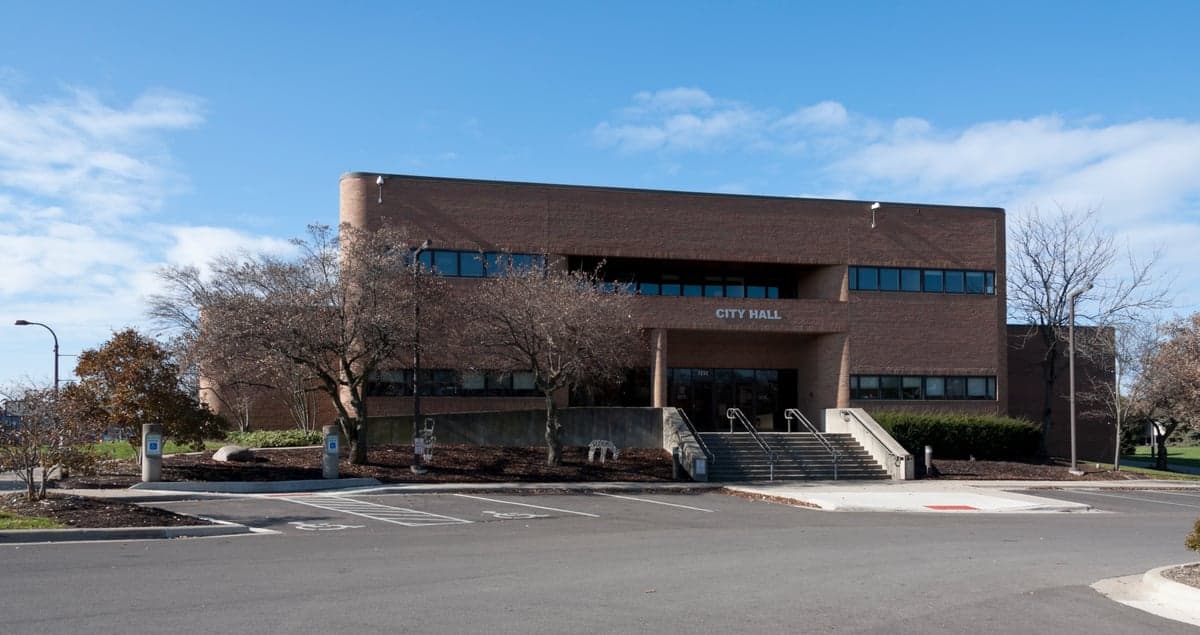
Photo: Wikipedia
Political ClimatePolitical Climate in Reynoldsburg, OH
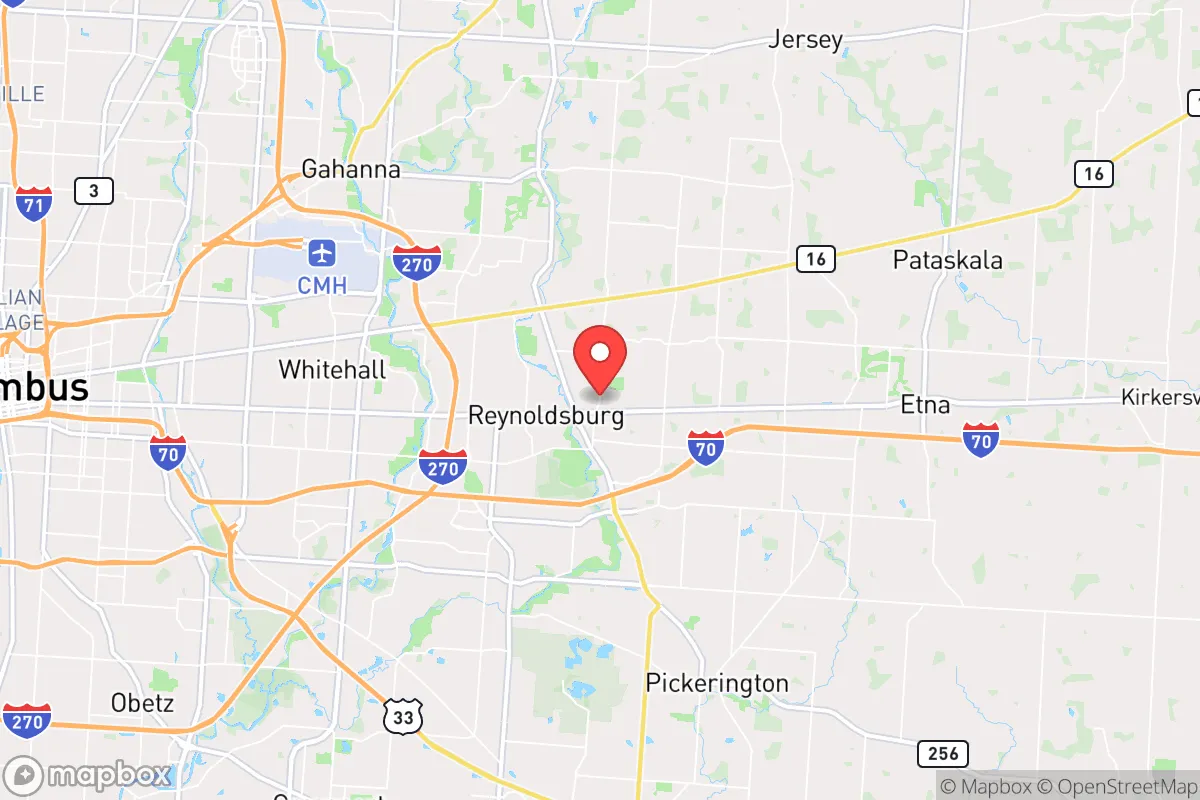
District shown is the primary district for this city’s centroid. Cities may span multiple districts.
Local Political AnalysisPolitical Analysis of Reynoldsburg, OH
Reynoldsburg, Ohio, has a Cook PVI of D+21, meaning it leans heavily Democratic compared to the nation as a whole, but that number doesn’t tell the whole story for folks who’ve lived here a while. This used to be a place where you could count on common-sense, live-and-let-live values—neighbors didn’t pry, and the city government mostly stuck to fixing potholes and keeping the parks clean. Over the last decade or so, though, you’ve seen a real shift toward progressive policies that feel more like they’re coming from Columbus proper than from the folks who actually grew up here. The trajectory is concerning if you value personal freedoms and want to keep government out of your wallet and your daily life.
How it compares
Drive ten minutes east to Pickerington or south to Canal Winchester, and you’ll feel a different political vibe—those communities still lean more conservative, with lower taxes and less appetite for social engineering from city hall. Even Gahanna, just to the north, has a more balanced mix, while Reynoldsburg has been trending hard left, mirroring the politics of downtown Columbus. The D+21 rating puts it in the same league as Whitehall and Bexley, but unlike those areas, Reynoldsburg was historically a working-class, family-oriented suburb where people didn’t want to be told how to live. Now, you see city council pushing things like equity initiatives and zoning changes that prioritize density over single-family homes, which feels like a direct attack on the property rights that made this place attractive in the first place.
What this means for residents
For the average person, this political climate means you’re paying more attention to local elections than you used to, because that’s where the overreach really hits home. Property taxes have crept up to fund programs that don’t directly benefit your street, and there’s a growing sense that city staff are more interested in checking progressive boxes than in keeping the streets safe and the schools accountable. If you value school choice or Second Amendment rights, you’ll find yourself increasingly at odds with the local leadership—Reynoldsburg schools have leaned into DEI training and critical race theory concepts, and the city has explored “safe storage” ordinances that feel like a foot in the door for gun control. Longtime residents I talk to are either digging in their heels or quietly looking at homes in Pataskala or Etna, where the county government is still run by folks who believe in limited interference.
Culturally, Reynoldsburg still has its roots in the Reynoldsburg Tomato Festival and a strong sense of community among the older neighborhoods, but the new arrivals from Columbus are changing the character. You’ll see more “In this house” yard signs and fewer American flags, and the local Facebook groups are full of arguments about mask mandates and library book content that would have been unthinkable twenty years ago. The policy distinction that stands out most is the city’s aggressive push for transit-oriented development along the Broad Street corridor, which sounds nice on paper but means more apartments, less parking, and a higher density of renters who don’t have the same stake in the community as homeowners. If this trend continues, Reynoldsburg will become a bedroom for Columbus progressives, and the independent, self-reliant spirit that built this town will be a memory. Keep an eye on the next city council race—that’s your best chance to push back.

State Political ClimatePolitical Climate in Ohio
State Political AnalysisPolitical Environment in the State
Ohio is a classic purple state with a distinct red lean that has deepened over the past two decades. Once a bellwether that both parties fought over, Ohio has shifted from a toss-up to a solidly Republican state in presidential elections, with Donald Trump winning it by 8 points in 2020 and 11 points in 2024. The state’s political center of gravity is now firmly in its rural and exurban counties, while the major metros—Cleveland, Columbus, and Cincinnati—remain Democratic strongholds. For a conservative considering relocation, Ohio offers a mixed bag: a state government that has moved aggressively right on taxes, gun rights, and education, but with local pockets of progressive governance that can feel like a different world.
Urban vs. rural divide
The political map of Ohio is a tale of three cities and everything else. The "Big Three" metros—Cuyahoga County (Cleveland), Franklin County (Columbus), and Hamilton County (Cincinnati)—consistently vote Democratic, with Cuyahoga delivering over 66% for Biden in 2020. But these counties are shrinking or stagnant in population, while the surrounding suburban and exurban rings are growing and trending red. For example, Delaware County (north of Columbus) voted +23 for Trump in 2024, up from +18 in 2020, as families flee the city for lower taxes and better schools. Meanwhile, the rural southeast (Appalachian Ohio) and northwest (the "Black Swamp" region) are deeply Republican, with counties like Holmes and Mercer routinely hitting 75-80% for the GOP. The real battleground is the "collar counties" around the metros—places like Warren County (north of Cincinnati), which is now one of the most reliably Republican counties in the state, and Lake County (east of Cleveland), which flipped from blue to red in 2016 and has stayed there. If you’re moving to Ohio, your political experience will depend almost entirely on whether you land in a city proper or one of these growing exurbs.
Policy environment
Ohio’s state-level policy has taken a sharp conservative turn since 2011, when Republicans gained full control of the legislature and governor’s office. The income tax has been cut from a top rate of 9.98% in 2005 to a flat 3.5% in 2025, with the goal of eliminating it entirely. Property taxes are local but generally moderate, though recent reappraisals in fast-growing counties like Delaware and Union have caused sticker shock for new homeowners. The state is a "right-to-work" state in practice if not in law—union membership has fallen to 12.5%, and public-sector unions were weakened by Senate Bill 5 in 2011 (though it was repealed by voters). On education, Ohio has a robust school choice program: the EdChoice voucher system lets students in underperforming districts attend private schools, and over 100,000 kids now use it. Homeschooling is lightly regulated, with no notification requirements for parents. On healthcare, Ohio did not expand Medicaid under the Affordable Care Act until 2014, and the state has since added work requirements for able-bodied adults. Election laws have tightened: voter ID is now required (with a free state ID available), and early voting was reduced from 35 days to 28 days. For a conservative, the policy environment is generally favorable, but the property tax issue is a real pain point in growing areas.
Trajectory & freedom
Ohio has been moving in a decidedly pro-freedom direction on most fronts, but with some notable exceptions. The biggest win for conservatives was the passage of constitutional carry (permitless carry) in 2022, making Ohio the 23rd state to allow it. The "Stand Your Ground" law was also strengthened in 2021. On parental rights, Ohio passed the "Parents’ Bill of Rights" in 2023, requiring schools to notify parents of any changes to a child’s health or well-being and banning transgender procedures on minors. The "Save Women’s Sports Act" (2023) keeps biological males out of female athletics. However, there’s a dark cloud: in 2023, voters passed Issue 1, enshrining abortion rights in the state constitution with 56% of the vote, overriding a six-week heartbeat ban that had been in effect. This was a major setback for the pro-life movement and shows that even in a red-leaning state, ballot initiatives can bypass the legislature. On the economic freedom front, Ohio eliminated the business franchise tax and is phasing out the commercial activity tax, making it more attractive for small businesses. But the state still has a high combined sales tax rate (up to 8% in some counties), and the gas tax was raised in 2019 to fund infrastructure. Overall, Ohio is getting freer on guns and parental rights, but the abortion vote was a stark reminder that the culture war is far from settled.
Civil unrest & political movements
Ohio has seen its share of political flashpoints. The 2020 protests in Columbus and Cleveland over George Floyd’s death were large but largely peaceful, though there were isolated incidents of looting. The state’s response was notable: Governor Mike DeWine called in the National Guard but did not use the heavy-handed tactics seen in other states. On the right, the "Ohio Freedom Alliance" and local "Moms for Liberty" chapters have been active in school board races, particularly in suburban counties like Warren and Delaware, where they’ve successfully pushed for book bans and curriculum transparency. Immigration politics are less heated than in border states, but there’s a growing tension in places like Dayton and Columbus, where refugee resettlement programs have brought in Somali and Congolese communities. The city of Columbus declared itself a "sanctuary city" in 2019, which has caused friction with the state legislature, which passed a law in 2024 banning sanctuary policies and requiring local law enforcement to cooperate with ICE. Election integrity has been a hot topic since 2020, with Republican Secretary of State Frank LaRose purging voter rolls and pushing for stricter ID laws. There was a minor controversy in 2022 when a Democratic operative was caught submitting fraudulent voter registrations in Cuyahoga County, but no widespread fraud was found. For a new resident, the most visible political movement will be the yard signs and bumper stickers—you’ll see plenty of "Let’s Go Brandon" and "Trump 2024" in the exurbs, and "Black Lives Matter" and "Pride" flags in the cities.
Projection
Over the next 5-10 years, Ohio is likely to become more Republican at the state level, but with a growing urban-rural divide that could lead to more ballot initiative battles. The demographic trends favor the GOP: the population is aging (median age 39.5), and the fastest-growing counties are the red-leaning exurbs like Delaware, Union, and Warren. The cities are losing population, particularly Cleveland and Cincinnati, while Columbus is holding steady due to Ohio State University and state government jobs. In-migration is modest but positive, with people coming from blue states like California and Illinois for the lower cost of living and taxes. However, the abortion rights vote showed that even conservative voters can be persuaded on certain issues, and there’s a real risk that future ballot initiatives could legalize marijuana (already medical) or expand Medicaid further. The state legislature is likely to continue cutting taxes and loosening regulations, but the property tax issue will force a reckoning—home values have surged 40% since 2020 in some exurbs, and seniors on fixed incomes are getting squeezed. For a conservative moving in now, expect a state that is broadly friendly to your values, but with local battles over schools and taxes that will require you to stay engaged.
For a new resident, the bottom line is this: Ohio offers a solid conservative policy environment at the state level, with low taxes, strong gun rights, and school choice. But you need to choose your location carefully. If you land in a growing exurb like Powell (Delaware County) or Mason (Warren County), you’ll find like-minded neighbors and good schools. If you end up in Cleveland or Columbus proper, you’ll be in a blue bubble with higher taxes and more progressive governance. The state is trending in the right direction on most fronts, but the abortion vote was a warning that cultural issues can still surprise you. Come for the affordability and the freedom, but be ready to fight for it at the local level.
* Values derived from national, state, county, city and local statistics and may differ in a specific area. Last updated: 2026-04-21T19:24:44.000Z
Narrative content on this page is AI-generated and may contain mistakes. Verify any details that matter before acting on them.
ReloMaps may earn a commission from affiliate links at no extra cost to you.

