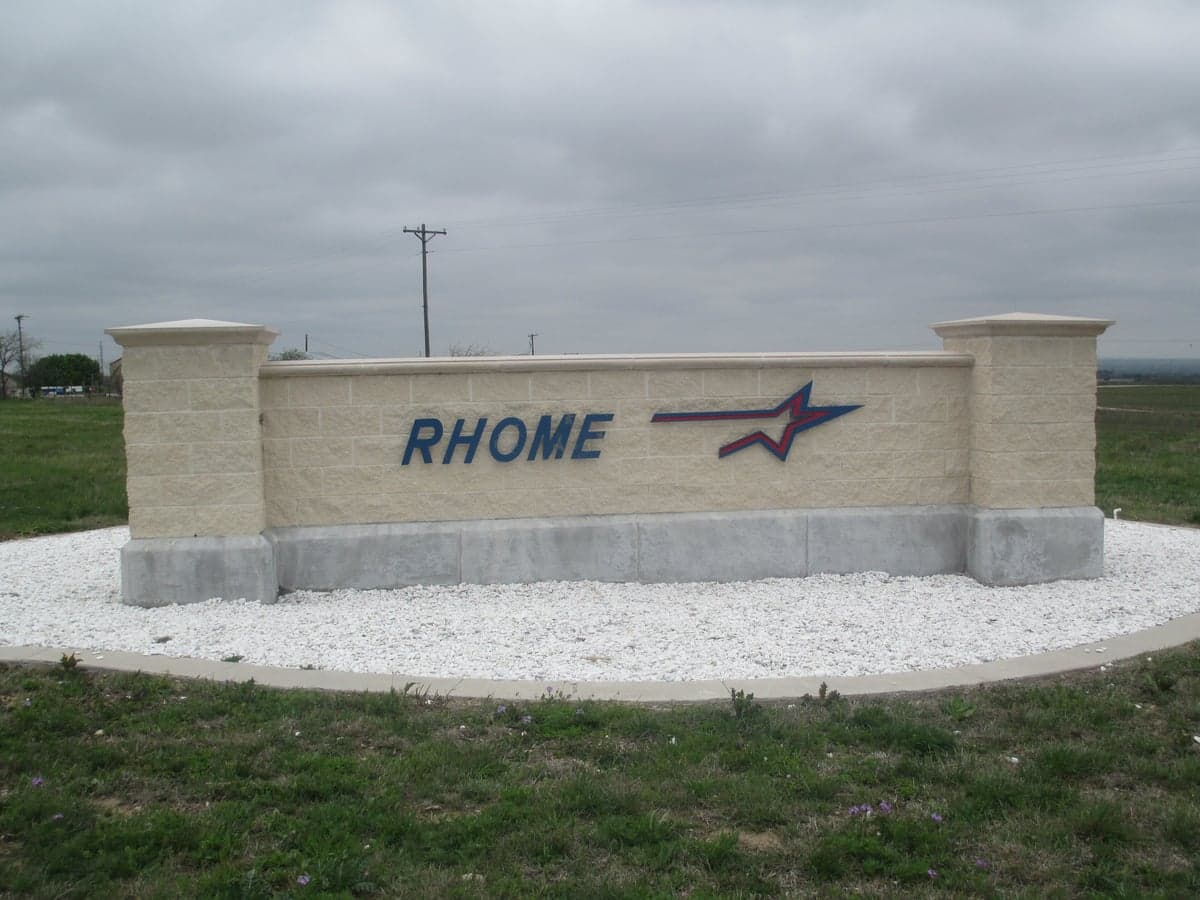
Photo: Wikipedia
Personal Sovereignty in Rhome, TX
Strong independent fundamentals that actively favor personal liberty and low regulation.
What does Personal Sovereignty tell us?
Personal Sovereignty measures your capacity for self-reliance and independence with minimal government friction. Higher scores mean fewer barriers between you and the way you want to live... but it assumes you have the space you need and good neighbors.
What does this tell us?
Personal Sovereignty measures your capacity for self-reliance and independence with minimal government friction. Higher scores mean fewer barriers between you and the way you want to live... but it assumes you have the space you need and good neighbors.
State Policy
Energy independence: Net exporter (220% of energy produced in-state)
Personal Liberty
Homesteading

Personal Liberty Analysis
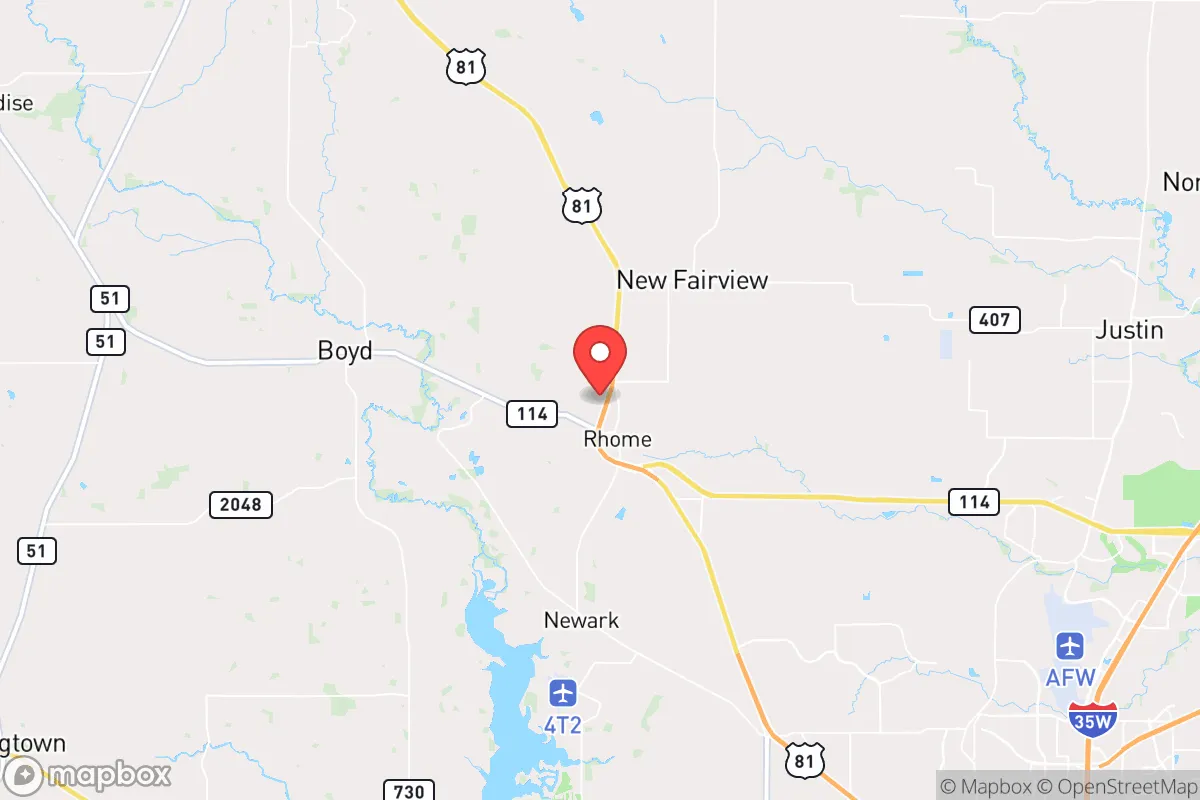
For the individual or family prioritizing personal sovereignty above all else, Rhome, Texas, offers a strategic foothold in a state that has, for decades, positioned itself as a bulwark against federal overreach. Located in Wise County, roughly 30 miles northwest of Fort Worth, this small town of around 1,600 residents sits in a region where the prevailing ethos is one of self-reliance, not reliance on government. The autonomy environment here is defined less by what the local government provides and more by what it leaves alone—a critical distinction for those who view expanding state power as the primary threat to liberty. While no place in the United States is entirely free from regulatory creep, Rhome’s combination of Texas’s constitutional framework, a rural county’s limited enforcement capacity, and a community culture that values privacy creates a baseline of personal freedom that is increasingly difficult to find in suburban or urban settings.
Tax burden and regulatory posture: How Texas’s fiscal structure protects your autonomy
The most immediate and tangible expression of personal sovereignty in Rhome is the absence of a state income tax. Texas’s reliance on property and sales taxes means the state has no direct claim on your earnings, a structural feature that limits the government’s ability to track, audit, or penalize your financial decisions. For the prepper or survivalist, this is not merely a financial advantage—it is a sovereignty buffer. Wise County’s property tax rate hovers around 0.65% to 0.75% of assessed value, which is moderate by Texas standards, but the key is that local appraisal districts have limited reach compared to states with income tax bureaucracies. The regulatory posture in Rhome is similarly light: the town has no zoning ordinance, meaning you are largely free to use your land as you see fit, provided you comply with basic county-level building codes and septic regulations. This absence of zoning is a deliberate choice by a community that values property rights over aesthetic uniformity. For the individual who wants to build a workshop, store supplies, or keep livestock without navigating a maze of permits, this is a significant win. However, be aware that Wise County does enforce standard health and safety codes, and the Texas Commission on Environmental Quality (TCEQ) has authority over water and waste—so complete regulatory freedom is a myth, but the burden here is far lighter than in incorporated cities like Fort Worth or Dallas.
Self-defense and gun law specifics: What the Second Sanctuary movement means for Rhome
Texas’s gun laws are among the most permissive in the nation, and Wise County has reinforced this with a formal Second Amendment Sanctuary resolution, passed in 2021. This means local law enforcement is directed not to enforce any federal gun control measures that would infringe on state law—a critical protection for those who view firearm ownership as the ultimate guarantor of personal sovereignty. In Rhome, you can carry a handgun openly or concealed without a permit, thanks to the state’s permitless carry law (effective September 2021). There are no local ordinances restricting magazine capacity, firearm types, or storage requirements. The sheriff’s office in Wise County is known for a pro-Second Amendment stance, and the county’s rural character means that defensive use of force is generally viewed through a lens of self-reliance rather than state monopoly on violence. For the survivalist, this means you can maintain a robust personal arsenal without fear of local confiscation or registration schemes. The only significant limitation is the federal Gun Control Act’s prohibition on certain transfers, but local enforcement of that is minimal. If your sovereignty calculus includes the ability to defend your home, family, and property without asking permission, Rhome offers one of the strongest legal environments in the country.
Self-reliance and homesteading viability: Lot sizes, zoning, and off-grid feasibility
The practical ability to live independently—growing food, harvesting water, generating power—is where Rhome truly shines for the prepper mindset. Because the town lacks zoning, residential lots can be used for agricultural purposes, and many properties in the surrounding area are 1 to 5 acres, with larger tracts available further out. This is not a subdivision with homeowners’ associations dictating lawn length or paint colors; it is a place where you can keep chickens, goats, or even a few head of cattle without bureaucratic interference. Off-grid living is feasible, though not entirely unregulated. Texas law allows rainwater collection without a permit, and many rural residents rely on wells for water, subject only to county well-drilling permits (typically a one-time fee under $200). Solar panels and battery storage are unregulated at the local level, and net metering is available through the electric cooperative (Brazos Electric Power Cooperative) that serves the area. However, note that the Texas power grid (ERCOT) has reliability issues, which for the prepper is actually an advantage: it incentivizes true energy independence rather than reliance on a fragile system. Composting toilets and greywater systems are legal under state law, provided they meet basic health standards. The bottom line: if you want to build a self-sufficient homestead with minimal government oversight, Rhome’s regulatory vacuum is a major asset. The only real constraint is that Wise County does enforce property line setbacks and septic system requirements, but these are standard and not onerous.
Personal liberties: Parental rights, medical autonomy, speech, and property
In the realm of personal liberties, Rhome benefits from Texas’s broader state-level protections, which are among the strongest in the nation for those who prioritize family autonomy and medical freedom. Parental rights are explicitly protected under Texas law, meaning that decisions about education, healthcare, and religious upbringing rest with parents, not the state. The Wise County school district (Northwest ISD, which serves parts of Rhome) has a conservative board that generally avoids controversial curriculum mandates. For the parent concerned about government overreach into childhood education, this is a safe harbor. Medical autonomy is similarly robust: Texas has not mandated COVID-19 vaccines for children or adults, and there are no state-level vaccine passports. The state has also passed laws prohibiting discrimination against those who decline medical treatments, including vaccines, which provides a legal shield for those who choose alternative health approaches. Free speech is protected under the Texas Religious Freedom Restoration Act, which applies to both religious and secular expression. Property rights are the bedrock of Texas law, with strong protections against eminent domain abuse and regulatory takings. The one area where personal liberty is more constrained is in the realm of drug policy—Texas has strict laws against marijuana and other substances, and Wise County law enforcement is known for a zero-tolerance approach. For the sovereignty-minded individual, this is a trade-off: you gain strong protections for property, speech, and family, but you lose the ability to make personal choices about substances that are legal in other states.
Overall, Rhome offers a level of personal sovereignty that is rare in modern America. Compared to the coastal states or even urban Texas, the combination of no income tax, no zoning, permitless carry, strong parental rights, and a culture of self-reliance creates an environment where the individual—not the state—is the primary decision-maker. The trade-offs are real: limited economic opportunity, a slower pace of life, and a community that expects you to handle your own problems. But for the survivalist or prepper who views government overreach as the existential threat of our time, Rhome represents a strategic retreat to higher ground—both literally and figuratively. It is not a utopia, but it is a place where the default assumption is that you are free to live as you see fit, as long as you do not harm others. In a country where that assumption is increasingly rare, that is worth serious consideration.

* Values derived from national, state, county, city and local statistics and may differ in a specific area. Last updated: 2026-05-10T18:41:47.000Z
Narrative content on this page is AI-generated and may contain mistakes. Verify any details that matter before acting on them.
ReloMaps may earn a commission from affiliate links at no extra cost to you.

