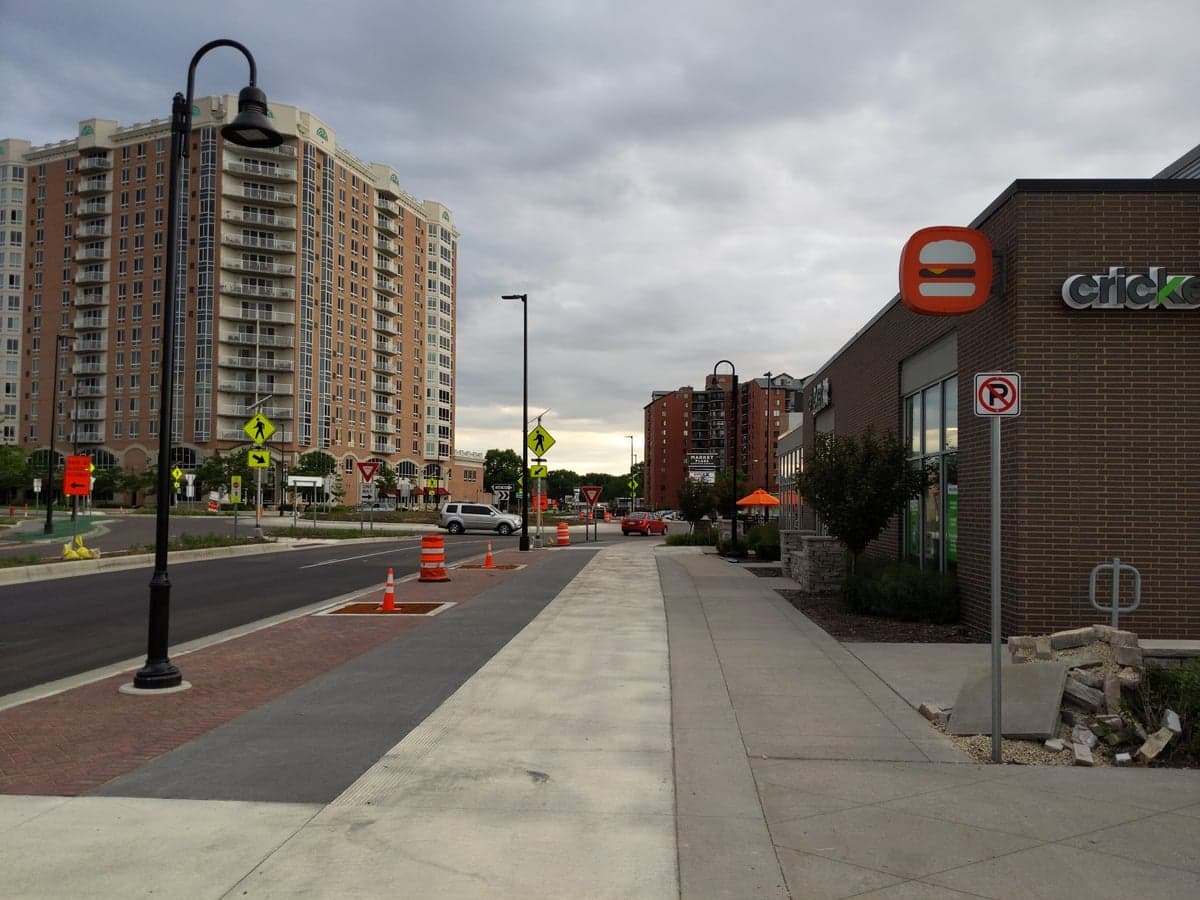
Photo: Wikipedia
Personal Sovereignty in Richfield, MN
Moderate friction. Expect trade-offs in some aspect of personal liberty and independence.
What does Personal Sovereignty tell us?
Personal Sovereignty measures your capacity for self-reliance and independence with minimal government friction. Higher scores mean fewer barriers between you and the way you want to live... but it assumes you have the space you need and good neighbors.
What does this tell us?
Personal Sovereignty measures your capacity for self-reliance and independence with minimal government friction. Higher scores mean fewer barriers between you and the way you want to live... but it assumes you have the space you need and good neighbors.
State Policy
Energy independence: Importer (20% of energy produced in-state)
Personal Liberty
Homesteading

Personal Liberty Analysis
Richfield, Minnesota, presents a challenging environment for personal sovereignty, where state-level policies significantly constrain individual autonomy despite the city’s own moderate local governance. As a first-ring suburb of Minneapolis, Richfield operates under the full weight of Minnesota’s expansive regulatory and tax apparatus, making it a location where self-reliance and personal freedom require constant navigation of government oversight. For those prioritizing minimal state interference—whether in financial matters, self-defense, or lifestyle choices—Richfield’s appeal is limited, especially when compared to more rural or less regulated states in the Upper Midwest.
Tax burden and regulatory posture in Richfield
Minnesota’s tax burden is among the highest in the nation, and Richfield residents feel this acutely. The state imposes a progressive income tax with a top marginal rate of 9.85%, one of the steepest in the country, while property taxes in Hennepin County average around 1.1% of home value—above the national median. Sales tax in Richfield is 8.025%, combining state (6.875%) and local (1.15%) rates. For a survivalist or prepper mindset, this heavy taxation directly reduces the capital available for self-reliant investments like land, supplies, or alternative energy systems. The regulatory posture is equally burdensome: Minnesota has stringent environmental and building codes that complicate off-grid or unconventional housing. Zoning in Richfield is typical of inner-ring suburbs, with minimum lot sizes around 6,000 to 7,000 square feet and strict adherence to city codes that prohibit many forms of independent infrastructure, such as rainwater collection systems or composting toilets without permits. The state’s regulatory environment also extends to business—starting a home-based enterprise or cottage food operation requires navigating layers of licensing and inspection, a deterrent for those seeking economic independence.
Self-defense and gun law specifics in Richfield
Minnesota’s gun laws are moderate compared to coastal states but still impose meaningful restrictions on personal sovereignty. Richfield residents must obtain a permit to carry a concealed firearm, which requires a training course and a background check, with permits issued by the county sheriff. Open carry is legal without a permit, but local ordinances in Richfield can create friction—city parks and public buildings may have restricted zones. The state has a “duty to inform” law, meaning you must notify law enforcement during any traffic stop if carrying. For preppers, the bigger concern is Minnesota’s red flag law (Extreme Risk Protection Order), enacted in 2023, which allows family members or law enforcement to petition a court to temporarily remove firearms from an individual deemed a risk. This law is a significant erosion of due process, as it can be triggered by subjective assessments and does not require a criminal conviction. Additionally, Minnesota bans private firearm sales without a background check (universal background check law), limiting the ability to transfer weapons freely among trusted individuals. While Richfield itself does not have additional local gun ordinances beyond state law, the city’s proximity to Minneapolis—which has considered more restrictive measures—means political pressure for further limits is constant. For those prioritizing self-defense autonomy, these layers of state control are a clear negative.
Self-reliance and homesteading viability in Richfield
Richfield’s dense suburban layout makes traditional homesteading nearly impossible. The average lot size is under a quarter-acre, and city zoning prohibits livestock like chickens or goats without special permits, which are rarely granted. Gardening is allowed, but homeowners associations (HOAs) in many neighborhoods impose restrictions on front-yard gardens, fencing, and even clotheslines, undermining self-sufficiency. Off-grid feasibility is essentially zero: Minnesota’s building codes require grid-tied electrical systems for new construction, and solar panel installations must meet utility interconnection standards. Rainwater harvesting is limited to 2,500 gallons per property and must be registered with the state, while composting toilets are not permitted as primary sanitation. For a survivalist, the lack of land and regulatory hostility to independent infrastructure means Richfield is a poor base for long-term self-reliance. The city’s water supply comes from the Mississippi River via Minneapolis, making it vulnerable to infrastructure disruption. Those serious about homesteading would need to look 30–60 minutes outside the metro, where acreages and looser county zoning allow for more autonomous living. Richfield’s only advantage is its access to a large network of like-minded individuals through local prepper groups and gun clubs, but the physical constraints of the suburb itself are severe.
Personal liberties in Richfield: parental rights, medical autonomy, speech, and property
Minnesota’s state-level policies significantly curtail personal liberties in Richfield. On parental rights, the state has mandatory reporting laws that can override parental decisions in medical and educational contexts, and recent legislation has expanded the authority of child protective services. Vaccine mandates for school attendance are enforced, and while exemptions exist, they require notarized affidavits and are subject to annual renewal—a bureaucratic hurdle that erodes parental autonomy. Medical autonomy is similarly constrained: Minnesota has a prescription drug monitoring program that tracks controlled substance prescriptions, and the state’s health insurance mandates limit alternative or holistic care options. The COVID-19 era saw executive orders that closed businesses and restricted gatherings, and while those are lifted, the legal framework for future emergency powers remains broad. Free speech is generally protected, but Minnesota has hate speech statutes that can be used to prosecute certain expressions, and the state’s campaign finance laws restrict political speech near elections. Property rights are heavily regulated: the state’s environmental review process can delay or block development on private land, and eminent domain is used for public projects like light rail expansions. Richfield’s city council has also passed ordinances limiting short-term rentals (like Airbnb) and requiring rental property inspections, further reducing how owners can use their property. For those who view government overreach as a primary threat, these cumulative restrictions make Richfield a location where personal sovereignty is constantly negotiated with the state.
Overall, Richfield offers a low-to-moderate level of personal sovereignty compared to other areas in the Midwest. While it is not as restrictive as coastal cities like Portland or San Francisco, it falls well short of the autonomy found in rural Minnesota counties or states like South Dakota, which has no income tax, no red flag law, and minimal zoning. For a survivalist or prepper, Richfield’s high taxes, regulatory density, and limited homesteading potential make it a strategic compromise only if proximity to Minneapolis employment is essential. Those prioritizing maximum personal freedom should look to more rural areas within a two-hour drive, where state-level constraints are less acutely felt and local governance is more aligned with individual liberty. Richfield is a place to live within the system, not to escape it.

* Values derived from national, state, county, city and local statistics and may differ in a specific area. Last updated: 2026-04-19T04:24:13.000Z
Narrative content on this page is AI-generated and may contain mistakes. Verify any details that matter before acting on them.
ReloMaps may earn a commission from affiliate links at no extra cost to you.

