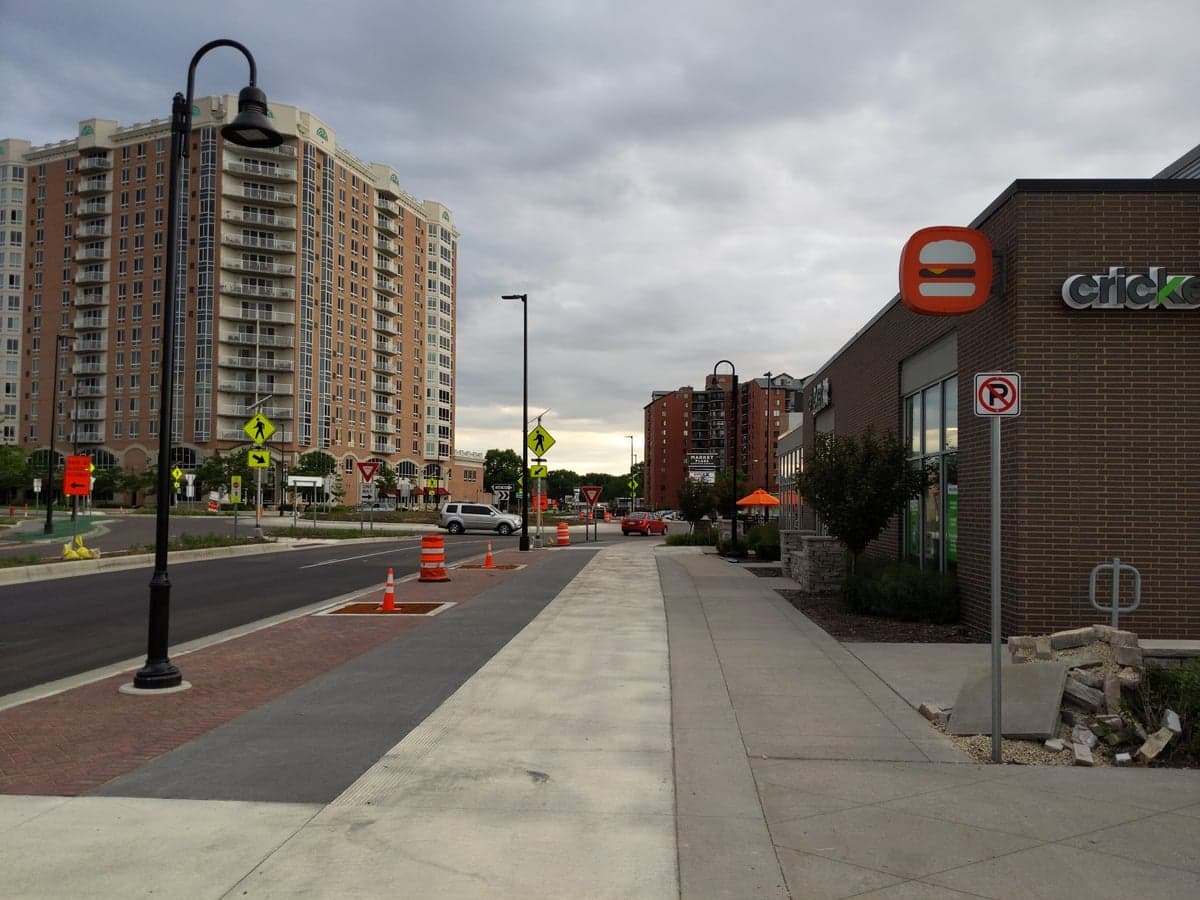
Photo: Wikipedia
Quality of Life in Richfield, MN
A high quality of life with strong walkability, manageable living costs, healthy neighborhood signals, and solid amenity access.
What does Quality of Life tell us?
Quality of Life blends cost of living, nearby amenities, socioeconomic signals, and neighborhood character. City-level scores represent the whole municipality; individual neighborhoods can differ.
What does this tell us?
Quality of Life blends cost of living, nearby amenities, socioeconomic signals, and neighborhood character. City-level scores represent the whole municipality; individual neighborhoods can differ.
Cost of Living
14% above national average
The Real Cost of Living in Richfield, MN for 2026
| Tier | Individual | Family (4) |
|---|---|---|
| Survival | $21k | $40k |
| Comfortable | $62k | $92k |
| Luxury | $134k+ | $208k+ |
| Elite (Top 5%) | $158k+ | $244k+ |
92%
The Area Signal
A metric tracking the socioeconomic signals of the area.


Hobbies
Explore the areaGroceries
2 within 10 miles
Gas
0 within 10 miles
Hospital
3 within 20 miles
Airport
MSP — Minneapolis-St Paul International Airport (Terminal 1) MN
Post Office
USPS — Minneapolis, MN
Critical Amenities
Quality-of-Life Analysis
Richfield, Minnesota, presents a middle-to-upper-middle-class quality of life shaped by its position as a mature, landlocked first-ring suburb of Minneapolis. With a cost of living index of 114 (14% above the national average), the city attracts a mix of long-term homeowners, young families, and professionals who prioritize proximity to the urban core over the larger lots found in outer suburbs. The population is notably diverse for the metro area, with a significant Somali and Latino community, giving Richfield a more cosmopolitan feel than many neighboring suburbs.
Cost of living, housing, and affordability compared to Minneapolis and Bloomington
Richfield’s housing market is the primary driver of its above-average cost of living. The median home value sits at $320,400, which is roughly 15% lower than the Minneapolis citywide median but about 10% higher than in neighboring Bloomington. This pricing reflects Richfield’s desirability as a compromise: homes are generally older (largely built in the 1950s and 1960s) and on smaller lots than in Bloomington, but the city offers a shorter average commute of 23.2 minutes and direct access to I-35W and Hwy 62. Median rent is $1,334, which is notably lower than the Minneapolis average of roughly $1,500, making Richfield a more affordable rental option for workers commuting to downtown Minneapolis or the airport. Property taxes are moderate for Hennepin County, though the city’s aging housing stock means buyers should budget for potential maintenance and energy-efficiency upgrades.
Amenities, schools, and what daily life is like for families
Daily life in Richfield centers on its strong sense of community and practical amenities. The Richfield Public School District (ISD 280) is a key draw, with Richfield High School offering International Baccalaureate (IB) programs and a graduation rate near 90%. The city is also home to the Richfield Ice Arena, a regional hub for youth hockey, and the Wood Lake Nature Center, a 150-acre wetland park with trails and a boardwalk. For shopping and dining, the city is anchored by the Southtown Center mall and a dense strip of restaurants along 66th Street, including well-regarded local spots like El Taco Riendo and Hola Arepa. The city’s grid layout and bike-friendly streets (part of the Minneapolis Grand Rounds system) make errands walkable in the central neighborhoods, though most residents still rely on cars. The Richfield Farmers Market runs May through October, and the city’s recreation department organizes popular events like the Fourth of July parade and the Richfield Art Festival.
Richfield is best suited for people who want an urban-adjacent lifestyle without paying Minneapolis prices or dealing with downtown parking. The city works well for young families who value good public schools and a safe, walkable environment, as well as for commuters who work in Minneapolis, Bloomington, or the airport corridor. Retirees on fixed incomes may find the cost of living challenging, but the city’s strong community programs and proximity to medical facilities (including Fairview Southdale Hospital) are draws. Those seeking large new homes, acreage, or a quiet exurban feel will likely prefer outer-ring suburbs like Lakeville or Prior Lake. Richfield’s appeal is its balance: a genuine neighborhood feel with the cultural and employment benefits of the Twin Cities metro, all at a price point that remains accessible compared to the urban core.

Crime in Richfield, MN
Crime rates similar to the national median for U.S. locations.
Violent CrimeViolent Crime Analysis
Property CrimeProperty Crime Analysis
Crime Analysis
Richfield, Minnesota, presents a mixed safety profile that demands careful consideration from potential residents. While the city’s violent crime rate of 197.9 incidents per 100,000 people sits below the national average, its property crime rate of 2,141.1 per 100,000 is significantly elevated, reflecting challenges common to inner-ring suburbs of a major metro area. The overall safety picture is further complicated by the progressive judicial environment in Hennepin County, which encompasses Richfield and the broader Minneapolis–Saint Paul region.
Crime in context
Richfield’s violent crime rate is roughly half the U.S. average, offering a degree of reassurance for those concerned about physical safety. However, the property crime rate is nearly 60% higher than the national median, placing it among the higher-risk suburbs for theft, burglary, and vehicle-related crime. This disparity is typical of communities adjacent to large urban centers, where property crime often spills over from the core city. The presence of progressive prosecutors in Hennepin County, who have implemented policies such as reduced cash bail and diversion programs for property offenders, is a contributing factor that keeps recidivism rates elevated and undermines deterrence.
What residents experience
Daily life in Richfield involves a heightened vigilance around personal property. Car break-ins, package thefts, and garage burglaries are the most common complaints, particularly in neighborhoods near major thoroughfares like I-494 and Lyndale Avenue. Violent crime is less frequent but not absent; incidents are often concentrated in a few commercial corridors and near transit stops. Residents report that police response times can be slow for property crimes, as the department prioritizes violent calls. The broader Hennepin County justice system’s focus on rehabilitation over incarceration means that repeat property offenders frequently cycle back into the community, a pattern that frustrates many long-term homeowners.
Neighborhood-level variation
Safety conditions vary noticeably within Richfield. The western half of the city, closer to the Minneapolis border and the I-35W corridor, tends to see higher crime volumes, while the eastern side near the Veterans Memorial Park area is generally quieter. The area around the Richfield Municipal Center and the Wood Lake Nature Center is considered the safest, with lower incident rates and stronger neighborhood watch participation. Prospective renters should be cautious around the apartment complexes near 66th Street and Lyndale, where property crime reports are most concentrated. Overall, while Richfield is not a high-crime city by national standards, its proximity to a large metro area with lenient criminal justice policies creates a persistent property crime problem that requires active community engagement to manage.
* Values derived from national, state, county, city and local statistics and may differ in a specific area. Last updated: 2026-04-19T04:24:13.000Z
Narrative content on this page is AI-generated and may contain mistakes. Verify any details that matter before acting on them.
ReloMaps may earn a commission from affiliate links at no extra cost to you.

