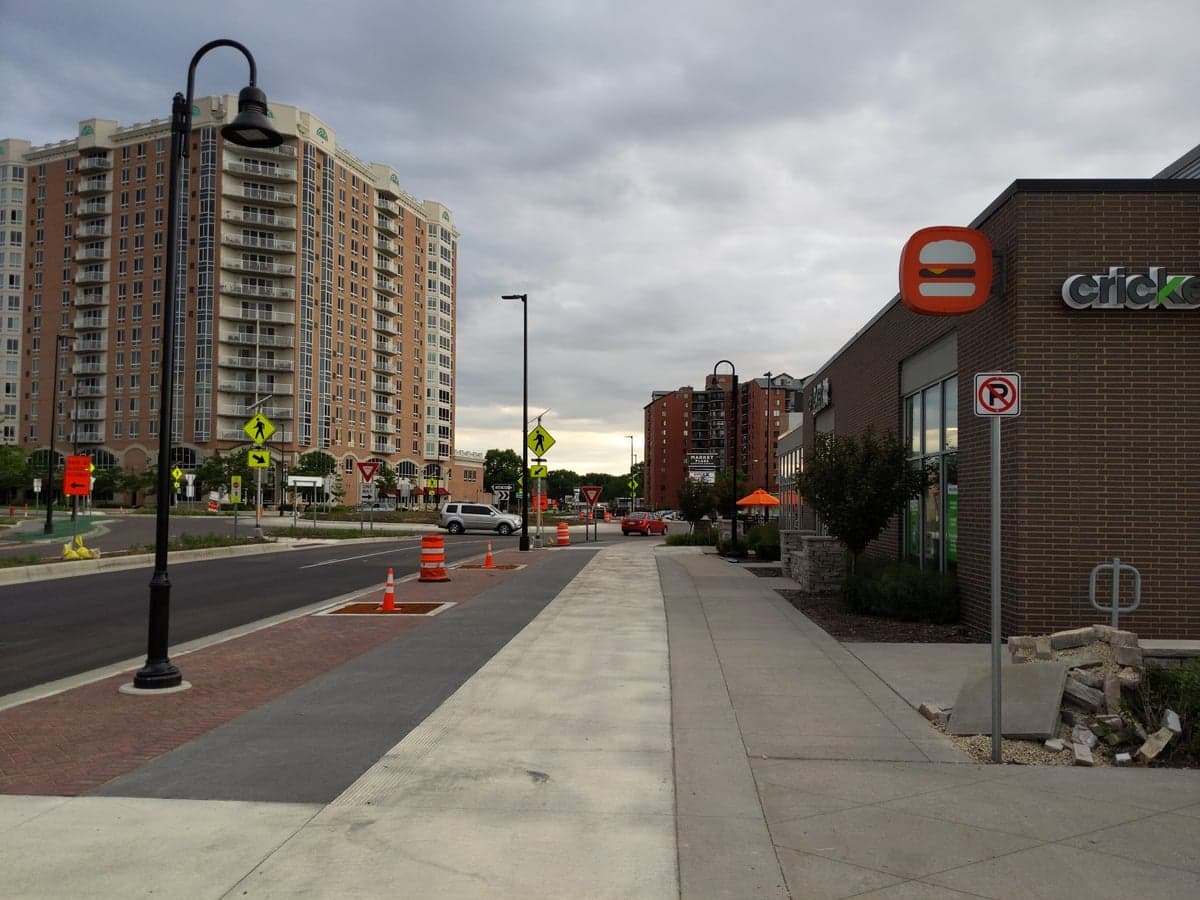
Photo: Wikipedia
Political ClimatePolitical Climate in Richfield, MN
District shown is the primary district for this city’s centroid. Cities may span multiple districts.
Local Political AnalysisPolitical Analysis of Richfield, MN
Richfield, Minnesota, is about as blue as it gets in the Twin Cities metro, with a Cook Partisan Voting Index of D+32. That means the city votes more than thirty points more Democratic than the national average, and it’s been trending that way for years. If you’re looking for a place where local government keeps its hands off your business and your wallet, this isn’t it—the political machine here is firmly progressive, and the trajectory is toward more regulation, higher taxes, and a growing list of mandates that chip away at personal freedoms.
How it compares
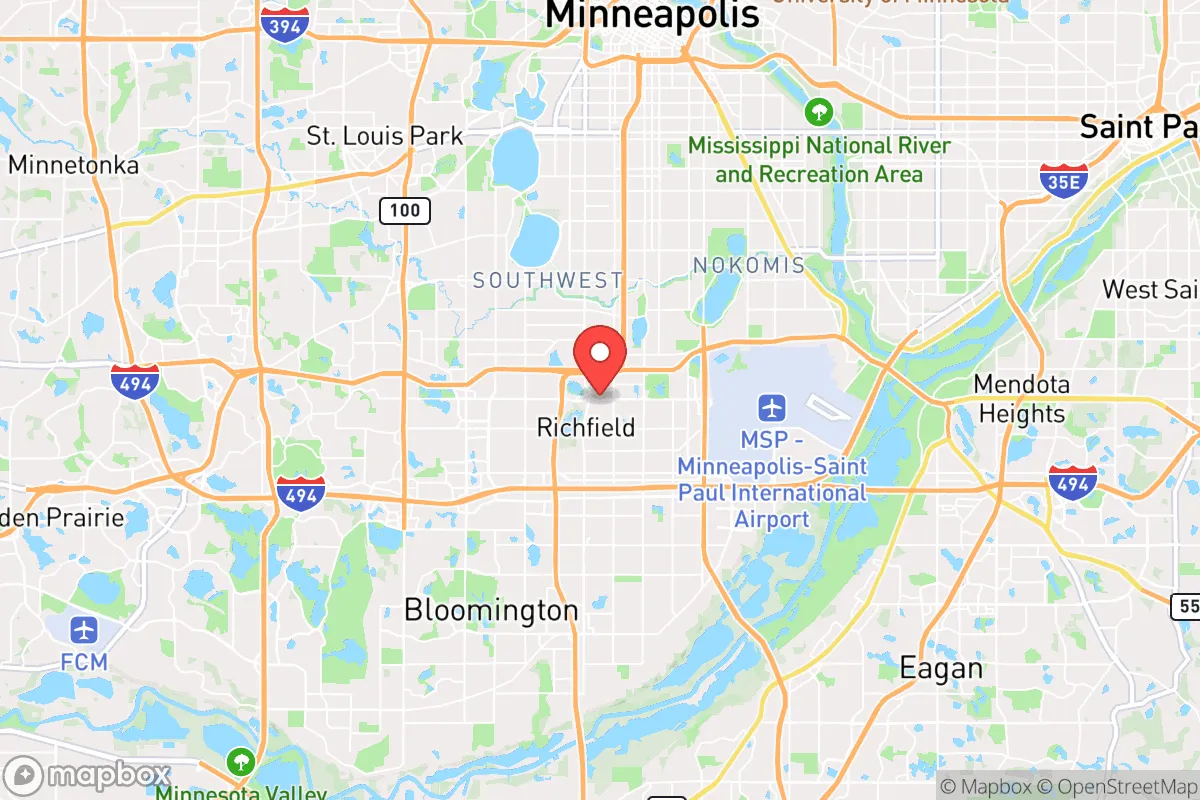
To understand Richfield, you have to look at its neighbors. Hop over to Edina or Minneapolis, and you’ll find the same brand of left-leaning politics—think strict zoning, heavy-handed environmental rules, and a city council that’s quick to impose new fees or restrictions. But drive just a few miles south to Bloomington, and you start to see a slightly more balanced picture, though still solidly blue. Head further out to suburbs like Lakeville or Prior Lake, and you’ll hit communities that lean conservative, where people are more likely to push back on tax hikes and government overreach. Richfield sits in the middle of this political sandwich, but it’s firmly on the progressive side, and the gap is widening. The city council and school board elections here rarely see a competitive race from the right, so the agenda tends to shift leftward without much resistance.
What this means for residents
For folks who value personal freedoms—like choosing whether to wear a mask, how to run a small business, or what kind of car to drive—Richfield’s political climate can feel suffocating. The city has embraced progressive policies on housing density, environmental standards, and public health mandates that often go beyond state requirements. Property taxes are on the rise to fund new initiatives, and there’s a growing push for more government oversight in everyday life, from rental regulations to restrictions on home-based businesses. If you’re a conservative or even a moderate who believes in limited government, you’ll find yourself constantly voting against new ordinances that feel like they’re designed to control rather than empower. The long-term trend is concerning: as the city becomes more diverse and younger, the political energy is all about expanding government’s role, not rolling it back.
One cultural distinction worth noting is Richfield’s strong union presence and its history as a working-class suburb. That used to mean a more pragmatic, blue-collar conservatism on some issues, but those days are fading. Today, the union influence aligns almost entirely with the Democratic machine, pushing for higher wages and benefits that sound good on paper but often lead to higher costs for residents and small businesses. The city’s identity is shifting from a quiet, middle-class community to a more activist-driven one, where local leaders are eager to experiment with new social programs and environmental rules. If you’re looking for a place where you can live your life without the government breathing down your neck, Richfield is probably not the right fit—and it’s only going to get more restrictive from here.

State Political ClimatePolitical Climate in Minnesota
State Political AnalysisPolitical Environment in the State
Minnesota has shifted from a classic purple battleground to a reliably blue state over the past two decades, with Democrats now holding all statewide offices and both legislative chambers. The state voted for Hillary Clinton by 1.5 points in 2016, Joe Biden by 7 points in 2020, and Kamala Harris by roughly 4 points in 2024, but that top-line number hides a deeply divided electorate. The real story is the collapse of rural Democratic support and the explosive growth of the Twin Cities metro, which now supplies nearly 60% of the state’s votes and drives the state’s progressive agenda.
Urban vs. rural divide
The political map of Minnesota is a tale of two worlds. The Minneapolis-St. Paul metro area, including suburbs like Edina, Maple Grove, and Woodbury, has become a Democratic stronghold, with Hennepin and Ramsey counties routinely delivering 65-70% of their votes to Democratic candidates. Meanwhile, greater Minnesota—places like St. Cloud, Rochester, and Duluth—has been trending red, though not fast enough to offset metro growth. The Iron Range, once a Democratic bastion, flipped hard for Trump in 2016 and 2020, with St. Louis County (home to Duluth) barely staying blue. The rural-urban divide is stark: in 2024, Otter Tail County voted +30 for Trump, while Ramsey County voted +40 for Harris. The suburbs are the real battleground—places like Anoka County (north of the cities) went for Trump in 2016 but flipped back to Biden in 2020, then narrowly to Harris in 2024, showing how volatile these swing areas are.
Policy environment
Minnesota’s policy environment has taken a sharp left turn since Democrats gained the trifecta in 2023. The state now has a progressive income tax with a top rate of 9.85% on income over $200,000 (single filers), one of the highest in the nation. Property taxes are moderate, but sales tax is 6.875% statewide, with local add-ons pushing it past 8% in some cities. The 2023 session saw a flurry of legislation: a paid family and medical leave program funded by a new payroll tax, a carbon-free electricity mandate by 2040, and the legalization of recreational marijuana. Education policy is dominated by the teachers’ union, with per-pupil spending among the highest in the country but stagnant test scores. Healthcare is heavily regulated, with a state-run insurance exchange and Medicaid expansion. Election laws are among the most liberal—automatic voter registration, no-excuse absentee voting, and same-day registration—which conservatives argue erodes ballot integrity. The state also passed a “driver’s license for all” law in 2023, allowing undocumented immigrants to obtain licenses, a flashpoint for those concerned about rule of law.
Trajectory & freedom
On the freedom index, Minnesota is moving decisively in the wrong direction for conservatives. The 2023 legislative session was a firehose of government expansion. The Minnesota Clean Energy Act mandates 100% carbon-free electricity by 2040, effectively banning natural gas and coal plants. The Minnesota Paid Family and Medical Leave Act imposes a new 0.7% payroll tax split between employers and employees, with the state controlling benefit eligibility. Gun rights took a hit with the passage of universal background checks and a “red flag” law (extreme risk protection orders), which allow courts to temporarily seize firearms from individuals deemed a threat—a law many gun owners see as a due-process violation. Parental rights were weakened by a law that allows minors 16 and older to consent to gender-affirming care without parental notification, and the state became a “sanctuary” for such care, actively shielding providers from out-of-state legal actions. On the plus side, property taxes remain locally controlled, and there’s no statewide rent control. But the overall trend is clear: more mandates, more taxes, and less individual autonomy.
Civil unrest & political movements
Minnesota has been a flashpoint for civil unrest since the 2020 murder of George Floyd in Minneapolis, which sparked riots that caused over $500 million in property damage and led to the dismantling of the Minneapolis Police Department’s Third Precinct. The aftermath saw a surge in progressive activism, with groups like the Minnesota Freedom Fund bailing out protesters and the Minneapolis City Council attempting to defund the police (a move later reversed after public backlash). On the right, the Minnesota Gun Owners Caucus and Minnesota for Marriage have been active, but the state’s conservative movement is fragmented. Immigration politics are heated: the “driver’s license for all” law and the state’s status as a sanctuary for gender-affirming care have drawn national attention. Election integrity remains a sore point—the 2020 election saw a narrow 7-point margin for Biden, but Trump’s campaign challenged the results in court, and many rural counties passed resolutions calling for election audits. The Minnesota State Fair and Mall of America have been sites of dueling protests, and the state’s political discourse is noticeably more polarized than a decade ago.
Projection
Over the next 5-10 years, Minnesota is likely to become even more blue, driven by continued in-migration to the Twin Cities metro from other states and the natural growth of the urban population. The rural exodus will accelerate, with counties like Marshall, Roseau, and Koochiching losing population and political influence. The state’s progressive tax structure and regulatory environment will continue to push higher-income earners and businesses to neighboring states like South Dakota and Wisconsin, but the metro’s economic gravity (home to 16 Fortune 500 companies) will keep the state afloat. The 2026 gubernatorial race will be a bellwether—if Democrats hold the seat, expect more of the same; if a Republican wins, it could slow the leftward drift but not reverse it. The most likely scenario is a slow, steady march toward a California-style model: high taxes, heavy regulation, and a two-tier economy where the metro thrives and rural areas struggle. A new resident moving in now should expect to pay more in taxes, navigate more state mandates, and live in a state where the political culture is increasingly hostile to conservative values.
Bottom line for a new resident: If you’re a conservative looking for a state that respects individual liberty, low taxes, and local control, Minnesota is a tough sell. The state’s political trajectory is firmly leftward, and the cost of that—in taxes, regulations, and cultural friction—is real. The Twin Cities offer a vibrant economy and natural beauty, but you’ll be swimming against a strong political current. If you’re considering a move, look at the exurban fringe—places like North Branch or Cambridge in Chisago County, or Hutchinson in McLeod County—where the political climate is more conservative and the cost of living lower. But be prepared: the state government in St. Paul is not your ally, and that’s not changing anytime soon.
* Values derived from national, state, county, city and local statistics and may differ in a specific area. Last updated: 2026-04-19T04:24:13.000Z
Narrative content on this page is AI-generated and may contain mistakes. Verify any details that matter before acting on them.
ReloMaps may earn a commission from affiliate links at no extra cost to you.

