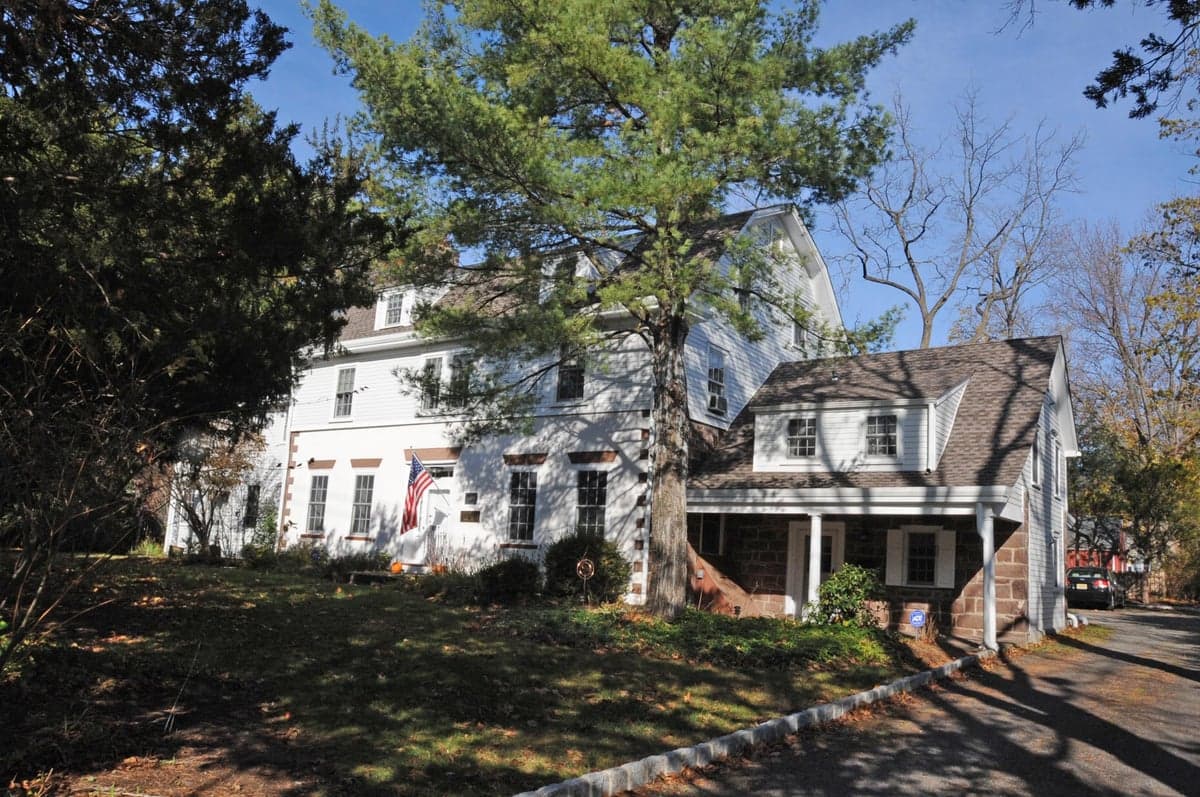
Photo: Wikipedia
Personal Sovereignty in Ridgewood, NJ
Viable for self-reliance. Generally workable, though some barriers may limit total independence.
What does Personal Sovereignty tell us?
Personal Sovereignty measures your capacity for self-reliance and independence with minimal government friction. Higher scores mean fewer barriers between you and the way you want to live... but it assumes you have the space you need and good neighbors.
What does this tell us?
Personal Sovereignty measures your capacity for self-reliance and independence with minimal government friction. Higher scores mean fewer barriers between you and the way you want to live... but it assumes you have the space you need and good neighbors.
State Policy
Energy independence: Importer (8% of energy produced in-state)
Personal Liberty
Homesteading

Personal Liberty Analysis
For a conservative-leaning individual or family prioritizing personal sovereignty, Ridgewood, New Jersey presents a complex and often contradictory environment. While the village itself offers a high degree of local order and property stability, it operates squarely within one of the nation's most assertive state governments, which consistently ranks among the worst for individual autonomy, tax burden, and regulatory overreach. The trade-off is clear: you gain a well-managed, safe, and affluent community, but you cede significant control over your finances, your property, and your personal choices to a state apparatus that is actively hostile to the principles of self-reliance and limited government. This analysis breaks down the specific sovereignty factors a strategic relocator must weigh.
Tax burden and regulatory posture: The cost of living under Trenton's thumb
Ridgewood's most immediate assault on personal sovereignty is its tax burden. New Jersey has the highest property taxes in the nation, and Ridgewood is a prime example. The effective property tax rate on a median-valued home here is among the highest in Bergen County, often exceeding 2% of assessed value annually. For a $1 million home—common in this market—that means a yearly property tax bill of over $20,000. This is not a fee for services; it is a permanent, escalating claim on your labor and capital. The state's income tax is also steep, with a top marginal rate of 10.75% kicking in at $1 million, but even middle-income earners face rates above 5%. This fiscal posture is a direct transfer of wealth from productive individuals to a state bureaucracy that has consistently underfunded pensions and expanded its scope. The regulatory environment is equally stifling. New Jersey's COAH (Council on Affordable Housing) mandates force towns like Ridgewood to zone for high-density development, eroding the very character and property rights that drew people there. State-level environmental regulations, from stormwater management to tree removal permits, add layers of bureaucratic approval to even minor property improvements. For a prepper or survivalist, this means every project—from a backyard garden shed to a solar panel installation—requires navigating a thicket of state and local red tape, a direct infringement on your right to use your land as you see fit.
Self-defense and gun law specifics: A near-total prohibition on the right to keep and bear arms
For anyone serious about self-defense, Ridgewood is a legislative disaster zone. New Jersey's gun laws are among the most restrictive in the United States, and local enforcement in Bergen County is aggressive. The state requires a Firearms Purchaser Identification Card (FPID) for long guns and a separate permit for each handgun purchase, with a 30-day waiting period between handgun purchases. The application process involves fingerprinting, background checks, and references, and local police chiefs have significant discretion to deny permits. Carrying a concealed firearm is effectively impossible for ordinary citizens. New Jersey is a "may-issue" state with a "justifiable need" standard that, prior to the Bruen decision, was used to deny virtually all carry applications. Even post-Bruen, the state has enacted a "sensitive places" law that bans carry in a vast array of locations—including parks, libraries, and private businesses unless the owner explicitly posts a sign allowing it. This creates a legal minefield where a law-abiding citizen can easily become a felon. Magazine capacity is limited to 10 rounds, and many common rifle configurations are banned under the state's "assault weapons" law. For a prepper, this means your defensive capabilities are severely hamstrung. You cannot legally defend your home with a standard-capacity magazine, and you cannot carry a firearm for personal protection outside your home without facing near-certain legal jeopardy. The state's posture is one of total distrust of the individual's right to self-defense.
Self-reliance and homesteading viability: Lot sizes, zoning, and off-grid feasibility
Ridgewood's dense suburban character is fundamentally at odds with a self-reliant, homesteading lifestyle. The typical lot size is a quarter-acre or less, with many homes on smaller plots. Zoning ordinances are strict, with detailed regulations on setbacks, building heights, and permitted uses. Keeping chickens is allowed in some zones but requires a permit and is subject to neighbor complaints. Keeping goats, pigs, or any livestock for meat or milk is almost universally prohibited. Off-grid living is effectively illegal. The village requires connection to municipal water and sewer systems. Installing solar panels is permitted but must be grid-tied; battery storage for full independence is heavily regulated and often discouraged by local utilities. Rainwater harvesting for potable use is not allowed. The entire infrastructure is designed to keep you dependent on centralized systems. For a prepper, this means you cannot build a resilient, self-sufficient homestead. You are reliant on the grid, the municipal water supply, and the grocery store. A long-term power outage or supply chain disruption would leave you with few options. The community's affluence means that most residents are not thinking about self-reliance, and local authorities are not sympathetic to those who are. The best you can do is a suburban "prepper-lite" approach: a well-stocked pantry, a backup generator (with fuel storage regulations), and a garden that is more hobby than subsistence.
Personal liberties: Parental rights, medical autonomy, speech, and property
On paper, Ridgewood respects free speech and assembly, but the practical reality is constrained by state overreach. Parental rights are under active assault. New Jersey has some of the most progressive education laws in the country, including mandatory LGBTQ+ curriculum standards and policies that allow students to change their names and pronouns without parental notification. For a conservative parent, this means your child's school is actively working to undermine your authority and values. Medical autonomy is severely limited. The state imposed one of the nation's strictest COVID-19 vaccine mandates for healthcare workers and school staff, and it maintains a universal vaccine mandate for school children with very narrow exemptions. Religious exemptions for school vaccine requirements are difficult to obtain and often require a court challenge. The state's medical marijuana program is tightly controlled, and there is no legal access to psilocybin or other alternative therapies. Property rights are the weakest link. New Jersey's eminent domain laws are broad, and towns like Ridgewood have used them for redevelopment projects that benefit private developers. The state's "Mount Laurel" doctrine forces towns to zone for affordable housing, which can lead to court-ordered development that overrides local zoning and property owner objections. For a survivalist, this means your property is not truly yours; it is subject to the whims of state planners and judges who prioritize "social equity" over your right to exclude and control your land.
In the final analysis, Ridgewood offers a high degree of local safety and order, but at the cost of surrendering nearly every aspect of personal sovereignty to a powerful, centralized state government. Compared to a free state like New Hampshire or Idaho, where tax burdens are low, gun laws are permissive, and property rights are respected, Ridgewood is a cage with a nice view. For a strategic relocator who values autonomy over convenience, the calculus is clear: the village's charms are not worth the price of living under Trenton's thumb. If you must be in the Northeast for work or family, Ridgewood is a tolerable compromise for those who can afford the financial and philosophical cost. But for anyone serious about self-reliance, personal defense, and raising a family free from government intrusion, the answer is to look elsewhere—to states that still respect the individual as the sovereign unit of society.

* Values derived from national, state, county, city and local statistics and may differ in a specific area. Last updated: 2026-04-30T03:16:54.000Z
Narrative content on this page is AI-generated and may contain mistakes. Verify any details that matter before acting on them.
ReloMaps may earn a commission from affiliate links at no extra cost to you.

