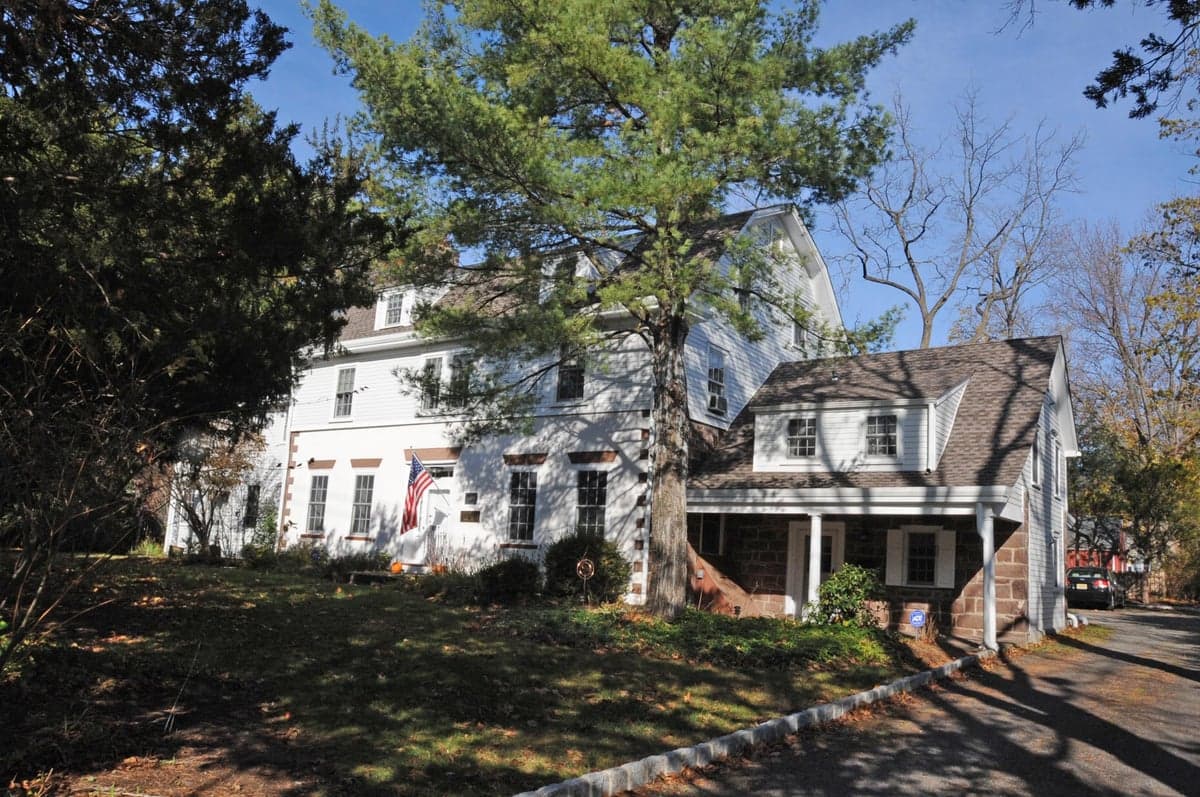
Photo: Wikipedia
Strategic Assessment of Ridgewood, NJ
High tactical risk. This location is likely close to major population centers, strategic targets, or sits in a high-disaster corridor. A retreat property and careful exit planning is required.
What does the Strategic Assessment tell us?
Our Strategic Assessment grades tactical survivability of an area. Major population centers, military targets, fallout zones, natural disasters, and border exposure all drive risk — lower exposure means a more defensible position in a crisis.
This is heavily inspired by Joel Skousen's Strategic Relocation book. Highly recommended you checkout the book ($)What does this tell us?
Our Strategic Assessment grades tactical survivability of an area. Major population centers, military targets, fallout zones, natural disasters, and border exposure all drive risk — lower exposure means a more defensible position in a crisis.
This is heavily inspired by Joel Skousen's Strategic Relocation book. Highly recommended you checkout the book ($)Strategic Pillars

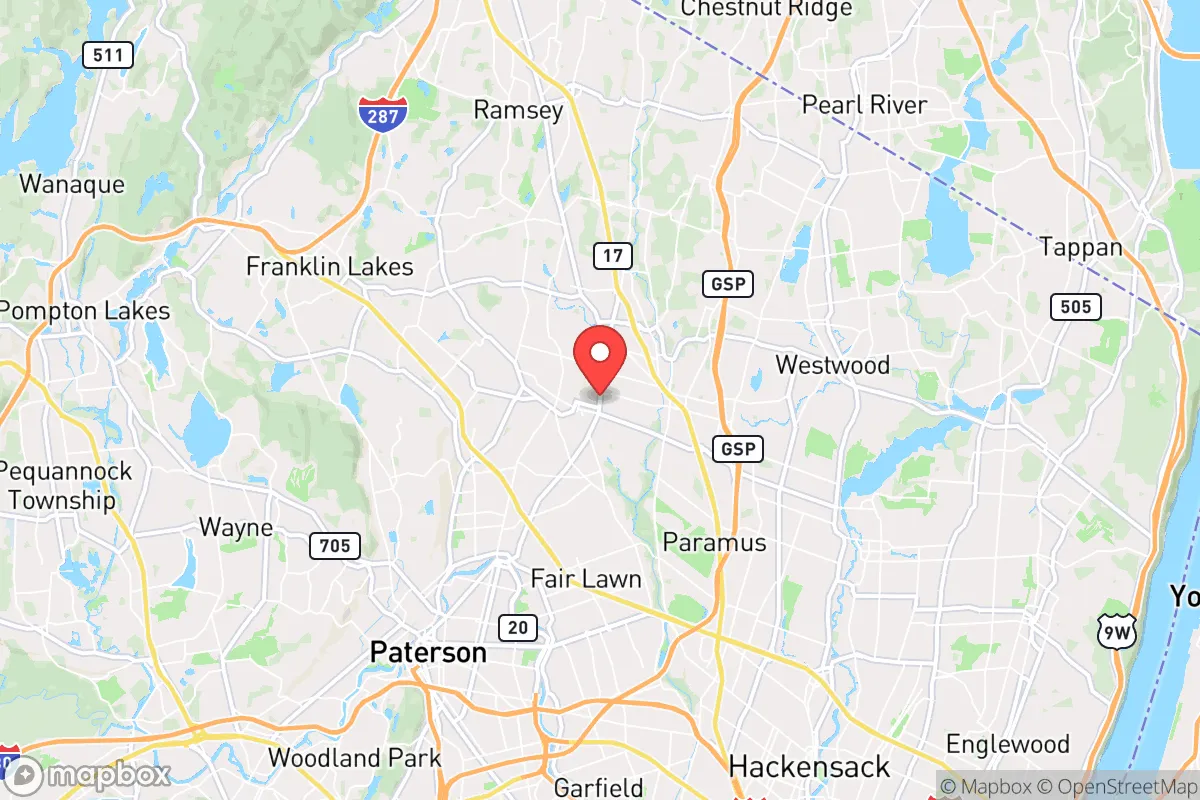
Key Distances
Regional Safe Places
Below is our recommended "safe zones" in New Jersey and the surrounding area based on our strategic heuristics. For most people, it's unrealistic to live in a “safe zone” full-time due to work, family or other personal reasons. They tend to be more rural. However, many of these areas are perfect for second homes and retreat properties that double as a vacation home or even a short-term rental.
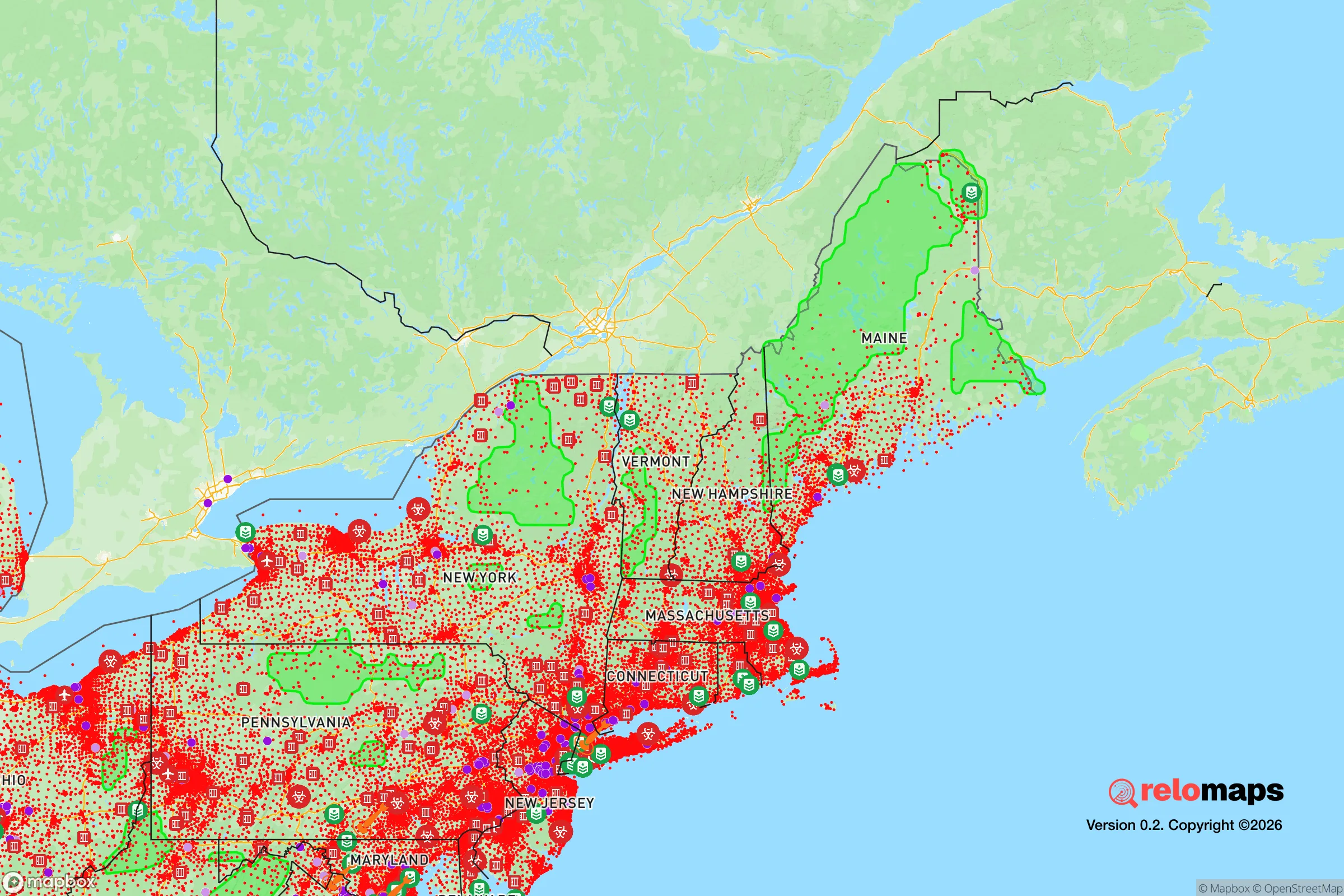
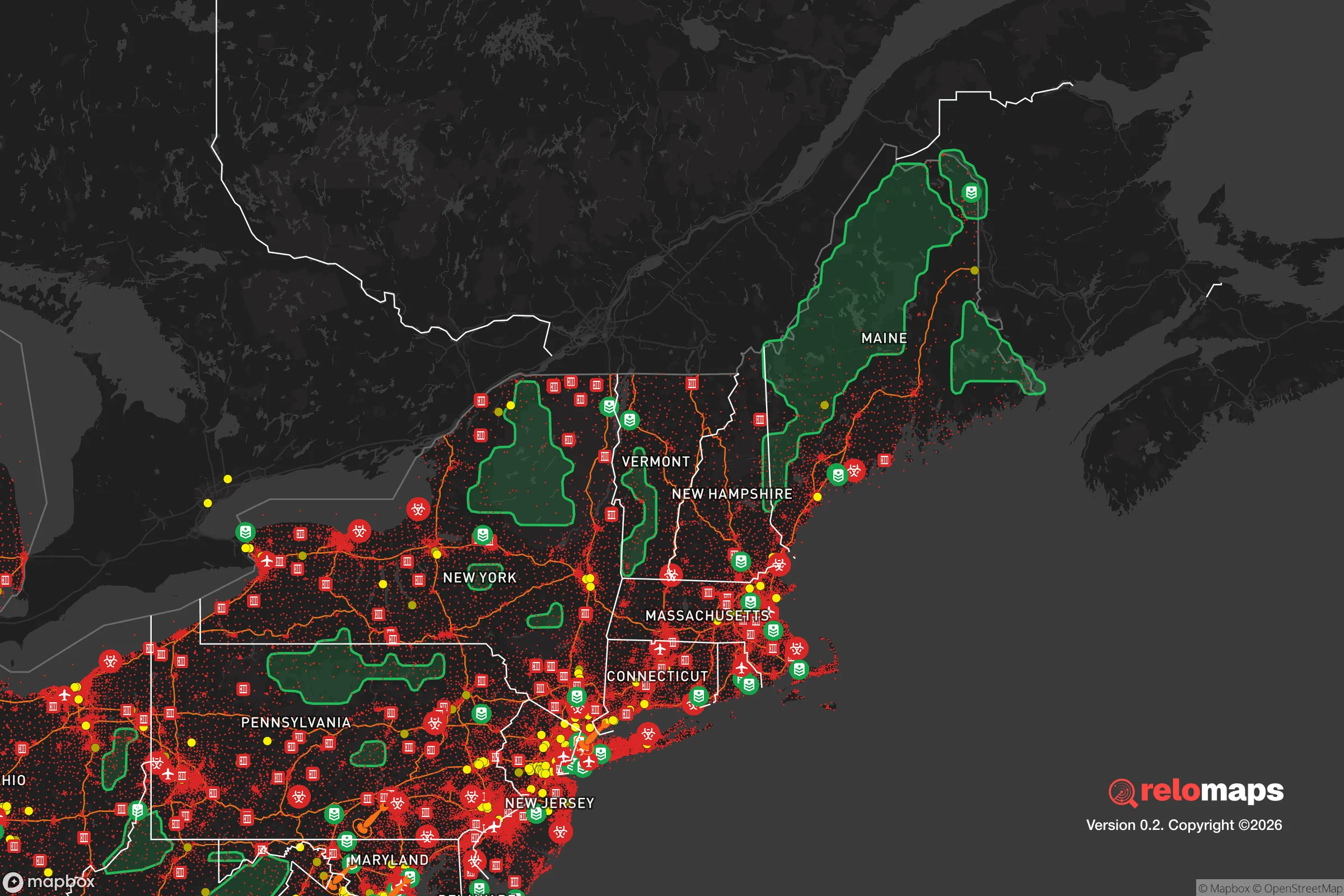


Important Note: For informational purposes only. This does not mean nothing bad ever happens in the green zones. Please use common sense. This is based on public data and modeled with AI. We tried to take a conservative approach but mistakes happen. We update this regularly as new information becomes available.
Solar Generator Recommendations
Backup power matters more here than in safer locations. We've picked three solar generators across budgets and capacity tiers — start with the budget unit if you only need a few essentials, or step up if you want to run a fridge and HVAC for days at a time.

Jackery Portable Power Station Explorer 300
Budget OptionPower on the Go: Weighing only 11 lbs, it's convenient to set up and store with book-sized foldable solar panels

BLUETTI Portable Power Station AC180
Designed for both indoor and outdoor scenarios, AC180 is highly capable as it has a robost capacity and continuous output power.

EF ECOFLOW DELTA Pro Ultra Power Station
Upgraded PickEcoFlow DELTA Pro Ultra is a whole-home energy system designed to grow with your family. Integrated with the Smart Home Panel 2, it scales to meet your evolving energy needs — keeping your home powered, intelligent, and secure through every stage of life.
We earn a commission, at no additional cost to you.
Strategic Assessment Analysis
Ridgewood, New Jersey, presents a complex strategic picture for the conservative prepper. On one hand, its deep-rooted community, high property values, and excellent local governance offer a degree of stability and social cohesion that is increasingly rare. On the other, its location—just 20 miles from Manhattan and within the blast radius of a major metropolitan target—introduces severe vulnerabilities that no amount of local charm can mitigate. For the relocator prioritizing long-term survival and self-sufficiency, Ridgewood is a study in contradictions: a place of genuine resilience in daily life, but one that sits uncomfortably close to the epicenter of potential national-scale collapse.
Geographic position and natural advantages for long-term stability
Ridgewood’s primary strategic asset is its position within Bergen County, which offers a blend of suburban density and access to natural resources. The area sits atop the Newark Basin, with a reliable groundwater table that feeds the Saddle River and several smaller tributaries. This means that, unlike many suburban sprawls, Ridgewood has a viable, if not abundant, local water source for filtration and small-scale agriculture. The town’s elevation—roughly 100 to 200 feet above sea level—provides a modest but meaningful advantage against storm surge or flooding from the Hudson River, which is a real concern for lower-lying communities closer to the coast. The surrounding region is also part of the New Jersey Highlands, a zone of forested hills and rocky terrain that offers natural chokepoints and defensible positions for those willing to bug out to the northwest. For the prepper, the key takeaway is that Ridgewood itself is not a fortress, but it sits at the edge of a region that could become a viable retreat zone if the urban core collapses. The local soil, while rocky, is capable of supporting vegetable gardens and fruit trees, and the town’s strict zoning laws have preserved a surprising amount of green space, including the 100-acre Saddle River County Park and the Ridgewood Wildscape. These pockets of nature are not wilderness, but they are a buffer against total urban dependency.
Risks, exposures, and proximity to fallout-relevant landmarks
This is where the analysis turns sobering. Ridgewood’s proximity to New York City is its greatest liability. The town lies roughly 20 miles from Midtown Manhattan, placing it well within the primary fallout zone for a nuclear detonation over the city. Depending on wind patterns, a 10-kiloton device could deposit lethal radiation levels across Bergen County within hours. The George Washington Bridge, the Lincoln Tunnel, and the Holland Tunnel are all within a 30-minute drive, meaning that any mass evacuation of New York City would funnel millions of people directly through Ridgewood’s arteries—specifically Route 17 and the Garden State Parkway. The town’s own population of 26,000 would be overwhelmed by refugees, and the local police force, while competent, is not equipped for civil defense on that scale. Additionally, Ridgewood is within 10 miles of the Teterboro Airport, a major hub for private and corporate jets that could become a target for secondary attacks or a staging ground for government lockdowns. The nearby Meadowlands Sports Complex, a massive gathering point, is another potential target for soft-target attacks. For the prepper, the calculus is clear: Ridgewood is a high-risk zone for any event that originates in New York City. The town’s own infrastructure—power substations, water treatment plants, and fuel depots—are all vulnerable to cascading failures from a regional grid collapse. The local hospital, Valley Hospital, is a Level II trauma center, but it would be overwhelmed within minutes of a mass casualty event.
Practical resilience for a relocator: food, water, energy, and defensibility
For the individual or family looking to establish a resilient household in Ridgewood, the practical challenges are significant but not insurmountable. The town’s water supply comes from the Passaic Valley Water Commission, which draws from the Passaic River—a source that is vulnerable to contamination from upstream industrial sites and potential chemical spills. A prepper should plan for a minimum of two weeks of stored water per person, plus a high-quality Berkey or similar gravity filter for local stream water. The Saddle River is a viable backup, but it requires treatment. Food resilience is more promising: Ridgewood has a strong farmers’ market (June through November) and several local farms within a 15-minute drive, including Abma’s Farm and Demarest Farms. However, the town’s zoning is restrictive—no backyard chickens without a permit, and no livestock at all. For energy, the grid is reliable but not hardened. A whole-house generator is a wise investment, as is a solar panel setup with battery storage, though homeowners’ association rules may limit visible installations. Defensibility is the weakest link. Ridgewood is a dense, walkable town with a grid-like street pattern, making it difficult to secure a perimeter. The best option for a relocator is to choose a home on a cul-de-sac or near the town’s edges, ideally with a basement that can serve as a safe room. The local police department is well-funded and has a strong community policing model, but in a SHTF scenario, they would be stretched thin. The town’s proximity to the New Jersey State Police barracks in Totowa is a minor advantage, but state resources would be diverted to the urban core first.
The overall strategic picture for Ridgewood is one of high risk with moderate reward. For the prepper who values community cohesion, good schools, and a stable local economy, Ridgewood offers a foundation that many other suburbs lack. But the town’s fatal flaw is its location: it is a satellite of a major target, and no amount of local preparedness can fully offset that vulnerability. The conservative relocator should view Ridgewood as a potential base of operations for the short to medium term, but not as a final redoubt. The smart play is to use Ridgewood as a staging point—build a network, stockpile supplies, and identify a secondary retreat in the Pennsylvania Poconos or the New York Catskills, both within a two-hour drive. If the country holds together, Ridgewood is a fine place to raise a family and live a comfortable life. If the worst happens, you need a plan to get out before the bridges are locked down. Ridgewood is not a bunker; it is a forward operating base. Treat it as such, and you can make it work. Treat it as a safe haven, and you will be caught flat-footed. The choice is yours.

* Values derived from national, state, county, city and local statistics and may differ in a specific area. Last updated: 2026-04-30T03:16:54.000Z
Narrative content on this page is AI-generated and may contain mistakes. Verify any details that matter before acting on them.
ReloMaps may earn a commission from affiliate links at no extra cost to you.

