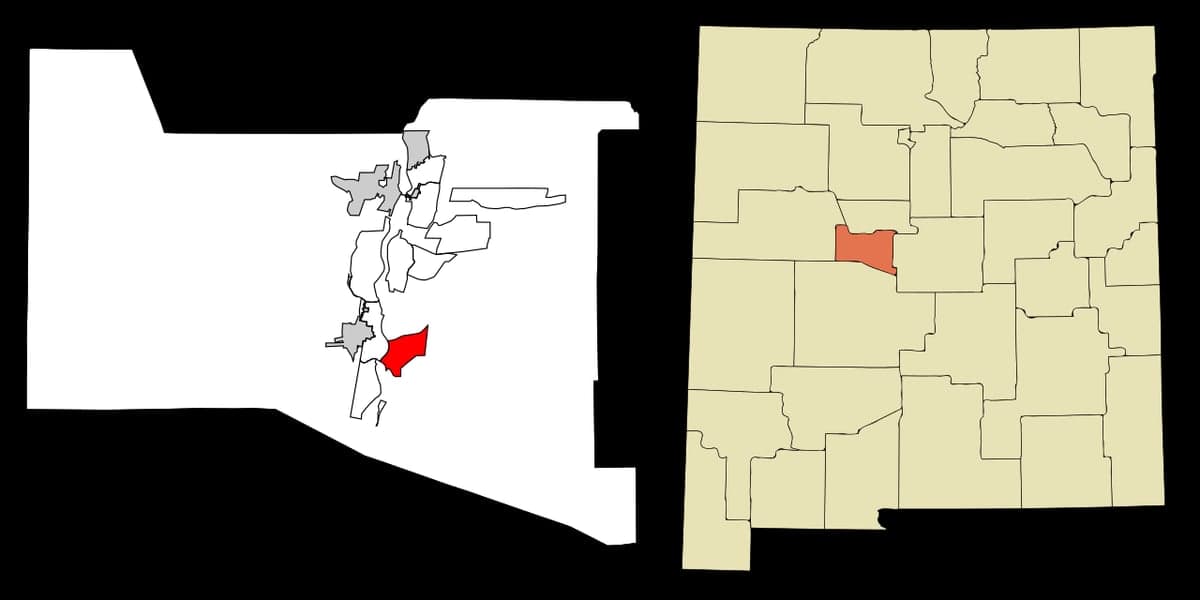
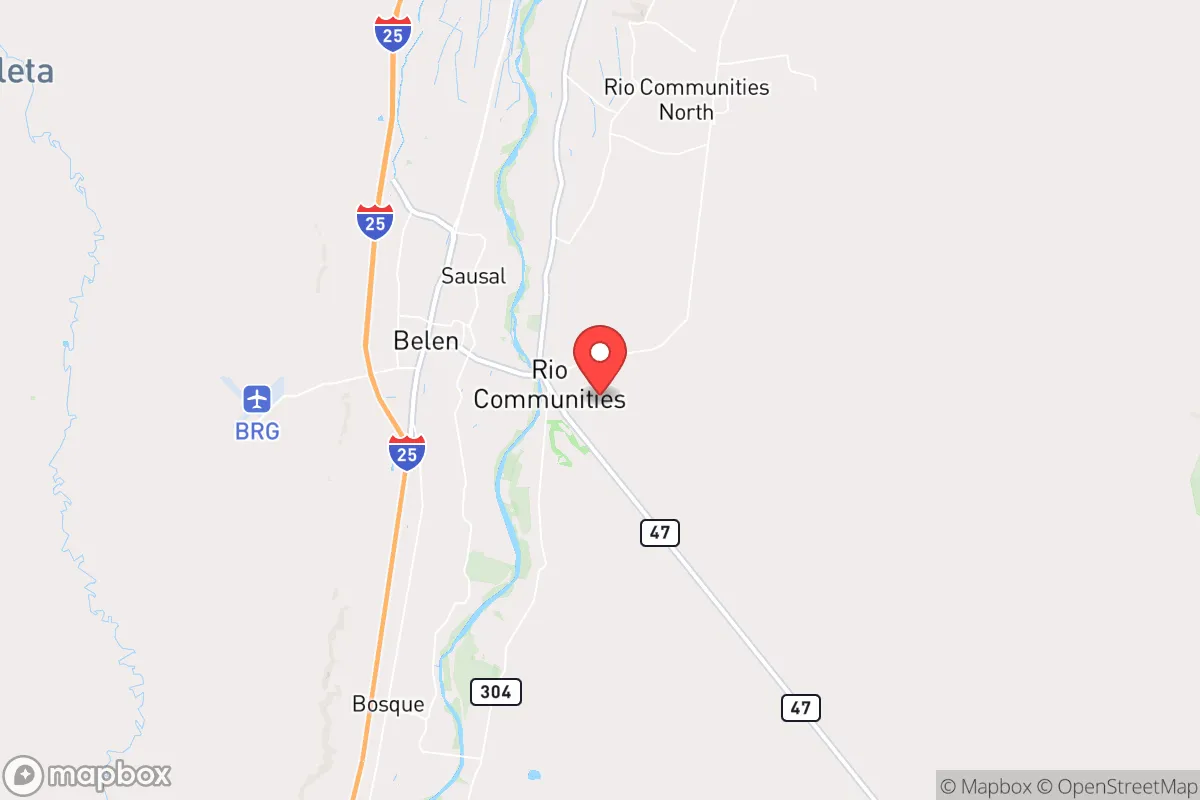
Photo: Wikipedia
Quality of Life in Rio Communities, NM
Above-average quality of iife. The area offers a reasonable cost of living, decent mobility, and a mix of neighborhood amenities.
What does Quality of Life tell us?
Quality of Life blends cost of living, nearby amenities, socioeconomic signals, and neighborhood character. City-level scores represent the whole municipality; individual neighborhoods can differ.
What does this tell us?
Quality of Life blends cost of living, nearby amenities, socioeconomic signals, and neighborhood character. City-level scores represent the whole municipality; individual neighborhoods can differ.
Cost of Living
27% below national average
The Real Cost of Living in Rio Communities, NM for 2026
| Tier | Individual | Family (4) |
|---|---|---|
| Survival | $14k | $26k |
| Comfortable | $39k | $57k |
| Luxury | $67k+ | $104k+ |
| Elite (Top 5%) | $79k+ | $123k+ |
81%
The Area Signal
A metric tracking the socioeconomic signals of the area.
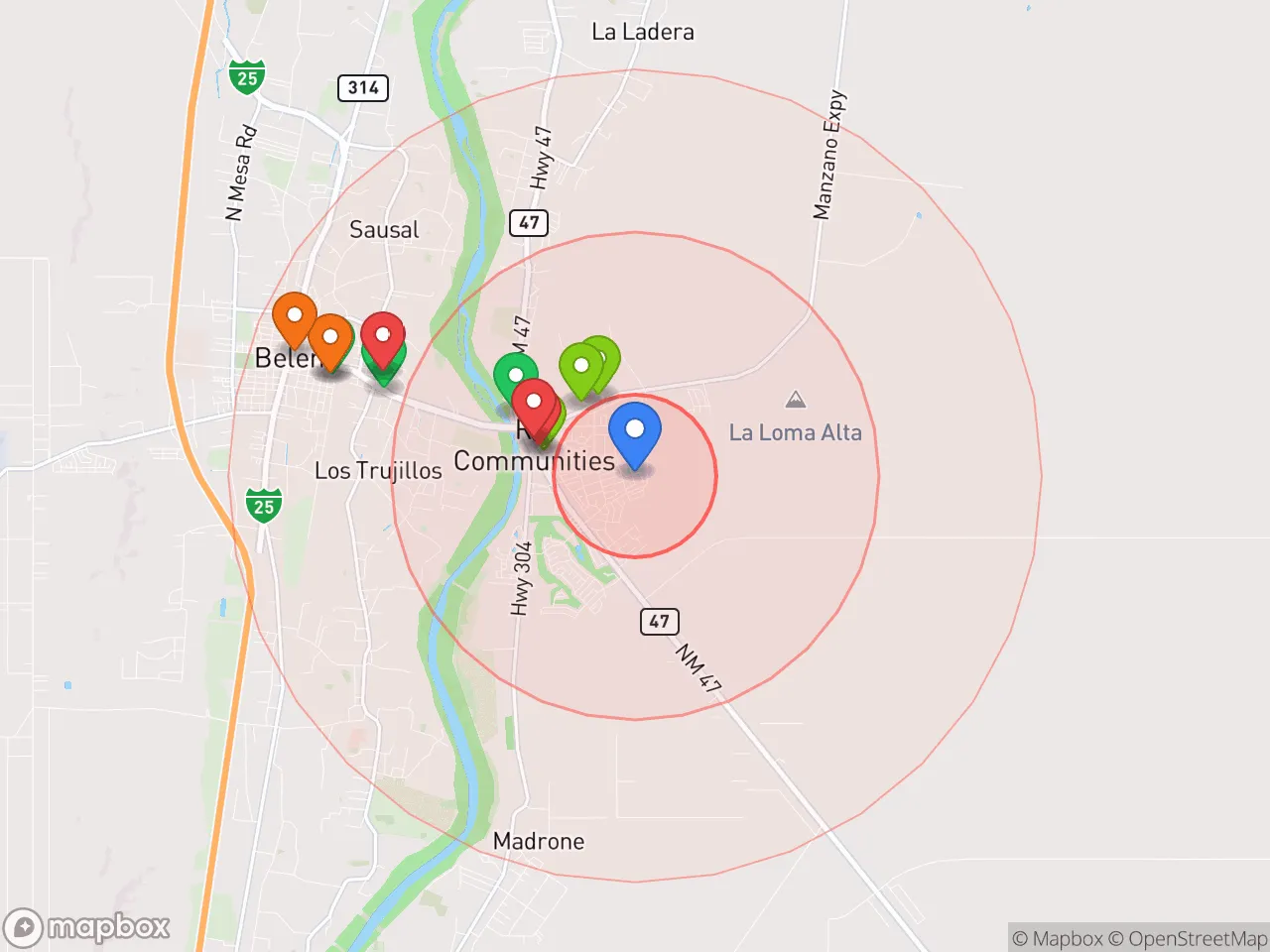
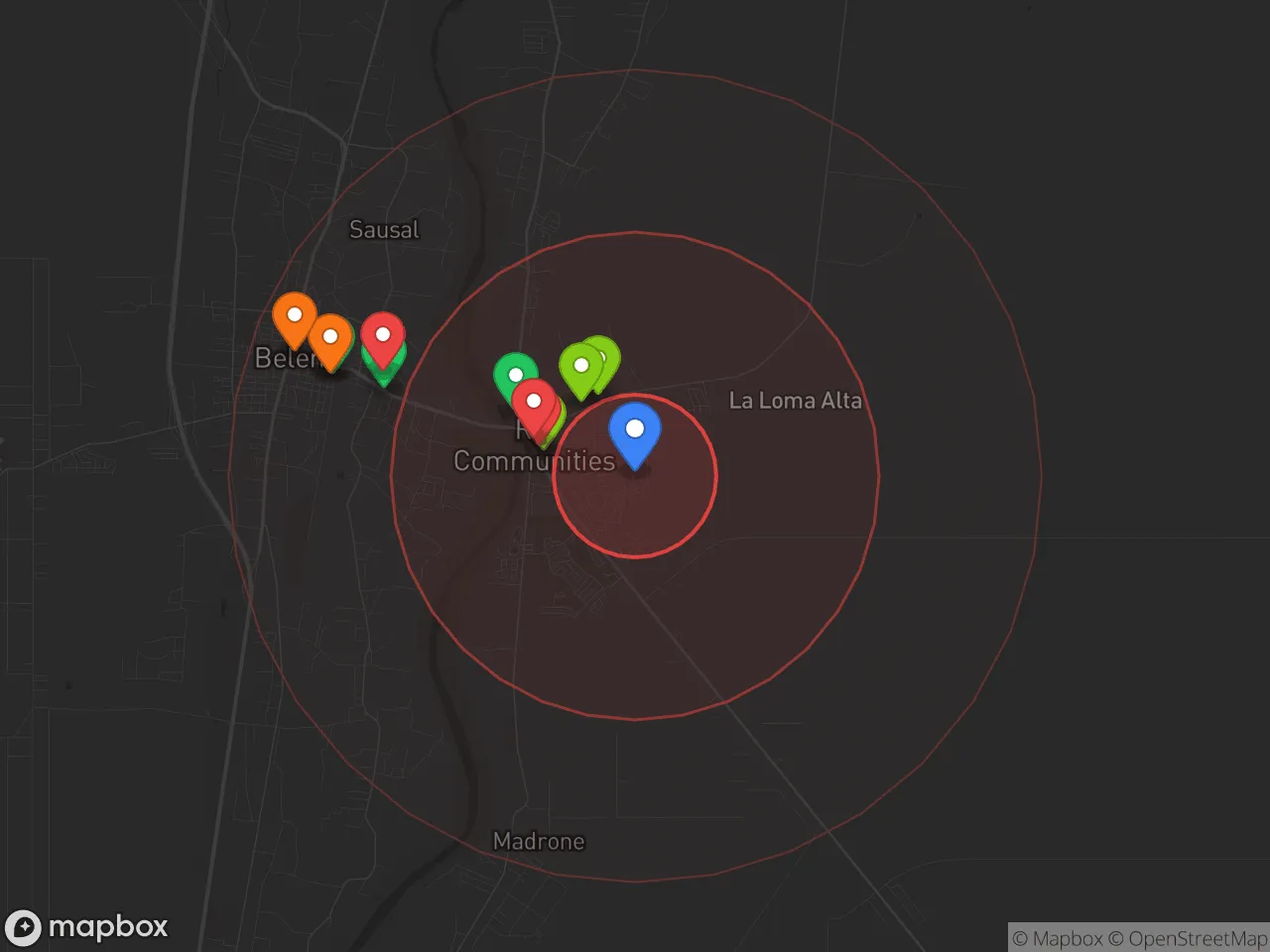
Hobbies
Explore the areaGroceries
1 within 10 miles
Gas
16 within 10 miles
Hospital
0 within 20 miles
Airport
LAS — Las Vegas Municipal
Post Office
USPS — Rio Communities, NM
Critical Amenities
Quality-of-Life Analysis
Rio Communities, a small city in Valencia County, New Mexico, offers a notably affordable quality of life that attracts a mix of retirees, remote workers, and families seeking a quieter, lower-cost alternative to the Albuquerque metro area. With a cost of living index of 73—well below the U.S. average of 100—and a median home value of $200,000, the area provides a financial cushion that is increasingly rare in the Southwest. The population skews older and more settled, with a median age around 44, and the community’s character is defined by its easy access to outdoor recreation along the Rio Grande and a slower, more neighborly pace of life.
Cost of living, housing, and how it compares to nearby areas
Rio Communities stands out for its affordability, especially when compared to Albuquerque, which sits about 40 minutes north. The cost of living index of 73 means everyday expenses—groceries, utilities, and healthcare—are roughly 27% cheaper than the national norm. Housing is the biggest draw: the median home value of $200,000 is less than half of Albuquerque’s median of roughly $340,000, and the median rent of $870 is similarly accessible. For context, a comparable rental in Albuquerque averages $1,200–$1,400. The average commute of 23 minutes is manageable, with most residents driving to jobs in Belen (10 minutes south) or Los Lunas (15 minutes north), though some commute to Albuquerque. Property taxes in Valencia County are low, typically around 0.6% of assessed value, which keeps monthly housing costs even lower. However, the trade-off is a limited housing stock—mostly single-family homes built in the 1990s and 2000s—and fewer rental options than in larger cities.
Amenities, schools, and what daily life is like for families
Daily life in Rio Communities revolves around a handful of local parks, a small grocery store, and the nearby Rio Grande Valley State Park for hiking and birdwatching. The community lacks a downtown core; most errands require a short drive to Belen or Los Lunas, which offer Walmart, restaurants, and medical clinics. Schools are served by the Los Lunas School District, which includes Rio Grande Elementary and Valencia High School—both rated average by state standards, with graduation rates around 80%. For families, the appeal lies in the safe, low-crime environment and the ability to afford a home with a yard. Retirees appreciate the quiet streets and proximity to the Belen Rail Runner Express station, which provides commuter rail to Albuquerque. The area does not have a major hospital; the nearest emergency room is in Los Lunas (15 minutes), with more comprehensive care in Albuquerque. Nightlife is minimal, but community events like the annual Rio Communities Festival and farmers markets in Belen provide social anchors.
Rio Communities is best suited for people who prioritize affordability and space over urban amenities. Retirees on fixed incomes, remote workers who can tolerate a 23-minute commute to a coffee shop or co-working space in Belen, and families who want a single-family home under $250,000 will find the area a strong fit. Those seeking walkable neighborhoods, high-end dining, or top-tier schools should look elsewhere. For anyone willing to trade city conveniences for a lower cost of living and a slower rhythm, Rio Communities delivers a practical, grounded quality of life in New Mexico’s Rio Grande Valley.

Crime in Rio Communities, NM
Higher crime rates than 67% of comparable U.S. locations.
Violent CrimeViolent Crime Analysis
Property CrimeProperty Crime Analysis
Crime Analysis
Rio Communities, New Mexico, reports a violent crime rate of 598.5 incidents per 100,000 residents and a property crime rate of 2,174.8 per 100,000, placing it significantly above both state and national averages. These figures indicate a heightened risk environment compared to typical U.S. communities, driven in part by systemic factors affecting the broader Albuquerque metropolitan area. The city’s proximity to a large metro region with progressive judicial policies—including district attorneys and judges who prioritize leniency and rehabilitation over incarceration—contributes to a revolving-door justice system that keeps repeat offenders on the streets, undermining public safety and victim rights.
Crime in context
Rio Communities’ violent crime rate is roughly 1.5 times the national average (approximately 380 per 100K) and well above New Mexico’s already elevated state rate of about 780 per 100K. Property crime here is nearly 1.3 times the national average (around 1,700 per 100K). The area’s crime challenges are compounded by its location within Valencia County, which has seen rising property offenses tied to drug-related theft and vehicle break-ins. Progressive prosecutorial policies in nearby Albuquerque—where district attorneys often decline to charge low-level offenses or push for diversion programs—create a spillover effect, as criminals operate with reduced consequences across jurisdictional lines.
What residents experience
Residents report that property crime is the most visible daily concern, with vehicle burglaries, package theft, and vandalism occurring regularly. Violent incidents, while less frequent, include aggravated assaults and robberies that often go unpunished due to lenient sentencing guidelines. The local police department, though responsive, struggles with limited resources and a judicial environment that prioritizes offender rehabilitation over victim restitution. Many homeowners invest in security systems, neighborhood watch programs, and defensive landscaping to mitigate risks. The lack of consistent prosecution for repeat offenders—a hallmark of progressive justice reforms—erodes community trust and leaves residents feeling that the system fails to protect them.
Neighborhood-level variation is notable: areas closer to the I-25 corridor and the Rio Grande riverfront see higher crime concentrations, while newer subdivisions on the city’s eastern edge report fewer incidents. Gated communities and those with active homeowners’ associations tend to have lower property crime rates. However, the overarching influence of progressive judicial policies in the region means that even safer pockets are not immune to spillover crime from nearby high-crime zones. Prospective residents should prioritize properties with strong physical security and consider proximity to police substations or well-lit, patrolled streets.
* Values derived from national, state, county, city and local statistics and may differ in a specific area. Last updated: 2026-05-01T02:54:28.000Z
Narrative content on this page is AI-generated and may contain mistakes. Verify any details that matter before acting on them.
ReloMaps may earn a commission from affiliate links at no extra cost to you.

