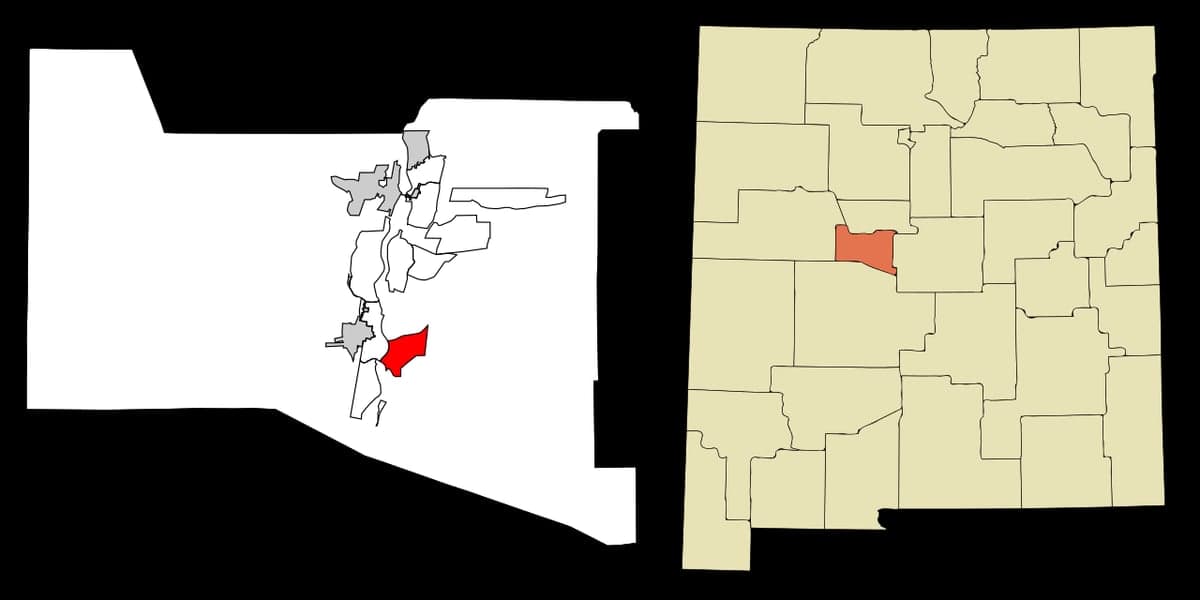
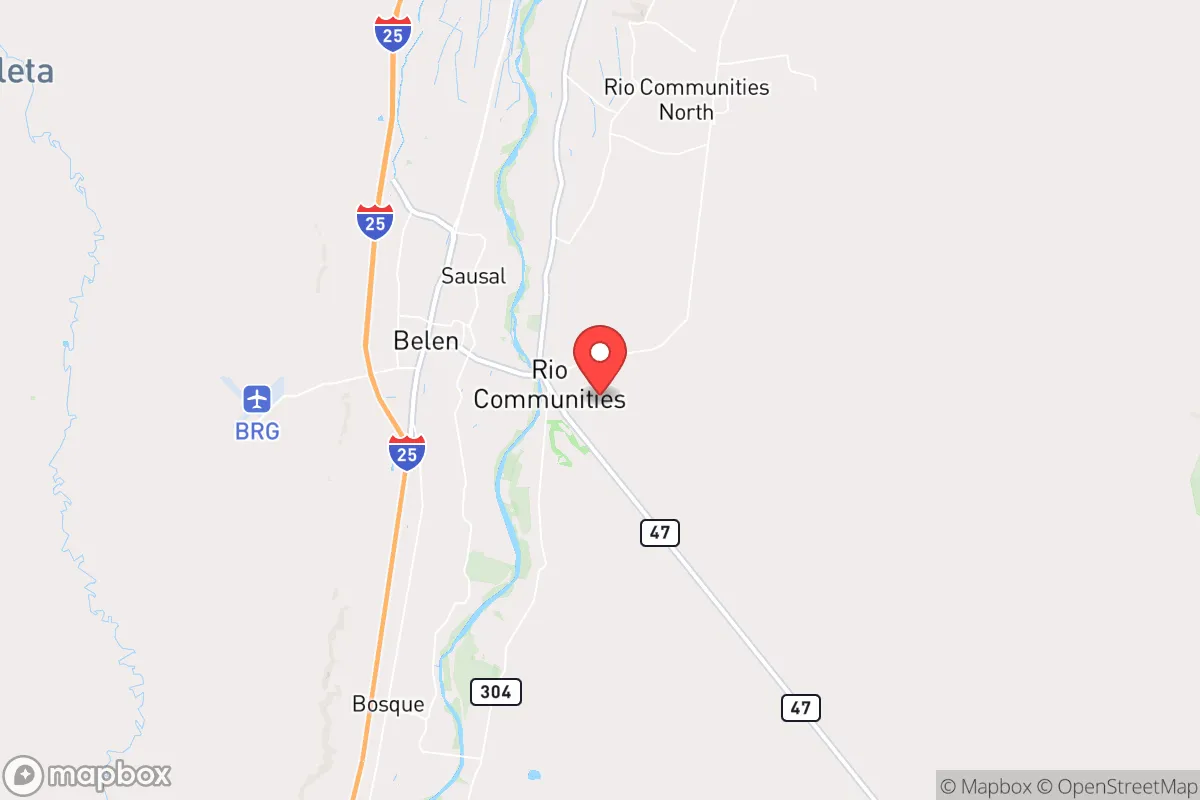
Photo: Wikipedia
Political ClimatePolitical Climate in Rio Communities, NM
District shown is the primary district for this city’s centroid. Cities may span multiple districts.
Local Political AnalysisPolitical Analysis of Rio Communities, NM
Rio Communities sits in a political sweet spot that’s getting harder to find these days—a place where the Cook PVI rating of EVEN actually means something. For a long time, this area was reliably conservative, with folks who believed in minding their own business and letting the Second Amendment do the talking. But over the last decade, you’ve seen the political winds shift, especially as Albuquerque’s progressive influence creeps south along I-25. The 2020 and 2024 elections showed the county trending bluer, though Rio Communities itself still holds a solid conservative core—it’s not uncommon to see Trump signs in yards next to “Keep It Local” banners. The real story is how the surrounding areas, like Belen to the north and Los Lunas to the east, have started to lean more left, while Rio Communities remains a stubborn red dot in a purpling map.
How it compares
If you drive ten minutes north to Belen, you’ll feel the difference immediately—more government housing, more chain stores, and a city council that’s been flirting with progressive zoning policies that make it harder to run a small business without a dozen permits. Los Lunas, meanwhile, has exploded with new developments and a younger, more transient population that tends to vote Democrat. Rio Communities, by contrast, still feels like the old New Mexico—quiet, rural, and suspicious of anyone who wants to “reimagine” public safety or impose energy mandates on single-family homes. The contrast is starkest when you look at school board elections: Rio Communities consistently votes for candidates who prioritize parental rights and local control, while neighboring districts have seen pushes for critical race theory and gender ideology curricula. For a conservative, this area is a last stand against the tide of government overreach that’s swallowing the state.
What this means for residents
For the people who live here, the political climate means you can still live your life without the government breathing down your neck. Property taxes are low, there’s no city income tax, and the county sheriff’s office is still run by folks who believe in enforcing the law, not redefining it. But you can’t ignore the warning signs: the state legislature in Santa Fe keeps passing bills that chip away at gun rights, energy independence, and school choice. The long-term trend is concerning—if the progressive wave from Albuquerque keeps pushing south, Rio Communities could find itself fighting the same battles that have already been lost in bigger cities. For now, though, residents enjoy a sense of community where neighbors still help each other without a government program, and where the biggest political debate is whether to pave a dirt road or keep it rustic. That’s a rare thing in 2026.
Culturally, Rio Communities stands out for its stubborn independence. You won’t find a diversity, equity, and inclusion office here, and the local library doesn’t host drag queen story hours. The annual Fourth of July parade is still about flags and veterans, not rainbow banners. The biggest policy distinction is the area’s resistance to state-mandated housing density increases—locals fought off a proposal in 2023 that would have forced multi-family units into single-family neighborhoods. That’s the kind of fight that defines this place: a quiet, determined refusal to let outside bureaucrats tell you how to live. If you’re looking for a place where personal freedom still means something, and where the government stays out of your backyard, Rio Communities is one of the last honest spots left in central New Mexico.

State Political ClimatePolitical Climate in New Mexico
State Political AnalysisPolitical Environment in the State
New Mexico has long been a reliably blue state in presidential elections, voting Democratic by margins of 10-11 points in 2020 and 2024, but the picture beneath the surface is far more complicated than the statewide totals suggest. The dominant coalition is an uneasy alliance of urban progressives in Albuquerque and Santa Fe, unionized government workers, and a heavily Hispanic electorate that has historically leaned Democratic but is showing real cracks. Over the last 10-20 years, the state has drifted leftward on social and cultural issues, but a growing conservative backlash is visible in the eastern plains, the oil-rich Permian Basin counties, and even some suburban pockets around Albuquerque that are starting to look more like West Texas than the Duke City.
Urban vs. rural divide
The political map of New Mexico is a classic story of two states. Bernalillo County (Albuquerque) and Santa Fe County are the Democratic engine rooms, together accounting for nearly half the state’s vote. Santa Fe is as progressive as any city in America—think Boulder with green chile—while Albuquerque’s core is reliably blue, though its East Mountains and far South Valley precincts lean conservative. On the other side, the eastern counties—Curry (Clovis), Roosevelt (Portales), Lea (Hobbs), and Chaves (Roswell)—vote like Lubbock or Amarillo, often going 70-80% Republican. The oil boom in the Permian Basin has made Lea County one of the most reliably red in the nation, and that economic base is pulling the southeast corner of the state further right. Doña Ana County (Las Cruces) is a genuine swing county, voting blue but by shrinking margins as conservative Hispanics and military families from nearby El Paso influence the mix. The rural north, including Taos and Rio Arriba counties, is culturally conservative but votes Democratic out of habit and union loyalty—a dynamic that is slowly eroding as younger voters drift away from the party.
Policy environment
New Mexico’s policy environment is a mixed bag that should give a conservative pause. The state has a progressive income tax with rates up to 5.9%, and a gross receipts tax (essentially a sales tax on services) that can push 8-9% in some cities. Property taxes are relatively low, which is a plus, but the state’s regulatory climate is heavy, especially for oil and gas—though the industry still thrives thanks to global demand. Education policy is a flashpoint: the state has a universal pre-K program funded by a new tax on high earners, and the public school system consistently ranks near the bottom nationally. School choice is limited, though a 2023 law expanded charter schools modestly. Healthcare is dominated by the state’s Medicaid expansion, which covers nearly half the population, and a 2021 law created a public option health insurance plan. Election laws are a concern for conservatives: New Mexico has same-day voter registration, no voter ID requirement (though you must provide a signature), and automatic voter registration via the DMV. The 2023 Voting Rights Act added new mandates for language access and early voting, which critics argue opens the door to fraud, though no major scandals have emerged. The state also has a red flag law (2019) allowing courts to temporarily seize firearms from individuals deemed a threat, and a 2021 law banned carrying firearms at polling places and government buildings.
Trajectory & freedom
On the freedom front, the trajectory is concerning. The 2021 Energy Transition Act mandated 100% carbon-free electricity by 2045, effectively killing coal and pressuring natural gas—a direct hit to the state’s largest industry. The 2023 Family and Medical Leave Act created a mandatory paid leave program funded by payroll taxes, which small business owners in Hobbs and Clovis hate. Gun rights have been steadily eroded: the 2019 red flag law, the 2021 polling place ban, and a 2023 law raising the age to purchase semi-automatic rifles from 18 to 21. Parental rights took a hit with the 2023 Reproductive and Gender-Affirming Health Care Act, which protects access to abortion and gender transition procedures for minors, overriding parental consent in some cases. Property rights are under pressure from the state’s Oil and Gas Conservation Division, which has tightened setback rules for drilling near homes. On the positive side, the state has no personal income tax on Social Security benefits, and a 2024 law eliminated the state’s tax on military pensions—a win for retirees and veterans. But the overall trend is toward more government control, not less.
Civil unrest & political movements
New Mexico has seen its share of political flashpoints. The 2020 protests in Albuquerque turned violent, with the Autonomous Zone near the University of New Mexico lasting several days before police cleared it. The state’s sanctuary policies are among the strongest in the nation: a 2019 law prohibits state and local law enforcement from cooperating with federal immigration authorities, and the governor has repeatedly clashed with the Trump administration over border enforcement. In 2023, the Otero County Commission (Alamogordo) made national headlines by refusing to certify primary election results over concerns about Dominion voting machines, sparking a legal battle that ended with the state Supreme Court forcing certification. The New Mexico Civil Guard, a militia group, has been active in the southern border region, conducting patrols and clashing with activists. On the left, the Santa Fe Dreamers Project and other immigrant advocacy groups are highly organized, while the New Mexico Federation of Labor remains a powerful force in Democratic politics. The Gadsden flag flies from many pickup trucks in the eastern counties, and the New Mexico Republican Party has shifted hard right, with a 2024 platform calling for nullification of federal gun laws and a return to gold and silver currency.
Projection
Looking ahead 5-10 years, the picture is mixed. The Permian Basin oil boom is drawing conservative migrants from Texas and Oklahoma into Lea and Eddy counties, which will keep those areas deep red. But the Albuquerque metro is growing more diverse and more progressive, driven by transplants from California and Colorado who work in tech and government. The Santa Fe-Los Alamos corridor is a Democratic stronghold that will only get bluer. The wild card is the Hispanic vote: if national trends hold, and younger Hispanic men in particular continue shifting right, places like Valencia County and Doña Ana County could become competitive. But the state’s Democratic machine is entrenched, with a gerrymandered congressional map that gives Democrats a 3-0 edge in the House. Realistically, New Mexico will remain a blue state for the foreseeable future, but the margin could narrow to 5-6 points by 2032 if the GOP can capitalize on energy and parental rights issues. The biggest risk for conservatives is that the state’s tax and regulatory burden continues to drive out small businesses and families, leaving a population that is more dependent on government and more likely to vote for it.
For a conservative moving to New Mexico, the bottom line is this: you can find a good life in the eastern counties or the oil patch, where your vote actually counts and your values are shared. But if you’re moving to Albuquerque or Santa Fe, expect to live in a blue city with all the attendant frustrations—high taxes, progressive school boards, and a government that sees your gun safe as a problem to be solved. The state’s natural beauty and low property taxes are real draws, but the political trajectory is toward more government, less freedom, and a culture war that shows no signs of cooling. Choose your county carefully, and don’t expect the state to change for you.
* Values derived from national, state, county, city and local statistics and may differ in a specific area. Last updated: 2026-05-01T02:54:28.000Z
Narrative content on this page is AI-generated and may contain mistakes. Verify any details that matter before acting on them.
ReloMaps may earn a commission from affiliate links at no extra cost to you.

