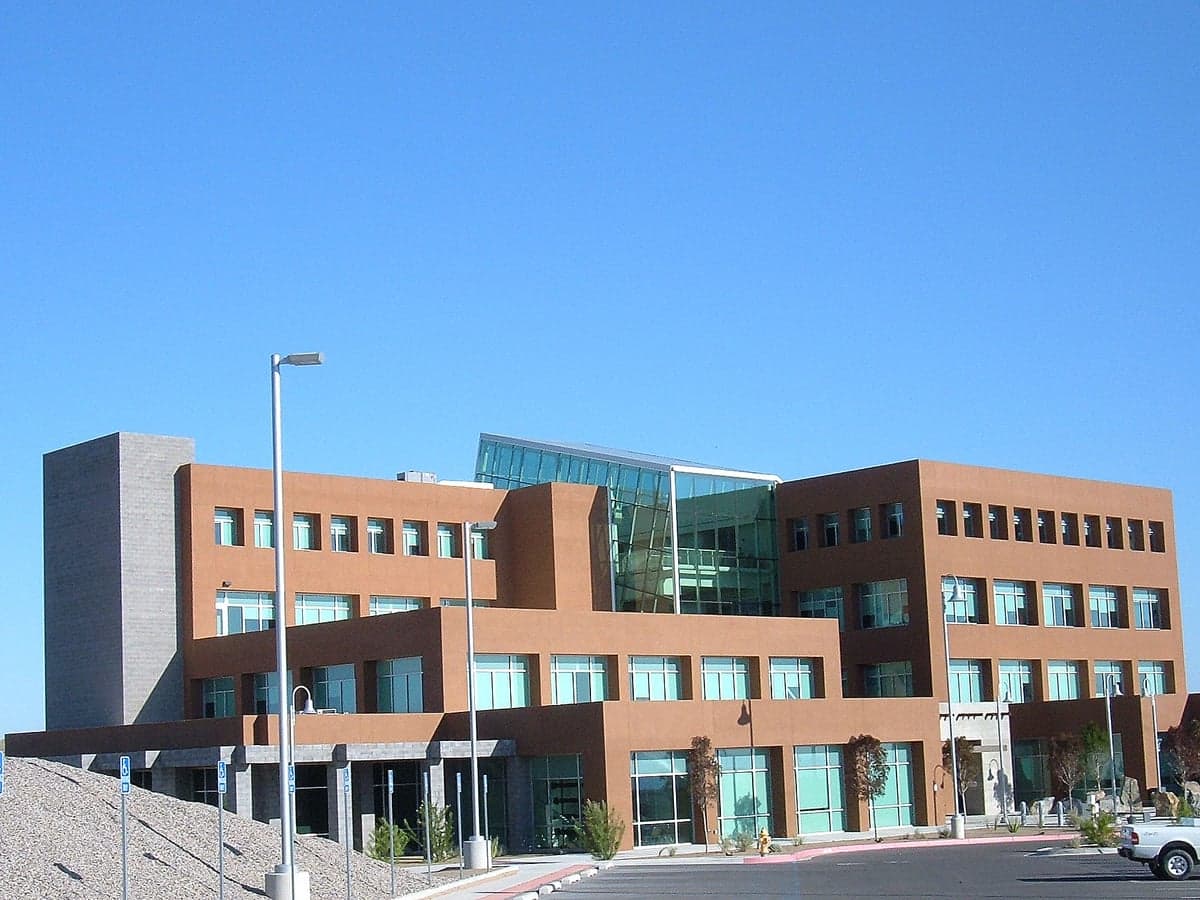
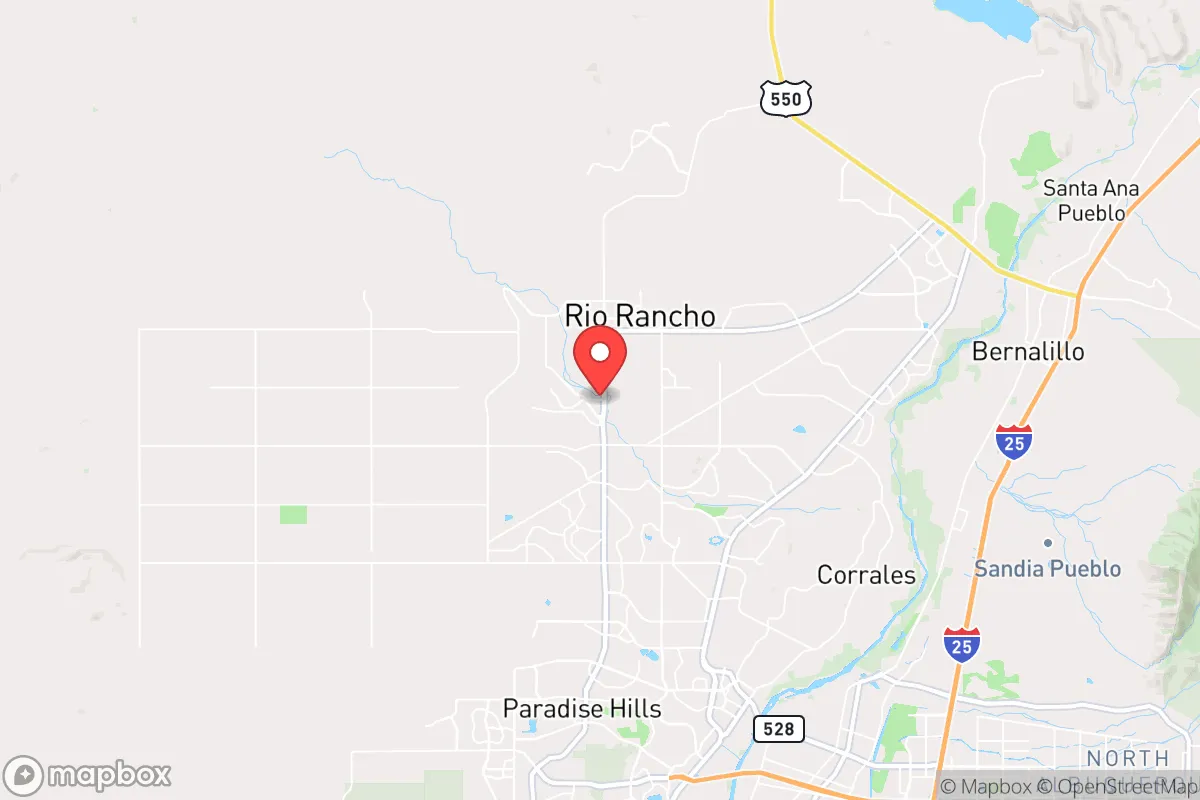
Photo: Wikipedia
Quality of Life in Rio Rancho, NM
Above-average quality of iife. The area offers a reasonable cost of living, decent mobility, and a mix of neighborhood amenities.
What does Quality of Life tell us?
Quality of Life blends cost of living, nearby amenities, socioeconomic signals, and neighborhood character. City-level scores represent the whole municipality; individual neighborhoods can differ.
What does this tell us?
Quality of Life blends cost of living, nearby amenities, socioeconomic signals, and neighborhood character. City-level scores represent the whole municipality; individual neighborhoods can differ.
Cost of Living
15% above national average
The Real Cost of Living in Rio Rancho, NM for 2026
| Tier | Individual | Family (4) |
|---|---|---|
| Survival | $24k | $44k |
| Comfortable | $53k | $78k |
| Luxury | $126k+ | $195k+ |
| Elite (Top 5%) | $148k+ | $229k+ |
110%
The Area Signal
A metric tracking the socioeconomic signals of the area.
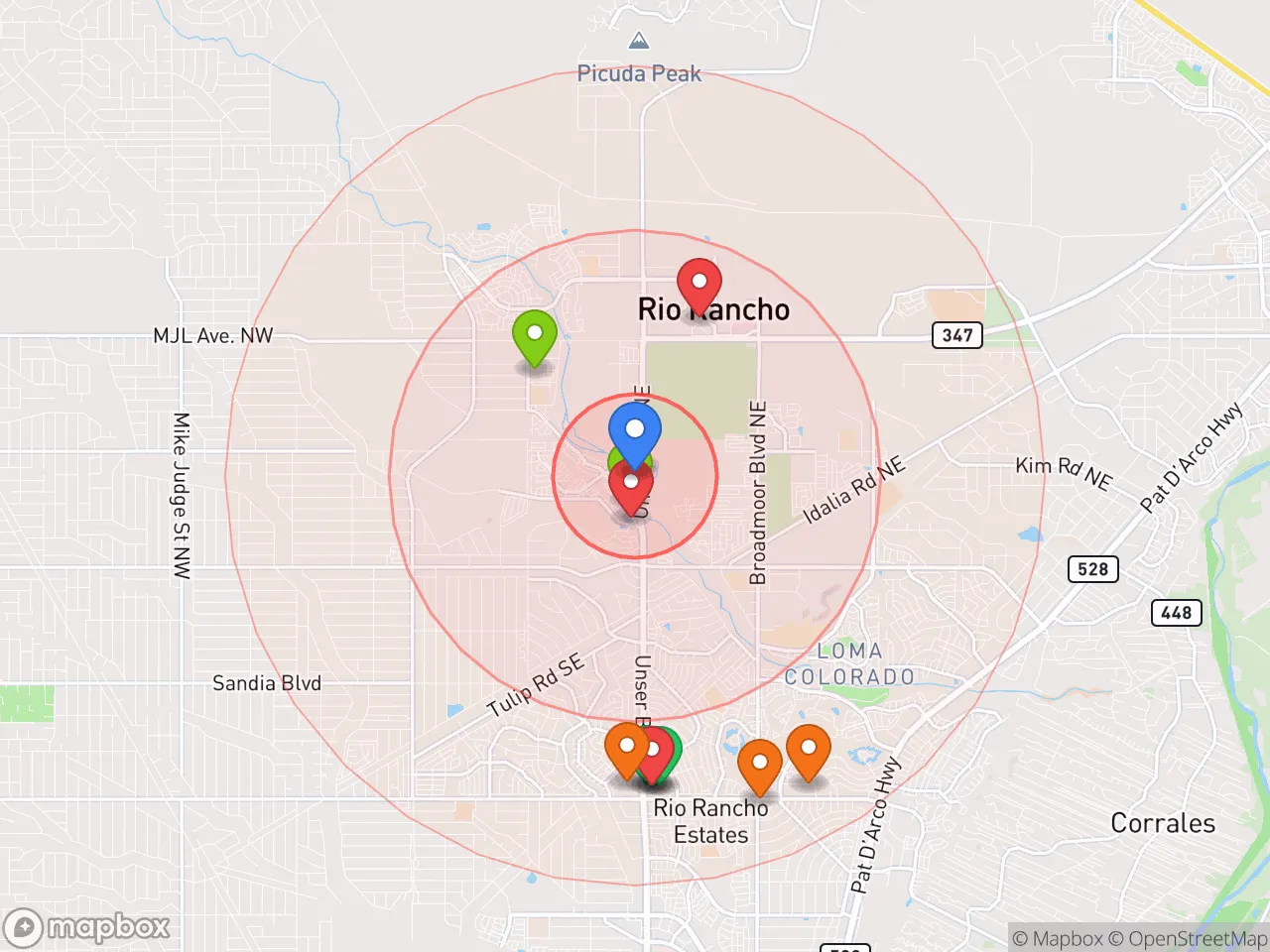
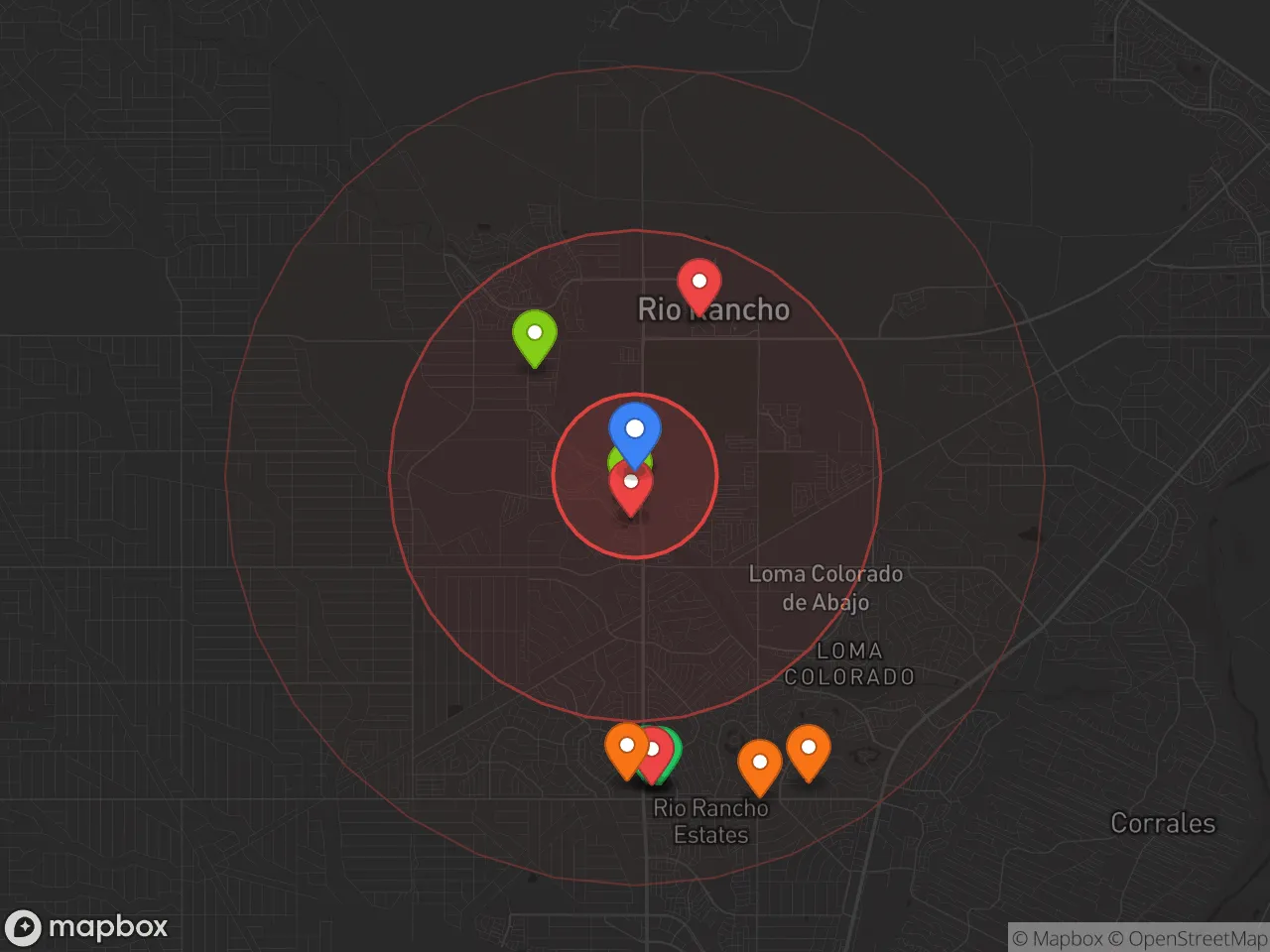
Hobbies
Explore the areaGroceries
7 within 10 miles
Gas
20 within 10 miles
Hospital
19 within 20 miles
Airport
LAS — Las Vegas Municipal
Post Office
USPS — Rio Rancho, NM
Critical Amenities
Quality-of-Life Analysis
Rio Rancho, New Mexico, presents a distinctive quality-of-life profile shaped by its status as a planned, middle-to-upper-middle-class suburb of Albuquerque. With a cost-of-living index of 115 (15% above the national average), the city attracts a mix of families, professionals, and retirees seeking newer housing stock, lower crime rates than the urban core, and a slower daily pace. The median household income hovers around $70,000, supporting a population that is predominantly owner-occupied, with a strong presence of Sandia National Laboratories and Intel employees who commute from the city.
Cost of living and housing affordability compared to Albuquerque and Santa Fe
Rio Rancho’s cost of living is notably higher than the national average, but it remains significantly more affordable than Santa Fe (index ~125) and roughly on par with Albuquerque’s western suburbs. The median home value of $273,300 is about 10% below the national median, yet it represents a premium over comparable homes in Albuquerque’s South Valley or West Side. Median rent sits at $1,481, which is competitive for a three-bedroom home in the metro area but still above the state average. The primary driver of the elevated index is housing: newer subdivisions in areas like Northern Meadows and Loma Colorado command prices 15-20% higher than older Albuquerque neighborhoods. Property taxes are low (roughly 0.7% of assessed value), which partially offsets the higher purchase price for homeowners.
What daily life is like for families: schools, amenities, and commute realities
Daily life in Rio Rancho revolves around its master-planned layout, with wide arterial roads, abundant parks, and a network of walking trails. The city’s public schools, part of Rio Rancho Public Schools, generally outperform Albuquerque Public Schools on standardized tests, with V. Sue Cleveland High School and Rio Rancho High School both offering strong STEM and dual-credit programs. Amenities are concentrated along Unser Boulevard and Southern Boulevard, anchored by the Cottonwood Mall and the Santa Ana Star Center events venue. The average commute of 29.9 minutes is a key trade-off: most residents drive into Albuquerque for work, with the commute along I-25 or through the Paseo del Volcan corridor often stretching to 35-40 minutes during peak hours. Weekend recreation includes easy access to the Sandia Mountains for hiking and the Rio Grande bosque for cycling, while the city’s own Cabezon Park and J&R Pool serve as neighborhood hubs.
Rio Rancho is best suited for families and mid-career professionals who prioritize newer, larger homes and a suburban safety profile over urban walkability or cultural density. Retirees on fixed incomes may find the cost index challenging, but those moving from higher-cost states (e.g., California or Colorado) often see it as a bargain. The city’s growth trajectory—population up roughly 15% since 2020—suggests continued demand, though the long commute and limited local nightlife are consistent drawbacks for younger singles or empty-nesters seeking a more vibrant downtown scene.

Crime in Rio Rancho, NM
Generally safer than 68% of comparable U.S. locations.
Violent CrimeViolent Crime Analysis
Property CrimeProperty Crime Analysis
Crime Analysis
Rio Rancho, New Mexico, presents a mixed safety profile that is notably safer than nearby Albuquerque but still carries crime rates above national averages. The city’s violent crime rate of 318.4 incidents per 100,000 residents is roughly on par with the national average, while its property crime rate of 982.2 per 100,000 significantly exceeds the U.S. median. As a rapidly growing suburb in Sandoval County, Rio Rancho benefits from a lower population density and a more stable economic base than its larger neighbor, but it is not immune to the regional crime pressures that affect the greater Albuquerque metropolitan area.
Crime in context
When compared to New Mexico’s statewide violent crime rate of approximately 780 per 100,000, Rio Rancho’s figure of 318.4 is less than half the state average. However, the property crime rate of 982.2 per 100,000 is roughly 1.5 times the national average of about 650 per 100,000. The city’s location within a large metro area with a history of progressive judicial policies is a factor worth noting. Sandoval County, like Bernalillo County, has seen district attorneys and judges who prioritize rehabilitation over incarceration, a philosophy that critics argue contributes to higher recidivism and more property crimes. This ideological approach, while sympathetic to offenders, can result in more criminals on the street and negatively impact justice for victims and the public.
What residents experience
In practice, Rio Rancho residents report that property crimes—particularly vehicle burglaries, package thefts, and shed break-ins—are the most common safety concerns. Violent crime is less frequent but does occur, often concentrated near commercial corridors like Unser Boulevard and Southern Boulevard. The city’s police department maintains a visible presence, and neighborhood watch programs are active in subdivisions such as Loma Colorado and Meadowlark. However, the broader metro area’s lenient sentencing trends mean that repeat offenders often cycle through the system quickly, a pattern that frustrates local law enforcement and residents alike. Daily life for most families involves standard precautions: locking vehicles, securing garages, and avoiding isolated areas after dark.
Neighborhood-level variation is significant in Rio Rancho. Established master-planned communities like Northern Meadows and Cabezon generally report lower crime rates due to private security patrols and active homeowners associations. Older areas near the city’s original downtown core, as well as sections adjacent to Highway 528, tend to see higher incident numbers. Prospective residents should examine block-level crime maps and consider that the city’s overall safety statistics can mask pockets where property crime is more persistent. The influence of progressive justice policies at the county level means that even in safer neighborhoods, the risk of encountering repeat property offenders remains higher than in jurisdictions with stricter sentencing frameworks.
* Values derived from national, state, county, city and local statistics and may differ in a specific area. Last updated: 2026-05-01T18:32:10.000Z
Narrative content on this page is AI-generated and may contain mistakes. Verify any details that matter before acting on them.
ReloMaps may earn a commission from affiliate links at no extra cost to you.

