Demographics of Rockwall, TX
Affluence Level in Rockwall, TX
A middle-class area roughly in line with national averages across income, home values, education, and employment.
People of Rockwall, TX
Rockwall, Texas, today is a predominantly white, family-oriented suburb of 49,605 residents where nearly half of adults hold a college degree and the foreign-born population sits at a low 3.6%. The city’s character is defined by its rapid post-2000 growth, a strong sense of local identity rooted in its historic square, and a demographic profile that is 67.6% white, 16.5% Hispanic, 7.8% Black, 2.1% East/Southeast Asian, and 2.1% Indian (subcontinent). This is a place where newcomers are drawn by top-rated schools and lakefront living, but where the population remains less diverse than the broader Dallas-Fort Worth metroplex.
How the city was settled and grew
Rockwall’s original population was built by Anglo-American settlers arriving in the 1850s, drawn by land grants and the promise of fertile Blackland Prairie soil for cotton farming. The city’s name comes from a mysterious underground rock wall discovered by early farmers, which became a local landmark and a symbol of the town’s distinctiveness. The first wave of families clustered around the historic town square, an area now known as Downtown Rockwall, where the county courthouse and commercial blocks still anchor the community. By the early 1900s, a small but stable population of German and Czech farmers had settled in the surrounding rural areas, with many of their descendants living in the Heath area (now a separate city) and the unincorporated Fate corridor. Rockwall remained a small farming town through the mid-20th century, with a population under 3,000 as late as 1960, and its growth was modest until the suburban boom of the 1970s.
Modern era (post-1965)
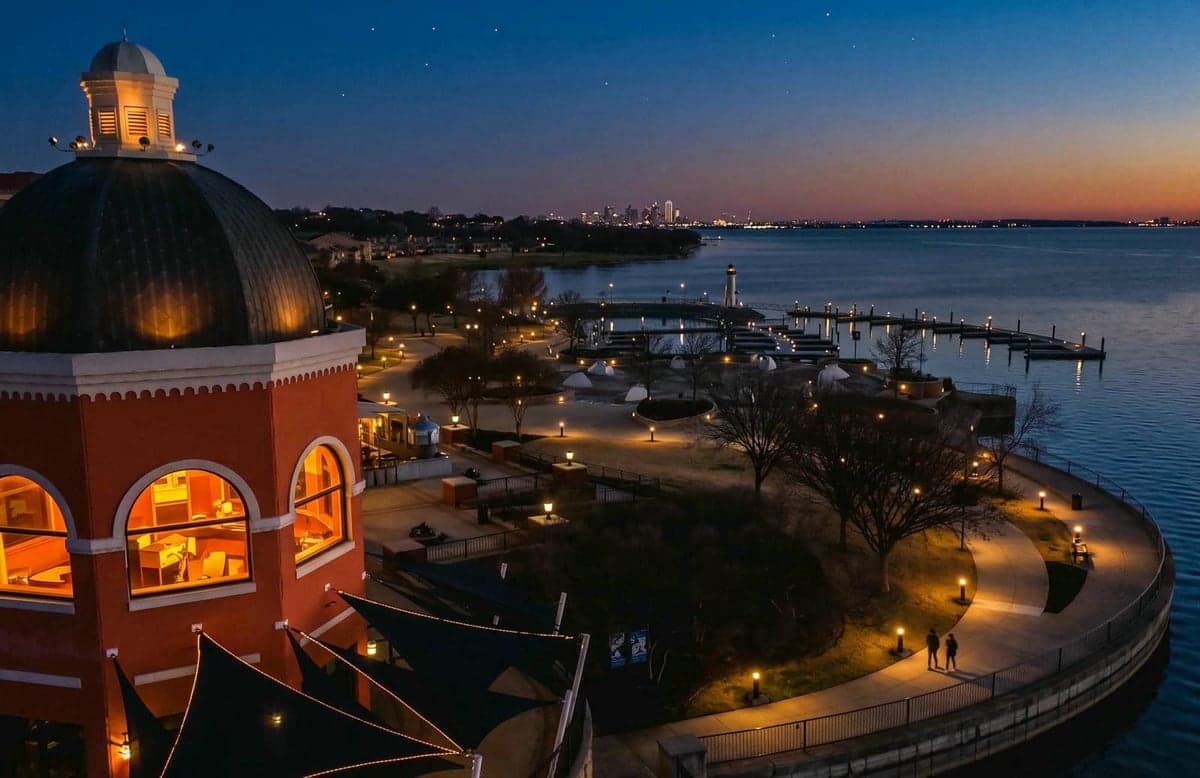
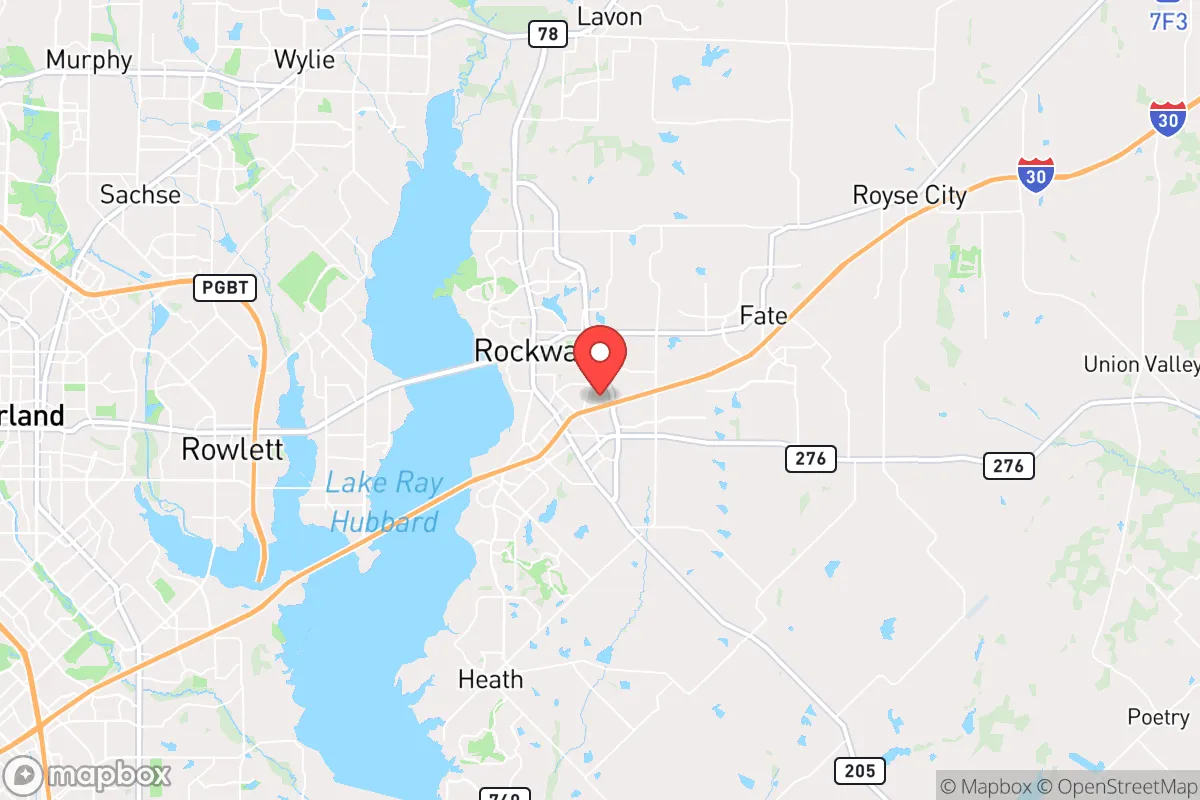
The post-1965 era transformed Rockwall from a sleepy county seat into a bedroom community for Dallas professionals, a shift driven by the completion of Interstate 30 and the construction of Lake Ray Hubbard in the 1970s. The lake’s creation spurred waterfront development, and the first major suburban subdivisions—such as Chandlers Landing and The Shores—began attracting upper-middle-class white families seeking larger lots and lake access. Throughout the 1980s and 1990s, Rockwall’s population grew steadily, with new neighborhoods like Bay Oaks and Stone Creek drawing mostly white, college-educated migrants from Dallas and Collin counties. The Hispanic population began to grow in the 1990s, concentrated in older housing stock near the downtown area and in the Williamsburg neighborhood, where many families worked in construction and service industries. The Black population, historically small, increased modestly after 2000, with families settling in newer subdivisions like Buffalo Creek and the Highlands. The East/Southeast Asian and Indian communities arrived primarily after 2010, drawn by the school district’s reputation and proximity to corporate jobs in Plano and Richardson, and they tend to cluster in newer master-planned sections such as Hidden Creek and the Pinnacle area.
The future
Rockwall’s population is likely to continue growing at a moderate pace, with the city’s buildable land shrinking and infill development becoming more common. The white share is slowly declining as Hispanic and Asian-origin populations increase, but the city is not tribalizing into distinct ethnic enclaves—rather, newer subdivisions are more integrated than older ones. The foreign-born share, while low, is rising gradually as professionals from India and East Asia move in for tech-adjacent jobs, though these groups remain small and are assimilating into the broader suburban culture. The Hispanic population is growing through both domestic migration and higher birth rates, and is expected to approach 20% by 2035, with families settling in both established neighborhoods and new developments near the Rockwall Technology Park. The Black population is stable, with little new in-migration. Over the next 10–20 years, Rockwall will likely become slightly more diverse but remain a predominantly white, affluent suburb where the main demographic story is aging in place among existing homeowners and the arrival of younger families seeking the same school-and-lake lifestyle.
For someone moving in now, Rockwall is a place where the population is stable in its core identity—family-oriented, conservative-leaning, and education-focused—but slowly diversifying along predictable Sun Belt patterns. The city offers a low-immigration, high-amenity environment where newcomers will find a community that values its small-town roots while accommodating gradual change. The key trade-off is between the city’s strong schools and safe neighborhoods and its relative lack of ethnic and cultural variety compared to larger DFW suburbs.

* Values derived from national, state, county, city and local statistics and may differ in a specific area. Last updated: 2026-05-11T19:42:53.000Z
Narrative content on this page is AI-generated and may contain mistakes. Verify any details that matter before acting on them.
ReloMaps may earn a commission from affiliate links at no extra cost to you.

