Strategic Assessment of Rockwall, TX
Meaningful friction. Expect exposure to either population pressure, blast zones, or natural disaster risk. Consider buying a retreat property.
What does the Strategic Assessment tell us?
Our Strategic Assessment grades tactical survivability of an area. Major population centers, military targets, fallout zones, natural disasters, and border exposure all drive risk — lower exposure means a more defensible position in a crisis.
This is heavily inspired by Joel Skousen's Strategic Relocation book. Highly recommended you checkout the book ($)What does this tell us?
Our Strategic Assessment grades tactical survivability of an area. Major population centers, military targets, fallout zones, natural disasters, and border exposure all drive risk — lower exposure means a more defensible position in a crisis.
This is heavily inspired by Joel Skousen's Strategic Relocation book. Highly recommended you checkout the book ($)Strategic Pillars

Key Distances
Regional Safe Places
Below is our recommended "safe zones" in Texas and the surrounding area based on our strategic heuristics. For most people, it's unrealistic to live in a “safe zone” full-time due to work, family or other personal reasons. They tend to be more rural. However, many of these areas are perfect for second homes and retreat properties that double as a vacation home or even a short-term rental.

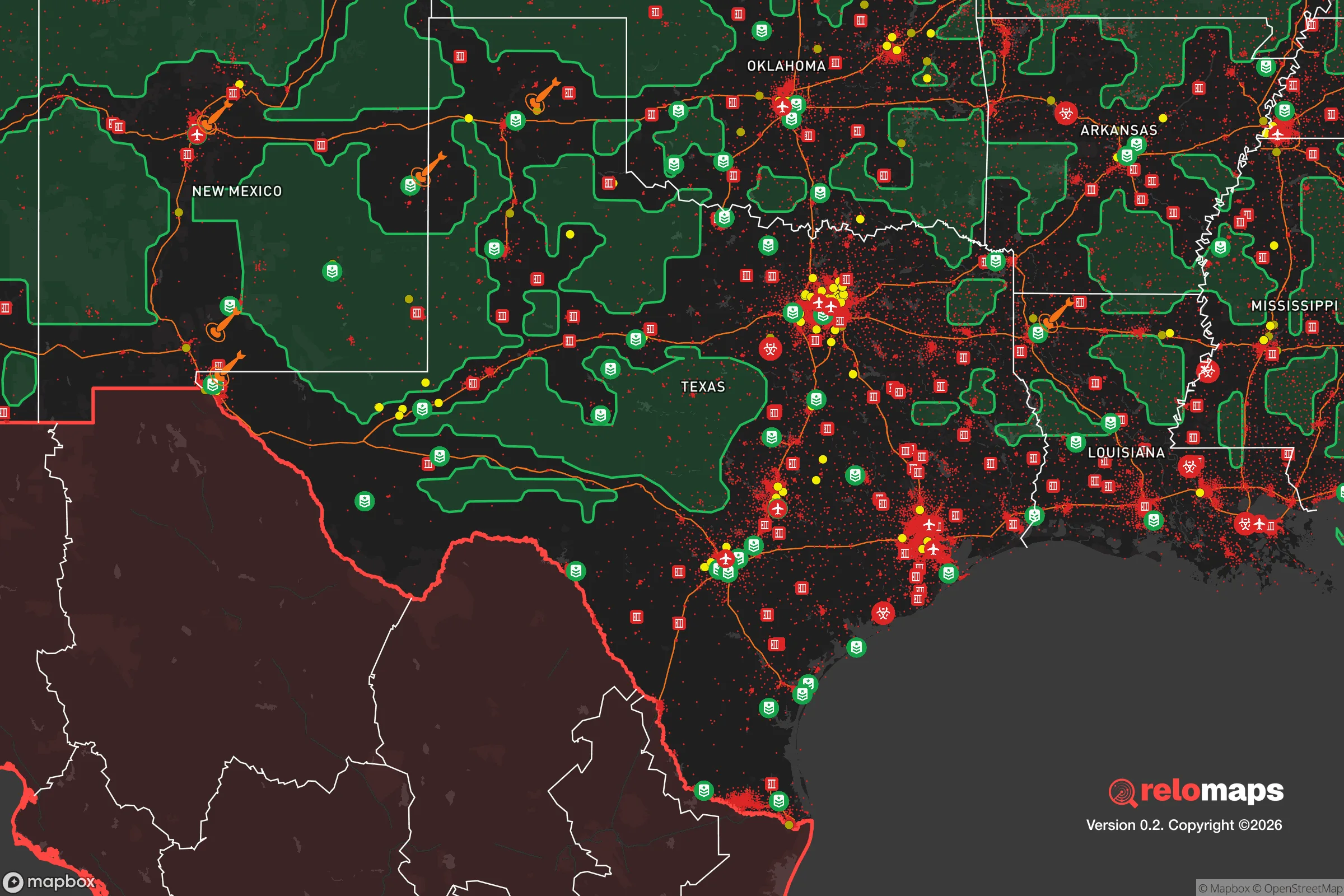


Important Note: For informational purposes only. This does not mean nothing bad ever happens in the green zones. Please use common sense. This is based on public data and modeled with AI. We tried to take a conservative approach but mistakes happen. We update this regularly as new information becomes available.
Solar Generator Recommendations
Backup power matters more here than in safer locations. We've picked three solar generators across budgets and capacity tiers — start with the budget unit if you only need a few essentials, or step up if you want to run a fridge and HVAC for days at a time.

Jackery Portable Power Station Explorer 300
Budget OptionPower on the Go: Weighing only 11 lbs, it's convenient to set up and store with book-sized foldable solar panels

BLUETTI Portable Power Station AC180
Designed for both indoor and outdoor scenarios, AC180 is highly capable as it has a robost capacity and continuous output power.

EF ECOFLOW DELTA Pro Ultra Power Station
Upgraded PickEcoFlow DELTA Pro Ultra is a whole-home energy system designed to grow with your family. Integrated with the Smart Home Panel 2, it scales to meet your evolving energy needs — keeping your home powered, intelligent, and secure through every stage of life.
We earn a commission, at no additional cost to you.
Strategic Assessment Analysis
Rockwall, Texas, presents a mixed strategic picture for the conservative prepper or survivalist. Its primary resilience advantage is its position as a relatively affluent, landlocked suburban enclave on the eastern edge of the Dallas-Fort Worth metroplex, but its proximity to a major population center and critical infrastructure targets introduces significant risks. The area’s natural geography offers some defensive benefits, but its economic and logistical dependence on the DFW hub makes it a high-risk zone for fallout from civil unrest, mass casualty events, or a major disaster.
Geographic position and natural defensive advantages
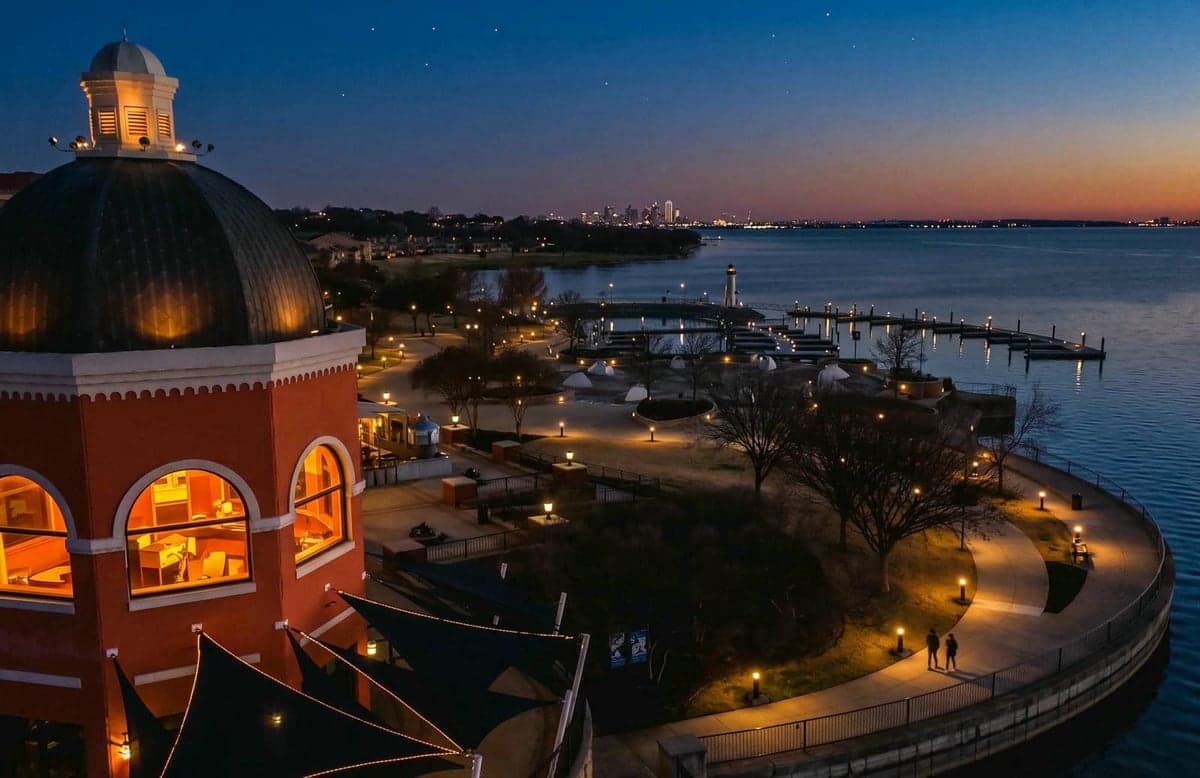
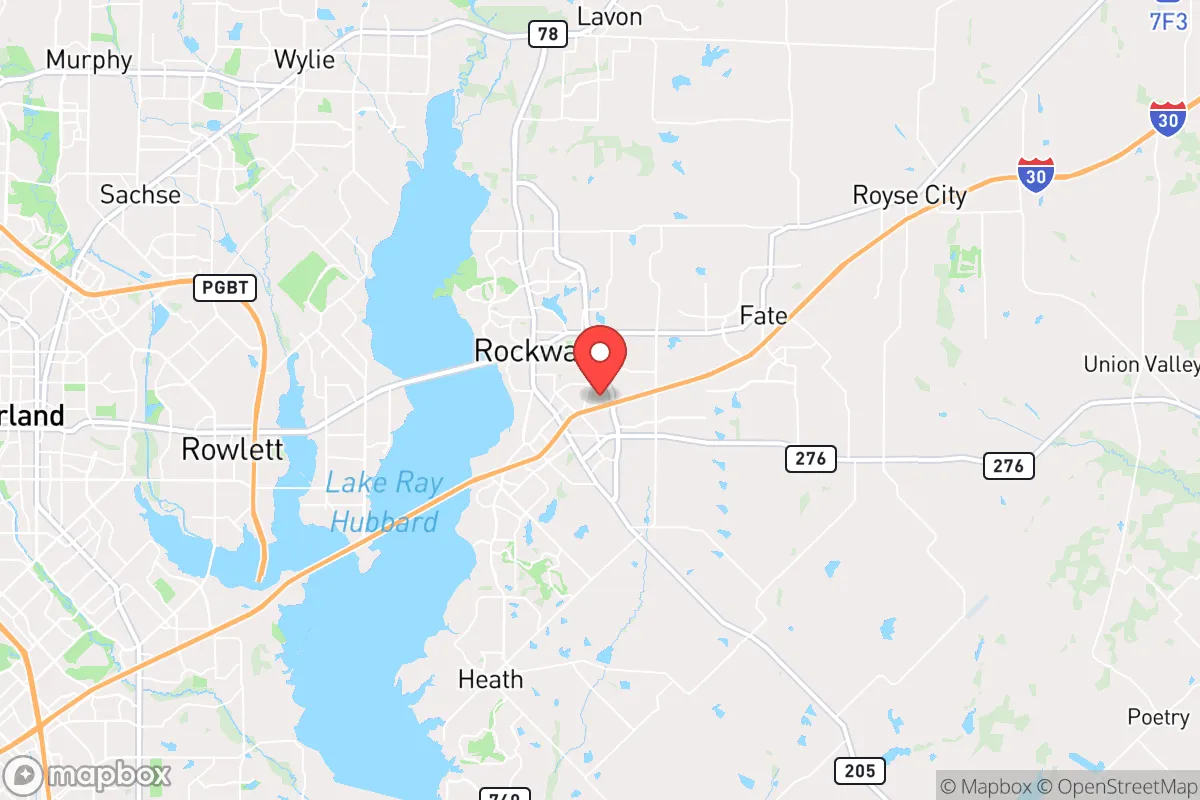
Rockwall sits on the western shore of Lake Ray Hubbard, a large reservoir that provides a natural barrier to the east and a substantial freshwater source. The city’s location on the eastern fringe of the DFW metroplex means it is somewhat removed from the densest urban core, but it is still within the immediate blast and fallout zone of any major event targeting Dallas or the region’s critical infrastructure. The terrain is gently rolling, with no significant mountains or natural chokepoints, but the lake itself offers a defensible flank. The area’s position along Interstate 30 and the George Bush Turnpike provides rapid evacuation routes west toward more rural areas or east toward the piney woods of East Texas, though these same routes would become choke points during a mass evacuation. The lack of major military bases or nuclear power plants within a 30-mile radius reduces the risk of a direct strategic strike, but the proximity to DFW International Airport and Love Field makes the area a likely target for secondary effects of a major attack or disruption.
Risks, exposures, and proximity to fallout-relevant landmarks
The most significant vulnerability for Rockwall is its proximity to the DFW metroplex, a population center of over 7 million people. In the event of civil unrest, a mass casualty event, or a major disaster, Rockwall would likely experience spillover effects, including refugees fleeing the urban core, supply chain disruptions, and potential violence. The city is also within 30 miles of the Dallas CBD, which contains high-value targets like the Federal Reserve Bank of Dallas, major corporate headquarters, and critical transportation hubs. A detonation or attack on these targets would produce fallout patterns that could affect Rockwall depending on wind direction. Additionally, the area is in Tornado Alley, with a history of severe weather events, including the 2015 tornado that struck nearby Rowlett. The region’s reliance on the Texas Interconnection power grid, which has proven vulnerable to winter storms (e.g., 2021’s Winter Storm Uri), means that a prolonged grid failure would hit Rockwall hard, as the city lacks significant local energy generation. The presence of major natural gas pipelines and refineries in the broader region adds another layer of risk for industrial accidents or targeted attacks.
Practical resilience for a relocator: food, water, energy, and defensibility
For a relocator with a prepper mindset, Rockwall offers some practical advantages but also notable gaps. Water is a strong point: Lake Ray Hubbard is a massive, reliable freshwater source, and the city’s water treatment infrastructure is modern. However, during a prolonged grid outage, pumping and treatment would fail without backup power, so private well access or a lake-adjacent property with a manual pump is a significant asset. Food security is moderate: The area has several large grocery chains and a growing local farming community, but the city’s suburban character means most residents rely on just-in-time delivery. A major disruption would empty shelves within 48 hours. Community gardens and local farms exist but are not sufficient for a full-scale crisis. Energy is a critical weakness: Rockwall is entirely dependent on the ERCOT grid, which has shown systemic fragility. Solar with battery backup is a viable option given the region’s high sun exposure, but natural gas generators are more common among preppers here. The city’s defensibility is mixed: the lake provides a natural barrier to the east, but the flat terrain and numerous suburban subdivisions make it difficult to secure a perimeter. The best defensive posture is to own property on the lake’s eastern shore or in the more rural areas north of the city, where road access can be more easily controlled. The local law enforcement presence is robust, but during a widespread collapse, the Rockwall Police Department would be overwhelmed by the sheer volume of refugees from Dallas. Community resilience is a wildcard: Rockwall has a strong sense of local identity and a relatively high median income, which correlates with better-organized neighborhood watch and church-based mutual aid networks. However, the city’s affluence also means many residents are unprepared for a long-term crisis, creating a potential for rapid social breakdown if supplies run out.
The overall strategic picture for Rockwall is one of calculated risk. It is not a bug-out location for a total collapse scenario—the proximity to DFW is too great, and the terrain is too open. However, for a relocator who wants to stay within commuting distance of a major job market while maintaining a reasonable level of preparedness for short-to-medium-term disruptions, Rockwall is a viable option. The key is to treat it as a layered defense: secure a property with lake access, invest in off-grid energy and water, build strong local ties with like-minded neighbors, and have a pre-planned evacuation route east into the less populated areas of Hunt or Rains counties. The city’s real strength is as a staging ground—a place to build resources and community before a crisis, with the ability to move deeper into the countryside if the situation deteriorates. For the conservative prepper who values economic opportunity but refuses to be caught flat-footed, Rockwall offers a workable middle ground, provided you never forget that the city’s greatest asset—its proximity to Dallas—is also its greatest liability.

* Values derived from national, state, county, city and local statistics and may differ in a specific area. Last updated: 2026-05-11T19:42:53.000Z
Narrative content on this page is AI-generated and may contain mistakes. Verify any details that matter before acting on them.
ReloMaps may earn a commission from affiliate links at no extra cost to you.

