Political ClimatePolitical Climate in Rockwall, TX
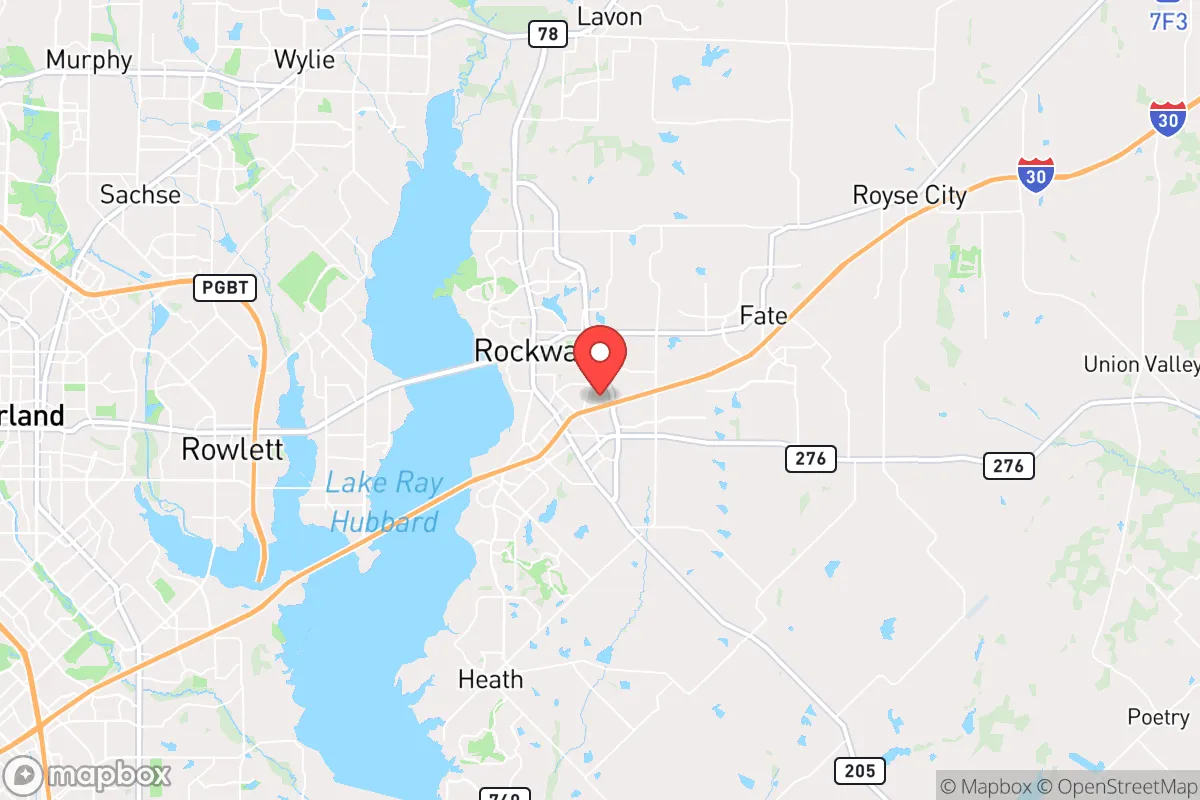
District shown is the primary district for this city’s centroid. Cities may span multiple districts.
Local Political AnalysisPolitical Analysis of Rockwall, TX
Rockwall, Texas, has long been a rock-solid conservative stronghold, and that hasn't changed much despite the state's slow leftward drift. The Cook Partisan Voting Index (PVI) for Rockwall County sits at R+16, meaning the area votes about 16 points more Republican than the national average. That's a full 12 points redder than Texas as a whole, which clocks in at R+4. If you've been here a while, you've watched the county stay reliably red through wave after wave of growth, even as nearby Dallas County has turned increasingly blue. The trajectory here is steady: Rockwall remains one of the most reliably conservative pockets in North Texas, and I don't see that changing anytime soon.
How it compares
When you stack Rockwall against the rest of Texas, the difference is stark. The state's R+4 rating already leans Republican, but that number has been slipping over the last decade as urban centers like Houston, Austin, and Dallas-Fort Worth pull the state toward the center. Rockwall, meanwhile, has held firm. Drive 20 minutes west into Dallas proper and you'll hit precincts that vote Democratic by double digits. Head east toward Royse City or Greenville, and you're back in deep-red territory. Even within Rockwall County, the city of Rockwall itself is a bit more moderate than the rural parts, but the countywide PVI tells the real story. Compared to the state average, Rockwall is a conservative outlier — and proud of it.
What this means for residents
For folks living here, the political climate translates into a local government that generally keeps its hands off your personal freedoms. Property taxes are a perennial gripe — Texas has no income tax, so local governments lean hard on property levies — but the county commission and city council tend to favor low regulation and limited interference. You won't see the kind of progressive policy experiments that pop up in Austin or Dallas. Mask mandates, business shutdowns, and heavy-handed zoning rules? Not Rockwall's style. The school board has stayed focused on parental rights and curriculum transparency, which is a big deal for families. If you're worried about government overreach creeping into your daily life, Rockwall is a place where that concern is still taken seriously by elected officials.
That said, the area isn't immune to change. As more people move from blue states and blue cities, you'll occasionally see a local race get tighter than it used to be. The 2022 midterms saw a few close calls in county-level contests that would have been blowouts a decade ago. It's not a crisis yet, but it's something to keep an eye on. The long-term concern is that if the influx of new residents continues, the political character could shift — and with it, the culture of personal liberty that makes Rockwall attractive in the first place.
Culturally, Rockwall still feels like old-school Texas: church on Sunday, barbecue on Saturday, and a general distrust of politicians who promise to fix everything with new programs. The city's historic square, with its courthouse and local shops, stands as a symbol of that small-town independence. Unlike the sprawling suburbs of Frisco or McKinney, which have become more politically mixed, Rockwall has kept its conservative identity intact. For now, it's a place where you can still count on your neighbors to share your values — and your skepticism of government overreach.

State Political ClimatePolitical Climate in Texas
State Political AnalysisPolitical Environment in the State
Texas has been a reliably Republican state for the past three decades, but the political landscape is far more complex than a simple red-state label suggests. The state’s Cook Partisan Voting Index of R+4 reflects a solid but not overwhelming GOP lean, driven by massive conservative margins in rural areas and exurbs, while fast-growing urban centers like Austin, Dallas, and Houston have shifted leftward. Over the last 10-20 years, the trajectory has been one of narrowing margins at the statewide level—from double-digit GOP wins in the 2000s to single-digit victories in 2020 and 2022—as in-migration from blue states and demographic changes have made Texas a true battleground.
Urban vs. rural divide
The political map of Texas is a tale of two worlds. The state’s five largest metro areas—Houston, Dallas-Fort Worth, San Antonio, Austin, and El Paso—account for roughly 70% of the population, and they are increasingly Democratic strongholds. Austin and El Paso are deep blue, with Travis County voting 71% for Biden in 2020 and El Paso County at 66%. Dallas and Harris (Houston) counties are also reliably Democratic, though their suburbs are shifting. Meanwhile, the rural and small-town expanse—places like Lubbock, Midland, and the Panhandle—votes 70-80% Republican. The real battleground is the suburban ring counties: Collin (north of Dallas), Denton, and Fort Bend (southwest of Houston) were once GOP lockboxes but have trended purple. In 2020, Biden won Fort Bend County, while Collin and Denton still went Republican but by shrinking margins. This urban-rural chasm means statewide elections hinge on turnout in the suburbs—and that’s where the fight is.
Policy environment
Texas’s policy environment is defined by a low-tax, low-regulation posture that has attracted millions of new residents. There is no state income tax, and property taxes are high but capped by law (Proposition 1 in 2022 limited appraisal increases to 10% annually). The regulatory climate is business-friendly, with no state-level minimum wage above the federal $7.25 and weak union protections. On education, the state funds schools through a Robin Hood system that redistributes property tax revenue from wealthy districts to poor ones, but per-pupil spending remains below the national average. Healthcare policy is notably hands-off: Texas did not expand Medicaid under the ACA, leaving roughly 18% of residents uninsured—the highest rate in the nation. Election laws have tightened: SB 1 (2021) restricted mail-in voting, added ID requirements, and banned drive-through voting, a response to 2020’s expanded access in Harris County. For a conservative audience, this policy mix is largely positive—low taxes, limited government, and election integrity—but the lack of Medicaid expansion and high property taxes are persistent concerns.
Trajectory & freedom
On personal liberty, Texas has moved in two directions simultaneously. On the positive side for conservatives, the state has expanded gun rights with permitless carry (HB 1927, 2021), allowing any law-abiding adult to carry a handgun without a license. Parental rights were strengthened via HB 900 (2023), which requires parental consent for minors to access sexually explicit library materials. Medical autonomy was bolstered by the Texas Heartbeat Act (SB 8, 2021), banning abortion after six weeks and empowering private citizens to sue violators. Property rights saw a win with SB 147 (2023), barring foreign adversaries from purchasing land near military bases. However, there are concerning expansions of government overreach: SB 4 (2023) made illegal entry a state crime, effectively deputizing local police for federal immigration enforcement—a move that some conservatives see as federal overreach in reverse. The state also passed HB 20 (2023), which bans gender-transition procedures for minors, a move that aligns with parental rights but also represents a state-level restriction on medical decisions. Overall, Texas is more free on guns, life, and parental rights, but less free on immigration enforcement and some medical choices—a mixed bag that leans conservative.
Civil unrest & political movements
Texas has seen its share of political flashpoints. The 2020 Black Lives Matter protests in Austin, Dallas, and Houston were large and occasionally violent, with Austin seeing property damage and a police reform backlash. On the right, the “Trump Train” convoys in 2020 and 2021, particularly around San Antonio and the I-35 corridor, highlighted a mobilized conservative base. Immigration politics are a constant: the border city of El Paso has been a focal point for migrant surges, while Governor Abbott’s Operation Lone Star (2021-present) deployed state troopers and National Guard to the border, busing migrants to blue cities like New York and Chicago—a move that galvanized both supporters and critics. Secession rhetoric has flared among fringe groups (the “Texit” movement), but it remains a non-starter in mainstream politics. Election integrity controversies persist: after 2020, Harris County’s mail-in ballot handling was investigated, leading to SB 1. A new resident would notice polarized local news coverage and occasional protests outside the Capitol in Austin, but daily life in most suburbs is quiet and orderly.
Projection
Over the next 5-10 years, Texas is likely to become more competitive but not blue. In-migration from California, New York, and Illinois—roughly 1,000 people per day—is bringing a mix of conservatives fleeing high taxes and liberals seeking jobs. The suburbs of Dallas-Fort Worth (Collin, Denton, Tarrant) and Houston (Fort Bend, Montgomery) will continue to shift left, but rural areas will remain deeply red. The state’s fast-growing Hispanic population, historically more conservative than national averages, is trending Democratic but not uniformly—the Rio Grande Valley (Hidalgo County) flipped toward Trump in 2020. If the GOP can hold the suburbs and improve margins in the Valley, Texas stays red. If not, it becomes a swing state by 2032. For a new resident, expect continued low taxes and business growth, but also more political advertising and closer elections. The culture war fights over education, gender, and immigration will intensify, but the state’s fundamental freedom-friendly posture is unlikely to change dramatically.
For someone moving to Texas now, the bottom line is this: you get a low-tax, high-growth environment with strong protections for gun rights, parental authority, and religious liberty. The trade-off is that you’ll live in a state where politics is increasingly contested—especially in the suburbs—and where the government is active on social issues. If you value personal freedom from state overreach, Texas is still one of the best bets in the country, but keep an eye on the suburbs: they’ll decide whether the Lone Star State stays conservative or becomes the next battleground.
* Values derived from national, state, county, city and local statistics and may differ in a specific area. Last updated: 2026-05-11T19:42:53.000Z
Narrative content on this page is AI-generated and may contain mistakes. Verify any details that matter before acting on them.
ReloMaps may earn a commission from affiliate links at no extra cost to you.

