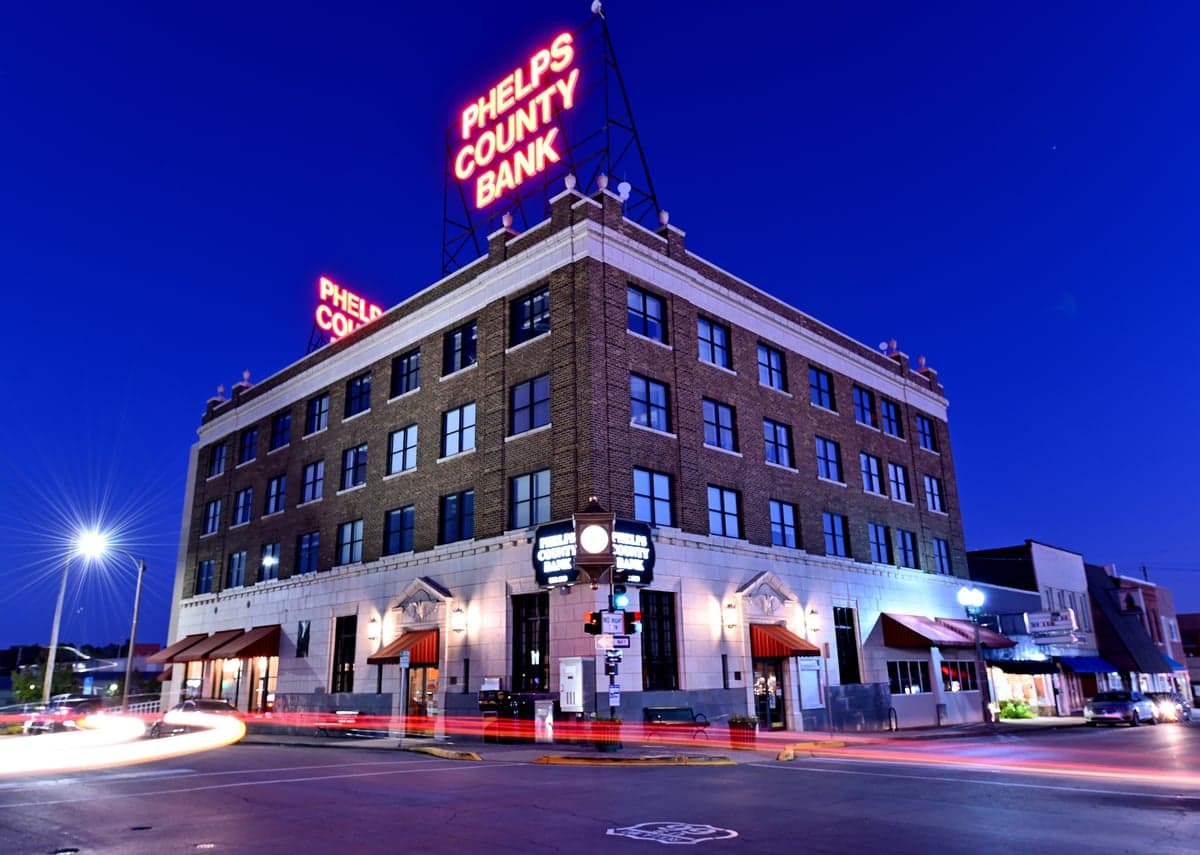
Photo: Wikipedia
Political ClimatePolitical Climate in Rolla, MO
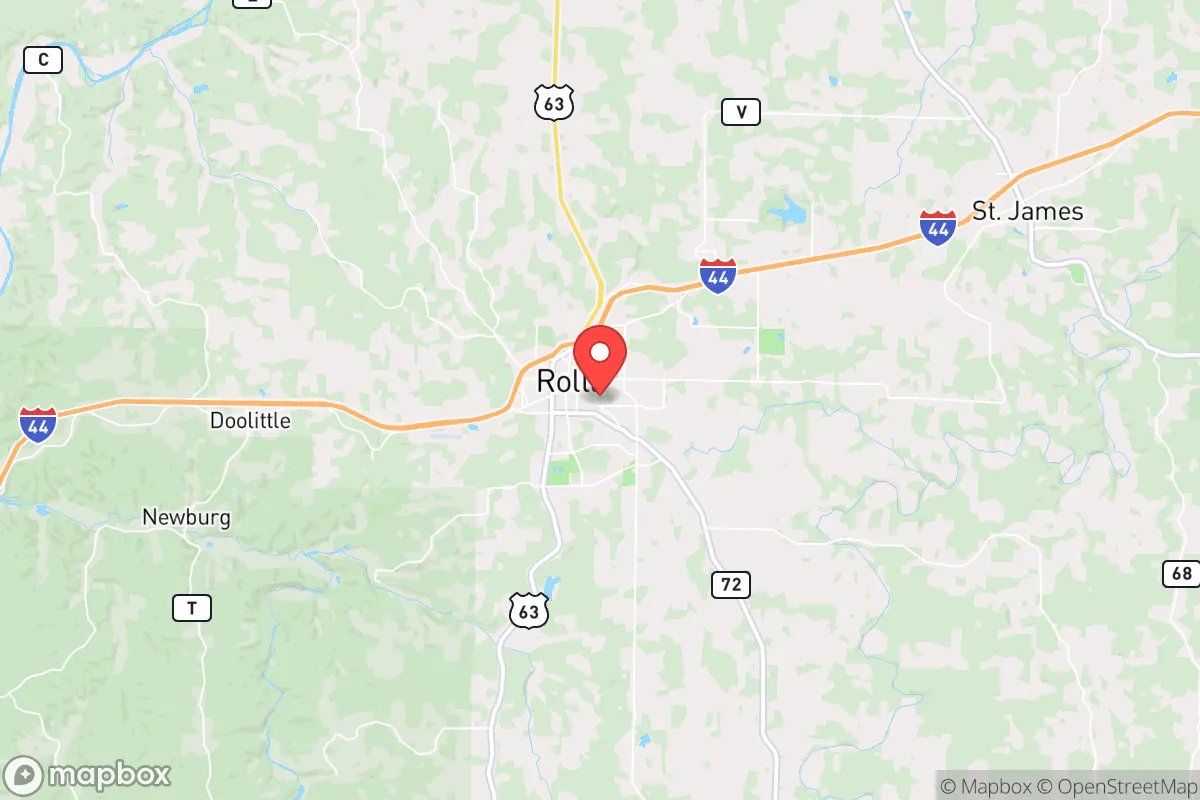
District shown is the primary district for this city’s centroid. Cities may span multiple districts.
Local Political AnalysisPolitical Analysis of Rolla, MO
Rolla, Missouri, sits deep in the heart of the Ozarks, and its politics reflect that heritage. The area has a Cook PVI of R+27, meaning it votes about 27 points more Republican than the national average, and that number has held steady for years. If you look at the 2024 election, Phelps County went for the Republican candidate by a margin of roughly 72% to 25%, a split that hasn't budged much since the 1990s. The real story here isn't a sudden shift—it's the quiet, stubborn consistency of a community that values local control and doesn't take kindly to outsiders telling them how to live.
How it compares
Drive 30 miles east to St. James, and you'll find a similar vibe—small-town, church-going, and reliably red. But head 90 miles northeast to St. Louis, and you're in a different world entirely, where the Cook PVI flips to D+27. That urban-rural divide is stark in Missouri, and Rolla sits squarely on the rural side. The contrast with Columbia, home to the University of Missouri and about 80 miles north, is even sharper: Columbia leans D+10, with a younger, more transient population that pushes for progressive policies on housing and taxes. Rolla, by contrast, has a stable base of families and retirees who've watched those cities struggle with rising crime and overreaching regulations and want no part of it. The local county commission has consistently voted down proposals for new zoning ordinances that would restrict property use, and the school board has resisted state-level mandates on curriculum content, preferring to keep decisions in the hands of local parents and teachers.
What this means for residents
For someone living here, the political climate translates into a lighter touch from government. Property taxes in Phelps County run about 0.75% of assessed value, well below the state average of 0.95%, and there's no city income tax. The county sheriff's office operates with a philosophy of enforcing state law without getting into federal overreach—they've publicly stated they won't assist with federal gun registration efforts or act as immigration enforcement unless a violent felony is involved. That kind of hands-off approach is exactly what draws people here from places like California or Illinois, where they felt the government was getting too involved in their daily lives. The downside? Public services are lean. The county's road maintenance budget has been flat for a decade, and the local hospital, Phelps Health, relies heavily on a rural subsidy that gets debated in Jefferson City every session. But most residents would tell you they'd rather patch a pothole themselves than pay higher taxes for a government program they didn't ask for.
The cultural distinctions here are worth noting. Rolla is home to Missouri University of Science and Technology, which brings in a rotating population of engineering students and faculty from all over the world. That academic presence creates a small but visible liberal bubble—you'll see a few "Coexist" bumper stickers near campus—but it hasn't shifted the overall political landscape. The university itself stays out of local politics, and the students tend to leave after graduation. What you won't find in Rolla is the kind of progressive activism that's taken hold in college towns like Columbia or Lawrence, Kansas. There's no push for sanctuary city status, no defund-the-police movements, no serious talk of rent control. The long-term trajectory looks stable: as long as the surrounding counties keep voting red and the state legislature stays conservative, Rolla will remain a place where personal freedom is the default and government overreach is met with a polite but firm "no thanks."

State Political ClimatePolitical Climate in Missouri
State Political AnalysisPolitical Environment in the State
Missouri has long been considered a bellwether state, but over the past 20 years it has shifted decisively from a purple swing state to a solidly red one, with Republicans now holding supermajorities in both chambers of the state legislature and every statewide office. The state voted for Donald Trump by 18 points in 2024, a stark contrast to the razor-thin margins of the 2000 and 2008 elections. This rightward march is driven by a powerful coalition of rural and exurban voters, combined with a steady exodus of Democratic-leaning populations from the state’s two major metros, St. Louis and Kansas City. For a conservative considering relocation, Missouri offers a political climate that has grown increasingly aligned with limited government, Second Amendment rights, and cultural conservatism, but the picture is not uniform across the state.
Urban vs. rural divide
The political map of Missouri is a textbook study in the urban-rural chasm. The state’s two Democratic strongholds are St. Louis City and Kansas City, along with their inner-ring suburbs like University City and Independence. These areas vote reliably blue by 30-40 point margins, powered by union households, minority communities, and a growing progressive activist class. However, the rest of the state is overwhelmingly red. The I-70 corridor west of Columbia, the Ozarks, and the Bootheel are deeply conservative. A key example is St. Charles County, just west of St. Louis, which has flipped from a swing county in the 1990s to a Republican bastion that now votes +30 points red. Similarly, Greene County (Springfield) and Christian County are among the most reliably conservative in the nation. The rural-urban split is so stark that St. Louis and Kansas City together cast roughly 40% of the state’s Democratic votes, while the remaining 90+ counties deliver Republican landslides. The political divide is not just about party—it’s about worldview. Rural Missourians see the state’s big cities as culturally alien, while urbanites view the rest of the state as backward. This tension is the central fact of Missouri politics.
Policy environment
Missouri’s policy environment is a conservative’s dream on paper, but with some notable caveats. The state has a flat income tax rate of 4.95% (down from 6% in 2019) and a low corporate tax rate of 4%, with no estate tax. Property taxes are among the lowest in the nation, averaging about 0.8% of home value. The state is a right-to-work state (though the law was repealed by ballot initiative in 2018, the legislature has since passed a new version), and it has no state-level rent control or price controls. On education, Missouri has a robust charter school law in St. Louis and Kansas City, and a growing school choice movement—the Missouri Empowerment Scholarship Accounts program, passed in 2021, provides tax credits for private school scholarships. However, the state’s public school funding formula is a perennial battleground, with rural districts often feeling shortchanged. On healthcare, Missouri did not expand Medicaid until 2021, when voters approved it by ballot initiative, overriding years of legislative resistance. This was a major defeat for conservatives, and the program now covers over 300,000 additional residents. Election laws have tightened: voter ID is required, and the 2022 law eliminated no-excuse absentee voting and shortened the early voting window. Overall, the policy environment is friendly to business and traditional values, but the Medicaid expansion and the 2018 right-to-work repeal show that voters can sometimes buck the legislature.
Trajectory & freedom
Missouri is on a trajectory of expanding personal freedom in several key areas, but with some worrying counter-currents. The biggest win for liberty in recent years was the 2021 passage of the Second Amendment Preservation Act (SAPA), which declares federal gun laws that infringe on the right to keep and bear arms to be null and void in Missouri. This law, while controversial and facing federal court challenges, represents a bold assertion of state sovereignty. In 2023, the legislature also passed a law banning local governments from enforcing federal red flag orders. On parental rights, Missouri passed the Parental Bill of Rights in 2022, giving parents explicit authority over their children’s education and medical decisions. The state also banned transgender surgeries for minors in 2023. On the economic freedom front, the state has been cutting income taxes and eliminating occupational licensing requirements for certain professions. However, there are concerning trends. The Medicaid expansion, while popular, has increased state spending and dependency. Additionally, the state’s marijuana legalization (approved by voters in 2022) has created a heavily regulated market that some libertarians see as a new form of government control. The biggest threat to freedom remains the influence of large corporations in Jefferson City, particularly in the energy and agriculture sectors, which often lobby for subsidies and regulations that benefit them at the expense of small businesses.
Civil unrest & political movements
Missouri has a history of political flashpoints that new residents should be aware of. The 2014 Ferguson protests, following the shooting of Michael Brown, were a national turning point for the Black Lives Matter movement and exposed deep racial tensions in the St. Louis region. While the protests have subsided, the political aftershocks continue—St. Louis County has seen a surge in progressive activism, including calls to defund the police and the election of a progressive prosecutor, Wesley Bell, who later lost to a more moderate challenger. On the right, the Missouri Freedom Caucus has become a powerful force in the state legislature, pushing for even more aggressive conservative policies, including a near-total abortion ban (triggered after Dobbs) and a push for school vouchers. Immigration politics are less heated than in border states, but there have been skirmishes over sanctuary city policies—St. Louis and Kansas City have both declared themselves sanctuary cities, leading to legislative efforts to ban such policies statewide. Election integrity remains a hot-button issue. The 2020 election saw Trump win Missouri easily, but activists on the right continue to push for stricter voting laws, including a ban on ballot drop boxes and tighter signature verification. A new resident in a rural area will see little visible political conflict, but in the suburbs of St. Louis and Kansas City, yard signs, bumper stickers, and local Facebook groups are constant battlegrounds.
Projection
Over the next 5-10 years, Missouri is likely to become even more conservative, but not without a fight. The key demographic trend is the continued growth of the exurbs—places like Wentzville, O’Fallon, and Lee’s Summit are attracting families from the coasts and from within the state, and these new residents tend to be conservative-leaning. At the same time, St. Louis City and Kansas City are losing population, which reduces the Democratic vote share. The state’s rural areas are aging and shrinking, but they remain deeply red. The wild card is the growing Hispanic population in southwest Missouri, particularly around Carthage and Monett, which could shift the political calculus if that community becomes more politically active. On policy, expect further tax cuts, continued expansion of school choice, and more battles over abortion—the current near-total ban is likely to face ballot initiatives, as it did in Kansas and Ohio. The Second Amendment Preservation Act will likely be litigated for years, but the political will to defend it remains strong. The biggest risk to the conservative trajectory is if the state’s urban areas continue to radicalize and attract national progressive funding, leading to a more polarized and dysfunctional state government. But for now, the trend is clear: Missouri is becoming redder, freer, and more culturally conservative.
For a conservative moving to Missouri, the bottom line is this: you will find a state that largely shares your values on guns, taxes, and family, but you need to pick your location carefully. If you move to St. Louis City or Kansas City, you will be living in a progressive enclave with high crime and high taxes. If you choose the suburbs of St. Charles County or the Springfield area, you will find like-minded neighbors, good schools, and a government that mostly stays out of your way. The state is not perfect—the Medicaid expansion and the influence of corporate lobbyists are real concerns—but compared to most of the country, Missouri offers a high degree of personal freedom and a political climate that is trending in the right direction. Just be prepared for the occasional culture war battle, especially if you live near the urban centers.
* Values derived from national, state, county, city and local statistics and may differ in a specific area. Last updated: 2026-04-29T20:55:56.000Z
Narrative content on this page is AI-generated and may contain mistakes. Verify any details that matter before acting on them.
ReloMaps may earn a commission from affiliate links at no extra cost to you.

