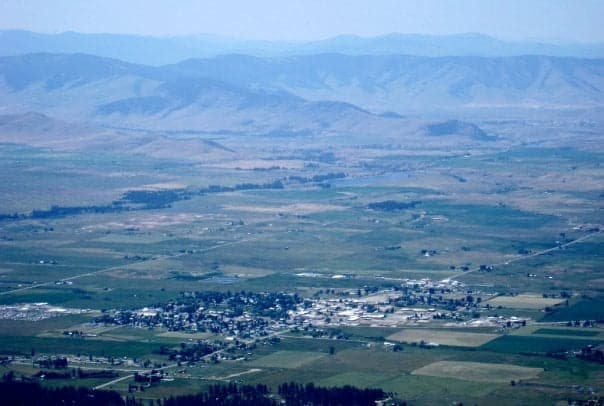
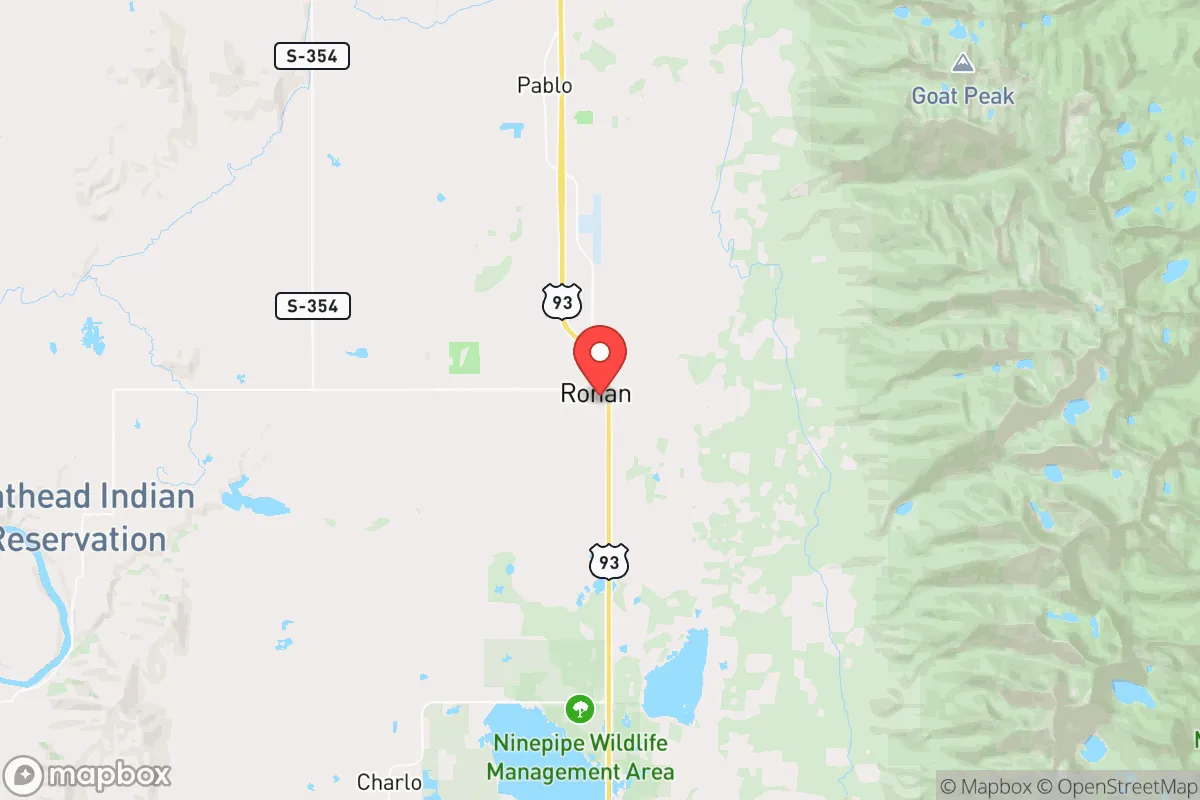
Photo: Wikipedia
Political ClimatePolitical Climate in Ronan, MT
District shown is the primary district for this city’s centroid. Cities may span multiple districts.
Local Political AnalysisPolitical Analysis of Ronan, MT
Ronan, Montana, sits in a county that leans reliably conservative, with a Cook PVI of R+5, but the real story is how the town itself has held the line against the kind of progressive creep you see in places like Missoula or even Kalispell. For decades, this was a quiet farming and timber community where folks minded their own business and the biggest political fights were over school levies and county road maintenance. Lately, though, you can feel the pressure—out-of-state money buying up lakefront property, new faces showing up at town council meetings pushing "sustainability" initiatives that sound an awful lot like government telling you what you can do with your own land. The trajectory is still solidly red, but it’s a defensive red now, not the relaxed, hands-off conservatism that used to define the place.
How it compares
Drive twenty miles south to Polson, and you’ll find a town that’s been hit harder by the same forces—more second homes, more short-term rentals, and a city council that’s started floating things like plastic bag bans and "equity" training for city staff. Ronan, by contrast, still feels like the old Montana. The county commission here hasn’t gone along with the state’s more aggressive land-use planning mandates, and the local school board has pushed back hard against curriculum changes that feel like they’re coming from Helena or D.C. Compare that to Missoula, an hour and a half south, where the city government has basically turned into a social experiment lab—mask mandates that lasted years, zoning rules that make it impossible to build a simple garage without three permits, and a police force that’s been defunded in spirit if not in name. Ronan’s not there yet, and the locals are watching those examples like a hawk. The contrast with the Flathead Reservation’s tribal government is also worth noting—the Confederated Salish and Kootenai Tribes run their own show, and while they’ve got their own priorities, they tend to be pragmatic about things like hunting access and water rights, not ideological crusades.
What this means for residents
For the average Ronan resident, the political climate means you can still live your life without a bureaucrat peeking over your shoulder. Want to build a shed on your five acres without a $500 permit and a six-month review? You can probably do it. Want to send your kid to school without them being asked to fill out a gender identity survey? That’s still the norm here. The downside is that the town’s resistance to change can feel like stagnation—there’s not a lot of new industry, the downtown has a few empty storefronts, and the younger generation often leaves for jobs in Kalispell or Missoula. But for those who stay, the trade-off is clear: you keep your freedoms, your privacy, and your right to be left alone. The biggest concern going forward is that the same people who ruined places like Bozeman and Whitefish are starting to eye the Mission Valley. If the county commission ever flips, or if enough new residents with "big city" ideas move in, Ronan could lose what makes it special. For now, though, it’s still a place where a handshake means something and the government stays out of your business.
Culturally, Ronan is a mix of ranching families, tribal members, and a growing number of folks who moved here specifically to escape the chaos of the coast. That means you get a libertarian streak that runs deeper than party labels—people here don’t like being told what to do, whether it’s by the EPA, the county health department, or the local school board. The biggest policy fights in recent years have been over things like mask mandates in schools (rejected early on) and a proposed countywide land-use plan that would have restricted how you could subdivide your property (also rejected). There’s a strong sense that the government in Helena is out of touch, and that Washington D.C. is actively hostile to rural life. That’s why you see more "Don’t Tread on Me" flags than Biden signs around here. The long-term worry is that the state’s growth will eventually dilute this culture, but for now, Ronan remains a pocket of old-school Montana independence—a place where the political climate is still defined by what the government can’t do to you, not what it can do for you.

State Political ClimatePolitical Climate in Montana
State Political AnalysisPolitical Environment in the State
Montana has long been a reliably Republican state at the presidential level, voting for the GOP candidate in every election since 1968 except for Bill Clinton’s 1992 win. However, the state’s political climate is far more nuanced than a simple red-state label suggests. Over the past 10-20 years, a powerful coalition of libertarian-leaning ranchers, conservative small-business owners, and a growing wave of out-of-state transplants—many fleeing progressive policies in places like California and Washington—has solidified the GOP’s dominance, but also introduced internal tensions between traditional “Big Sky” libertarianism and newer, more culturally conservative strains. The result is a state that is broadly conservative but increasingly polarized along geographic and demographic lines.
Urban vs. rural divide
The political map of Montana is a textbook case of the urban-rural split. The state’s few population centers—namely Missoula, Bozeman, and Helena—are the blue islands in a sea of red. Missoula, home to the University of Montana, is the most reliably Democratic city in the state, consistently voting for progressive candidates and ballot measures. Bozeman, once a conservative ranching town, has seen explosive growth from tech workers and outdoor enthusiasts, and while it still leans Republican, its county (Gallatin) has become a swing area, flipping to Biden in 2020 by a narrow margin. Helena, as the state capital, has a more mixed electorate due to government workers and a small but vocal progressive base. In contrast, the vast rural expanse—from the Hi-Line in the north to the eastern plains and the Bitterroot Valley—is deeply Republican. Counties like McCone, Garfield, and Petroleum routinely deliver 80-90% of their votes to GOP candidates. The divide is stark: the three largest counties (Yellowstone, Gallatin, Missoula) account for nearly half the state’s population, yet the remaining 53 counties overwhelmingly determine statewide elections. This means a Republican primary win in Montana is often the real election, especially in legislative races.
Policy environment
Montana’s policy environment is a mixed bag for conservatives, though the trend is positive. The state has no sales tax, a major draw for those fleeing high-tax states, and property taxes are relatively low compared to the national average. The regulatory posture is generally business-friendly, with a right-to-work law on the books and a relatively low corporate income tax rate of 6.75%. However, the state’s education system is a point of contention. Montana has a strong tradition of local control over schools, but recent years have seen battles over curriculum transparency and parental rights. In 2021, the legislature passed a law requiring schools to post curriculum materials online, a win for transparency. Healthcare policy is similarly mixed: Montana expanded Medicaid under the Affordable Care Act in 2015, a move that many conservatives opposed, but the state has also resisted federal overreach in areas like vaccine mandates. Election laws are solidly conservative: Montana requires voter ID, has no same-day registration, and in 2021 passed a law restricting ballot harvesting and requiring absentee ballots to be returned by election day. The state also has a strong initiative process, which has been used by both sides—for example, to legalize medical marijuana and, more recently, to expand Medicaid.
Trajectory & freedom
On the freedom front, Montana has been a bright spot, but with some concerning clouds. The state is a Constitutional Carry state, meaning no permit is needed to carry a concealed firearm, and it has a strong preemption law preventing local governments from enacting their own gun control. In 2021, the legislature passed a law prohibiting enforcement of federal gun laws that violate the Second Amendment—a direct challenge to federal overreach. Parental rights have been strengthened with the passage of a law requiring schools to notify parents of any changes to a student’s health or well-being, a key win for families. On medical autonomy, Montana was one of the first states to pass a law banning COVID-19 vaccine mandates by private employers, and it has resisted federal health mandates. However, the state’s libertarian streak has limits. In 2022, voters rejected a ballot initiative to legalize recreational marijuana (though medical use remains legal), and the state has a strong anti-abortion law that bans the procedure after 20 weeks. The biggest concern for freedom-minded residents is the influx of new residents from blue states, who are bringing more progressive voting habits, particularly in Bozeman and Missoula. This demographic shift could erode the state’s conservative policies over time.
Civil unrest & political movements
Montana is not known for widespread civil unrest, but there have been notable flashpoints. The most visible in recent years has been the Stand with Ukraine protests in Missoula and Bozeman, which drew both left-wing and right-wing participants, but also highlighted a split between isolationist and interventionist conservatives. More locally, the Yellowstone County area (Billings) has seen tensions over immigration, with some residents pushing for stricter enforcement and others advocating for more welcoming policies. The state has no sanctuary cities, and local law enforcement generally cooperates with federal immigration authorities. Election integrity has been a hot topic, with the 2020 election leading to a recount in a few close races, but no widespread fraud was found. The most organized political movements are on the right: the Montana Republican Party has been split between the establishment wing and a more populist, anti-establishment faction that has gained ground in recent primaries. On the left, the Montana Democratic Party is largely a rural party, but it has been energized by the growth in Bozeman and Missoula. A new resident would notice the strong presence of “Don’t California My Montana” sentiment, particularly in rural areas, where bumper stickers and local businesses proudly display the slogan.
Projection
Looking ahead 5-10 years, Montana’s political trajectory is uncertain but leans toward continued conservative dominance, albeit with a more fractured GOP. The state is projected to gain a second congressional seat after the 2030 census, which will amplify its national influence. The biggest wild card is the in-migration pattern: if the current flow of conservative-leaning refugees from blue states continues, the state will likely remain red. However, if the transplants are more moderate or left-leaning—as seen in Bozeman and Missoula—the urban centers could flip the state purple. The state’s libertarian streak is a double-edged sword: it attracts freedom-loving people, but it also means resistance to any form of government intervention, even when it might be needed to manage growth. Expect continued battles over land use, water rights, and property taxes as the population grows. The state’s political future will likely be decided in the suburbs of Billings, Bozeman, and Kalispell, where the new arrivals are settling.
For a new resident, the bottom line is this: Montana is still one of the most freedom-friendly states in the Union, with low taxes, strong gun rights, and a culture of self-reliance. But it is not immune to the national trends. If you move here, you’ll find a state that largely shares your values, but you’ll also need to be engaged in local politics to keep it that way. The fight for Montana’s soul is real, and it’s happening in school board meetings, county commissions, and state legislative races. If you’re looking for a place where your vote still matters and your voice can be heard, Montana is it—but don’t expect it to stay that way without effort.
* Values derived from national, state, county, city and local statistics and may differ in a specific area. Last updated: 2026-04-21T14:49:03.000Z
Narrative content on this page is AI-generated and may contain mistakes. Verify any details that matter before acting on them.
ReloMaps may earn a commission from affiliate links at no extra cost to you.

