Photo: Wikipedia
Demographics of Roy, UT
Affluence Level in Roy, UT
An upper-middle-class area. Household wealth, education levels, and homeownership run ahead of national benchmarks.
People of Roy, UT
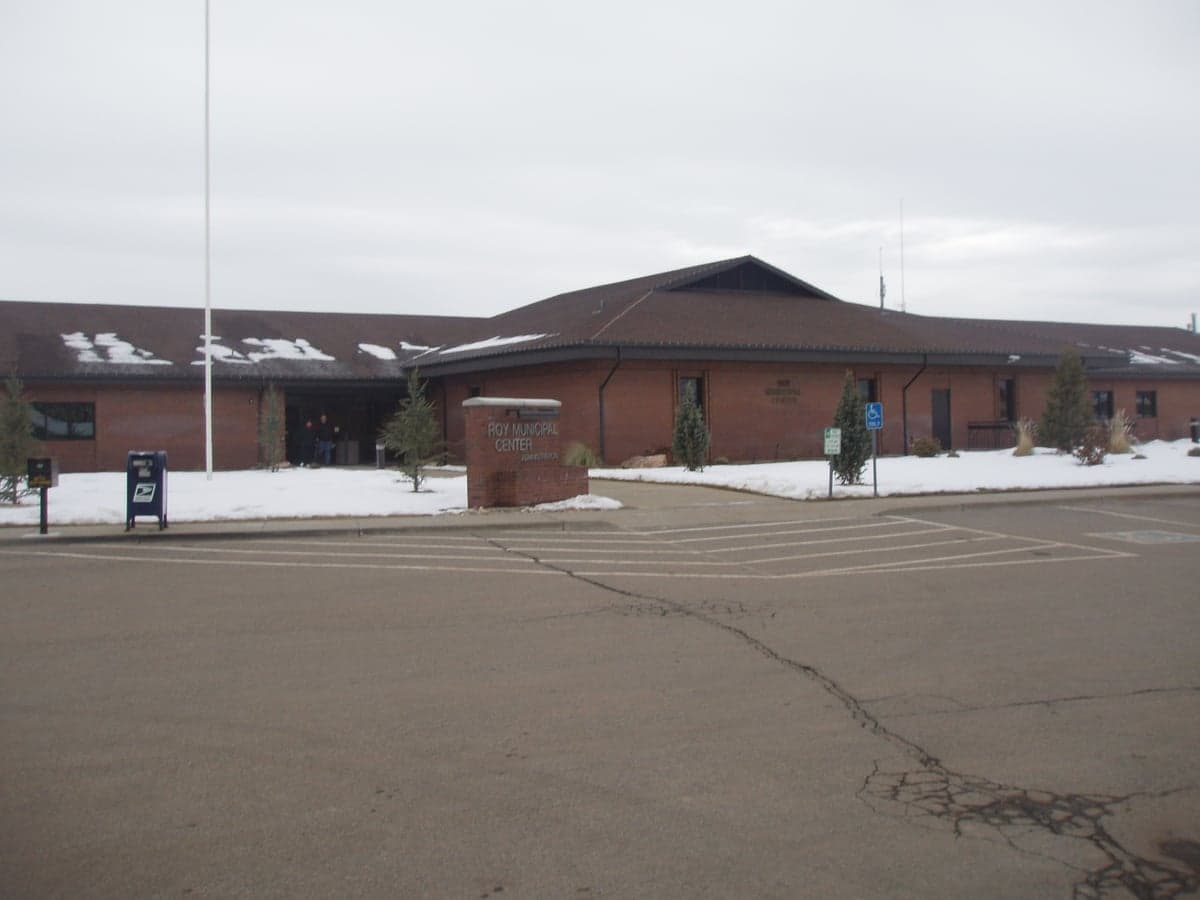
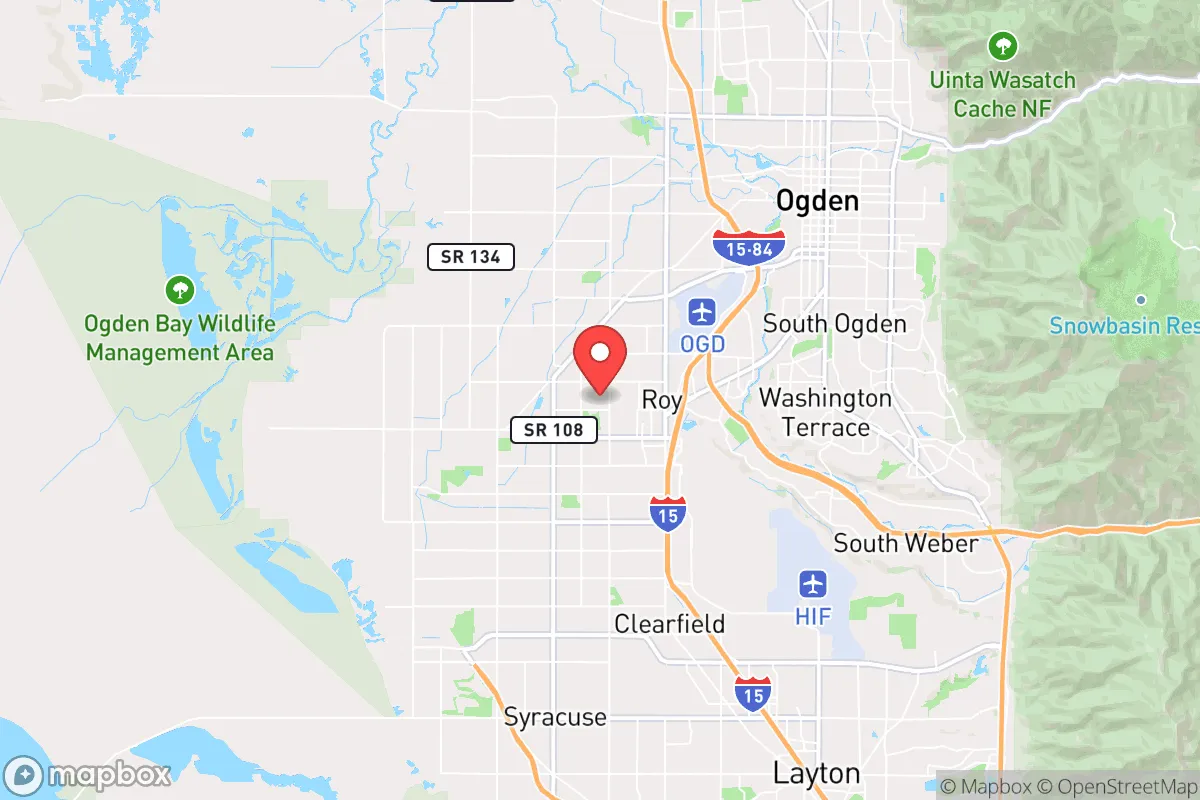
Roy, Utah, is a predominantly white, family-oriented suburb of Ogden with a population of 39,021, characterized by a strong sense of community and a conservative-leaning culture. The city is notably less diverse than the national average, with a foreign-born population of just 2.6% and a Hispanic community of 19.3% that represents the largest minority group. Residents are predominantly employed in nearby Hill Air Force Base, local manufacturing, and the service sector, giving the city a blue-collar, military-connected identity. With only 23.1% of adults holding a bachelor's degree or higher, Roy is a place where practical skills and community ties often outweigh formal education.
How the city was settled and grew
Roy's human history begins not with pioneers but with the railroad. The area was originally part of the Weber River floodplain, settled sparsely by Latter-day Saint (LDS) farmers in the 1850s, but the city's real founding came in 1873 when the Union Pacific Railroad built a station here. The town was named after a railroad official's son, Roy, and the first wave of residents were railroad workers and their families, many of whom were of English and Scandinavian descent. These early settlers built homes in what is now the Historic Downtown Roy area, centered around 1900 West and 5600 South, where the original depot stood. A second wave arrived in the 1910s and 1920s, drawn by the sugar beet industry and the Utah-Idaho Sugar Company factory, which employed hundreds. These workers, largely of German and Swiss heritage, settled in the Midland District (around 4800 South and 2000 West), creating a tight-knit farming community that persisted through the Great Depression.
Modern era (post-1965)
The post-1965 era transformed Roy from a rural farming town into a sprawling suburb. The catalyst was the expansion of Hill Air Force Base during the Vietnam War, which brought thousands of military personnel and civilian contractors to the area. This wave of domestic in-migration—mostly white, middle-class families from other parts of Utah and the Mountain West—settled in new subdivisions like Lakeview Estates (near 4300 South and 3500 West) and Sandridge (around 5600 South and 2500 West). These neighborhoods, built in the 1970s and 1980s, feature ranch-style homes and large lots, reflecting the car-dependent suburban ideal. The Hispanic population began to grow in the 1990s, driven by construction and service jobs, and concentrated in the West Roy area (west of 3500 West), where older, more affordable housing stock attracted immigrant families. Today, the Hispanic community is 19.3% of the population, but they remain largely integrated into the broader white community rather than forming a distinct ethnic enclave. The Asian population (East/Southeast Asian) is small at 1.8%, with families often connected to Hill AFB or regional healthcare jobs, and they are scattered across newer developments like Roy Meadows (near 5600 South and 4500 West). The Indian-subcontinent population is effectively zero, and the Black population is negligible at 0.6%.
The future
Roy's population is projected to grow modestly, reaching roughly 45,000 by 2040, driven by continued infill development and the expansion of Hill AFB's mission. The city is not homogenizing into a single identity but rather tribalizing along generational and housing-type lines. Older, established neighborhoods like Historic Downtown Roy and Midland District are seeing an aging white population, while newer subdivisions like Roy Station (a recent development near the FrontRunner commuter rail stop) attract younger families, many of whom are white but also include a growing number of Hispanic and mixed-race households. The Hispanic community is plateauing rather than accelerating, as immigration from Latin America has slowed and second-generation families are assimilating into the broader white culture. The foreign-born share (2.6%) is likely to remain low, as Roy lacks the economic pull for large-scale international migration. The city's future is one of slow, steady growth with a stable demographic profile: predominantly white, with a significant but integrated Hispanic minority, and very little racial or ethnic diversity beyond that.
For someone moving to Roy now, the city offers a predictable, family-oriented environment with strong military and LDS community ties. It is not a place of rapid demographic change or cultural experimentation, but rather a stable, middle-class suburb where neighbors know each other and the schools are safe. The key trade-off is low diversity and limited urban amenities in exchange for affordable housing, low crime, and a sense of rootedness that is increasingly rare in the Intermountain West.

* Values derived from national, state, county, city and local statistics and may differ in a specific area. Last updated: 2026-05-01T12:12:59.000Z
Narrative content on this page is AI-generated and may contain mistakes. Verify any details that matter before acting on them.
ReloMaps may earn a commission from affiliate links at no extra cost to you.

