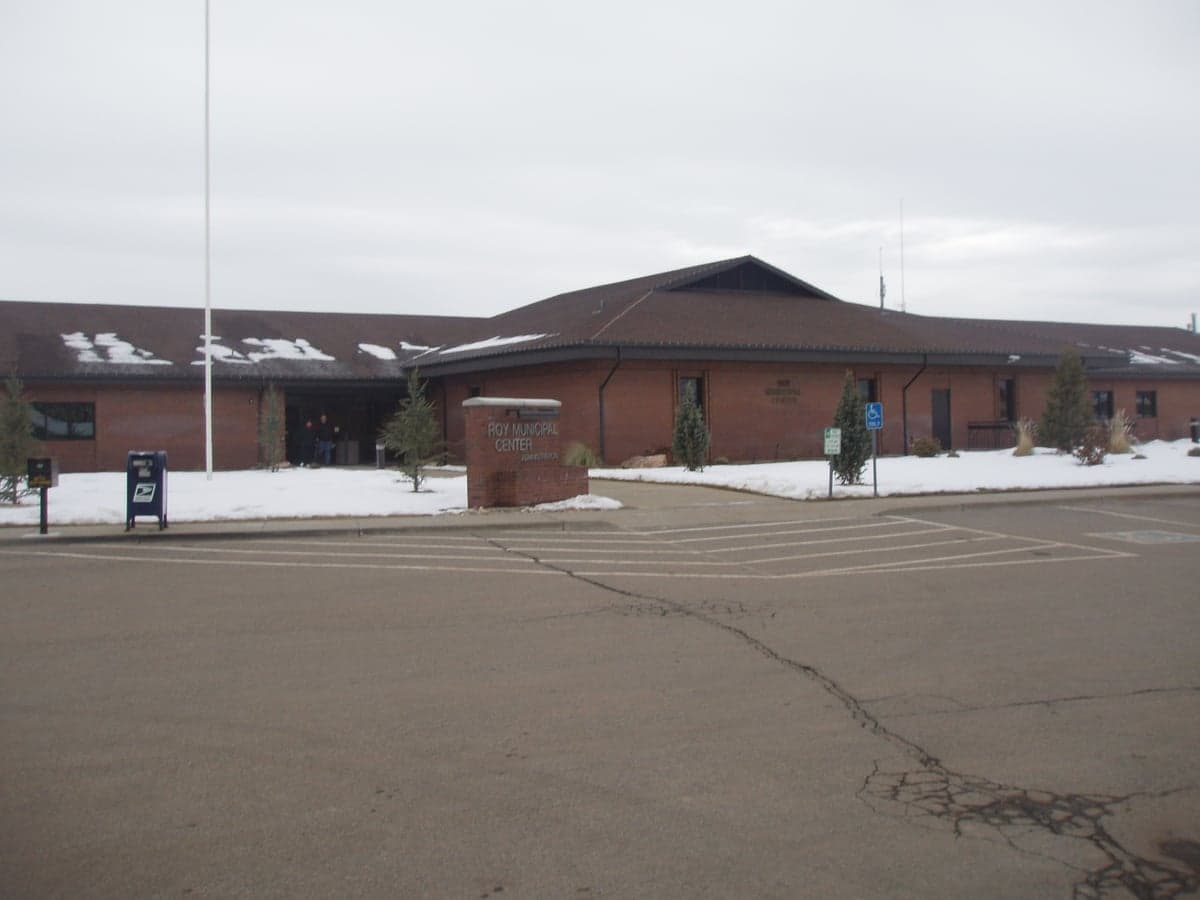
Photo: Wikipedia
Political ClimatePolitical Climate in Roy, UT
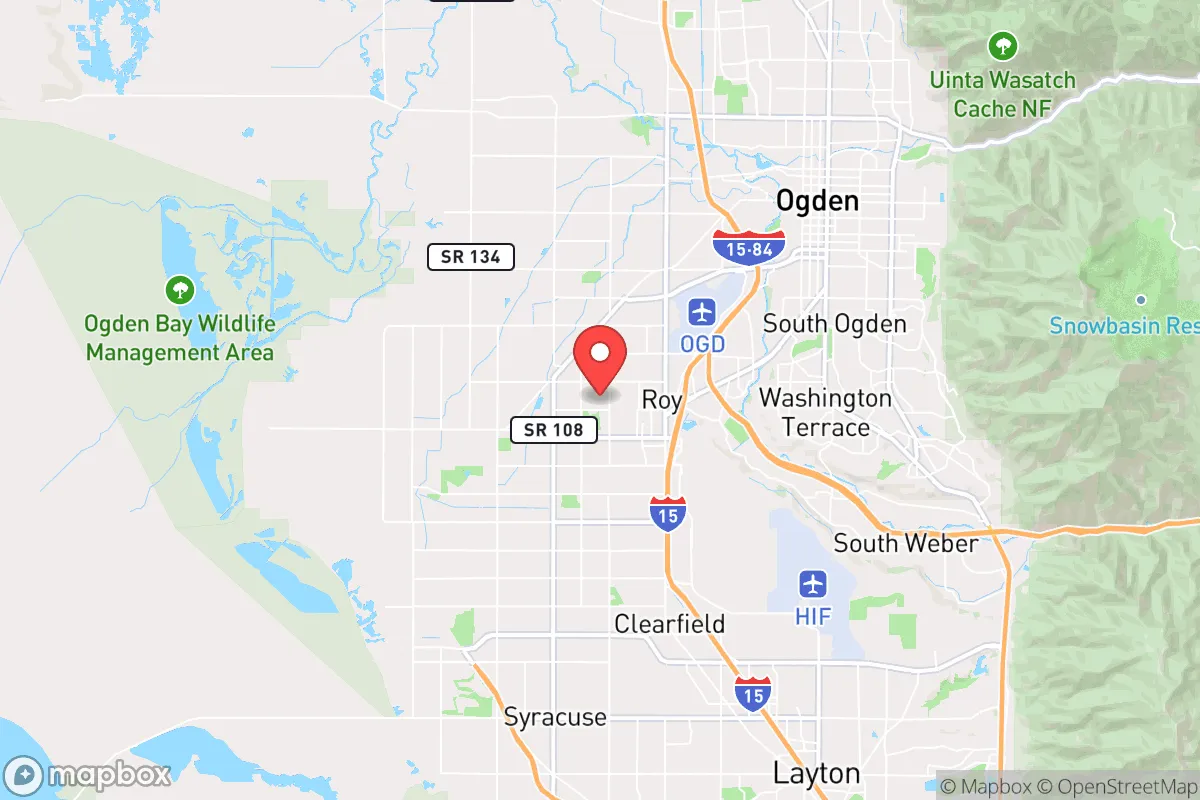
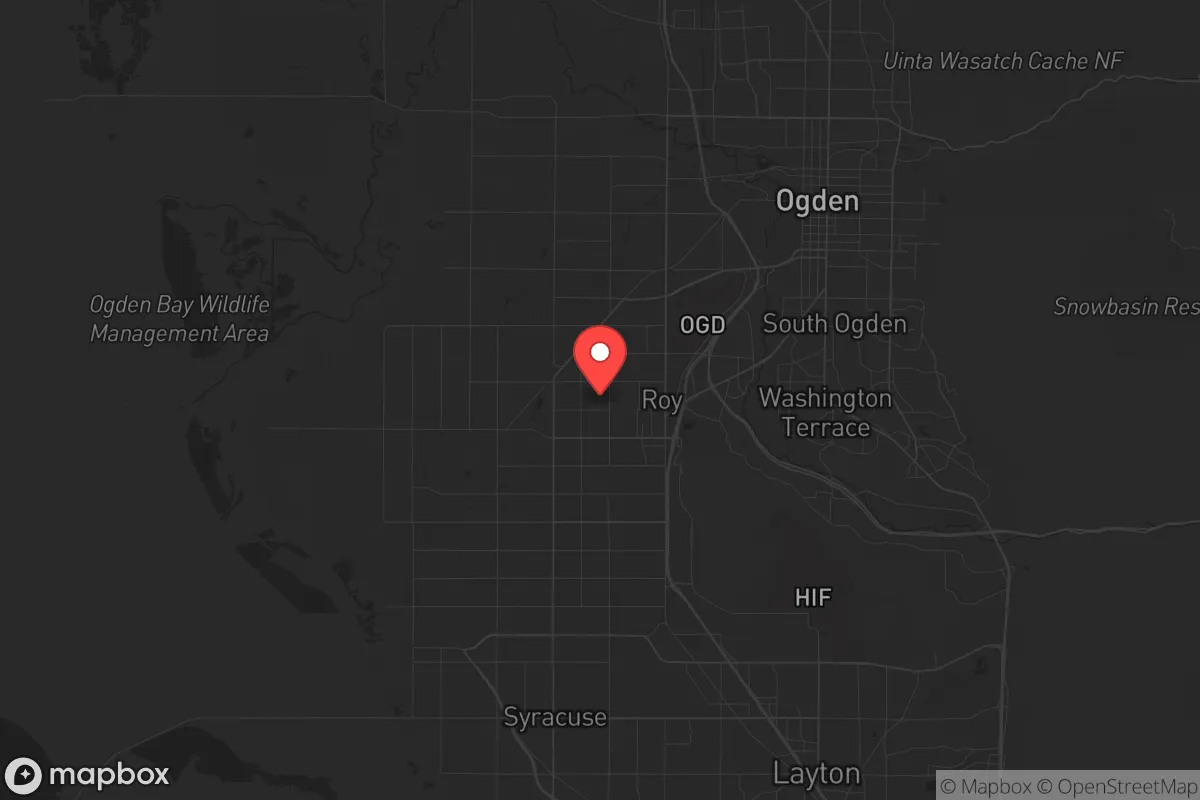
District shown is the primary district for this city’s centroid. Cities may span multiple districts.
Local Political AnalysisPolitical Analysis of Roy, UT
Roy, Utah, sits solidly in conservative territory, with a Cook PVI of R+10 that reflects a deep-rooted preference for limited government and personal responsibility. This isn't a place that's suddenly flipped; it's been reliably red for decades, and the local culture still prizes self-reliance over government handouts. That said, you can feel the subtle pressure from the Wasatch Front's growth—more people moving in from out of state, bringing ideas that don't always mesh with the old-school values folks here grew up with. The political lean is still overwhelmingly Republican, but the flavor of that conservatism is shifting, and not everyone is thrilled about it.
How it compares
Compared to nearby Ogden, which has a more mixed political vibe and a noticeable progressive streak in its downtown core, Roy feels like a different world. Ogden's city council has flirted with policies that feel like government overreach—think zoning restrictions and bike-lane mandates that tell people how to live—while Roy's leadership has generally kept a lighter touch. Head south to Salt Lake City, and the contrast is stark: that's a place where progressive ideology has taken a firm hold, with higher taxes and more regulations that can feel suffocating if you value personal freedoms. Roy, by contrast, is still a place where you can buy a decent-sized lot, park your truck in the driveway, and not have the city tell you what color to paint your fence. The surrounding Weber County leans conservative too, but Roy is one of the strongerholds, with a voting record that consistently backs candidates who talk about cutting red tape and protecting Second Amendment rights.
What this means for residents
For the people living here, the political climate means a government that mostly stays out of your business—at least for now. Property taxes are reasonable, and there's no city income tax, which is a big deal if you're trying to stretch a paycheck. The school board and city council tend to focus on practical stuff like road maintenance and public safety, not social experiments. But there's a growing unease among long-time residents about the direction things could go. As the area gets more crowded, there's pressure to adopt the kind of zoning and housing policies that have made places like Salt Lake City feel overregulated. The concern is that if progressive ideology creeps in—through state mandates or federal overreach—you'll start seeing more restrictions on everything from what you can build on your own property to how you can run a small business. That's the real worry: losing the freedom to live your life without a bureaucrat's permission.
Culturally, Roy still holds onto a few distinctions that set it apart. The annual Roy Days celebration is a low-key, family-friendly event that feels more like a neighborhood block party than a corporate-sponsored festival. There's a strong sense of community here, where people know their neighbors and look out for each other—something that's getting harder to find along the Wasatch Front. The local gun culture is alive and well, with a couple of well-regarded shooting ranges and a general attitude that self-defense is a personal right, not a government privilege. If you're looking for a place where the government doesn't try to micromanage your daily life, Roy still fits the bill. But keep an eye on the ballot box: the next few election cycles will tell you whether this town holds the line or starts drifting toward the kind of overreach that's already taken root in bigger cities nearby.

State Political ClimatePolitical Climate in Utah
State Political AnalysisPolitical Environment in the State
Utah is a deeply red state, with Republicans holding every statewide office and supermajorities in both legislative chambers, but the political climate is far more complex than a simple party label suggests. The state has voted Republican in every presidential election since 1968, with margins typically exceeding 20 points — Donald Trump won by 20.5% in 2024 — yet the dominant political culture is shaped by a unique blend of Mormon communitarianism, Western libertarian instincts, and a growing tension between the Wasatch Front’s booming urban corridor and the state’s rural hinterlands. Over the last 10-20 years, Utah has shifted from a reliably conservative but moderate state toward a more populist, freedom-oriented posture, though recent in-migration from California and other blue states is beginning to inject progressive energy into Salt Lake County and Summit County, creating the first real cracks in the GOP monolith.
Urban vs. rural divide
The political map of Utah is a study in contrasts. The Wasatch Front — Salt Lake City, Provo, and Ogden — contains roughly 80% of the state’s population and is where the real political action happens. Salt Lake County, once reliably red, has trended purple over the last decade; it voted for Joe Biden in 2020 by 11 points and for Kamala Harris in 2024 by a similar margin, driven by a surge of out-of-state transplants and younger, less religious voters. Provo and Utah County, by contrast, remain among the most conservative metropolitan areas in the nation, anchored by Brigham Young University and a dense LDS population that votes Republican at rates exceeding 80%. St. George in the southwest is another deep-red stronghold, growing fast with retirees and conservative families fleeing California. The rural counties — Duchesne, Uintah, San Juan, Beaver — routinely deliver 80-90% of their votes to GOP candidates, making them some of the most Republican jurisdictions in the country. The divide is not just urban vs. rural but also cultural: the Wasatch Front’s urban core is increasingly secular and diverse, while the rest of the state remains overwhelmingly LDS and culturally conservative.
Policy environment
Utah’s policy environment is broadly conservative but with a pragmatic, business-friendly twist that sometimes frustrates hardline libertarians. The state has a flat income tax rate of 4.65% (down from 5% in 2022) and a sales tax rate of 6.1%, with no inheritance or estate tax. Property taxes are low by national standards, though they vary by county. The regulatory posture is generally light-touch, especially for businesses, but the state has a history of aggressive land-use planning and water management that can feel intrusive to property-rights advocates. Education policy is a mixed bag: Utah spends less per pupil than almost any other state, but it also leads the nation in school choice, with robust charter school laws, a thriving homeschooling community, and a new universal school voucher program (HB 215, passed in 2023) that provides $8,000 per child for private or homeschool expenses. Healthcare policy is dominated by Intermountain Health, a nonprofit system that effectively functions as a quasi-public utility, keeping costs moderate but limiting competition. Election laws are solid: Utah has voter ID requirements, no-excuse mail-in voting (which conservatives have largely accepted as secure), and a nonpartisan redistricting commission that has kept gerrymandering to a minimum. The state also passed a constitutional carry law in 2021, allowing permitless concealed carry of firearms.
Trajectory & freedom
On balance, Utah has been moving in a more freedom-oriented direction over the last five years, but the trend is not uniform. The most significant expansion of personal liberty came with the 2021 permitless carry law (HB 60), which eliminated the requirement for a concealed carry permit and made Utah one of the most gun-friendly states in the West. Parental rights were strengthened in 2023 with HB 261, which prohibits school districts from withholding information about a child’s health or well-being from parents — a direct response to transgender accommodation policies in some districts. Medical autonomy took a hit in 2022 when the legislature passed a near-total abortion ban (triggered by Dobbs), with exceptions only for rape, incest, and maternal life; this was widely popular among conservatives but has drawn legal challenges and some backlash from libertarians who oppose government interference in medical decisions. On the taxation front, the 2022 income tax cut was a clear win for economic freedom, but property tax rates have crept upward in fast-growing counties like Utah and Washington, driven by rising valuations rather than rate increases. The biggest red flag for freedom-minded residents is the state’s aggressive water regulation: the Great Salt Lake crisis has prompted the legislature to impose strict water-use limits on homeowners and farmers, which some see as necessary but others view as government overreach into private property rights.
Civil unrest & political movements
Utah is not a hotbed of civil unrest, but it has seen its share of political flashpoints. The most visible in recent years has been the debate over transgender policies in schools, which erupted in 2022-2023 when the Salt Lake City School District adopted a policy allowing students to use preferred names and pronouns without parental consent. This sparked a wave of protests from conservative parents’ groups, culminating in the passage of HB 261 (the parental rights bill) and a ban on transgender athletes in K-12 sports (HB 11, 2022). Immigration politics are relatively muted compared to border states, but there is a growing tension between the state’s agricultural sector (which relies on migrant labor) and a vocal minority pushing for stricter enforcement; Utah has not passed a sanctuary city law, but Salt Lake City has declared itself a “welcoming city” and limits cooperation with ICE. Election integrity controversies have been minimal — Utah’s mail-in voting system is widely trusted across party lines — though a small group of activists in rural counties have called for hand-counting ballots, a proposal that has gone nowhere. The most organized political movement on the right is the Utah Patriot Coalition, which focuses on school board elections and local government transparency; on the left, the Utah Democratic Socialists of America have a small but active presence in Salt Lake City, organizing around housing and environmental issues. A new resident would notice that political activism is generally polite and low-key compared to states like Oregon or Colorado, but the temperature is rising, especially in the suburbs of Salt Lake County.
Projection
Over the next 5-10 years, Utah’s political climate will likely become more contested, but the state’s deep conservative roots will prevent a full flip. The key driver is demographic: the Wasatch Front is absorbing tens of thousands of new residents annually, many from California, Washington, and Colorado, and these transplants tend to be more secular, more educated, and more left-leaning than native Utahns. Salt Lake County will almost certainly become a permanent Democratic stronghold, and the suburbs of Draper, Sandy, and South Jordan — once solidly red — are showing signs of softening, with some precincts voting for Biden in 2020. However, the rural counties and Utah County will remain deeply red, and the state’s Republican supermajorities in the legislature are unlikely to be threatened for at least another decade. The bigger question is what kind of Republican Party emerges: the current leadership, dominated by the LDS church’s institutional influence, is moderate on immigration and environmental issues but hardline on social policy. A more populist, Trump-aligned faction is growing in the legislature, led by figures like Senator Mike Lee, and this could push the state toward more aggressive stances on immigration enforcement, election integrity, and federal overreach. For a conservative moving in now, the expectation should be that Utah will remain a safe haven for traditional values and economic freedom for the foreseeable future, but the Wasatch Front will become increasingly purple, and the culture wars will intensify in school boards and city councils.
For a new resident, the bottom line is that Utah offers one of the most stable and freedom-friendly environments in the country, especially if you value low taxes, strong gun rights, parental control over education, and a government that generally stays out of your business. The trade-off is that you’ll be living in a state where the LDS church still exerts significant cultural influence, where water restrictions are tightening, and where the urban corridor is becoming more politically diverse by the year. If you’re looking for a place where your conservative values are the norm and your personal liberties are respected, Utah is a strong bet — just don’t expect it to stay exactly the same for the next decade. The key is to choose your county wisely: stick with Utah County, Washington County, or the rural areas if you want the deepest red, or embrace the growing diversity of Salt Lake County if you prefer a more dynamic, if more contested, political environment.
* Values derived from national, state, county, city and local statistics and may differ in a specific area. Last updated: 2026-05-01T12:12:59.000Z
Narrative content on this page is AI-generated and may contain mistakes. Verify any details that matter before acting on them.
ReloMaps may earn a commission from affiliate links at no extra cost to you.

