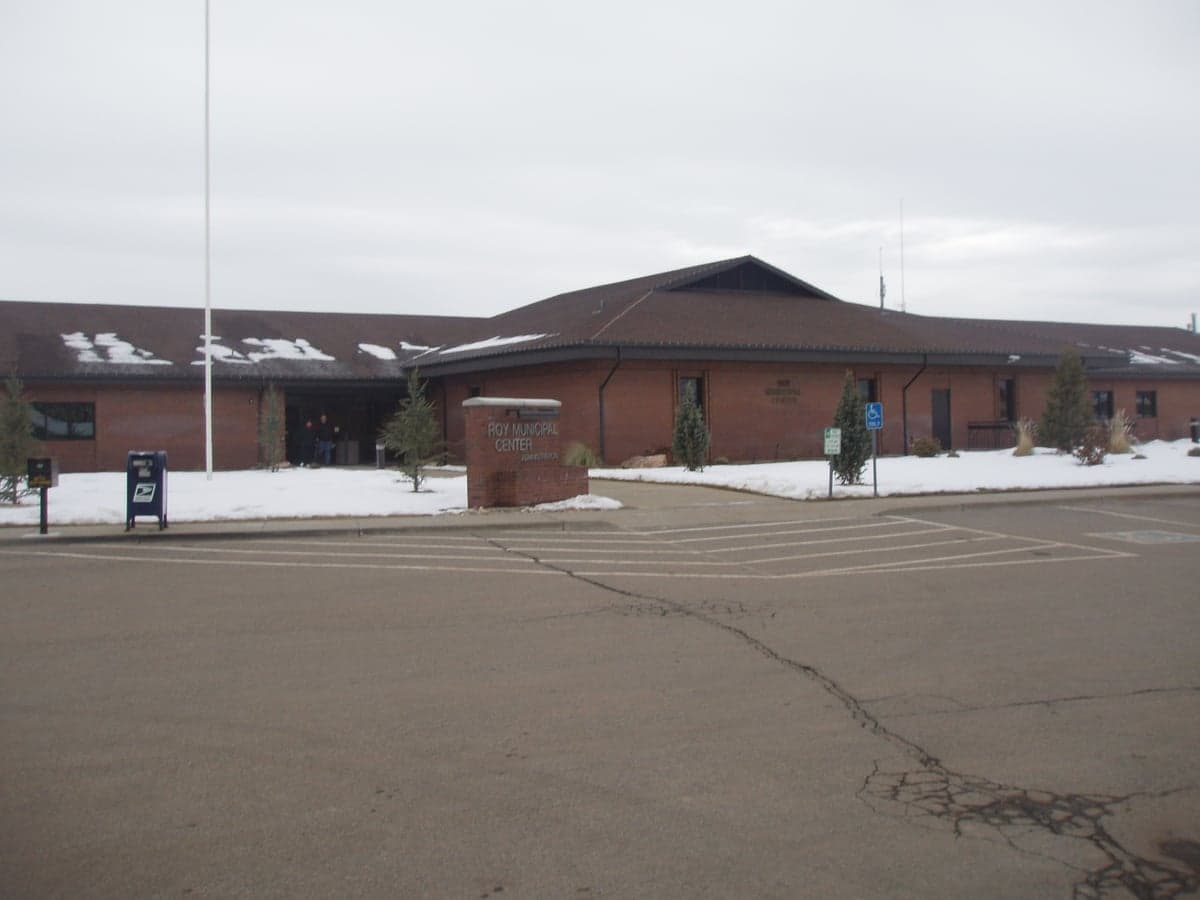
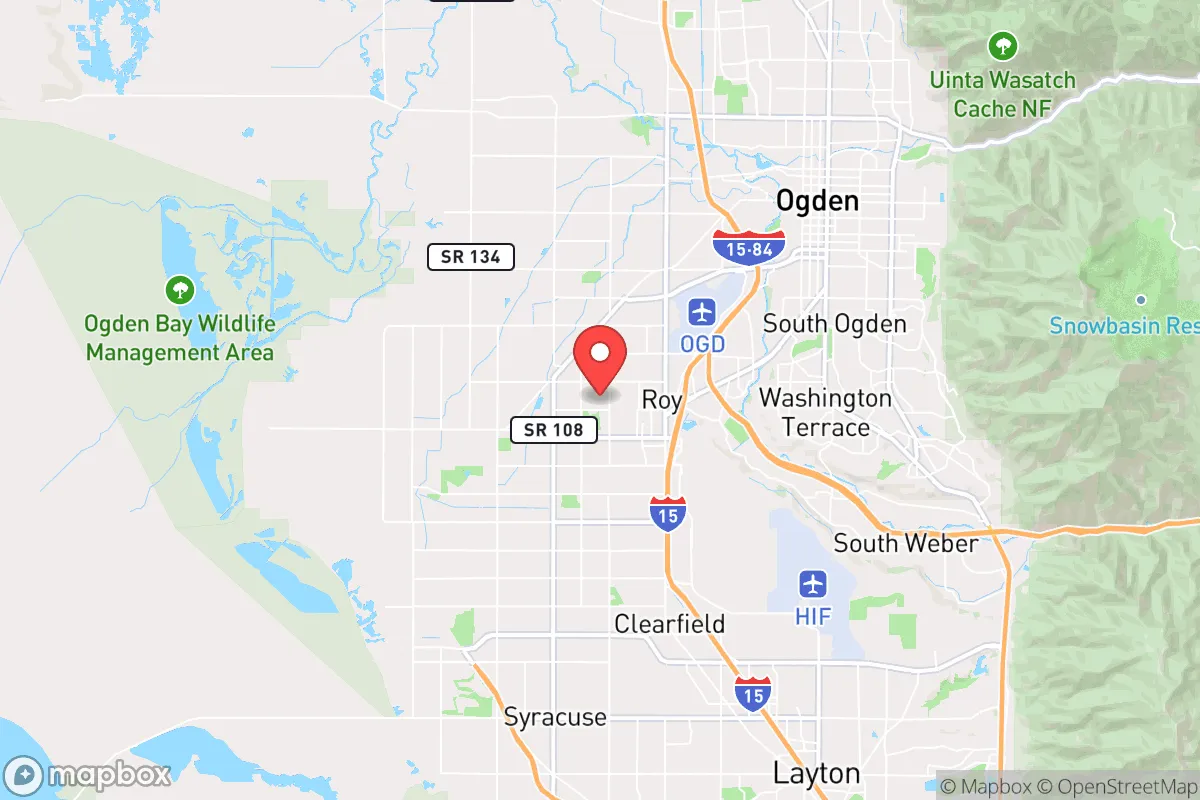
Photo: Wikipedia
Personal Sovereignty in Roy, UT
Viable for self-reliance. Generally workable, though some barriers may limit total independence.
What does Personal Sovereignty tell us?
Personal Sovereignty measures your capacity for self-reliance and independence with minimal government friction. Higher scores mean fewer barriers between you and the way you want to live... but it assumes you have the space you need and good neighbors.
What does this tell us?
Personal Sovereignty measures your capacity for self-reliance and independence with minimal government friction. Higher scores mean fewer barriers between you and the way you want to live... but it assumes you have the space you need and good neighbors.
State Policy
Energy independence: Self-sufficient (80% of energy produced in-state)
Personal Liberty
Homesteading

Personal Liberty Analysis
Roy, Utah, offers a notably high degree of personal sovereignty compared to many urban centers along the Wasatch Front, largely due to Utah’s strong state-level preemption laws and a local culture that prizes self-reliance. While it sits within the shadow of Hill Air Force Base and the greater Ogden metro area, Roy’s municipal governance tends toward a hands-off approach on personal lifestyle choices, though it is not a libertarian free-for-all. For the strategic relocator—especially those with a survivalist or prepper mindset—the key trade-off is between access to military-industrial infrastructure and the preservation of individual autonomy against creeping federal and state overreach. The environment here is one where you can largely live as you see fit, provided you respect property lines and noise ordinances, but you must remain vigilant about zoning and HOA restrictions that can quietly erode your freedom to use your land as you see fit.
Tax burden and regulatory posture: How Utah’s fiscal policies affect your autonomy
Utah’s tax structure is a net positive for personal sovereignty, with a flat 4.85% individual income tax and no state-level estate or inheritance tax. Roy itself adds a modest 1% local option sales tax on top of the state’s 4.85%, bringing the combined rate to around 6.85%—competitive with most of the West. Property taxes in Weber County average roughly 0.6% of assessed value, which is low by national standards and keeps the government’s claim on your real estate minimal. The regulatory posture in Roy is business-friendly but not lax: the city enforces standard building codes and requires permits for major construction, but there is no onerous business licensing regime for home-based enterprises. For the prepper, this means you can operate a small-scale side business—like welding, firearm repair, or food preservation—without drowning in red tape. However, Utah’s state-level sales tax on unprepared food (3%) is a minor irritant for those stockpiling supplies, and the state’s aggressive pursuit of sales tax on online purchases (via the 2018 Wayfair ruling) means your Amazon deliveries are tracked. Overall, the tax burden here supports a leaner government than in coastal states, but it is not a zero-tax haven—plan accordingly.
Self-defense and gun law specifics: What you can and cannot do in Roy
Utah is a constitutional carry state, meaning any law-abiding adult 21 or older can carry a concealed firearm without a permit—a major win for personal sovereignty. Roy does not impose any local restrictions beyond state law, so you can carry openly or concealed in most public spaces, including parks and city buildings that lack security checkpoints. The state’s preemption statute (Utah Code 53-5a-102) explicitly prohibits cities like Roy from enacting their own gun ordinances, so you won’t face the patchwork of local bans common in California or Colorado. For the survivalist, this is critical: your right to keep and bear arms is protected at the state level, and Roy’s police department generally respects that. Magazine capacity limits do not exist in Utah, and suppressors are legal with a federal tax stamp. Stand-your-ground laws are in effect, with no duty to retreat in any place you have a lawful right to be. The one caveat: Utah’s firearm purchase process includes a state background check through the BCI, even for private sales of handguns (long guns are exempt). This is a minor infringement compared to universal background check states, but it is worth noting for those who value absolute privacy in transactions. For the prepper, Roy’s proximity to federal land (the Wasatch-Cache National Forest is 30 minutes east) means you can train and shoot on public land without hassle, though you must follow BLM and Forest Service regulations on target shooting.
Self-reliance and homesteading viability: Lot sizes, zoning, and off-grid feasibility
Roy is a suburban city with predominantly small-to-medium lots—most residential parcels range from 0.15 to 0.35 acres, with a few larger tracts near the city’s northern edge. This limits large-scale homesteading: you cannot keep livestock like goats or chickens without a permit, and the city’s zoning code (Title 19) restricts agricultural uses to designated zones, which are scarce. For the serious prepper, this means Roy is better suited as a base for a “bug-in” strategy with stored supplies rather than a self-sufficient farm. Off-grid living is effectively illegal within city limits: Roy requires connection to municipal water and sewer, and solar panels must be grid-tied per the city’s building code. However, the surrounding unincorporated areas of Weber County—particularly west toward the Great Salt Lake or east into the foothills—offer larger parcels (1-5 acres) with fewer restrictions. There, you can install a septic system, drill a well, and set up off-grid solar with battery storage, though you must still comply with county health codes. The state’s “Right to Dry” law (Utah Code 57-13-1) protects your ability to hang clotheslines, but HOAs in Roy’s newer subdivisions often ban them—so if you value self-reliance, avoid any property with an active HOA. Water rights are a serious concern: Utah is the second-driest state, and the Weber River basin is fully appropriated. For the prepper, securing a property with a senior water right or a well permit is essential for long-term resilience, but expect to pay a premium for such parcels.
Personal liberties: Parental rights, medical autonomy, speech, and property
Utah is one of the strongest states for parental rights, with a 2023 law (HB 261) that prohibits schools from withholding information about a child’s health or well-being from parents—a direct counter to the “gender identity” secrecy policies seen in blue states. Roy’s school district (Weber School District) has been generally compliant, though parents should remain vigilant about curriculum transparency. Medical autonomy is a mixed bag: Utah has no state-level vaccine mandate for adults, and the 2023 ban on COVID-19 vaccine mandates for state employees (SB 200) signals a pro-choice stance on medical decisions. However, the state’s health department still enforces childhood vaccination requirements for school attendance, with only narrow religious exemptions (no philosophical exemption). For the prepper, this means you may need to homeschool or seek a private school to avoid mandatory vaccination schedules—a common workaround in the area. Free speech is robust under Utah’s constitution, and Roy has no local ordinances restricting political expression or assembly. Property rights are protected by Utah’s strong eminent domain laws (requiring “public use” and just compensation), but the city’s zoning board has broad discretion to deny permits for non-conforming uses—so if you want to build a bunker or a workshop, expect a fight. The state’s “Private Property Protection Act” (Utah Code 78B-8-201) allows you to sue local governments for regulatory takings, but this is a costly and time-consuming process. For the strategic relocator, Roy offers a baseline of liberty that is above the national average, but it is not a haven for those seeking to opt out of all government oversight.
In the broader context of the Intermountain West, Roy’s personal sovereignty profile is solid but not exceptional. It outperforms cities like Salt Lake City or Park City, where progressive city councils have imposed stricter regulations on firearms, land use, and parental rights. However, it lags behind rural Utah counties like Box Elder or Juab, where you can buy 20 acres for the price of a Roy townhouse and live with minimal government interference. For the prepper or survivalist, Roy is a strategic compromise: you get the job security of Hill Air Force Base, the tax advantages of a red state, and the legal protections of constitutional carry and parental rights, but you sacrifice the land and autonomy of a remote homestead. The key is to use Roy as a staging ground—a place to build income and networks—while keeping an eye on property in the surrounding unincorporated areas for your long-term retreat. If you value absolute sovereignty above all else, look further west or east; if you need a balance of liberty, infrastructure, and community, Roy is a solid bet in a nation where personal freedoms are increasingly under siege.

* Values derived from national, state, county, city and local statistics and may differ in a specific area. Last updated: 2026-05-01T12:12:59.000Z
Narrative content on this page is AI-generated and may contain mistakes. Verify any details that matter before acting on them.
ReloMaps may earn a commission from affiliate links at no extra cost to you.

