Demographics of Rugby, ND
Affluence Level in Rugby, ND
A below-average socioeconomic profile. Incomes, home values, and educational attainment trail the U.S., with higher poverty and unemployment.
People of Rugby, ND
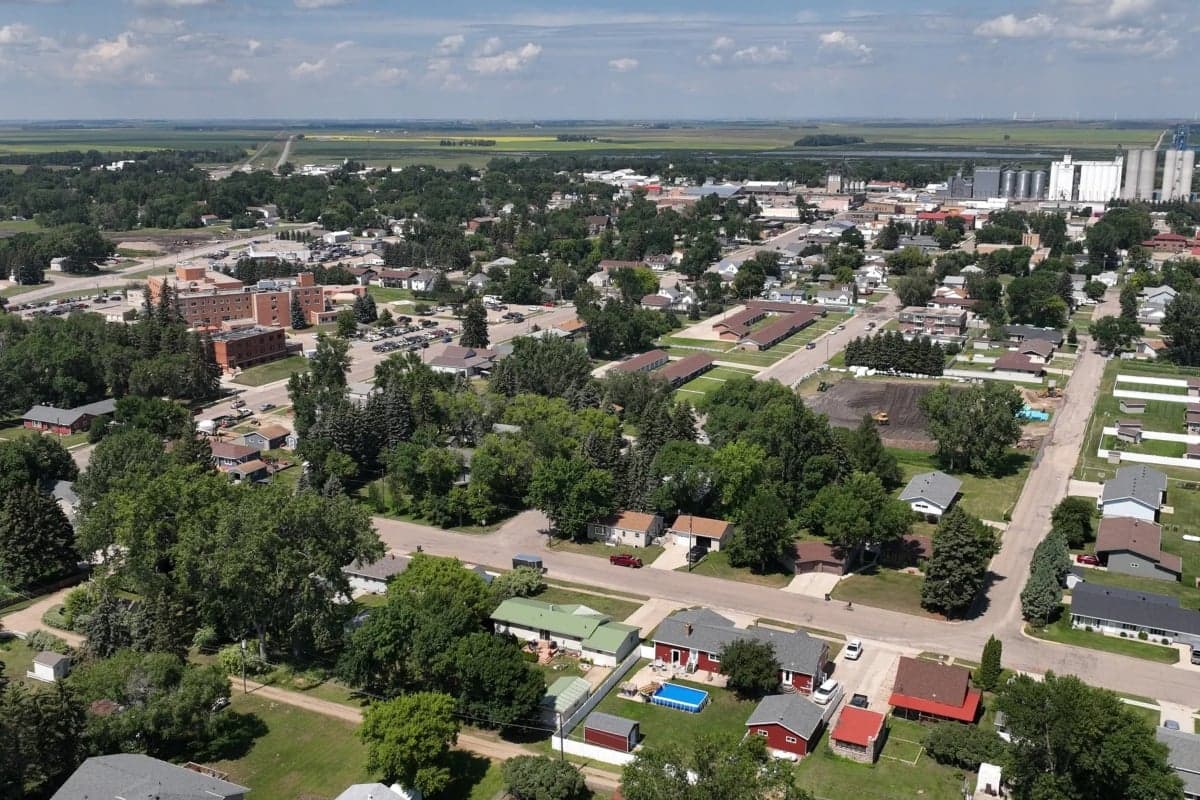
The people of Rugby, North Dakota today form a small, predominantly white community of 2,555 residents, characterized by a strong sense of local identity rooted in its agricultural and railroad history. With a 91.7% white population and a foreign-born rate of 0.0%, the city is one of the most ethnically homogeneous in the state, a fact that shapes its tight-knit, family-oriented social fabric. The population is notably older and less diverse than the national average, with 31.2% holding a college degree, reflecting a community where generational ties to the land and local businesses remain strong. Distinctive markers include a proud claim as the "Geographical Center of North America" and a local culture centered on high school sports, church, and agricultural fairs.
How the city was settled and grew
Rugby was founded in 1886 as a railroad town on the Great Northern Railway line, a strategic stop for transporting grain and livestock from the surrounding prairie. The original population was almost entirely composed of homesteaders of Northern European descent—primarily Norwegian, German, and Irish immigrants—who were drawn by the promise of 160-acre land grants under the Homestead Act. These early settlers built their homes in what is now known as the Original Townsite, a grid of streets centered around Main Avenue and the railroad depot. A second wave arrived in the early 1900s, including a smaller group of German-Russian families from the Black Sea region, who settled in the South Side neighborhood near the grain elevators, where they worked as laborers and tenant farmers. By 1910, the population had reached 1,200, and the city’s growth was fueled by the expansion of the Soo Line Railroad and the establishment of a creamery and a flour mill. The North End district, developed in the 1920s, became home to the children of these original homesteaders, who built modest frame houses on larger lots, reflecting the area’s slow, organic growth through the mid-20th century.
Modern era (post-1965)
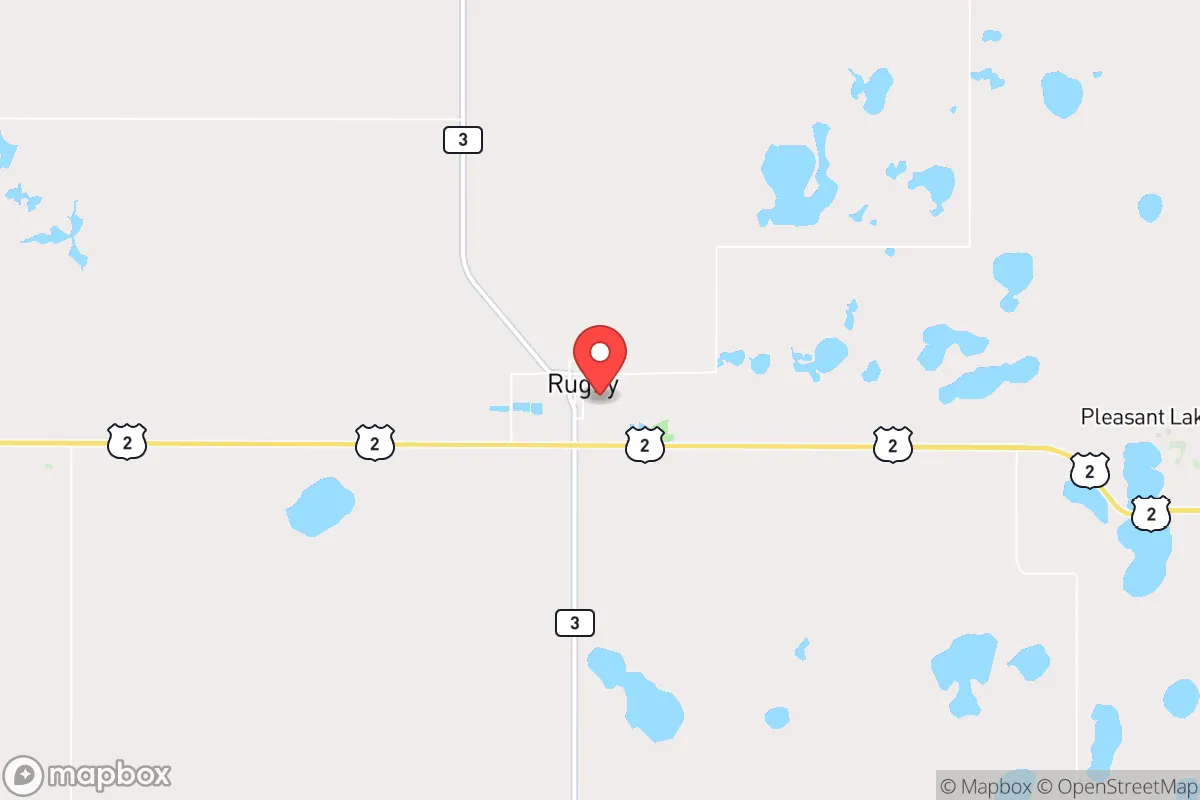
After the 1965 Immigration and Nationality Act, Rugby saw virtually no new immigration, a trend that continues today with a 0.0% foreign-born population. The post-1965 period instead saw a gradual out-migration of young adults seeking jobs in larger cities like Minot and Bismarck, leaving an aging population. The West Hill neighborhood, developed in the 1970s, absorbed some of the few new residents—mostly families moving from nearby farms into town for better schools and healthcare. The Eastwood Addition, a small subdivision built in the 1990s, attracted a handful of retirees and a few professionals working at the local hospital or the Rugby School District. No significant racial or ethnic shifts occurred; the Hispanic population remains at 0.9%, and the Black population at 0.4%, with these small numbers concentrated in rental properties along Highway 2 rather than in any distinct enclave. The Indian subcontinent population (0.4%) is almost entirely composed of a single family operating a motel, living in the Highway 2 Corridor area. The city’s demographic stability is a direct result of limited economic diversification—agriculture and the energy sector (oil field support) provide most jobs, but neither has attracted a diverse workforce.
The future
Rugby’s population is projected to continue a slow decline, mirroring trends across rural North Dakota. The city is not homogenizing further—it is already nearly as homogeneous as possible—but it is tribalizing into distinct age-based enclaves: the West Hill and Eastwood Addition neighborhoods are increasingly dominated by retirees, while the Original Townsite and South Side see younger families, though in shrinking numbers. The immigrant communities are not growing, plateauing, or assimilating because they are essentially nonexistent; the 0.0% foreign-born rate is unlikely to change without a major economic shift, such as a new meatpacking plant or a large-scale renewable energy project. The next 10-20 years will likely see the population fall below 2,000, with the remaining residents becoming even older and more dependent on healthcare services. The small Indian and Black populations are likely to remain static or leave, as there are no community institutions to sustain them.
For someone moving in now, Rugby is becoming a place where stability is both a strength and a limitation—a safe, predictable community with low crime and strong schools, but one with little demographic dynamism or cultural diversity. New residents will find a welcoming but insular environment, where fitting in means participating in local traditions and accepting a pace of life that has changed little in decades.

* Values derived from national, state, county, city and local statistics and may differ in a specific area. Last updated: 2026-04-19T06:13:42.000Z
Narrative content on this page is AI-generated and may contain mistakes. Verify any details that matter before acting on them.
ReloMaps may earn a commission from affiliate links at no extra cost to you.

