Quality of Life in Rugby, ND
A high quality of life with strong walkability, manageable living costs, healthy neighborhood signals, and solid amenity access.
What does Quality of Life tell us?
Quality of Life blends cost of living, nearby amenities, socioeconomic signals, and neighborhood character. City-level scores represent the whole municipality; individual neighborhoods can differ.
What does this tell us?
Quality of Life blends cost of living, nearby amenities, socioeconomic signals, and neighborhood character. City-level scores represent the whole municipality; individual neighborhoods can differ.
Cost of Living
36% below national average
The Real Cost of Living in Rugby, ND for 2026
| Tier | Individual | Family (4) |
|---|---|---|
| Survival | $13k | $25k |
| Comfortable | $29k | $42k |
| Luxury | $91k+ | $142k+ |
| Elite (Top 5%) | $111k+ | $172k+ |
120%
The Area Signal
A metric tracking the socioeconomic signals of the area.


Hobbies
Explore the areaGroceries
3 within 10 miles
Gas
0 within 10 miles
Hospital
1 within 20 miles
Airport
JFK — John F. Kennedy Memorial
Post Office
USPS — Rugby, ND
Critical Amenities
Quality-of-Life Analysis
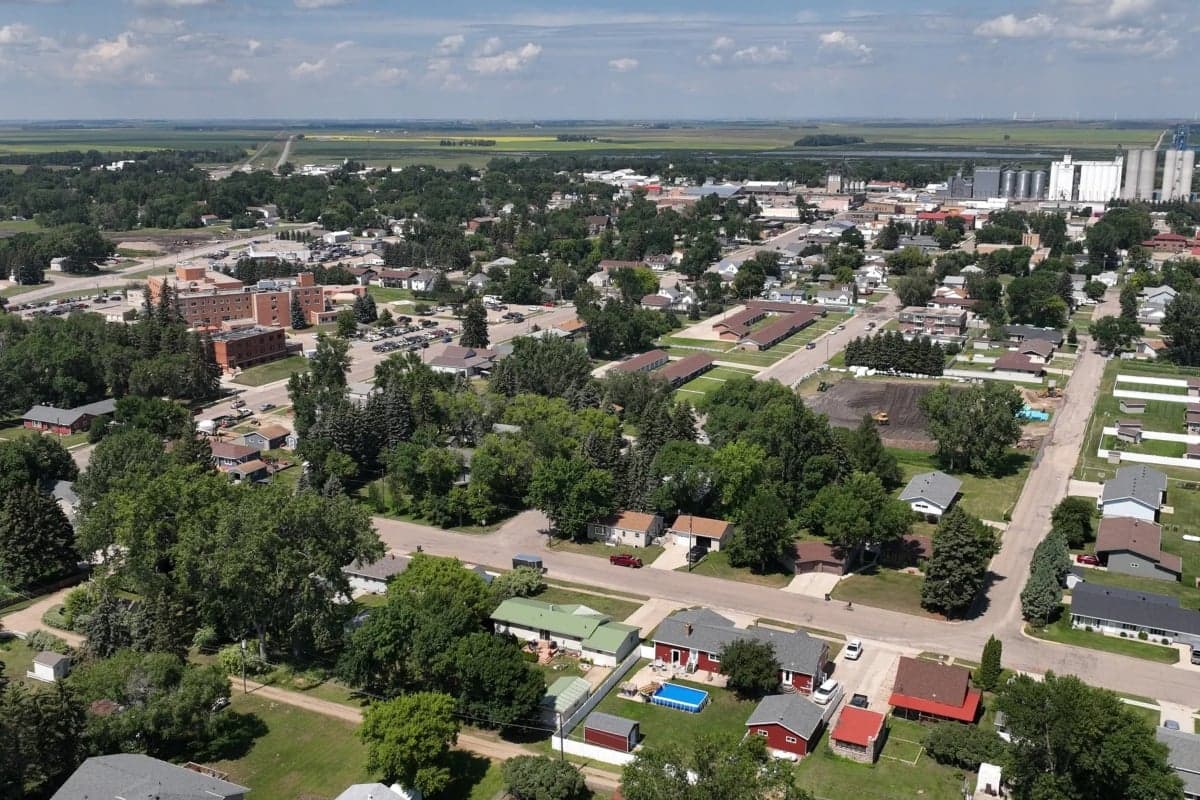
Rugby, North Dakota, presents a notably affordable quality of life, with a cost of living index of 64—well below the U.S. average of 100—making it one of the most budget-friendly communities in the state. The area is characterized by a mix of long-time farming families, energy-sector workers, and retirees drawn to its low housing costs and quiet, rural pace. Median home values sit at $147,800, and median rent is just $829, figures that are roughly half of what one would pay in larger North Dakota cities like Bismarck or Fargo.
Cost of living, housing, and affordability compared to nearby areas
Housing in Rugby is the primary driver of its low cost of living. With a median home value of $147,800 and median rent of $829, homeownership is accessible even for single-income households or those on fixed retirement budgets. This contrasts sharply with the state’s oil-boom towns like Williston, where median home values exceed $300,000, or even Minot, where prices hover around $220,000. The average commute in Rugby is just 18 minutes, reflecting the town’s compact layout and minimal traffic congestion—a significant quality-of-life advantage over larger metro areas where commutes often exceed 30 minutes. Property taxes in Pierce County are moderate, and overall utility costs are lower than national averages, further stretching household budgets.
Local amenities, schools, and daily-life rhythm
Daily life in Rugby revolves around a small-town schedule. The town’s public schools—Rugby High School and Ely Elementary—serve roughly 700 students combined, with student-teacher ratios around 12:1, allowing for personalized attention. The local hospital, CHI St. Alexius Health Rugby, provides emergency and primary care, though specialist visits often require a 90-minute drive to Minot. Grocery shopping is handled by a single full-service supermarket, and dining options include a handful of family-owned cafes and a popular pizza place. For recreation, the Prairie Village Museum and the nearby Rugby City Park offer walking trails and seasonal events. The town’s claim to fame as the “Geographical Center of North America” draws occasional tourists, but the daily rhythm is quiet: residents rely on Minot for major shopping, entertainment, and air travel (via Minot International Airport). Internet access is improving, with fiber-optic service available in parts of town, though speeds remain below urban standards.
Rugby is best suited for those who value low costs, short commutes, and a close-knit community over urban amenities. Retirees on fixed incomes, remote workers seeking a low-overhead base, and families wanting affordable homeownership will find the math compelling. However, the trade-offs are real: limited job diversity (the largest employers are the school district, the hospital, and local agriculture), sparse entertainment options, and harsh winters with average January highs around 16°F. For someone who prioritizes financial breathing room and a slower pace, Rugby offers a stable, low-stress foundation—provided they are comfortable with the isolation and weather that define life in north-central North Dakota.

Crime in Rugby, ND
Lower crime rates than 93% of comparable U.S. locations.
Violent CrimeViolent Crime Analysis
Property CrimeProperty Crime Analysis
Crime Analysis
Rugby, North Dakota, presents a notably safe environment compared to national benchmarks, with violent crime rates significantly below the U.S. average. The town's overall safety profile is bolstered by its small-town character and low population density, though property crime rates warrant attention from prospective residents. As a community in a conservative-leaning state, Rugby benefits from a justice system that prioritizes public safety and accountability, avoiding the progressive prosecutorial policies that have contributed to rising crime in larger metropolitan areas.
Crime in context
Rugby's violent crime rate of 41.6 incidents per 100,000 residents is dramatically lower than the national average of roughly 380 per 100,000, placing it among the safest communities in the country for personal safety. Property crime, however, stands at 541 per 100,000, which is slightly below the national average of approximately 1,950 per 100,000 but higher than the North Dakota state average of around 1,700 per 100,000. This disparity suggests that while violent offenses like assault and robbery are rare, theft and burglary occur at a moderate frequency for a rural community. The state's legal environment, which emphasizes law enforcement support and victim rights rather than lenient sentencing, helps maintain these low violent crime figures.
What residents experience
Daily life in Rugby is characterized by a strong sense of security, with most residents reporting little concern about becoming victims of violent crime. The town's small population—around 2,900 people—means neighbors know one another, and police response times are typically quick. Property crime, such as vehicle break-ins or shed burglaries, is the more common concern, often tied to transient populations or seasonal workers. Unlike large metro areas where progressive district attorneys may deprioritize property offenses, Rugby's local justice system treats such crimes seriously, ensuring offenders face consequences that deter repeat behavior. This approach directly contributes to a safer community for families and businesses.
Neighborhood-level variation
Crime in Rugby is relatively evenly distributed across the town, with no single neighborhood experiencing significantly higher rates than others. The downtown core and areas near U.S. Highway 2 see slightly more property crime due to easier access for non-residents, while residential streets on the outskirts report near-zero violent incidents. For those moving from larger cities, Rugby's consistent safety across all blocks is a stark contrast to urban areas where progressive policies have created dangerous pockets of crime. Prospective residents can expect a uniformly low-risk environment, with the understanding that rural property crime—though manageable—requires standard precautions like locking vehicles and securing outbuildings.
* Values derived from national, state, county, city and local statistics and may differ in a specific area. Last updated: 2026-04-19T06:13:42.000Z
Narrative content on this page is AI-generated and may contain mistakes. Verify any details that matter before acting on them.
ReloMaps may earn a commission from affiliate links at no extra cost to you.

