Political ClimatePolitical Climate in Rugby, ND
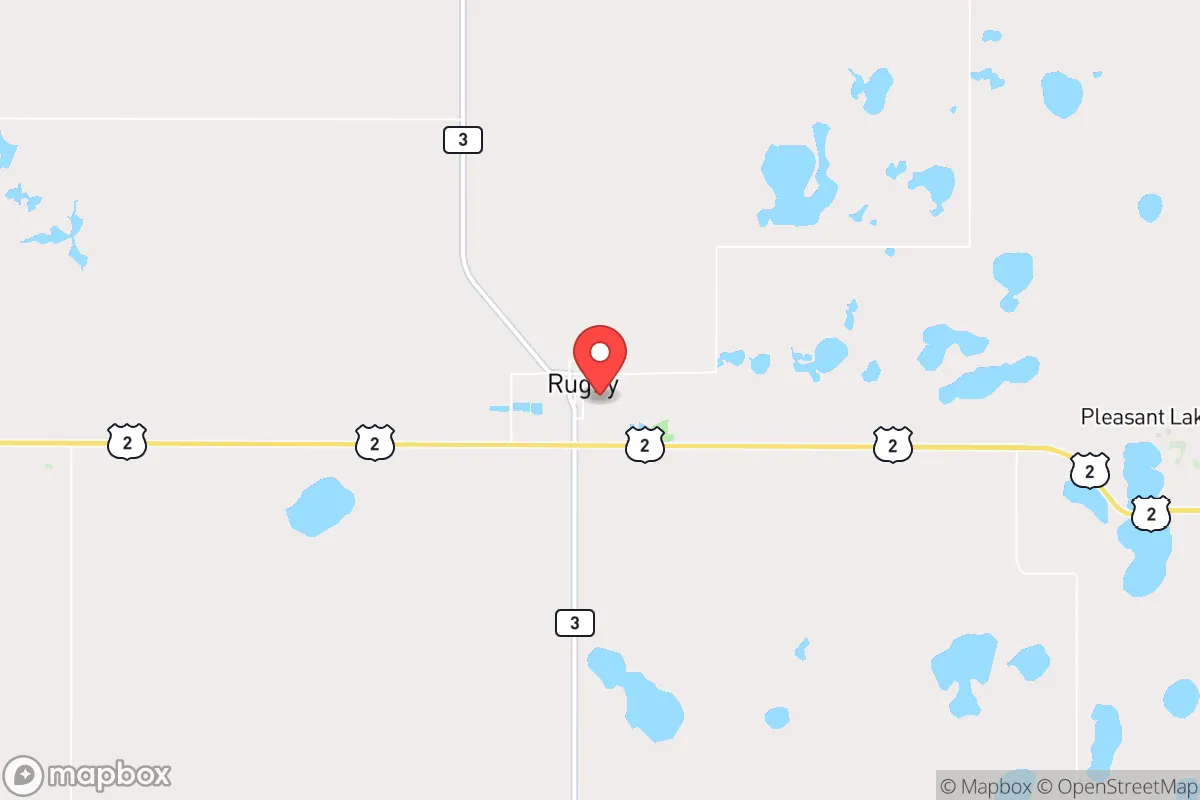
District shown is the primary district for this city’s centroid. Cities may span multiple districts.
Inherited from parent state — no local data available.
Local Political AnalysisPolitical Analysis of Rugby, ND
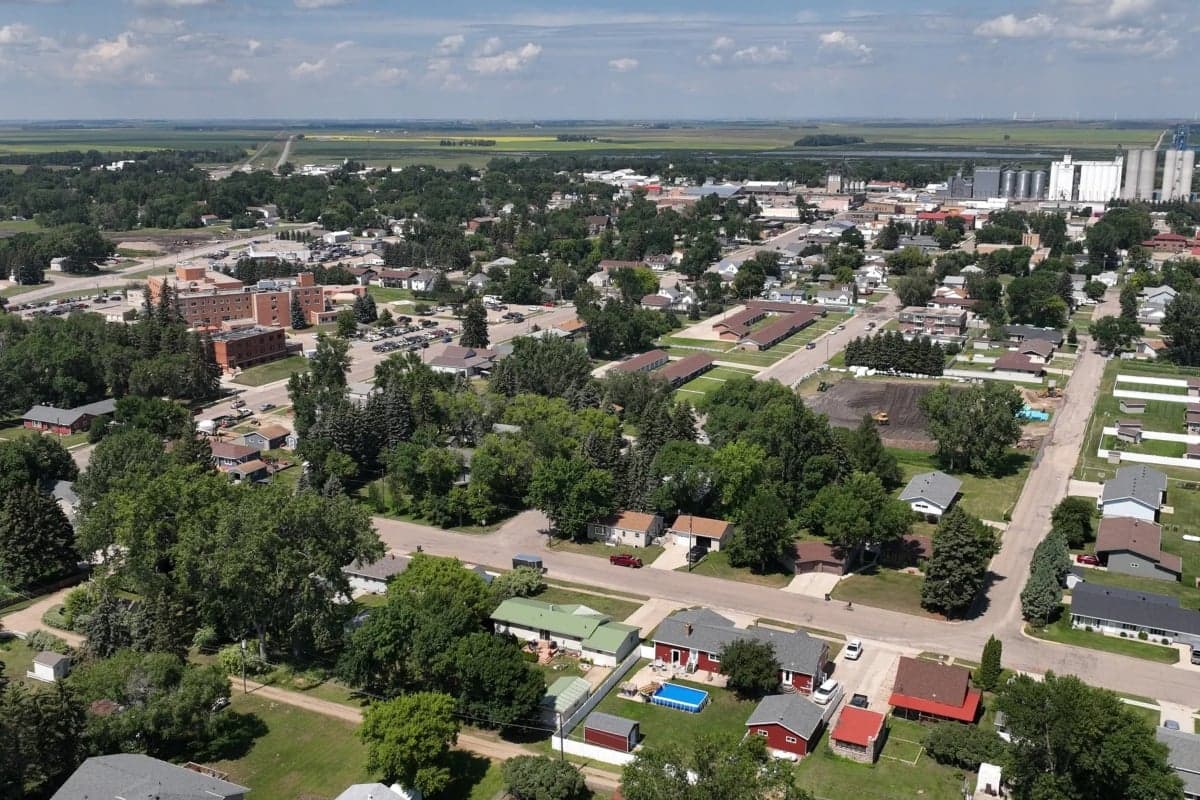
Rugby, North Dakota, is about as solidly conservative as it gets, and that's not just talk—the Cook PVI of R+18 puts it in the top tier of Republican-leaning areas in the state. For decades, this town has been a place where folks pretty much agree that government should stay out of your business, your family, and your paycheck. The political lean here isn't just about voting patterns; it's woven into daily life, from the local school board to the county commission. You don't see the kind of progressive drift that's creeping into places like Minot or even some parts of Bismarck—Rugby has held the line, and most residents aim to keep it that way.
How it compares
When you look at the surrounding area, Rugby stands out as a conservative anchor. Head south to towns like Harvey or even up to Rolla, and you'll find similar values, but the political intensity isn't quite the same. The real contrast is with cities like Grand Forks or Fargo, where you start seeing more mixed results—some precincts there have flipped or are trending left, especially among younger voters. Rugby, though, remains reliably red. The R+18 rating isn't just a number; it means that in a typical election, Republicans here win by a margin that's 18 points higher than the national average. That's a big deal when you consider how many rural areas are seeing their political influence shrink. For a long-time resident, it's reassuring to know that the local representatives—whether in the state legislature or on the county board—still prioritize things like property rights, gun ownership, and keeping taxes low, without the kind of overreach you hear about in more progressive states.
What this means for residents
For someone living in Rugby, the political climate translates into a pretty straightforward daily experience. You're not going to run into the kind of government mandates or social experiments that have popped up in places like Minneapolis or even some parts of the West Coast. The local schools, for instance, still focus on core academics and don't push the kind of ideological curriculum that's become common elsewhere. There's a strong sense that personal freedoms—like deciding how to raise your kids, what to do with your land, or whether to wear a mask—are respected. That said, there's a quiet concern among folks I've talked to that the pressure from outside is growing. You see it in the occasional push from state-level bureaucrats or federal grants that come with strings attached. The worry is that if we're not careful, those small shifts could start to erode the independence that makes Rugby work. It's not alarmist—it's just the kind of vigilance that comes from watching other towns lose their character.
Culturally, Rugby has a few distinct markers that set it apart. The town is known as the geographical center of North America, and that sense of being a hub—but a conservative one—shapes local policy. There's a strong emphasis on self-reliance, and you see it in everything from the local co-ops to the way people handle winter storms without expecting a government handout. The biggest policy distinction is probably the approach to land use and energy. Rugby sits in an area where agriculture and oil are big, and the local government tends to side with property owners over regulators. That means fewer zoning headaches and more freedom to develop or lease your land as you see fit. For anyone considering a move here, the bottom line is simple: if you value a community that still believes in personal responsibility and limited government, you'll fit right in. If you're looking for a place that's shifting toward progressive ideals, you might want to keep driving.

State Political ClimatePolitical Climate in North Dakota
State Political AnalysisPolitical Environment in the State
North Dakota remains one of the most reliably Republican states in the nation, with a partisan lean of roughly +20 points in federal elections over the past decade, but the picture is more nuanced than a simple red-state label suggests. The dominant coalition is a mix of rural agricultural conservatives, energy-sector workers from the Bakken oil patch, and a growing number of fiscally conservative transplants fleeing higher-tax states, though a notable progressive pocket persists in the state’s largest city, Fargo. Over the last 20 years, the state has shifted rightward on cultural issues while maintaining a pragmatic, low-tax posture, but recent in-migration and a younger demographic in the eastern corridor are beginning to introduce subtle tensions that long-time residents are watching closely.
Urban vs. rural divide
The political map of North Dakota is a textbook case of the urban-rural split, but with a twist. The eastern third of the state, anchored by Fargo (Cass County) and Grand Forks (Grand Forks County), is the only region where Democrats can consistently compete. Cass County voted for Joe Biden in 2020 by a slim margin, and Grand Forks County has flipped between parties in recent presidential cycles, driven largely by the University of North Dakota’s faculty and student population. In contrast, the rest of the state is deeply red. Williston and Watford City in the oil-rich Bakken region vote Republican by margins exceeding 70%, fueled by a transient workforce that prioritizes energy-friendly policies and low taxes. The rural counties along the Missouri River, like Mercer County and McLean County, are among the most conservative in the nation, with GOP vote shares often above 80%. The divide is stark: Fargo’s suburbs, such as West Fargo and Horace, are trending more moderate as new arrivals from Minnesota and California bring different sensibilities, while the small towns and farm communities remain rock-ribbed Republican. A new resident moving to Bismarck or Mandan will find a reliably conservative environment, but one that is less culturally intense than the oil patch and more focused on state government and healthcare employment.
Policy environment
North Dakota’s policy environment is a conservative’s dream on paper, but with some practical wrinkles. The state has no personal income tax (a flat rate was eliminated in phases through 2023), and property taxes are among the lowest in the nation, though local levies can vary significantly. The regulatory posture is business-friendly, particularly for energy and agriculture, with the state’s Industrial Commission actively promoting oil and gas development. Education policy is largely local, with school choice limited to a handful of private and religious options, though homeschooling is widely accepted and lightly regulated. Healthcare is a mixed bag: the state expanded Medicaid under the Affordable Care Act in 2013, a decision that still rankles some conservatives, but the system remains dominated by a few large providers like Sanford Health and Essentia Health. Election laws are among the most secure in the country, with voter ID requirements in place and no-excuse absentee voting available, though mail-in balloting is not universal. The state legislature, controlled by a supermajority of Republicans, has consistently passed pro-life legislation, including a near-total abortion ban triggered by the Dobbs decision, and has resisted efforts to legalize recreational marijuana despite voter initiatives. For a conservative relocating here, the policy environment is largely aligned with traditional values, but the Medicaid expansion and the lack of a robust school choice system are points of friction for some.
Trajectory & freedom
North Dakota has been on a trajectory of expanding personal freedom in several key areas over the past five years, but recent legislation has introduced some concerning trends. On the positive side, the state passed a constitutional carry law in 2017, allowing law-abiding residents to carry a concealed firearm without a permit, and has resisted federal overreach on gun control. Parental rights were strengthened with the 2023 passage of a bill requiring schools to notify parents of any curriculum involving human sexuality, and the state has been a leader in protecting medical freedom, with a 2021 law prohibiting vaccine passports and a 2023 ban on COVID-19 vaccine mandates for state employees. Property rights are robust, with the state’s “takings” laws providing strong protections against eminent domain abuse. However, the state’s tax burden has crept upward in recent years, with a 2023 increase in the gas tax and a new sales tax on digital goods, which some conservatives view as a step backward. The most concerning trend for freedom advocates is the state’s growing reliance on federal funds, which now account for over 40% of the state budget, creating a vulnerability to federal strings. On balance, North Dakota remains one of the freest states in the union, but the trajectory is not uniformly positive, and residents should watch for further tax increases and federal entanglement.
Civil unrest & political movements
North Dakota has a relatively low level of civil unrest compared to many states, but it has been the site of one of the most significant political flashpoints in recent American history: the Dakota Access Pipeline protests near the Standing Rock Reservation in 2016-2017. That event drew thousands of activists from across the country, leading to clashes with law enforcement and a lasting cultural divide between the state’s conservative majority and the progressive activist community. Since then, the state has seen sporadic protests over issues like abortion rights and police reform, but they have been small and localized. The immigration politics are relatively quiet, with the state’s foreign-born population remaining low (around 4%), though there has been some tension in the oil patch over the use of H-2B visa workers. Election integrity has been a hot topic, with the state’s Republican Secretary of State, Michael Howe, implementing strict voter ID laws and conducting a controversial purge of inactive voters in 2023, which drew lawsuits from left-leaning groups. There is no significant secession or nullification movement, though some rural counties have passed symbolic resolutions asserting local control over federal lands. A new resident is unlikely to encounter visible political conflict in daily life, but the legacy of the pipeline protests still lingers in the state’s political discourse, particularly in the western counties.
Projection
Over the next 5-10 years, North Dakota is likely to remain a reliably conservative state, but the demographic shift driven by in-migration from blue states will gradually moderate its politics. The eastern corridor, particularly the Fargo metro area, is growing faster than the rest of the state, and these new residents tend to be more culturally moderate and less engaged with traditional rural issues. The oil patch, meanwhile, is facing a long-term decline in production as global energy markets shift, which could reduce the political influence of the western counties. The state’s aging population is another factor: the median age is over 40, and younger residents are leaving for opportunities elsewhere, which could lead to a more conservative, but also more stagnant, political environment. On the policy front, expect continued battles over school choice, with a push for education savings accounts likely to gain traction, and ongoing debates over property tax relief. The biggest wildcard is the state’s fiscal dependence on federal funds, which could become a flashpoint if the federal government imposes new conditions on aid. For someone moving in now, the state will likely be a safe haven for conservative values for at least the next decade, but the cultural and political landscape will slowly evolve toward a more suburban, less agrarian conservatism.
For a conservative individual or family considering relocation, North Dakota offers a high degree of alignment with traditional values, low taxes, and a strong sense of community, but it is not without its trade-offs. The winters are brutal, the population is sparse, and the cultural amenities are limited compared to larger states. However, if you value personal freedom, a pro-business environment, and a government that largely stays out of your life, this is one of the best places in the country to plant roots. Just be prepared for the cold—and for the fact that your new neighbors will likely know your business before you’ve finished unpacking.
* Values derived from national, state, county, city and local statistics and may differ in a specific area. Last updated: 2026-04-19T06:13:42.000Z
Narrative content on this page is AI-generated and may contain mistakes. Verify any details that matter before acting on them.
ReloMaps may earn a commission from affiliate links at no extra cost to you.

