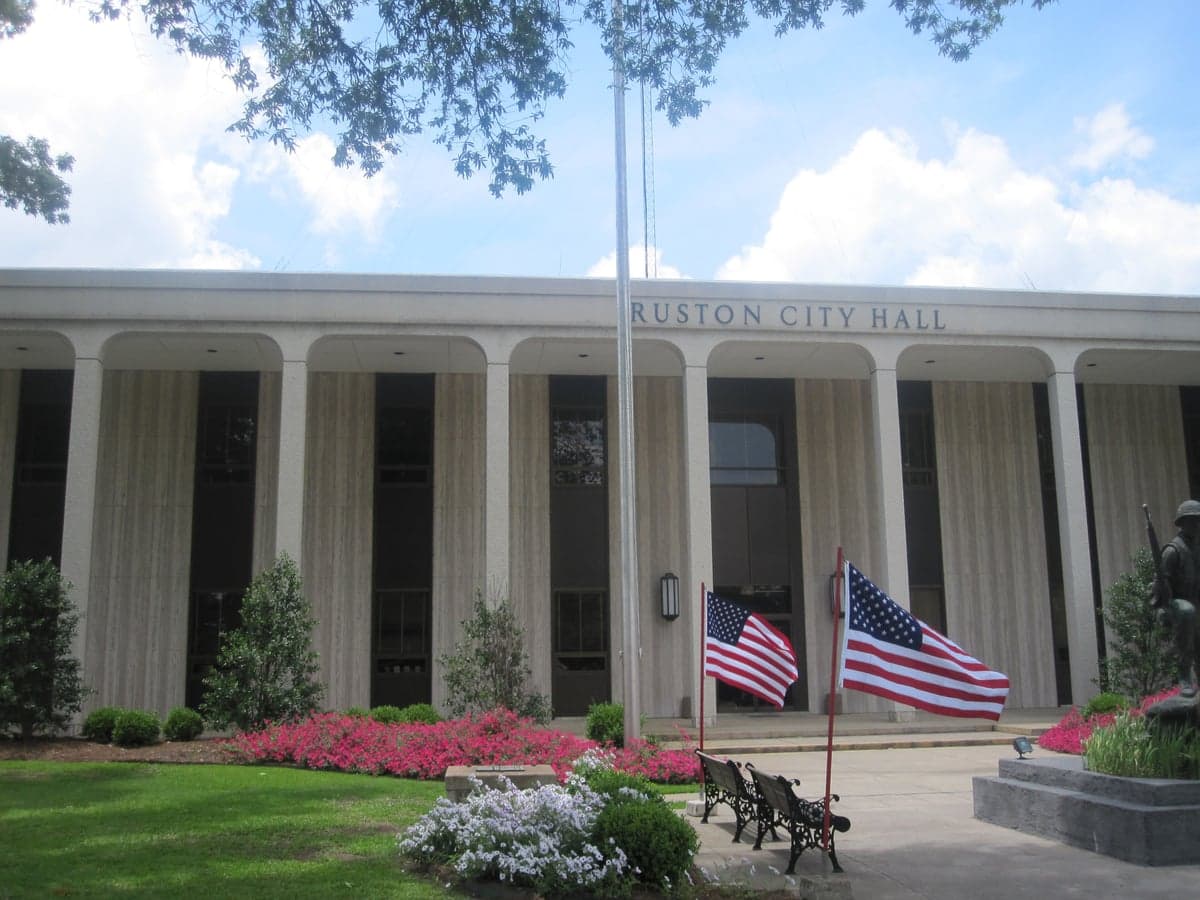
Photo: Wikipedia
Political ClimatePolitical Climate in Ruston, LA
District shown is the primary district for this city’s centroid. Cities may span multiple districts.
Local Political AnalysisPolitical Analysis of Ruston, LA
Ruston, Louisiana, sits deep in a reliably conservative corner of the state, with a Cook Partisan Voting Index of R+26 that tells you pretty much everything you need to know about the area’s political DNA. That number isn’t just a statistic—it reflects a community where traditional values, limited government, and personal responsibility are still the default setting for most folks. If you’ve been around here long enough, you’ve watched the national trends creep in, but Ruston has held its ground better than a lot of places, and that’s something worth paying attention to if you’re thinking about relocating.
How it compares
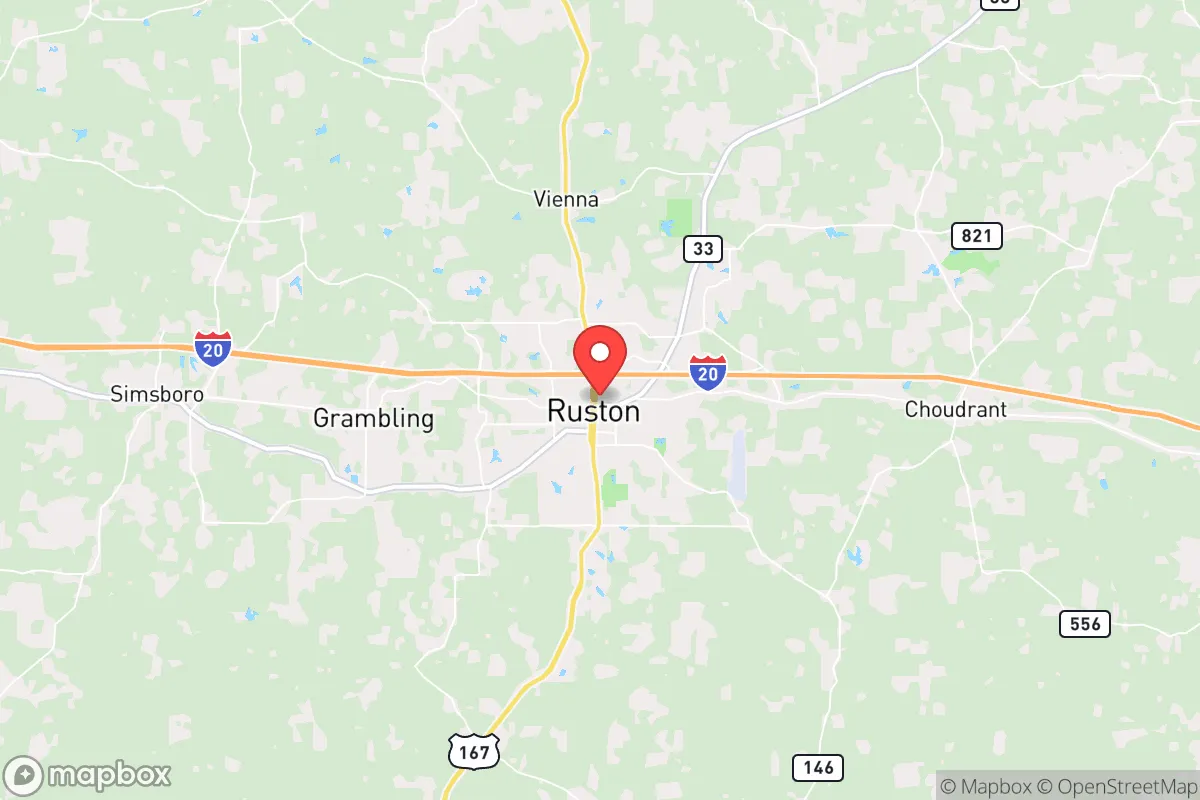
Drive thirty minutes south to Monroe, and you’ll find a similar conservative tilt, though Monroe’s urban core tends to vote a bit more blue, especially in precincts near the University of Louisiana at Monroe. Head west toward Shreveport, and the contrast gets sharper—Shreveport’s city council and mayor’s office have leaned progressive in recent years, with policies on zoning, policing, and spending that would raise eyebrows in Ruston. Even closer, Grambling, just a few miles down I-20, is a historically Black university town that votes reliably Democratic, so you get a real microcosm of Louisiana’s political diversity right here in Lincoln Parish. But Ruston itself? It’s the anchor of the region’s conservative base, and that’s held steady even as some surrounding parishes have seen small shifts toward the center-left in local races.
What this means for residents
For someone moving here, the practical upside is that government overreach into your personal life is still the exception, not the rule. Ruston’s city council and parish leadership have generally resisted the urge to micromanage businesses, property owners, or how you choose to raise your family. You won’t see the kind of heavy-handed zoning battles or mask mandates that have become common in more progressive cities. Property taxes stay low, and the local school board hasn’t gone down the rabbit hole of divisive curriculum wars—they’re focused on basics like reading, math, and keeping kids safe. That said, there’s been a slow creep of progressive ideas filtering in through state-level politics and some younger transplants, especially around Louisiana Tech University. You’ll hear talk about “equity” initiatives or sustainability goals, but so far, those haven’t translated into binding policies that restrict your freedoms. The long-term concern is whether Ruston can keep that balance as the state’s population shifts and national money flows into local governments.
Culturally, Ruston still feels like a place where the Second Amendment isn’t debated, where church attendance is the norm, and where neighbors know your name. The biggest policy distinction you’ll notice is the absence of the kind of red tape that chokes small businesses in blue cities—permitting is straightforward, and the local chamber of commerce actually helps, not hinders. If you’re looking for a community that values personal liberty and doesn’t treat every issue as a government problem, Ruston is a solid bet. Just keep an eye on the university’s influence; as Louisiana Tech grows, so does the pressure to adopt more progressive campus policies, and that can spill over into city politics. For now, though, the R+26 rating isn’t just a number—it’s a promise that your rights and your way of life are still respected here.

State Political ClimatePolitical Climate in Louisiana
State Political AnalysisPolitical Environment in the State
Louisiana has long been a reliably red state in federal elections, but its political climate is far more complex than a simple partisan label suggests. The state leans Republican at the presidential level, with Donald Trump winning it by nearly 19 points in 2024, but Democrats still hold significant power in local and state offices, particularly in the New Orleans metro and the Mississippi Delta parishes. Over the past 10-20 years, the state has shifted rightward, driven by suburban and exurban growth around Baton Rouge and the Northshore, but the old-school, populist Democratic machine still has deep roots in the bayou parishes and the capital city itself. This isn't a place where one party rules with an iron fist; it's a state where the battle lines are drawn between the rural, conservative Cajun country and the urban, increasingly progressive Crescent City.
Urban vs. rural divide
The political map of Louisiana is a textbook case of the urban-rural split. New Orleans is the state's progressive stronghold, consistently voting over 80% Democratic in presidential elections, with its politics heavily influenced by Black voters, labor unions, and a growing cohort of young transplants. In contrast, the rural parishes of Acadiana—places like Lafayette, Houma, and Alexandria—are deeply conservative, driven by oil and gas, agriculture, and a strong Catholic social tradition. The suburbs of Baton Rouge, particularly Livingston Parish and Ascension Parish, have flipped hard red over the last two decades, fueled by white flight from the capital city and an influx of families seeking lower taxes and better schools. Shreveport and Monroe in the north are more moderate, with a mix of rural conservatives and a significant Black population that votes reliably Democratic, making them swing areas in state races. The real battleground is the Northshore of Lake Pontchartrain—places like Covington and Mandeville—where wealthy, educated conservatives have created a GOP stronghold that rivals the rural parishes in intensity.
Policy environment
Louisiana's policy environment is a mixed bag for conservatives. On the plus side, the state has no personal property tax on vehicles or boats, and its homestead exemption is generous, protecting the first $75,000 of a home's value from property tax. The state income tax is a flat 3% as of 2025, down from a progressive structure, and the corporate tax rate is competitive. However, the state's sales tax is among the highest in the nation, often exceeding 10% in many parishes, which hits low-income families hardest. Education policy is a bright spot: Louisiana has one of the strongest school choice programs in the country, with the Louisiana Scholarship Program and a robust charter school sector, particularly in New Orleans, which has become a national model for education reform. On healthcare, the state expanded Medicaid under the Affordable Care Act, a decision that has been controversial among conservatives but has reduced the uninsured rate. Election laws are relatively secure, with voter ID requirements and a closed primary system for state offices, though the state's "jungle primary" system for federal races can sometimes allow Democrats to sneak through in heavily Republican districts. The state's regulatory posture is generally business-friendly, especially for oil and gas, but the coastal erosion crisis and the legal climate—Louisiana is known for its plaintiff-friendly courts—remain concerns for businesses.
Trajectory & freedom
Louisiana is trending toward more personal freedom in several key areas, but the picture is uneven. On gun rights, the state is a standout: in 2024, Louisiana became the 28th state to allow permitless carry of concealed firearms, a major win for Second Amendment advocates. The state also has strong preemption laws that prevent local governments from enacting their own gun control ordinances, a direct rebuke to New Orleans' attempts to regulate firearms. On parental rights, the state passed the "Parental Bill of Rights" in 2023, which requires schools to notify parents of any changes to a child's mental or physical health, effectively banning the kind of secret gender-transition policies seen in blue states. Medical autonomy is a mixed bag: the state has a strong conscience clause for healthcare workers, but it also has one of the highest rates of medical malpractice lawsuits in the country, which drives up costs. On property rights, the state's "coastal zone" regulations can be a headache for landowners near the Gulf, but overall, the state is less restrictive than many Western states. The biggest threat to freedom in Louisiana is arguably the state's high incarceration rate and the power of the district attorneys, who often run unopposed in rural parishes and can be heavy-handed on non-violent offenses.
Civil unrest & political movements
Louisiana has a history of political flashpoints, but recent years have been relatively calm compared to states like Oregon or Texas. The most visible unrest in recent memory was the 2016 protests in Baton Rouge after the shooting of Alton Sterling, which led to the killing of three police officers. That event still echoes in local politics, with the "defund the police" movement gaining little traction outside of New Orleans. The immigration debate is less intense here than in border states, but there is a growing concern about the influx of migrants through the southern border, with some parishes passing resolutions declaring themselves "sanctuary counties for the unborn" rather than for immigrants. Election integrity was a major issue after 2020, with the Louisiana legislature passing a series of laws to tighten absentee ballot rules and ban ballot harvesting, though the state's voting machines are still paperless, which remains a concern for some conservatives. The most active political movements are on the right: the Louisiana Family Forum is a powerful force in the legislature, pushing for pro-life and religious liberty legislation, while the Louisiana Oil and Gas Association fights against coastal lawsuits and federal overreach. On the left, the New Orleans-based "Power Coalition" organizes Black voters and pushes for criminal justice reform, but their influence is largely confined to the urban core.
Projection
Over the next 5-10 years, Louisiana is likely to become more Republican, but not necessarily more conservative in the way many hope. The demographic trends are clear: the rural parishes are aging and shrinking, while the suburbs of Baton Rouge, the Northshore, and Lafayette are growing with families and retirees from other states. This will likely push the state further right on cultural issues like abortion and gun rights, but the fiscal picture is more complicated. The state's reliance on oil and gas revenue means that a shift toward green energy could devastate the budget, forcing either tax increases or deep cuts to services. The coastal erosion crisis will also become more acute, potentially forcing the state to spend billions on levees and restoration, which could crowd out other priorities. The biggest wildcard is New Orleans: if the city continues to lose population and its political influence wanes, the state could become as red as Mississippi or Alabama. But if the city's economy rebounds and attracts more young, progressive transplants, it could become a blue island that drives statewide races to the center. For a conservative moving in now, expect a state that is culturally safe and getting safer, but fiscally fragile and prone to the kind of cronyism that has always defined Louisiana politics.
For a new resident, the bottom line is this: Louisiana offers a high degree of personal freedom on guns, education, and family policy, but you'll pay for it with high sales taxes, a shaky healthcare system, and a legal environment that can be unpredictable. The politics are generally friendly to conservative values, but the state's deep-seated corruption and inefficiency mean you can't take your eye off the ball. If you're looking for a place where your vote counts and your values are respected, Louisiana is a solid bet—just don't expect it to be easy. The food is good, the people are friendly, and the politics are real. That's about as good as it gets in the Deep South.
* Values derived from national, state, county, city and local statistics and may differ in a specific area. Last updated: 2026-05-01T04:21:09.000Z
Narrative content on this page is AI-generated and may contain mistakes. Verify any details that matter before acting on them.
ReloMaps may earn a commission from affiliate links at no extra cost to you.

