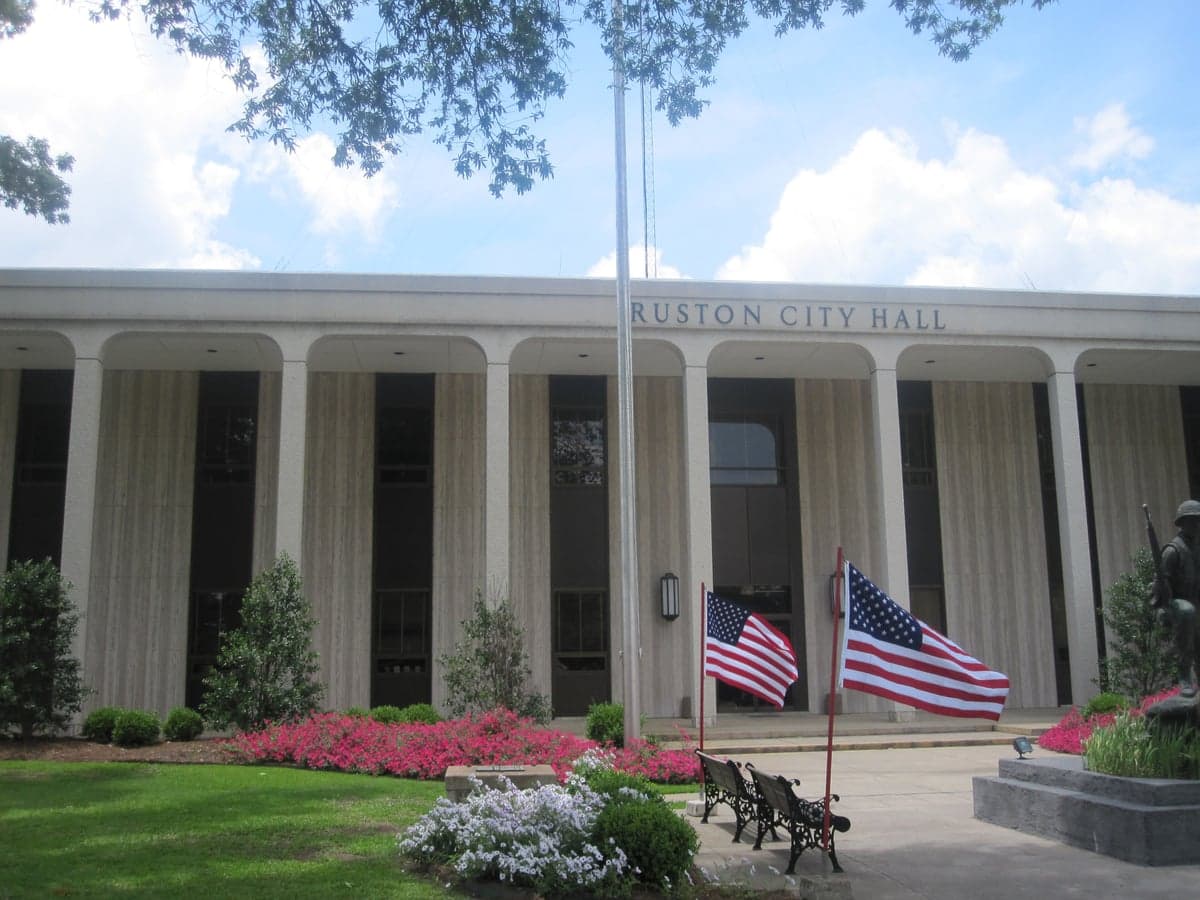
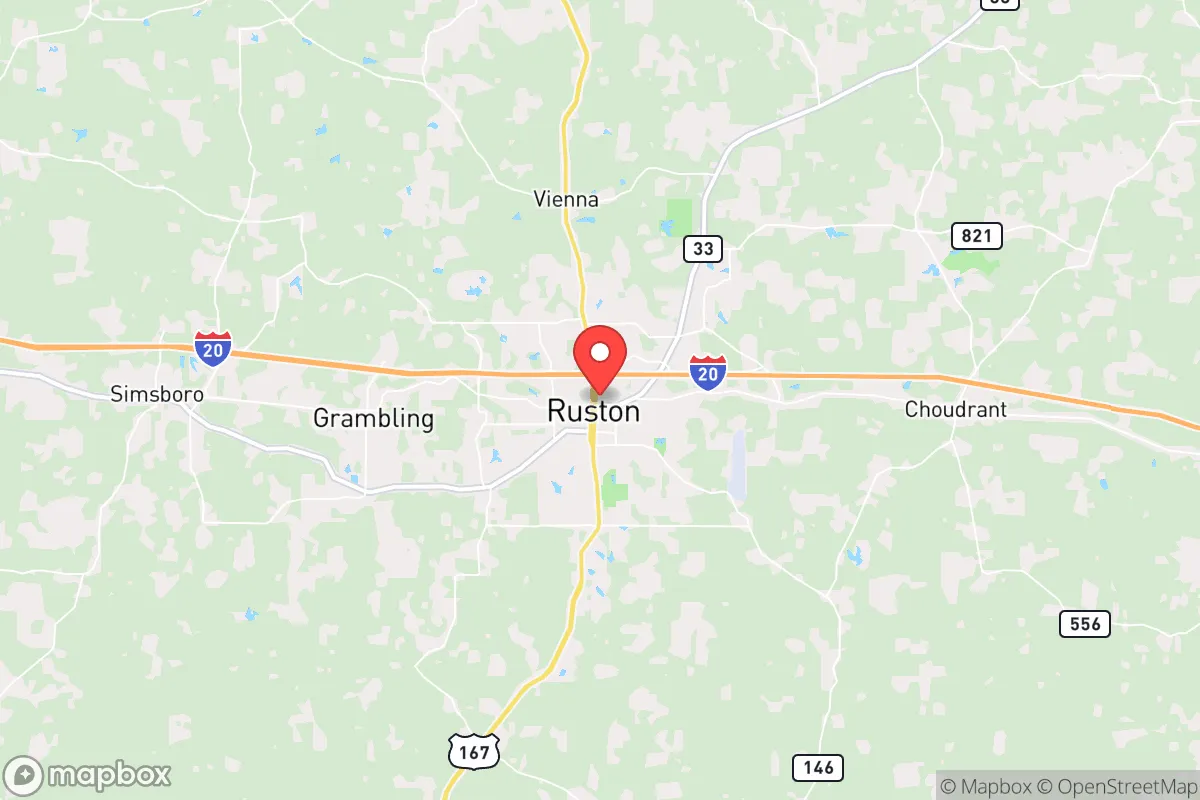
Photo: Wikipedia
Quality of Life in Ruston, LA
A high quality of life with strong walkability, manageable living costs, healthy neighborhood signals, and solid amenity access.
What does Quality of Life tell us?
Quality of Life blends cost of living, nearby amenities, socioeconomic signals, and neighborhood character. City-level scores represent the whole municipality; individual neighborhoods can differ.
What does this tell us?
Quality of Life blends cost of living, nearby amenities, socioeconomic signals, and neighborhood character. City-level scores represent the whole municipality; individual neighborhoods can differ.
Cost of Living
26% below national average
The Real Cost of Living in Ruston, LA for 2026
| Tier | Individual | Family (4) |
|---|---|---|
| Survival | $13k | $25k |
| Comfortable | $44k | $65k |
| Luxury | $59k+ | $92k+ |
| Elite (Top 5%) | $101k+ | $156k+ |
51%
The Area Signal
A metric tracking the socioeconomic signals of the area.
Hobbies
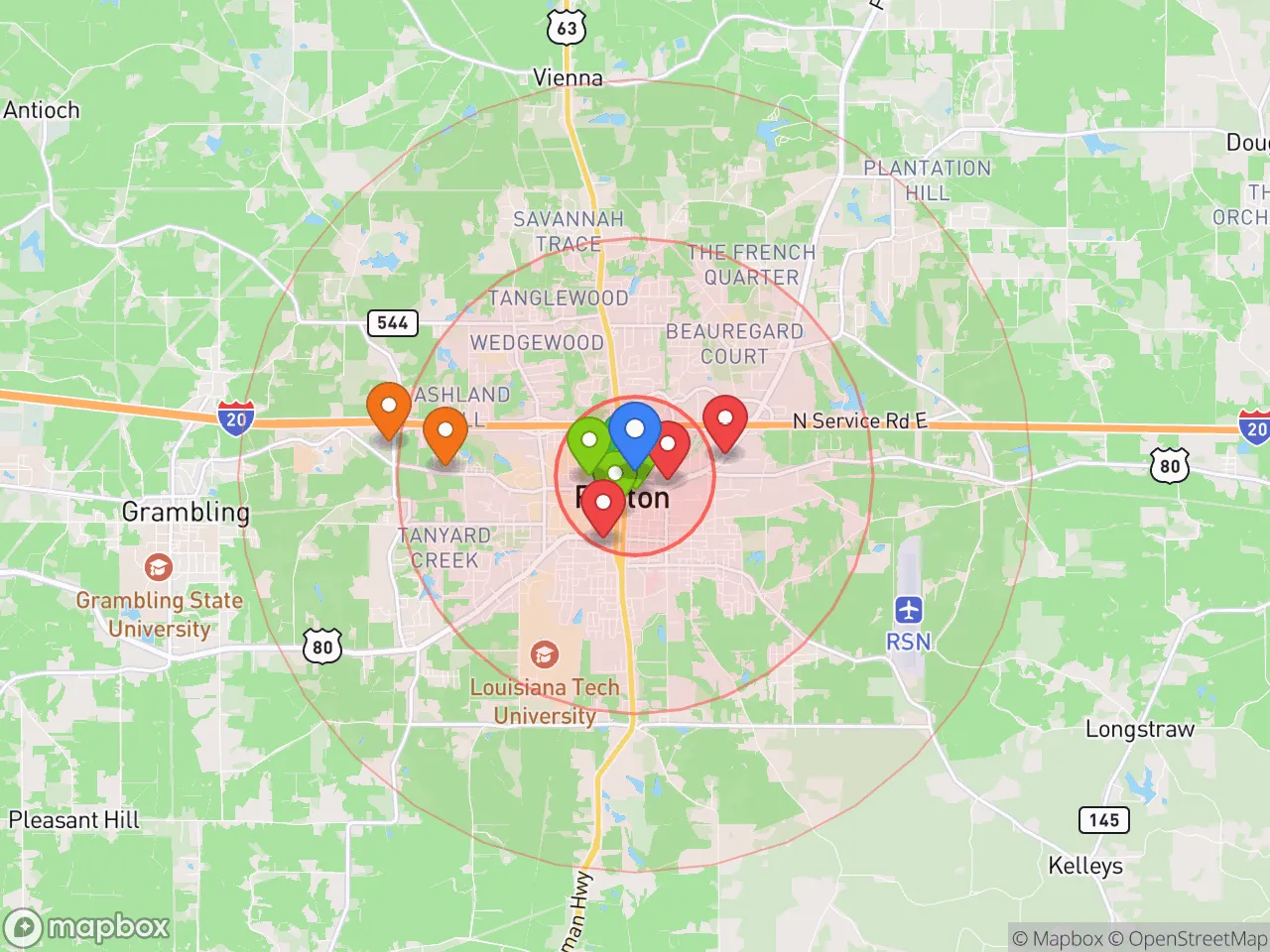
Explore the areaGroceries
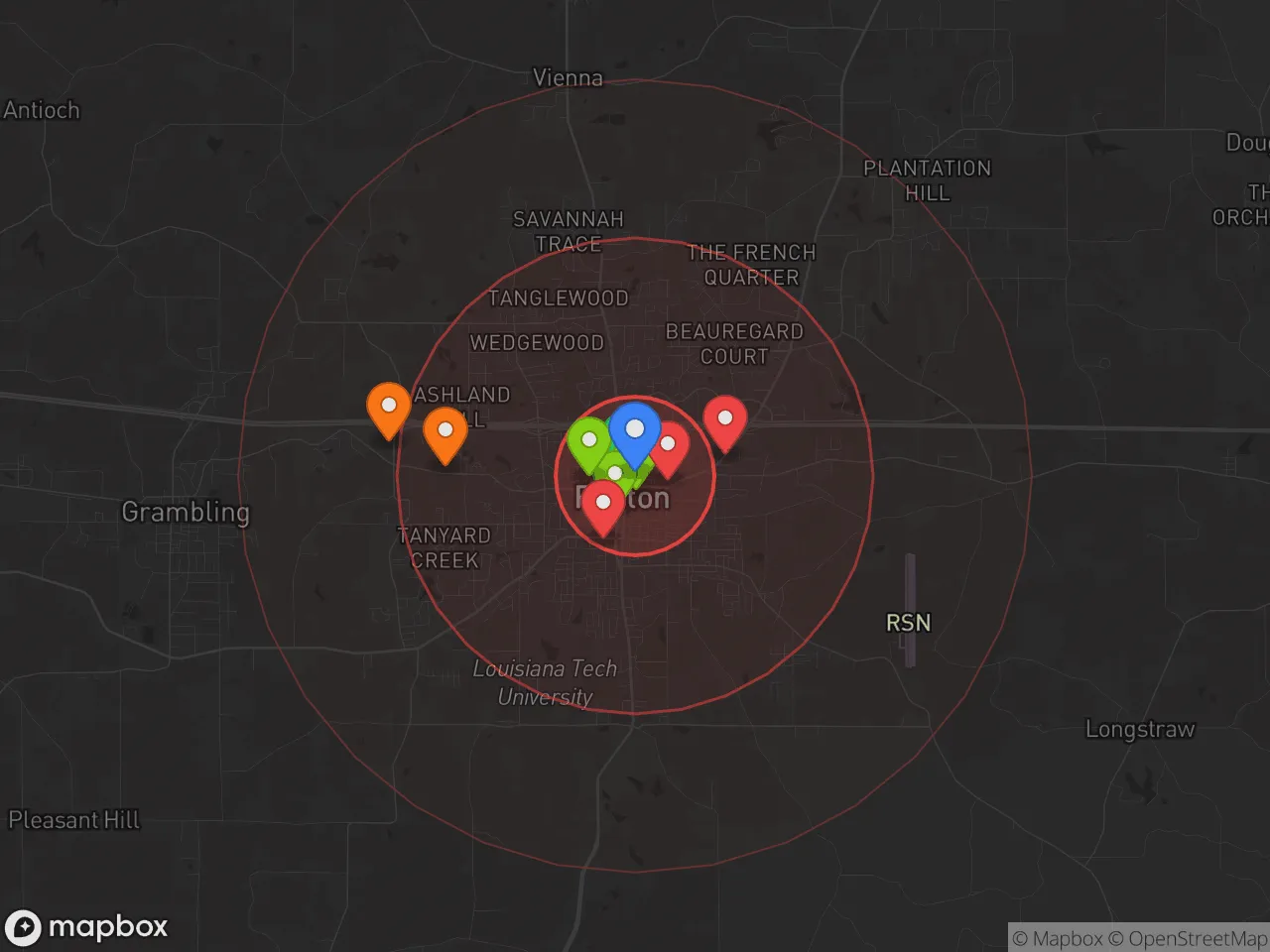
2 within 10 miles
Gas
19 within 10 miles
Hospital
5 within 20 miles
Airport
IAH — George Bush Intercontinental
Post Office
USPS — Ruston, LA
Critical Amenities
Quality-of-Life Analysis
Ruston, Louisiana, presents a notably affordable quality of life that attracts a mix of university faculty, healthcare professionals, and families seeking a slower pace without sacrificing access to education and culture. With a cost of living index of 74—well below the U.S. average of 100—the city offers a financial cushion that allows residents to stretch their incomes further than in larger metro areas. The population skews educated and civic-minded, anchored by Louisiana Tech University, which infuses the community with a youthful energy and a steady stream of cultural events.
How housing costs and everyday expenses compare to Monroe and Shreveport
Ruston’s housing market is a standout advantage for newcomers. The median home value sits at $226,700, significantly lower than the national median of roughly $420,000, while the median rent of $819 makes it one of the most affordable rental markets in north Louisiana. Compared to nearby Monroe (median home value ~$180,000) and Shreveport (~$195,000), Ruston’s homes are slightly pricier, but the trade-off comes in the form of a stronger local economy and lower property taxes. Everyday expenses like groceries and utilities also track below the national average, and the average commute of just 14 minutes means residents spend far less on gas and vehicle wear than the typical American worker. For a household earning the median regional income of around $55,000, homeownership is realistically attainable without the financial strain seen in Baton Rouge or New Orleans.
What daily life is like for families and professionals in Ruston
Daily life in Ruston revolves around Louisiana Tech University, which serves as both an employer and a cultural anchor. The university’s football games, concerts, and lecture series provide year-round entertainment, while the historic downtown district—centered on Railroad Avenue—offers locally owned restaurants, coffee shops, and boutiques. For families, the Lincoln Parish School District is a draw, with Ruston High School consistently ranking among the state’s top public high schools. Outdoor recreation is accessible at Lincoln Parish Park, which features a 45-acre lake for kayaking and fishing, and the nearby Kiroli Park for walking trails. The city’s small footprint (population ~22,000) means most errands are a five-minute drive, and the absence of heavy traffic is a daily luxury that residents frequently cite. Healthcare needs are met by Northern Louisiana Medical Center, a regional hospital that also employs a significant portion of the workforce.
Ruston is best suited for those who value a tight-knit, university-town atmosphere where affordability meets opportunity. Retirees on fixed incomes will appreciate the low rent and short commutes, while young professionals and families will find a stable job market anchored by education and healthcare. Remote workers, in particular, can leverage the low cost of living and reliable internet infrastructure to maximize savings. However, those seeking nightlife, diverse dining, or major retail chains may find the options limited—closest urban amenities are a 30-minute drive to Monroe or an hour to Shreveport. For the right person, Ruston offers a balanced, low-stress lifestyle that is increasingly rare in the modern South.

Crime in Ruston, LA
Higher crime rates than 58% of comparable U.S. locations.
Violent CrimeViolent Crime Analysis
Property CrimeProperty Crime Analysis
Crime Analysis
Ruston, Louisiana, presents a mixed safety profile that demands careful consideration from potential residents. The city's overall crime picture is defined by a violent crime rate of 286 incidents per 100,000 residents, which is notably lower than the national average, but a property crime rate of 3,499.6 per 100,000 that significantly exceeds both state and national benchmarks. This combination means that while the risk of a violent encounter is relatively contained, the likelihood of experiencing theft, burglary, or vehicle-related crime is substantially higher than in many peer communities across the South.
Crime in context
Ruston's violent crime rate of 286 per 100,000 sits well below the U.S. average of approximately 380 per 100,000 and is also lower than Louisiana's statewide rate of roughly 540 per 100,000. This is a meaningful distinction, as Louisiana consistently ranks among the highest-violence states in the nation. However, the property crime rate of 3,499.6 per 100,000 is nearly double the national average of around 1,950 per 100,000 and exceeds the Louisiana average of approximately 2,900 per 100,000. Residents face a property crime rate that is roughly 80% higher than the typical U.S. city, making theft and burglary the primary public safety concerns. It is important to note that Lincoln Parish, where Ruston is located, operates within Louisiana's judicial system. While local district attorneys and judges are generally considered more conservative than those in major urban parishes like Orleans or East Baton Rouge, the broader state context includes progressive-leaning prosecutorial policies in some jurisdictions that can influence statewide recidivism trends and sentencing norms.
What residents experience
For those living in Ruston, the daily reality of crime is heavily weighted toward property offenses. Larceny-theft accounts for the largest share of reported incidents, followed by burglary and motor vehicle theft. Residents frequently report issues with package theft, vehicle break-ins, and bicycle theft, particularly near the Louisiana Tech University campus and in student-heavy rental neighborhoods. Violent crimes such as aggravated assault and robbery do occur but are far less common, and homicides are rare events. The city's police department maintains a visible presence, and community policing initiatives are active, but the sheer volume of property crime means that prevention—such as securing vehicles, using home security systems, and avoiding leaving valuables in plain sight—is a practical necessity.
Neighborhood-level variation
Safety in Ruston is not uniform across the city. Areas west of the railroad tracks and closer to the downtown core tend to report higher concentrations of both property and violent crime, while neighborhoods east of I-20, including newer subdivisions near the Ruston Regional Airport and the northern sections around Cook Park, generally experience lower crime rates. The area immediately surrounding Louisiana Tech University sees elevated property crime but lower violent crime, a pattern typical of college towns. For families and retirees, the safest housing options are typically found in the eastern and northern residential corridors, where single-family homes on larger lots and gated apartment complexes predominate. Prospective renters and buyers should consult the Ruston Police Department's online crime mapping tool and speak with local real estate agents who can provide block-level insights before committing to a specific address.
* Values derived from national, state, county, city and local statistics and may differ in a specific area. Last updated: 2026-05-01T04:21:09.000Z
Narrative content on this page is AI-generated and may contain mistakes. Verify any details that matter before acting on them.
ReloMaps may earn a commission from affiliate links at no extra cost to you.

