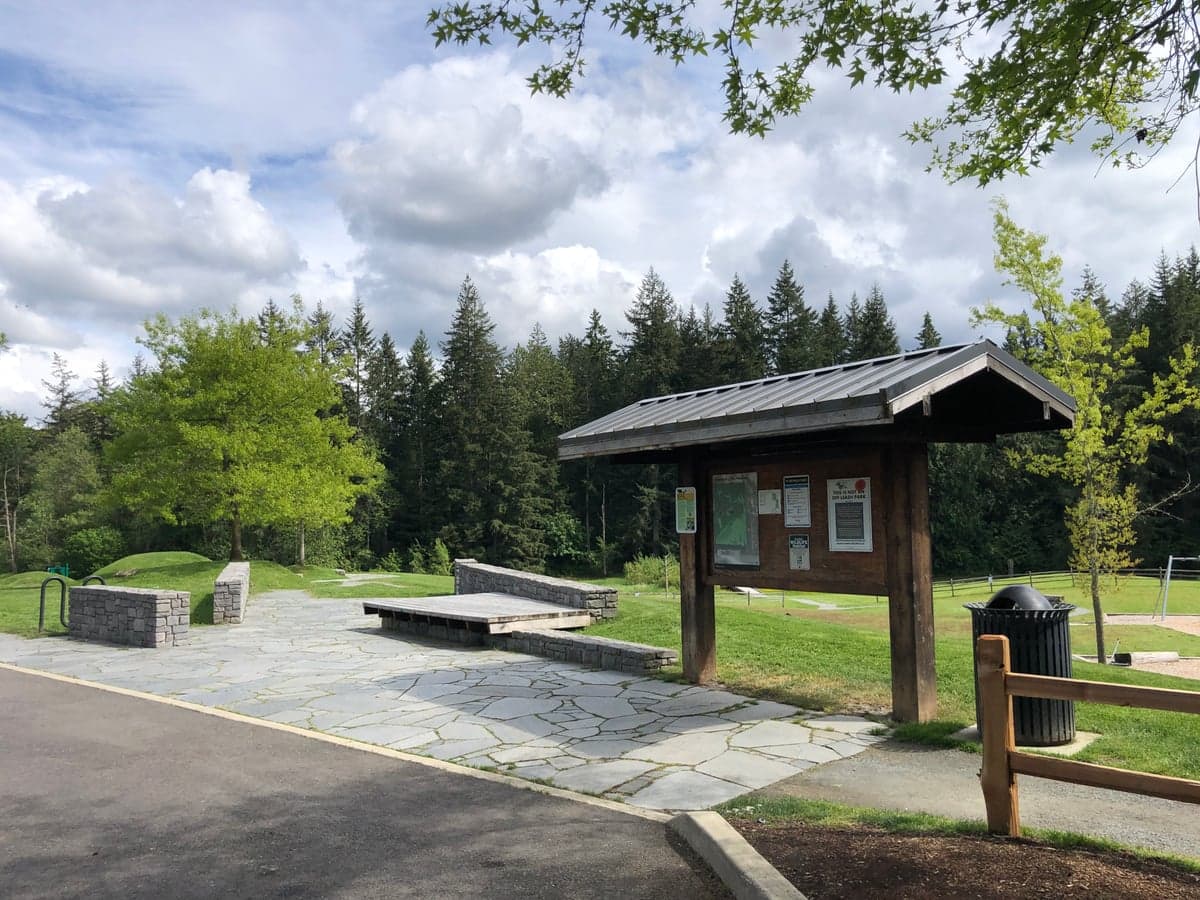
Photo: Wikipedia
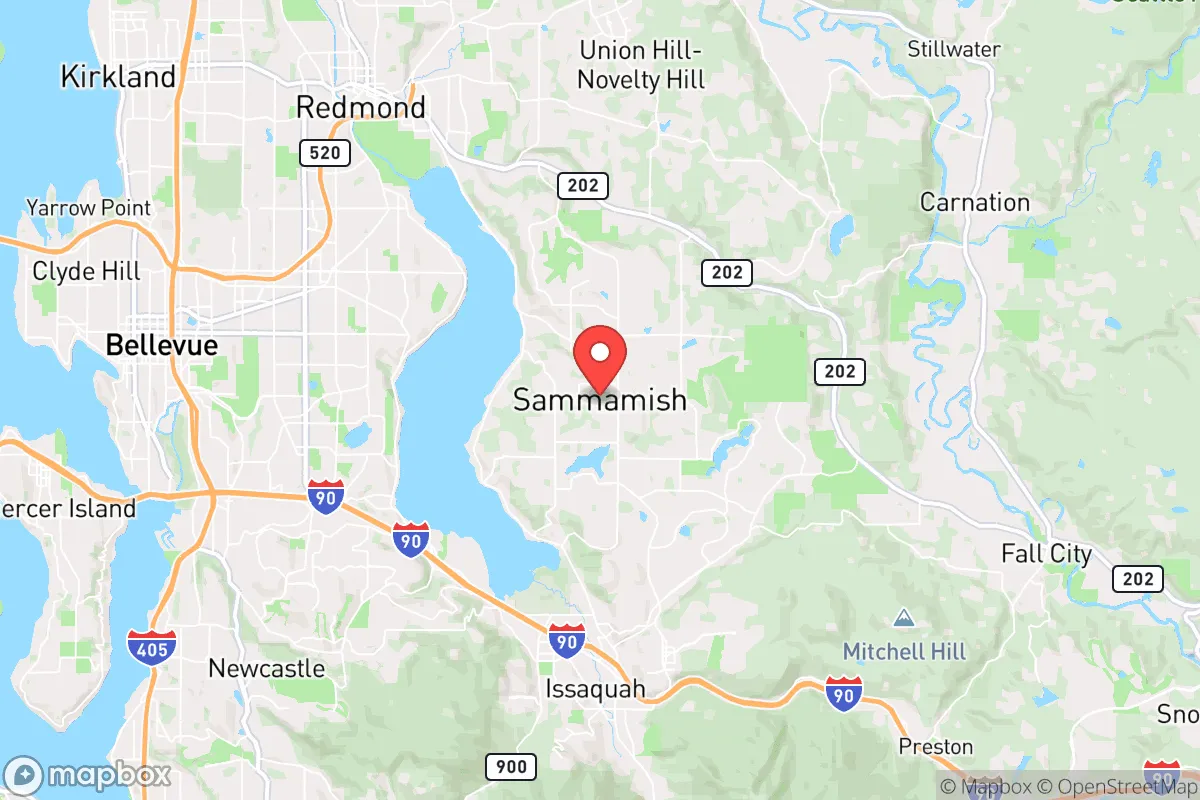
Personal Sovereignty in Sammamish, WA
Viable for self-reliance. Generally workable, though some barriers may limit total independence.
What does Personal Sovereignty tell us?
Personal Sovereignty measures your capacity for self-reliance and independence with minimal government friction. Higher scores mean fewer barriers between you and the way you want to live... but it assumes you have the space you need and good neighbors.
What does this tell us?
Personal Sovereignty measures your capacity for self-reliance and independence with minimal government friction. Higher scores mean fewer barriers between you and the way you want to live... but it assumes you have the space you need and good neighbors.
State Policy
Energy independence: Importer (55% of energy produced in-state)
Personal Liberty
Homesteading

Personal Liberty Analysis
Sammamish, Washington, presents a complex and often contradictory environment for personal sovereignty. While the city itself offers a high quality of life with excellent schools and low crime, it operates under the increasingly restrictive umbrella of King County and Washington State law. For those prioritizing maximum personal autonomy—particularly from a survivalist or prepper mindset—the area requires a clear-eyed assessment of where freedoms are protected and where they are systematically eroded. The trade-off is stark: you gain a safe, affluent community with strong property values, but you must navigate a state government that actively curtails self-reliance, gun rights, and parental control.
Tax burden and regulatory posture in a high-cost state
Washington State’s lack of a personal income tax is often cited as a major freedom advantage, and it is genuine. Sammamish residents pay zero state income tax, which preserves more of your earnings for savings, investments, or prepping supplies. However, this is offset by one of the highest combined state and local sales tax rates in the nation—currently 10.1% in King County—which hits every purchase of gear, tools, and bulk supplies. Property taxes are also significant, with effective rates around 0.9% of assessed value, meaning a typical $1.5 million home carries an annual tax bill of roughly $13,500. The regulatory posture is equally burdensome. Washington’s Growth Management Act heavily restricts land use, making it difficult to add accessory dwelling units, run home-based businesses, or modify property without extensive permitting. The state’s energy code is among the strictest in the country, mandating heat pumps and high-efficiency windows that increase construction and repair costs. For the self-reliant individual, this regulatory density represents a constant friction—every project, from a generator shed to a chicken coop, requires navigating a bureaucracy that assumes you need permission to improve your own land.
Self-defense and gun law specifics under Washington state code
This is the most significant erosion of personal sovereignty in Sammamish. Washington State has moved aggressively to restrict firearm ownership and carry rights. In 2023, the state passed HB 1240, banning the sale, manufacture, and import of over 50 specific semi-automatic firearms commonly referred to as "assault weapons." This includes the AR-15 platform, which is the most popular rifle for home defense and preparedness in America. Additionally, HB 1143 requires a 10-day waiting period for all firearm purchases and mandates completion of a state-approved safety training course before purchase. Magazine capacity is capped at 10 rounds for rifles and 15 rounds for handguns. Open carry is legal without a permit, but concealed carry requires a license, and the state has passed a "sensitive places" law that bans firearms in libraries, parks, transit centers, and any location where a government meeting is held. For the prepper, this means you cannot legally acquire new standard-capacity magazines or the most effective defensive rifles. You are limited to what you already owned before the ban, or to bolt-action and lever-action firearms. Self-defense in the home is still protected under the Castle Doctrine, but there is no "Stand Your Ground" law—you have a duty to retreat if safely possible before using deadly force outside your home. Sammamish itself has very low violent crime (0.6 per 1,000 residents), but the legal framework makes it harder to prepare for a scenario where that changes.
Self-reliance and homesteading viability: lot sizes, zoning, and off-grid feasibility
Sammamish is a suburban bedroom community, not a homesteading haven. The typical lot size in newer developments is 0.2 to 0.5 acres, with older neighborhoods occasionally offering 1-acre parcels. Zoning codes are strict: keeping chickens is allowed (up to 6 hens, no roosters), but goats, pigs, or cattle are prohibited on lots under 5 acres. Beekeeping is permitted with registration. Gardening is unrestricted, but the short growing season (Zone 8b, with last frost in mid-April and first frost in early November) limits year-round food production. Off-grid feasibility is essentially zero. The city requires connection to municipal water and sewer, and solar panels must be grid-tied with net metering approval from Puget Sound Energy. Rainwater collection for potable use is illegal under state law without a costly permit. Burning wood for heat is restricted by burn bans that can last weeks during winter inversions. For the serious prepper, Sammamish is a location for stockpiling and community networking, not for self-sufficient land-based living. The high property values also mean that buying a larger parcel for a retreat is prohibitively expensive—land in the area routinely sells for $500,000 per acre or more. A more viable strategy is to own a home in Sammamish for its safety and schools while maintaining a separate rural property in eastern Washington or Idaho for actual off-grid capability.
Personal liberties: parental rights, medical autonomy, speech, and property
Washington State has a mixed record on personal liberties. Parental rights are under active assault. In 2023, the state passed a law (SB 5599) that allows minors 13 and older to access shelter and certain medical services without parental consent, and it prohibits shelters from notifying parents in many cases. The state also mandates comprehensive sexual education that includes LGBTQ+ topics, with no opt-out for parents who object on religious or moral grounds. Medical autonomy is similarly constrained: Washington has a strict vaccine mandate for school attendance (including COVID-19 for K-12 students until 2024, though that has been relaxed), and the state's public health officers have broad emergency powers to impose lockdowns, mask mandates, and business closures without legislative approval. Free speech is protected under the state constitution, but the state has passed laws restricting "hate speech" in public schools and has a "malicious harassment" statute that can be used to prosecute political speech deemed threatening. Property rights are the strongest area: Washington is a "non-disclosure" state for real estate transactions, meaning sale prices are not public record, and there is no state-level rent control. However, the city of Sammamish has an active "missing middle" housing plan that could upzone single-family neighborhoods for duplexes and townhomes, reducing the exclusivity of low-density residential areas. For the conservative individual, the trend is clear: the state is actively reducing parental authority, expanding government control over medical decisions, and using public health powers to override personal choice.
Overall, Sammamish offers a high degree of personal safety and economic freedom from income tax, but it sits within a state that is aggressively hostile to many core tenets of personal sovereignty. The gun laws alone are a dealbreaker for many preppers, and the erosion of parental rights is a serious concern for families. Compared to states like Idaho, Montana, or Texas, Sammamish ranks poorly on self-defense, medical autonomy, and homesteading viability. For those who must remain in the Pacific Northwest for work or family, Sammamish is arguably one of the better options within King County—its low crime and strong community provide a buffer against some of the chaos seen in Seattle. But for anyone prioritizing maximum personal sovereignty, this area is best viewed as a temporary base of operations, not a final retreat. The strategic move is to use Sammamish for its economic opportunities while building a more defensible, less regulated position elsewhere.

* Values derived from national, state, county, city and local statistics and may differ in a specific area. Last updated: 2026-04-21T11:18:54.000Z
Narrative content on this page is AI-generated and may contain mistakes. Verify any details that matter before acting on them.
ReloMaps may earn a commission from affiliate links at no extra cost to you.

