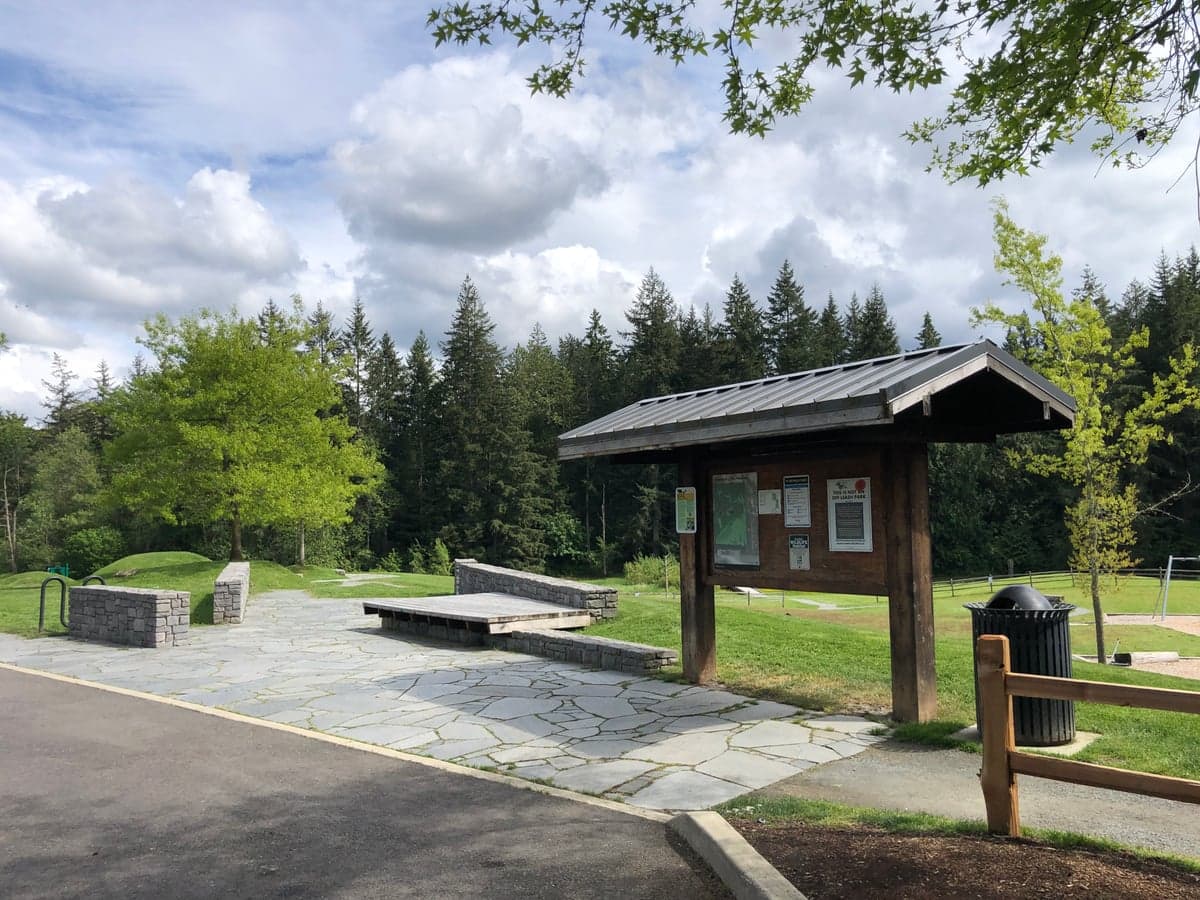
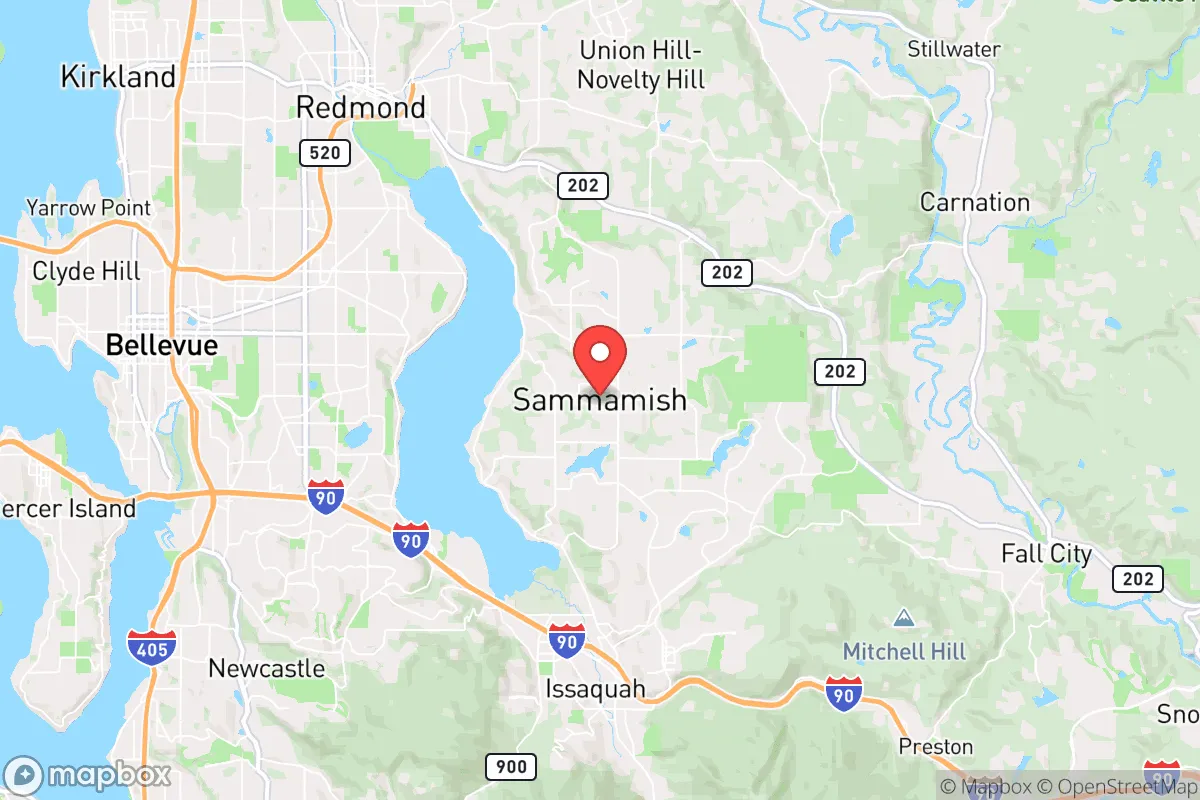
Photo: Wikipedia
Demographics of Sammamish, WA
Affluence Level in Sammamish, WA
A wealthy area with high-earning, well-educated households. Incomes, home values, and educational attainment meaningfully outpace national averages.
People of Sammamish, WA
The people of Sammamish, Washington, today form a dense, highly educated, and predominantly Asian and white suburban community of 66,375. The city’s identity is defined by its dual character: a family-oriented, high-amenity suburb with a median household income well above the state average, and a rapidly diversifying population where East/Southeast Asian and Indian communities each represent roughly 18% of residents. With 77% of adults holding a bachelor’s degree or higher, Sammamish ranks among the most educated cities in the state, and its population is notably young and family-centric, with a median age around 38.
How the city was settled and grew
Sammamish was not a 19th-century frontier town. Its modern population history begins in earnest after 1900, when the area was a sparsely populated logging and farming district. The original non-Native settlers were primarily white homesteaders of Northern European descent—Scandinavians, Germans, and English—who worked in timber, small-scale agriculture, and later, the region’s early automobile-related industries. The first significant cluster of homes appeared in the Monohon area, near the lake, where a small sawmill community operated. By the 1930s, a handful of summer cabins and year-round farmsteads dotted the plateau, but the population remained under 500. The post-World War II era brought a slow trickle of returning veterans and Seattle commuters, who built modest homes in what would later become the Pine Lake neighborhood. However, Sammamish remained a rural backwater until the 1980s, with no incorporated city government and a population that barely topped 3,000 by 1970.
Modern era (post-1965)
The 1965 Hart-Cellar Act had little immediate effect on Sammamish, as the area was still too remote to attract immigrants. The real transformation began in the 1980s and accelerated through the 1990s, driven by two forces: the explosive growth of Microsoft and other tech employers in nearby Redmond, and the construction of State Route 520, which made the Sammamish Plateau a viable commute to Seattle and Bellevue. The first major wave of new residents were domestic white professionals—engineers, managers, and executives—who built large single-family homes in master-planned subdivisions like Klahanee and Beaver Lake. By 2000, the population had surged past 30,000, and the city incorporated in 1999 to manage the growth.
The second wave, beginning around 2005, was overwhelmingly international. Highly skilled immigrants from India and East/Southeast Asia—particularly China, Korea, and Taiwan—moved directly into Sammamish, drawn by the top-rated Lake Washington School District and proximity to tech campuses. The Issaquah-Fall City Road corridor and the South Sammamish area (near the Issaquah border) became particular magnets for Indian families, while East Asian households concentrated in the newer developments around Pine Lake and Monohon. By 2020, the white share of the population had fallen from over 80% in 1990 to just 50.9%, while the Asian (East/Southeast Asian) share reached 18.6% and the Indian share hit 18.0%. The Hispanic (4.4%) and Black (1.5%) populations remain small but stable.
The future
Sammamish is not homogenizing; it is tribalizing into distinct, stable enclaves. The white population is plateauing, not declining further, as the city is largely built out and new construction is limited. The Indian and East/Southeast Asian communities are both growing, but through natural increase and limited in-migration, not rapid new waves. The South Sammamish area is becoming a de facto Indian-majority neighborhood, while Pine Lake and Monohon remain heavily East Asian. The white population is concentrated in the older, established neighborhoods like Klahanee and Beaver Lake. Over the next 10-20 years, the city will likely see a slow drift toward a tripartite demographic structure—roughly equal thirds white, Indian, and East/Southeast Asian—with very small Hispanic and Black minorities. The foreign-born share (19.8%) is near its peak, as most new residents are U.S.-born children of earlier immigrants. The city’s character will remain that of a high-achievement, family-focused suburb, but with increasingly distinct cultural neighborhoods rather than a melting pot.
For a conservative-leaning individual or parent considering relocation, Sammamish is a place of stable, prosperous enclaves where community identity is often tied to school attendance zones and neighborhood associations rather than a single civic culture. The population is not growing rapidly, but it is becoming more ethnically defined by geography. New arrivals should expect to find a well-educated, civically engaged, and politically moderate-to-conservative population, with a strong emphasis on property values, school performance, and local governance. The city is not becoming more diverse in a blended sense; it is becoming a collection of distinct, self-reinforcing communities.

* Values derived from national, state, county, city and local statistics and may differ in a specific area. Last updated: 2026-04-21T11:18:54.000Z
Narrative content on this page is AI-generated and may contain mistakes. Verify any details that matter before acting on them.
ReloMaps may earn a commission from affiliate links at no extra cost to you.

